Table of Contents
- What Counts as a Cosmetic Defect in a New Build?
- Your New Build Snagging List: What to Record and When
- Cosmetic Defect Rectification for New Build Developments: How the Process Works
- Hard Surface Repair for Developers: Repair vs Replace
- Understanding the Developer Defect Liability Period
- Choosing a Cosmetic Defect Rectification Specialist
- New Build Homeowner Checklist Before Handover
- Frequently Asked Questions
Last Updated: 30 August 2026
What Counts as a Cosmetic Defect in a New Build?
Cosmetic defect rectification is the process of repairing surface-level damage to finishes, fixtures, and fittings that affects appearance rather than structural integrity. At Surface Magic Repairs, we work across new build developments daily, and the distinction matters enormously, both for how defects are handled and who is responsible for fixing them.
A cosmetic defect is damage you can see but that does not compromise the safety or structural performance of a building. Common examples include chips in sanitaryware, scratches on worktops, scuffs on UPVC window frames, paint runs, tile surface marks, and dents in fitted furniture. These are the items that fill snagging lists on every new build site, from small residential conversions to large-scale housing developments.
The practical implication: cosmetic defects are typically the developer's responsibility to resolve before or shortly after handover, and they can significantly affect buyer satisfaction if left unaddressed.
Structural vs Cosmetic: Where the Line Falls
The distinction between structural and cosmetic is not always obvious. A crack in a tile grout joint is cosmetic. A crack that runs through the tile body and into the substrate may indicate movement beneath. A scratched bath panel is cosmetic. A bath that flexes underfoot points to inadequate support, which is structural.
As a general rule:
- Cosmetic defects affect finish, colour, or surface appearance only
- Structural defects affect load-bearing elements, waterproofing, or the building's performance
- Defects with functional impact (a door that won't close, a tap that leaks) sit in a separate category again
Getting this classification right matters. It determines whether a defect falls under the developer's cosmetic touch-up programme, the warranty provider's remit, or requires a specialist contractor. According to the NHBC guidance on snagging and defects, developers carry a two-year obligation to address defects reported after handover, which makes accurate classification essential from day one.
Your New Build Snagging List: What to Record and When
A new build snagging list is a formal record of all defects, cosmetic or otherwise, identified during a pre-handover inspection or in the period immediately following legal completion. Getting this document right is one of the most valuable things a buyer or site manager can do.
The timing matters. Ideally, a snagging inspection takes place before legal completion, giving the developer an opportunity to rectify issues before the buyer takes possession. Many buyers, however, are pressured to complete before snagging is finished. If that happens, defects must still be recorded and submitted to the developer promptly.
How to Conduct a Thorough Pre-Handover Inspection
Work through the property room by room, in good natural light where possible. Carry a torch for corners, under-counter spaces, and areas where ceiling spotlights create shadows that obscure surface marks.
Record every defect with:
- A photograph showing the full context and a close-up
- The exact location (room, wall, surface type)
- A brief description of the defect (chip, scratch, crack, stain, paint run)
- The material or finish affected
Do not rely on memory or informal conversations with site staff. A written, dated, photographed record is your only reliable reference point if disputes arise later.
Surfaces Most Likely to Appear on a Snagging List
Certain surfaces attract damage during the final stages of construction almost without exception. Trades working in a near-finished property inevitably cause minor impacts, scuffs, and marks.
The surfaces that appear most frequently on new build snagging lists include:
| Surface | Common Defect Types |
|---|---|
| Baths and shower trays | Chips, scratches, impact marks |
| Ceramic and porcelain tiles | Surface scratches, chipped edges, grout staining |
| Laminate and solid-surface worktops | Burns, scratches, impact chips |
| UPVC window frames and sills | Scuffs, scratches, paint overspray |
| Fitted kitchen units and doors | Dents, scratches, hinge marks |
| Sanitaryware (sinks, basins) | Chips, cracks, surface marks |
| Brickwork and stone sills | Impact damage, mortar staining |
This is the landscape that cosmetic defect rectification specialists work within every day.
Cosmetic Defect Rectification for New Build Developments: How the Process Works
Cosmetic defect rectification for new build developments follows a structured process that differs from a one-off domestic repair. The scale, variety of surfaces, and coordination with site managers and customer-care teams requires a methodical approach.
The process typically works as follows. A specialist visits the development to assess the snagging list, identify which defects are repairable in situ, and agree a programme of works with the site or customer-care team. Repairs are then completed surface by surface, using filling, colour-matching, texturing, and refinishing techniques that are matched to the existing material and finish.
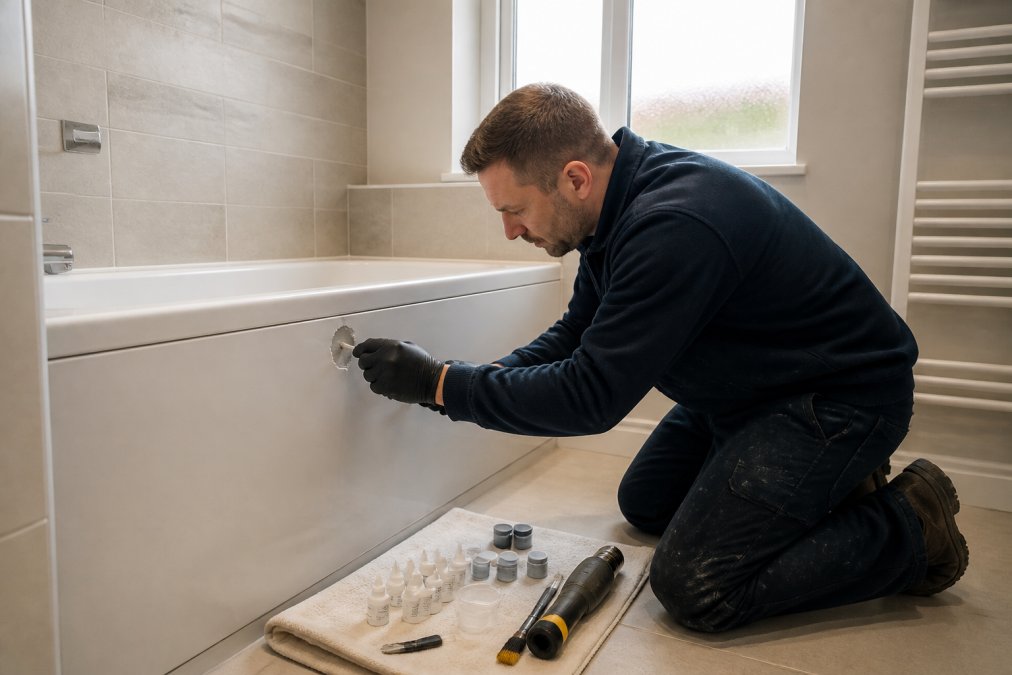
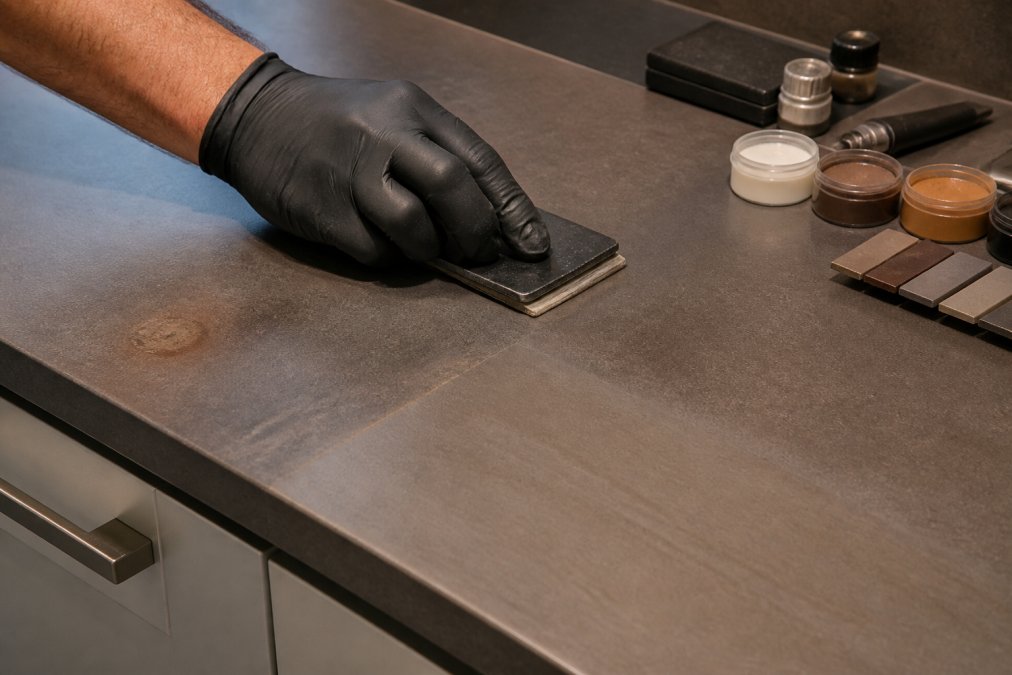
The key principle is that repairs are completed in place, with no strip-out required. A chipped bath does not need to be removed and replaced. A scratched worktop does not require a full kitchen refit. The damaged area is repaired, colour-matched, and refinished so that it is significantly improved and restored to an acceptable appearance.
It is worth being clear about expectations: results depend on the material, the finish, the extent of the damage, and the surrounding pattern. A skilled repair will substantially improve the surface, but no honest specialist will guarantee that every repair is completely invisible. What cosmetic defect rectification consistently delivers is a surface that looks far better than it did and avoids the cost, waste, and disruption of replacement.
Hard Surface Repair for Developers: Repair vs Replace
The default instinct on a busy site is often to replace a damaged item rather than investigate repair. This is understandable: replacement feels definitive. But for cosmetic damage to hard surfaces, it is rarely the right call.
Hard surface repair for developers offers a straightforward alternative. A specialist working in situ can repair chips, burns, scratches, and impact damage to baths, tiles, worktops, sanitaryware, and fitted furniture at a fraction of the cost and disruption of replacement.
The practical comparison looks like this:
- Replacing a bath requires disconnecting plumbing, removing panels, stripping out the old unit, disposing of it, fitting a new bath, re-plumbing, re-tiling any disturbed areas, and redecorating. The knock-on work multiplies the cost and timeline significantly.
- Repairing a chipped bath takes a specialist a matter of hours, with no strip-out, no tiling, and no redecoration required.
The same logic applies across virtually every hard surface on a new build development. Laminate worktops with burn marks, UPVC frames with deep scratches, and porcelain tiles with chipped edges are all candidates for in situ repair rather than replacement.
According to the Waste and Resources Action Programme guidance on construction waste reduction, repair-first approaches in construction and fit-out reduce material waste and associated disposal costs meaningfully. For developers managing multiple units, those savings accumulate quickly.
Understanding the Developer Defect Liability Period
The developer defect liability period is the window of time during which a developer is legally obligated to return and remedy defects reported by the buyer. For new build residential properties, this period is typically two years from legal completion.
This obligation sits alongside, but separately from, any warranty provided by a structural warranty body. The developer's own liability is a contractual matter, governed by the terms of the sale and the Consumer Code for Home Builders, which sets out minimum standards for how developers handle post-completion defects.
As documented in the Consumer Code for Home Builders requirements, developers must have a proper after-sales service in place and must respond to defect reports within a reasonable timeframe. Cosmetic defects reported during the liability period are the developer's responsibility to resolve.
NHBC Buildmark Warranty and Cosmetic Damage
The NHBC Buildmark warranty is the most widely used structural warranty for new build homes. It is important to understand what it does and does not cover.
The Buildmark warranty covers structural defects and damage to the physical structure of the home. It does not cover cosmetic defects or damage caused by normal wear and tear. Chips in a bath, scratches on a worktop, or scuffs on a door frame fall outside the Buildmark remit entirely.
These cosmetic items remain the developer's responsibility during the two-year defect liability period. After that period expires, they become the homeowner's responsibility. This is precisely why prompt snagging, clear documentation, and timely cosmetic defect rectification matter so much in the first two years after handover.
Choosing a Cosmetic Defect Rectification Specialist
Not every tradesperson who offers surface repairs has the skills or equipment to handle the variety of materials found on a modern new build development. Choosing the wrong specialist can result in repairs that are visible, patchy, or that fail prematurely.
The things that actually separate a competent specialist from an unreliable one are:
- Experience across multiple surface types. A new build snagging list will include baths, tiles, worktops, UPVC, fitted furniture, and brickwork. A specialist who only works on one or two surface types cannot handle a full development efficiently.
- Colour-matching capability. The ability to match existing colours, tints, and finishes accurately is the technical core of cosmetic repair. Ask specifically how colour-matching is handled and what happens if a first attempt is not satisfactory.
- In situ working method. Repairs should be completed on site, in place, without removing fixtures. Any specialist who routinely recommends removal and workshop repair for standard cosmetic damage should be questioned.
- Commercial site experience. Working on an occupied or near-complete development requires coordination with site managers, adherence to site rules, and the ability to manage multiple repairs across multiple units efficiently.
- Honest assessment of outcomes. A trustworthy specialist will tell you clearly which repairs are achievable and to what standard, rather than overpromising results that cannot be guaranteed.
Surface Magic Repairs works directly with housebuilders and developers on defect rectification programmes, handling multiple surfaces across new build sites with planned visits coordinated around the developer's handover schedule.
New Build Homeowner Checklist Before Handover
Use this checklist during your pre-handover inspection. Work through it room by room, in natural daylight where possible.
Bathrooms and en-suites:
- Bath and shower tray: check for chips, cracks, scratches, and impact marks
- Basin and sink: inspect edges, overflow, and underside for chips
- Tiles: check surface for scratches, chipped edges, and grout consistency
- UPVC window frames and sills: look for scuffs, scratches, and paint overspray
- Taps, shower fittings: check for surface marks and correct function
Kitchen:
- Worktops: inspect for scratches, burns, and impact chips along edges
- Cabinet doors and drawer fronts: check for dents, scratches, and hinge marks
- Sink: inspect for chips and surface marks
- Splashback tiles: check for chipped edges and surface scratches
Living areas and bedrooms:
- Fitted wardrobes and furniture: inspect for dents, scratches, and door alignment
- Windowsills and frames: check for scuffs and paint runs
- Skirting boards and architraves: look for impact marks and paint defects
External:
- Brickwork: check for impact damage and mortar staining
- Stone sills: inspect for chips and surface marks
- UPVC doors and frames: check for scratches and alignment
Record every item with a photograph and written description. Submit your completed list to the developer in writing, with a date stamp, as soon as possible after the inspection.
According to the HomeOwners Alliance guidance on new build snagging, buyers who submit a formal snagging list before completion are in a significantly stronger position when pursuing rectification from the developer.
Frequently Asked Questions
What is the difference between structural and cosmetic defects in new builds?
Structural defects affect the integrity of the building itself, such as foundation problems, roof failures, or load-bearing wall issues. Cosmetic defects are surface-level imperfections that do not affect how the property functions: chips in sanitaryware, scratches on worktops, scuffs on UPVC frames, or marks on tiles. Both matter at handover, but they are handled differently. Structural issues typically fall under warranty schemes such as NHBC Buildmark, while cosmetic defects are usually resolved through the developer's customer-care process or a specialist rectification service.
Are developers legally required to fix cosmetic defects after completion?
Developers are not automatically obliged under statute to rectify every cosmetic defect, but most are bound by the terms of their warranty scheme and their own customer-care commitments. The Consumer Rights Act 2015 requires that goods and services meet a satisfactory quality standard, and many developers voluntarily address cosmetic issues raised during the snagging period to protect their reputation and meet warranty obligations. Defects reported promptly and in writing stand the strongest chance of being actioned within the defect liability period.
What is the standard snagging process for new build developments?
The snagging process typically begins before legal completion. A buyer or their appointed inspector walks the property and records every defect, however minor, on a written snagging list. This list is submitted to the developer's customer-care team, who assess each item and arrange remedial works. Cosmetic defects such as chipped baths, scratched tiles or marked worktops are common findings. A specialist rectification service can address many of these in a single visit, reducing the number of return appointments and getting the property ready for occupation faster.
How does the NHBC Buildmark warranty cover cosmetic damage?
The NHBC Buildmark warranty does not generally cover cosmetic defects. It is designed to protect buyers against structural and physical damage that arises from a failure to build to NHBC's Technical Standards. During the first two years, the developer remains responsible for putting right defects reported by the homeowner, which can include cosmetic issues depending on the developer's own terms. From years three to ten, Buildmark cover focuses on significant damage to the structure. Cosmetic defects reported early and directed to the developer's customer-care team have the best chance of resolution.
What are the most common cosmetic defects found in new build properties?
The most frequently reported cosmetic defects in new build properties include chips and cracks in baths, shower trays and sinks; scratches on ceramic and porcelain tiles; marks, burns or chips on laminate and solid-surface worktops; scuffs and scratches on UPVC window frames and doors; paint splashes or rub-marks on fitted furniture; and minor damage to brickwork or stone sills caused during construction. Most of these can be repaired in situ by a specialist, avoiding the cost and disruption of full replacement.
Can a specialist repair multiple units on a new build development in a single visit?
Yes. A specialist cosmetic repair service can assess and address defects across multiple plots in a planned site visit, working alongside the developer's site manager or customer-care team. This approach is far more efficient than booking separate appointments for each unit and helps developers clear snagging lists quickly before or after handover. Colour-matching, filling, texturing and refinishing are all completed in situ, so there is no need to remove or replace fixtures, keeping disruption to a minimum across the development.
Cosmetic defects on new build developments are an almost universal reality. The question is not whether they will appear, but how efficiently they are resolved. Surface Magic Repairs provides planned defect rectification programmes for housebuilders and developers, completing in situ repairs across multiple surfaces and units with minimal disruption to handover schedules. Get an instant quote and find out how we can support your customer-care programme.
This article was written using GrandRanker