
Can a dented or chipped door be repaired rather than replaced?
In many cases, yes. Where the door is sound and the damage is localised, the area can be rebuilt and refinished in place, which avoids replacing and redecorating a whole door set.
Doors, frames & architraves
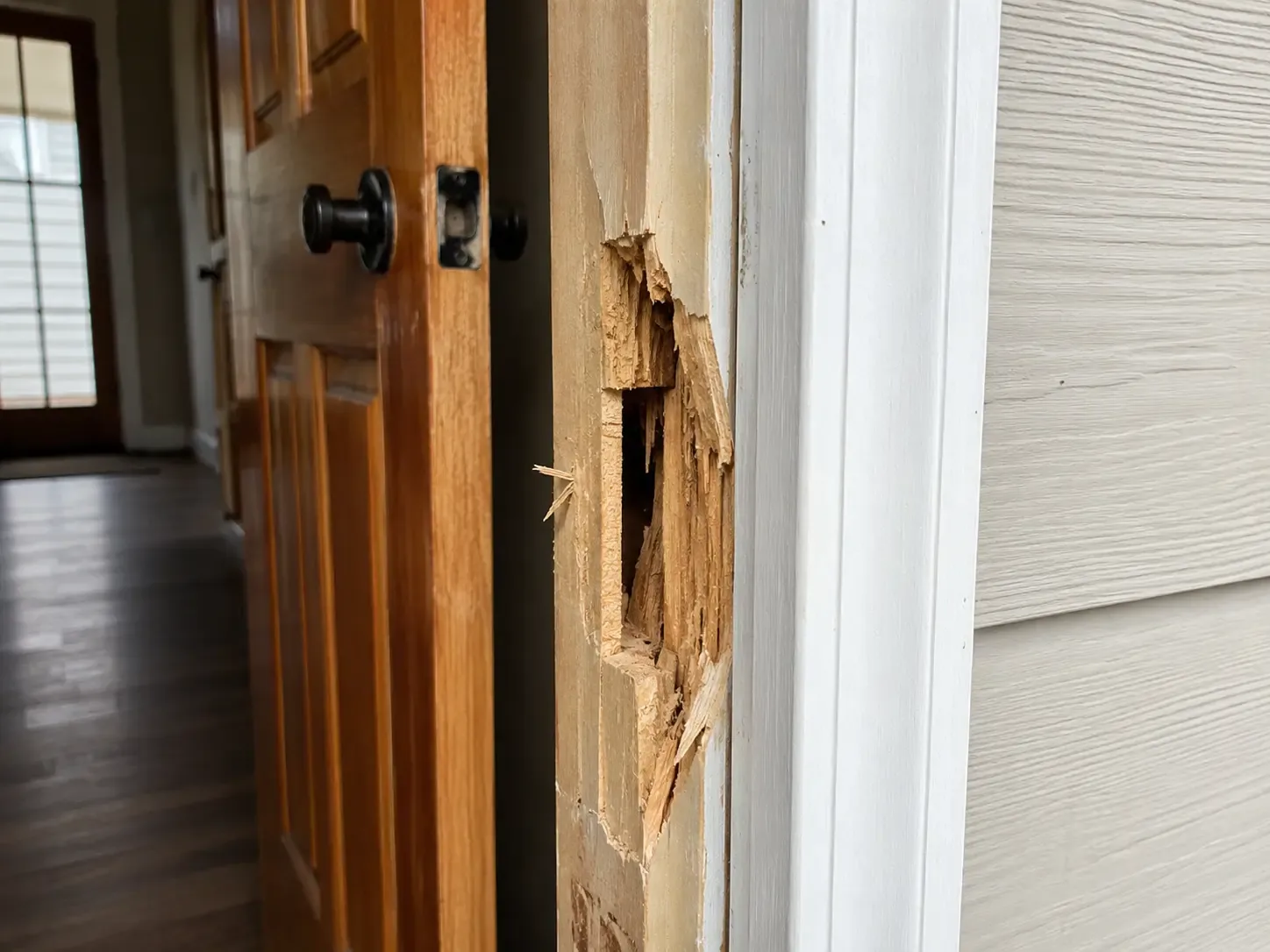
Doors and frames take constant knocks from trolleys, furniture, luggage and daily traffic, and a damaged edge or dented lining rarely justifies a new door set. Where the door and the damage are suitable, we repair and refinish in place.
We work on suitable finished timber, laminate and veneer-effect doors, together with painted door surfaces, linings, frames and architraves. The construction and finish are identified at assessment, because a hollow-core, laminate-faced and solid painted door all behave differently.
Scope
Damage
How it works
Photographs of the damage and the whole door or frame are reviewed so we can identify the construction and finish and confirm a repair is suitable.
Ironmongery, glazing, flooring and surrounding decoration are masked and protected, and the damaged area is cut back to sound material.
Missing material is rebuilt in layers and shaped back to the original edge, corner or face profile of the door, lining or architrave.
Colour, sheen and grain or texture are matched to the surrounding finish as closely as the materials allow so the repair blends into the door set.
The repair is checked with you in daylight, the area is left clean, and we explain curing time and aftercare before the door returns to normal use.
Where we work
Timber, veneered, laminate-faced and painted doors, along with linings, architraves, skirtings and other second-fix joinery, are the day-to-day of this work. Damage concentrates in the same places: leading edges, lock and handle areas, kick heights, and the corners of frames where trolleys, luggage and furniture make contact.
Fire doors are a special case. Their performance depends on their construction, and cosmetic work must not compromise that, so we assess the door and the type of damage first and will refuse work that would affect a fire door's integrity.
We identify the door construction and the finish before anything else, because a solid timber door, a veneered flush door and a foil-wrapped door all need different treatment. The condition of the surrounding paint or lacquer decides how far the finish work needs to extend.
Repairs are carried out with the door in place wherever possible, so rooms, flats and hotel bedrooms stay secure. Missing material is rebuilt, the profile is restored, and the finish is matched into the surrounding face or repainted to a clean break such as an edge or a panel line.
Repair is usually the practical route in occupied buildings and in matched joinery schemes, where replacing one door means matching a finish across a corridor and re-hanging ironmongery. It also avoids taking a room out of use for longer than necessary.
Replacement is the right answer where a door is warped, split through, no longer closing correctly, or where a fire door's construction is compromised. Safety and function come before appearance, and we say so.
Before you enquire
We need to see the damage, the finish and how many doors are involved.
Honest advice
Every surface is assessed before work is agreed. Where a repair is not the right long-term answer, we will say so.
Questions
In many cases, yes. Where the door is sound and the damage is localised, the area can be rebuilt and refinished in place, which avoids replacing and redecorating a whole door set.
We do not make fire-door certification or compliance claims of any kind. If a door is or may be a fire door, the responsible person must confirm what is acceptable before any work is carried out.
Suitable finished timber, veneer-effect, laminate-faced and painted surfaces, along with linings, frames and architraves. The finish is identified at assessment from your photographs.
Where the face and edge are suitable, redundant holes and fixing damage can be filled and refinished so the door looks tidy again.
Only where the damage is genuinely cosmetic and the repair cannot affect the door's construction or performance. If there is any doubt we will decline and recommend that a competent fire door inspector assesses it.
Redundant fixings and ironmongery holes can normally be filled, rebuilt and finished into the door face, which is a common part of refurbishment and change-of-use work.
Related
Coverage
We are based in Bolton and work across Greater Manchester and the North West, with wider coverage available for commercial work.
Office enquiries are answered Monday to Friday, 9:00am–3:00pm.
Helpful next steps
Surface Magic Repairs
Send photographs of the damage and we will advise on the most sensible route — repair where it is suitable, honest guidance where it is not.
Accreditations & Compliance
Supporting documentation and current scheme details are available on request for commercial clients and main contractors.
View accreditations & compliance