
Can you repair a chipped wall tile without replacing it?
Usually, yes. Where the tile is sound and well bonded, a chip can be rebuilt and the glaze level and grout lines recreated so the sound tiling around it stays untouched.
Wall tiles & splashbacks
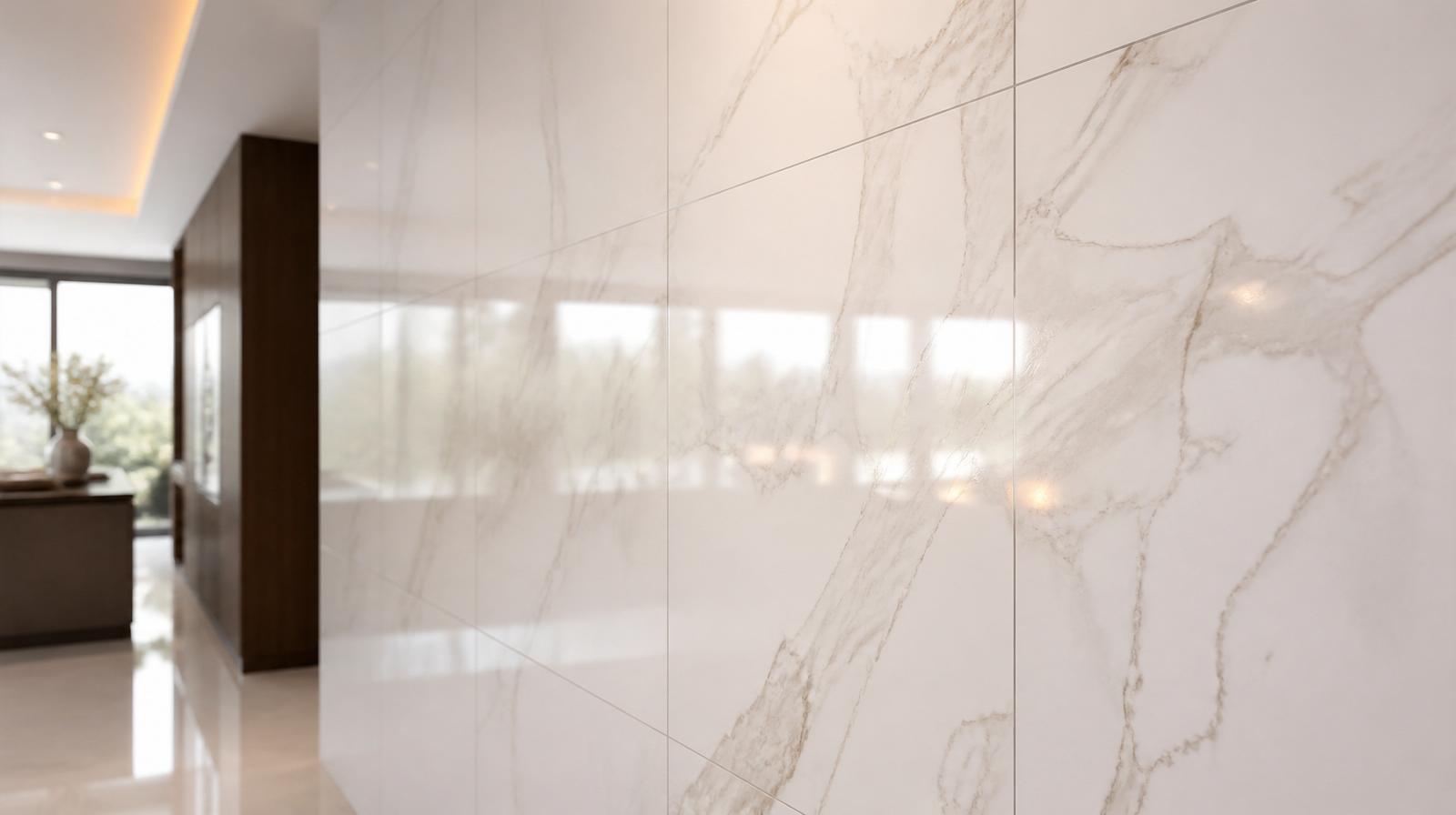
Replacing one damaged tile in the middle of a tiled wall often means matching a discontinued tile and disturbing everything around it. Where the tile and the damage are suitable, a localised cosmetic repair keeps sound tiling exactly where it is.
Our tile work prioritises wall tiles — bathrooms, kitchens, splashbacks, washrooms and tiled surrounds — and localised cosmetic damage. Floor tiles, high-wear circulation areas and load-bearing zones are assessed case by case, and in those settings replacement is often the better and more durable answer. We will tell you when that is the case.
Scope
Damage
How it works
Photographs are reviewed to judge whether the tile colour, glaze and texture can be matched closely enough, and whether the tile is well bonded and sound.
Adjoining tiles, grout lines, fittings and flooring are masked and protected, and the damaged area is cut back to sound material.
The chip or damaged section is rebuilt in layers and shaped flush with the surrounding tile face and edges.
Glaze level, colour and grout lines are recreated as closely as the tile allows so the repair reads as part of the tiled surface rather than a patch.
The repair is checked with you in natural light, the area is left clean, and we explain curing time and cleaning aftercare.
Where we work
Ceramic and porcelain wall and floor tiles are the bulk of this work, along with tiled splashbacks, bath surrounds, hallways and commercial circulation areas. Glazed ceramic chips reveal a pale body; porcelain is denser and the damage is often less obvious but harder to disguise; textured and patterned tiles need the pattern rebuilding as well as the colour.
Tiles are frequently discontinued, which is exactly why repair is often the practical route: matching a single tile from a ten-year-old bathroom is usually impossible, and lifting one tile risks damaging its neighbours.
We check whether the tile is still firmly bonded by tapping around the damage — a hollow sound suggests the tile or the bed behind it has failed, which changes the recommendation. Cracks that follow a straight line across several tiles usually indicate movement in the substrate rather than a tiling fault.
Where the tile is sound, the damage is cleaned back, rebuilt and then finished to work with the glaze, colour and any pattern or texture in the tile. Grout lines can be reinstated as part of the work so the repair reads as part of the tiled surface rather than a patch.
Repair is the pragmatic choice for one or two damaged tiles in an otherwise good scheme, especially where no spares exist. It avoids the risk of cracking adjacent tiles during removal and the visible mismatch of a modern replacement in an older run.
Where tiles are drummy across an area, where movement cracks keep reappearing, or where the tiling is being replaced anyway, retiling is the better use of money. We give that view straight rather than selling a repair that will not last.
Before you enquire
Tile repairs depend on tile type, pattern and how many tiles are affected.
Honest advice
Every surface is assessed before work is agreed. Where a repair is not the right long-term answer, we will say so.
Questions
Usually, yes. Where the tile is sound and well bonded, a chip can be rebuilt and the glaze level and grout lines recreated so the sound tiling around it stays untouched.
Floor tiles, high-wear areas and load-bearing zones are assessed case by case. In those settings replacement is often the more durable answer and we will say so.
That is one of the most common reasons people contact us. Repairing the damaged tile avoids hunting for a discontinued match or re-tiling a whole wall.
No. A tile that is loose or debonded needs re-fixing, which is a different job from a cosmetic surface repair.
A single chipped tile or damaged edge is usually a part-day repair, with the surrounding tiling and grout left alone. Matching a patterned or textured tile takes longer than a plain one, because the colour and texture are built up by hand on site.
Tile repairs are everyday work across Bolton, Greater Manchester and the wider North West. Elsewhere we take tiling repairs on as part of planned commercial or multi-room programmes rather than as a single visit.
No. The point of a tile repair is that the tile stays where it is, which avoids disturbing neighbouring tiles and the waterproofing behind them. If the tile has come loose, that becomes a different job and we will tell you.
Patterned finishes can usually be worked into a repair, and the result is judged at normal viewing distance rather than with your nose against the wall. Strongly veined or high-gloss tiles are the hardest, and we say so before starting.
Related
Coverage
We are based in Bolton and work across Greater Manchester and the North West, with wider coverage available for commercial work.
Office enquiries are answered Monday to Friday, 9:00am–3:00pm.
Helpful next steps
Surface Magic Repairs
Send photographs of the damage and we will advise on the most sensible route — repair where it is suitable, honest guidance where it is not.
Accreditations & Compliance
Supporting documentation and current scheme details are available on request for commercial clients and main contractors.
View accreditations & compliance