
Can scratches be polished out of stainless steel?
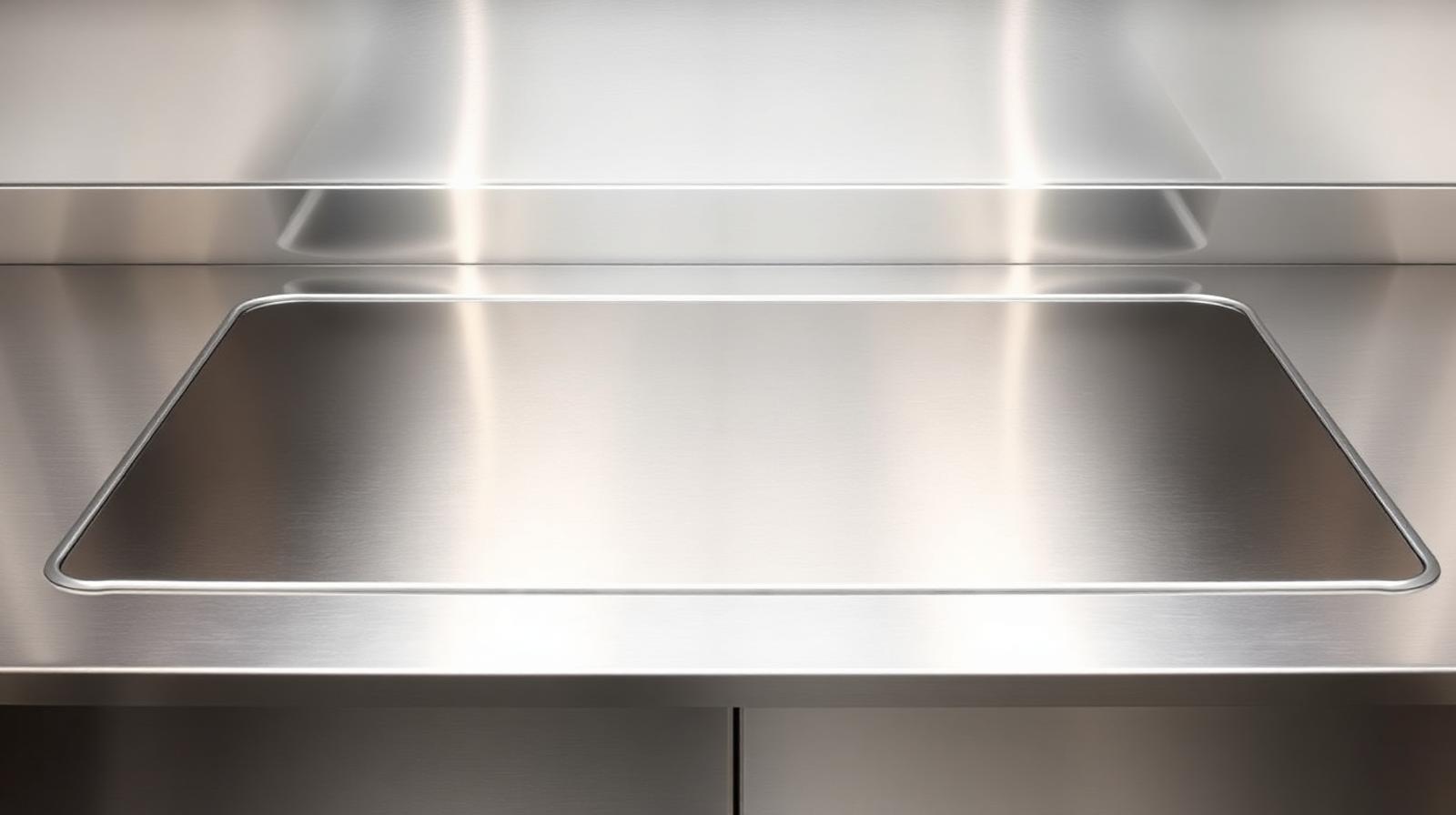
Light scratching in suitable stainless steel can often be reduced significantly and blended into the existing grain. Deep gouges that go beyond the surface cannot be polished away.
Metal, acrylic & polishable finishes
Some surfaces do not need filling or coating — they need working back. Where a finish is polishable and the damage is within the surface, polishing removes marks and restores clarity or lustre without adding anything to the material.
We polish suitable stainless steel and other metals, acrylic and further polishable finishes, matching the direction and level of the existing finish such as a brushed grain or a satin sheen. Scratched glass is a specialist discipline of its own — see our dedicated glass polishing and scratch removal page.
Scope
Damage
Also known as
Polishing and buffing restore a dull surface or a worn finish where the material itself is still sound — high-traffic worktops, vanity tops, reception surfaces and stone, quartz and solid-surface tops that have lost their sheen.
The achievable finish depends on the material, the original sheen level and how deep the wear goes, so the surface is assessed first. Where wear has gone through a coating or into the substrate, we say what can realistically be improved rather than promising a factory finish.
How it works
Photographs and details of the finish are reviewed to confirm the material is polishable and the damage sits within the surface rather than through it.
Adjoining surfaces, glazing and floors are masked and protected, and the surface is thoroughly cleaned so contaminants are not dragged through the polishing stages.
The surface is worked through progressive abrasive and polishing stages to reduce marking, following the direction of the existing grain where one is present.
The final stage is matched to the surrounding finish — brushed, satin or polished — so the treated area sits consistently with the rest of the surface.
The result is reviewed with you in daylight, the area is left clean, and we explain appropriate cleaning and aftercare for the finish.
Where we work
Polishing and restoration address dullness, fine scratching, cleaning-product haze and general wear rather than missing material. Suitable surfaces include solid-surface worktops, composite and coated surfaces, some sanitaryware and a range of panel and furniture finishes.
The realistic outcome is an even, consistent surface, not a new one. Where a surface has been worn unevenly — heavily in front of a sink, lightly elsewhere — evening out the finish is often what makes the biggest visual difference.
We check whether the marking sits in the surface or has gone through it, because polishing cannot restore material that is no longer there. Depth is often easier to judge by touch and raking light than in a photograph, so a small test area is sometimes agreed first.
The surface is cleaned, worked progressively through appropriate stages, and finished to a consistent sheen across the whole element rather than in a single patch, which is what makes polished areas stand out when it is done badly.
Polishing is the right answer for wear and haze on a surface that is otherwise intact, and it is often the cheapest meaningful improvement available before a sale, inspection or reopening.
Where the surface is chipped, cracked or worn through, repair work is needed first, and where it has thinned across the whole element, replacement is the honest recommendation.
Before you enquire
Wear is hard to photograph well, so angle and light matter more than usual.
Honest advice
Every surface is assessed before work is agreed. Where a repair is not the right long-term answer, we will say so.
Questions
Light scratching in suitable stainless steel can often be reduced significantly and blended into the existing grain. Deep gouges that go beyond the surface cannot be polished away.
Yes, but as a separate specialist service. See our Glass Polishing & Scratch Removal page, which covers shopfront and other glazing in detail.
Coated, powder-coated, printed, anodised and plated finishes generally are not, because polishing would cut through the finish itself. We confirm suitability at assessment.
We aim to bring the finish back towards its original appearance and match the surrounding grain or sheen. We do not claim a perfect or as-new result.
No. Fine scratching and haze usually respond well; deeper scores that you can feel with a fingernail often cannot be removed without taking away more material than is sensible. We say which is which after assessment.
Mild, non-abrasive cleaning and prompt wiping of spills. Cream cleaners, scouring pads and strong chemicals are what dull most surfaces in the first place, and we give surface-specific guidance at handover.
Related
Coverage
We are based in Bolton and work across Greater Manchester and the North West, with wider coverage available for commercial work.
Office enquiries are answered Monday to Friday, 9:00am–3:00pm.
Helpful next steps
Surface Magic Repairs
Send photographs of the damage and we will advise on the most sensible route — repair where it is suitable, honest guidance where it is not.
Accreditations & Compliance
Supporting documentation and current scheme details are available on request for commercial clients and main contractors.
View accreditations & compliance