
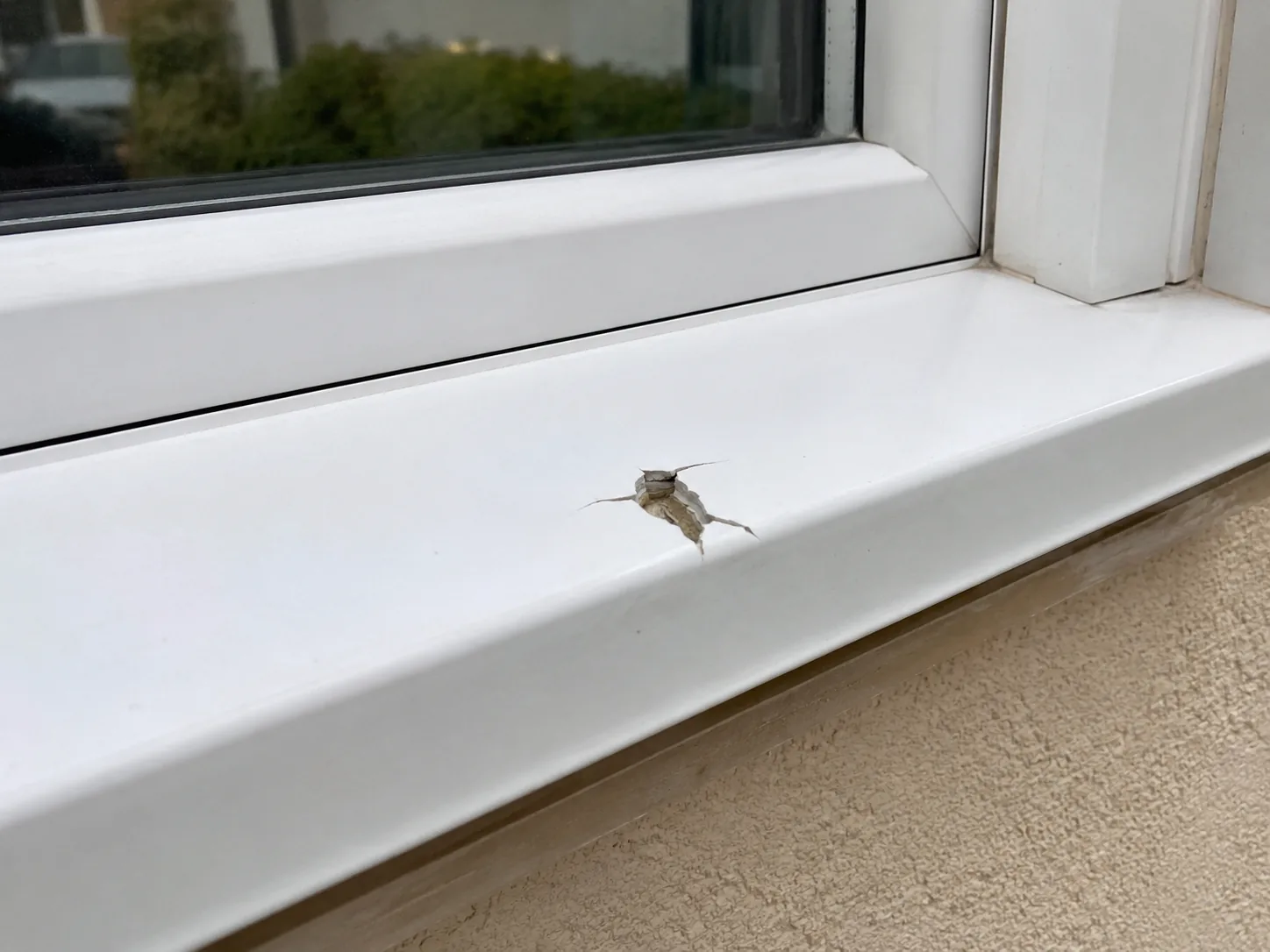
Can a cracked uPVC cill be repaired instead of replaced?
Often, yes. Where the cill is still sound and secure and the damage is localised, the section can be rebuilt and refinished in place without disturbing the window above it.
Windows, doors & trims
Damage to a uPVC frame or cill is rarely a reason to take a window or door out. Where the profile is sound and the damage is on the surface, we repair in place — so the glazing, sealant and surrounding plaster or brickwork stay exactly as they are.
We work on white, coloured and foiled woodgrain-effect uPVC across window frames, door frames, cills, trims and add-on profiles. Foils and textured finishes vary considerably, so the profile and the finish are always identified at assessment before any work is agreed.
Scope
Damage
How it works
You send clear photographs of the damage and a wider shot of the frame or cill. We identify the profile and finish and confirm whether an in-place repair is suitable before anyone travels.
Glazing, seals, sills and surrounding decoration are masked and protected, and the damaged area is cleaned back to sound, stable material.
The chip, dent or damaged section is rebuilt in layers and shaped back to the original line and profile of the frame, cill or trim.
Colour, sheen and texture — including woodgrain effect where present — are matched to the surrounding surface as closely as the materials allow.
The repair is checked with you in daylight, the area is left clean, and we explain curing time and aftercare before the window or door returns to normal use.
Where we work
White and foiled uPVC window frames, cills, doors, trims and conservatory sections all take the same kinds of cosmetic damage: trade knocks during building work, ladder marks, gouges from scaffold and tools, splashes of paint, plaster and cement, and heat damage from cigarettes or nearby equipment.
Woodgrain and coloured foils are the tricky end of this work, because the repair has to carry both a colour and a grain direction. We assess the foil finish before agreeing to proceed and tell you where a match will be strong and where it will be a visible improvement rather than an exact copy.
Site conditions matter more here than on interior work: temperature, damp and dust all affect finishing on external frames, so we look at access, weather and the number of elevations involved when planning the visit.
The damaged section is cleaned and prepared, the profile is rebuilt where material is missing, and the surface is finished to match the frame's colour and sheen. Glass, brickwork and surrounding finishes are masked, and windows remain usable and secure throughout.
Frame repair is at its most useful on new-build and refurbishment sites, where a handful of damaged frames would otherwise mean re-ordering units, waiting for delivery and disturbing finished plaster, plastering and decoration around the opening.
Where a frame is distorted, where the sealed unit or hardware has failed, or where the damage runs through the section rather than across its face, the window itself needs attention from a glazing contractor. Cosmetic repair is not a substitute for that.
Before you enquire
For frames and cills we need to see the finish as much as the damage, and to understand how many elements are involved.
Honest advice
Every surface is assessed before work is agreed. Where a repair is not the right long-term answer, we will say so.
Questions
Often, yes. Where the cill is still sound and secure and the damage is localised, the section can be rebuilt and refinished in place without disturbing the window above it.
We work with white, coloured and foiled woodgrain-effect uPVC. Because foils and textures vary, we identify the finish from your photographs and confirm suitability first.
No. Our work is surface and profile repair. Glazing, sealed units, hinges, handles and locking mechanisms are a glazier's or installer's work.
Yes — frame and cill damage found at snagging is a large part of our construction work. Send photographs of the affected plots and we will confirm what is suitable to repair.
One frame or cill repair is normally a part-day visit, because the glazing, sealant and surrounding plaster or brickwork are left untouched. Several windows at one property, or a run of plots on a site, are planned together so the technician works through them in sequence.
Frame and cill repairs are carried out across Bolton, Greater Manchester and the wider North West, and on new-build and fit-out sites further afield where the number of plots or units justifies a scheduled visit.
Often, yes — grain and colour can be worked into a repair. Foils vary widely, so we assess the specific frame from photographs and describe the likely result before you commit, rather than overstating what a foil match can achieve.
Yes. Most of our frame work happens during fit-out and snagging, and we plan around wet trades, dust and access so the finished repair is not damaged again the following day.
Related
Coverage
We are based in Bolton and work across Greater Manchester and the North West, with wider coverage available for commercial work.
Office enquiries are answered Monday to Friday, 9:00am–3:00pm.
Helpful next steps
Surface Magic Repairs
Send photographs of the damage and we will advise on the most sensible route — repair where it is suitable, honest guidance where it is not.
Accreditations & Compliance
Supporting documentation and current scheme details are available on request for commercial clients and main contractors.
View accreditations & compliance