
Scratches & surface marks
Fine to moderate scratching, scuffing and surface marking on suitable glass, assessed panel by panel.
Major commercial service
We professionally polish and restore suitable scratched or vandalised glass across shopfronts, commercial glazing and other glass surfaces—often avoiding the cost, disruption and waste of full pane replacement.
What we treat
Fine to moderate scratching, scuffing and surface marking on suitable glass, assessed panel by panel.
Scratched graffiti, key marks and acid-free abrasive damage can often be polished out where the damage sits within the glass surface.
Marks left by abrasive cleaning, scrapers, installation or fit-out work on shopfronts and internal glazing.
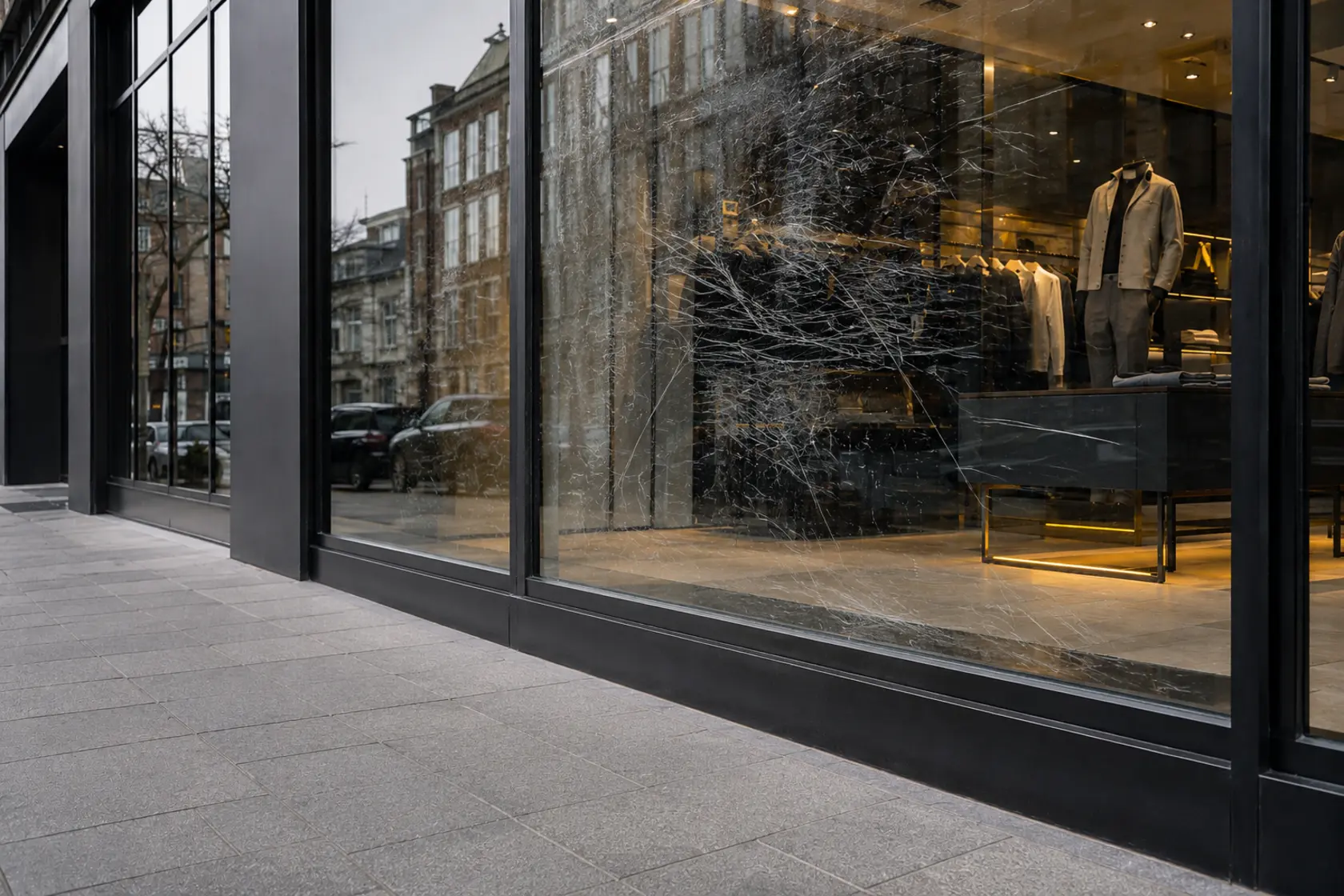
Typical damage
Illustrative example of scratched and vandalised shopfront glass.
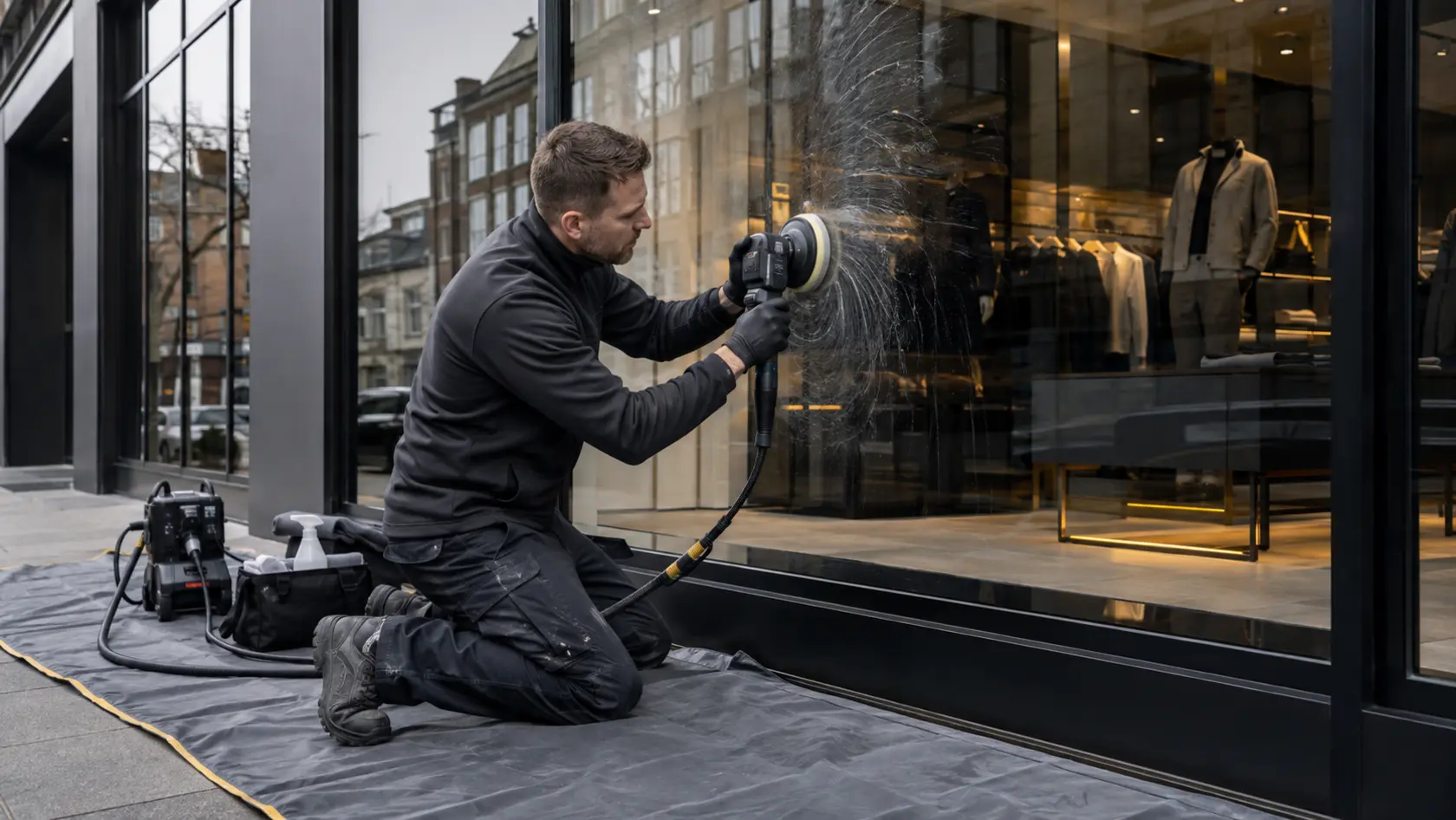
Specialist polishing
Illustrative example of progressive glass polishing on site. These two images are separate illustrative examples, not a before-and-after pair, and neither shows completed Surface Magic Repairs work.
A large shopfront pane usually means survey, lead time, access equipment, a glazing team and a closed or screened frontage. In many suitable cases polishing removes the need for all of that: the existing glass stays in place, the frontage keeps trading and there is no pane sent to waste.
Suitable polishing work can often be completed within a matter of hours and at a fraction of the cost of replacement, subject to inspection. We will always confirm what is realistic for your glass before any work is booked.
Our process
We inspect the pane, gauge the depth and type of damage and confirm whether polishing is suitable — or whether replacement advice is the honest answer.
Frames, seals, floors, fixtures and surrounding surfaces are masked and protected, and the working area is made safe for staff and the public.
The glass is worked through progressive stages with controlled abrasives and polishing compounds to reduce damage while keeping optical distortion to a minimum.
The finished pane is cleaned and inspected in daylight and reflected light with you, and the area is handed back ready for use.
Honest advice
Glass polishing is not suitable in every case, and we would rather tell you that than take on work that will disappoint. Every pane must be assessed first.
Explore the rest of our surface repair services or request a quotation.
Shopfronts, curtain walling, balustrades, partitions, splashbacks, mirrors and hotel and office glazing are the usual candidates. The damage is typically scratching from cleaning grit, scaffold and ladder contact, vandalism, or abrasive contamination during construction.
Coated, laminated, toughened and filmed glass all affect suitability. A surface coating or applied film cannot be polished through without changing the panel, so the type of glass is established before any work is agreed.
Each pane is assessed individually, in daylight and in reflected light, because a scratch that is hard to see from one angle can dominate the panel from another. Depth is the deciding factor: damage that a fingernail catches in is often too deep to treat without noticeable distortion.
Polishing is progressive and controlled, working the affected area and blending it into the surrounding surface so the panel reads evenly. Panes are cleaned and inspected with you before the area is handed back.
Polishing is attractive on large or awkward panes, where replacement means lead times, access equipment, road or shopfront disruption and the waste of an otherwise sound unit.
Replacement is the right answer for cracked glass, failed sealed units, deep damage that cannot be treated without distortion, and coated or filmed panels where polishing would remove the performance layer. We will tell you before starting, not after.
Before you enquire
Glass quotations depend on the pane, the depth of damage and how the glass will be reached.
Also known as
Glass polishing covers scratched glass and staining on glass: trolley and key scratches on a shopfront, scuffing on balustrades and partitions, and limescale marking or etching on shower screens.
Depth is what decides the outcome. Fine scratches and surface staining usually polish out; anything you can feel with a fingernail, damage close to an edge or a toughened panel is assessed first, because over-polishing glass is worse than leaving it.
FAQs
No. In many suitable cases scratches can be significantly reduced or removed, but deep damage, cracks and certain coatings may not be suitable. Every pane is assessed before we recommend polishing.
Replacing large commercial panes can mean lead times, access equipment, disruption and waste. Suitable polishing work can often be completed within a matter of hours and at a fraction of the cost of replacement, subject to inspection.
Polishing is carried out progressively and carefully to keep optical distortion to a minimum. Where the damage is too deep to treat without visible distortion, we will tell you before starting.
These can often be treated, but coatings, films and safety or structural considerations affect suitability. We assess the glass first and will advise on specialist replacement where appropriate.
We understand retail and hospitality trading patterns and will discuss timing with you when quoting so the work suits the site.
Send photographs of the glass and the damage, ideally with the pane size and location, and we will advise on suitability and next steps.
As a rough guide, if a fingernail catches firmly in the scratch it is likely too deep to remove without visible distortion. We confirm that on assessment and would rather decline than deliver a panel that looks worse.
It depends on the construction. Backed and coated products often cannot be treated on the finished face without affecting the coating, so we assess the specific item from photographs first.
Coverage
We are based in Bolton and work across Greater Manchester and the North West, with wider coverage available for commercial work.
Helpful next steps
Surface Magic Repairs
Send photographs of the scratched glass and we will advise on suitability, timing and next steps.
Accreditations & Compliance
Supporting documentation and current scheme details are available on request for commercial clients and main contractors.
View accreditations & compliance