Table of Contents
- What Determines the Cost of Bath Resurfacing?
- Bath Chip Repair Cost: What Affects the Price
- The Bath Resurfacing Process: Step by Step
- Can You Repair a Cracked Bath?
- When Replacement Makes More Sense Than Repair
- How to Get an Accurate Quote for Bath Resurfacing
- Frequently Asked Questions
Last Updated: September 13, 2026
What Determines the Cost of Bath Resurfacing?
The cost to resurface a bath depends on the bath material, the extent and type of damage, access to the bath, and the finish required. There is no single figure that applies to every job, which is why a photograph-based assessment matters more than any online estimate. Surface Magic Repairs does not provide specific pricing online; instead, they assess each bath individually before quoting.
If you are searching for how much to resurface a bath, the honest answer is that pricing is quoted per job. Surface Magic Repairs, a Bolton-based specialist in cosmetic hard-surface repair, assesses each bath individually before quoting. Two baths of identical size can need very different work depending on what has happened to them.
The repair-versus-replacement decision usually comes down to condition. A bath with sound structure and cosmetic damage is normally a strong candidate for resurfacing. A bath with structural movement, deep flexing or extensive cracking may not be.
Type and Condition of the Bath
Material drives both the method and the effort involved. Acrylic baths are common in modern homes and respond well to chip and scratch repair, but they flex, and flexing can reopen repairs if the cause is not addressed. Steel and cast iron baths hold a finish well but are heavier to work around. Stone resin and solid-surface baths can usually be refinished, though colour matching takes more care.
Age matters too. A bath that has already been resurfaced once may need different preparation, and a previous poor repair can add time (the NHS).
Extent of Damage and Access
A single chip near the waste is a different job from a bath covered in scratches, burn marks or a long crack running from the overflow. Access affects cost as well: a bath tight against three tiled walls is slower to work on than one with space around it.
- Number of separate damaged areas
- Depth of chips or cracks, and whether the surface beneath is exposed
- Whether the bath is boxed in or has a removable panel
- Colour matching difficulty, especially on patterned or coloured baths
- Whether an anti-slip finish is also required
Bath Chip Repair Cost: What Affects the Price
Bath chip repair cost is influenced by how many chips there are, where they sit, and how well the colour can be matched. A single small chip is the simplest category of work. Multiple chips, chips on a curved or textured area, or damage on a coloured bath all take longer.
The material underneath matters. If a chip has exposed the bath's substrate, the area usually needs filling and rebuilding before any finishing coat is applied, rather than a straightforward cosmetic touch-up (British Standards Institution). That rebuild stage is what separates a durable repair from one that fails within weeks.
Colour matching is the other variable. White baths are the most straightforward. Off-white, cream, grey, almond and coloured baths require the technician to mix and test a finish that blends under both natural and artificial light.
| Factor | Effect on Cost | Why It Matters |
|---|---|---|
| Number of chips or scratches | Higher with more areas | Each area needs separate preparation and finishing |
| Depth of damage | Higher if substrate is exposed | Filling and rebuilding add time |
| Bath colour | Higher for non-white baths | Colour mixing and testing take longer |
| Access around the bath | Higher if boxed in | Slower, more careful working |
| Existing poor repairs | Higher | Previous work may need removing first |
Where a bath has been repaired before and the finish has lifted or discoloured, the old repair often has to be removed before new work starts. That is a common hidden cost in any quotation, and it is worth flagging up front.
The Bath Resurfacing Process: Step by Step
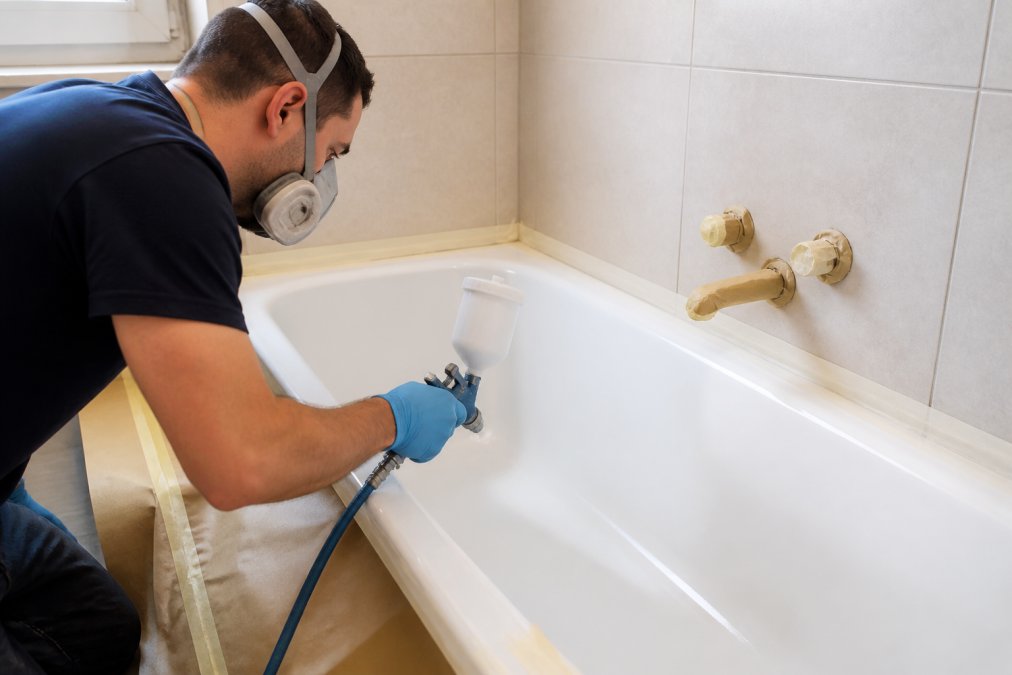
Bath resurfacing is a multi-stage process: assess the bath, prepare and clean the damaged area, fill and rebuild where needed, match the colour and texture, then apply and cure a protective finish. Most repairs are carried out in place, with no removal of the bath.
Preparation and Surface Assessment
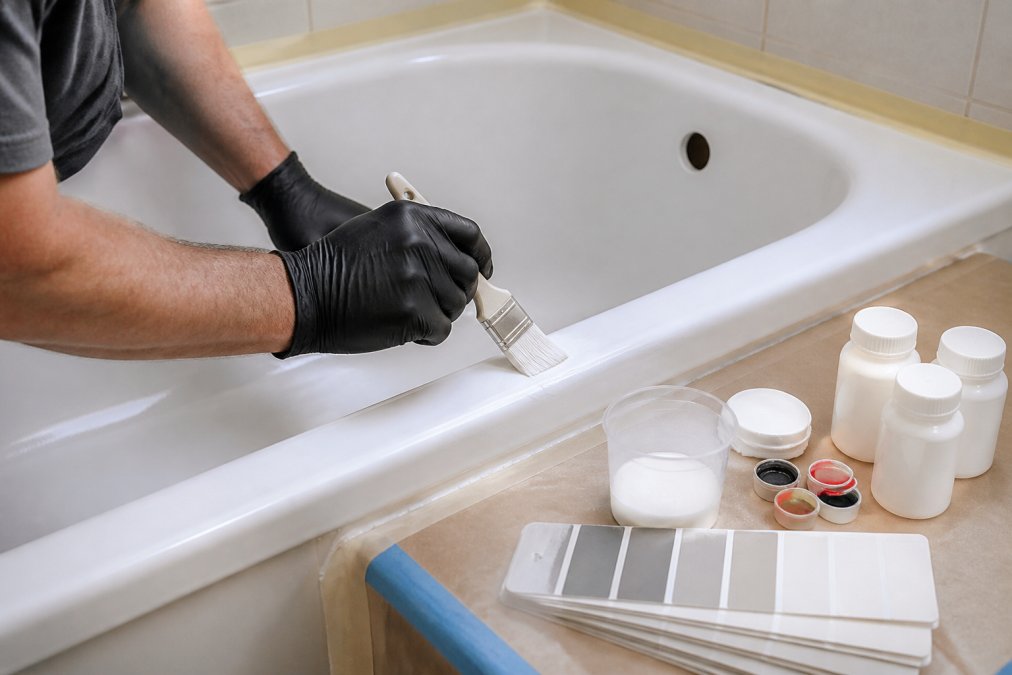
Nothing durable happens without preparation. The technician inspects the bath for movement, checks whether the damage is cosmetic or structural, and confirms the material. Loose material, soap residue, limescale and any failing previous repair are removed. The surrounding area is masked so tiles, sealant and flooring are protected.
If the bath flexes when weight is applied, that needs addressing before finishing, because a finish applied over a moving surface will crack again (Manual handling at work: Good handling technique).
Filling, Colour Matching and Finishing
Damaged areas are filled and rebuilt to the original profile. The technician then reproduces the colour, and where relevant the texture or pattern, so the repair blends with the surrounding surface. A suitable finish coat is applied and left to cure.
Curing time varies with the products used and the conditions in the room. The bath is normally usable again once the finish has cured, and the technician will confirm when. For commercial clients, such as hotels, this is often the deciding factor: a bath repaired in place avoids strip-out, retiling and the knock-on decorating that replacement drags in.
Can You Repair a Cracked Bath?
Many cracked baths can be repaired, but it depends entirely on the crack. A cosmetic crack or hairline crack in the surface coating is usually straightforward. A crack caused by structural movement, or one that runs through the body of the bath, may mean replacement is the more sensible option.
Three questions decide it:
- Is the bath flexing or moving when weight is applied?
- Is the crack stable, or does it open and close?
- Is the crack in a high-stress area, such as under the waste or where you stand?
If the answer to the first two is yes, a repair may not last, and an honest assessment should say so. If the bath is structurally sound and the crack is cosmetic, repair is usually viable and far less disruptive than replacement.
The safest approach is to have the bath assessed before committing. Surface Magic Repairs advises honestly when replacement would be more durable, rather than repairing something that will fail again.
When Replacement Makes More Sense Than Repair
Replacement is the better choice when the bath is structurally compromised, when it flexes significantly underfoot, or when the damage is so extensive that a repair would cost a large share of a new bath and still not last. It is also worth considering if you are already planning a full bathroom refit, since the bath will come out anyway.
There are practical cases for replacement too. If the bath is the wrong size or shape for how the room is used, or if accessibility needs have changed, a repair simply restores what is already there.
For most other situations, the case for repair is strong:
- The bath stays in place, so no strip-out, no retiling and no making good
- The room is usually out of action for a fraction of the time
- Serviceable material is kept out of the waste stream
- The finish is colour matched to blend with the existing surface
For landlords, letting agents and hotel operators, that downtime difference is often the deciding factor. A room returned to service quickly is worth more than a marginal saving on the fixture itself.
How to Get an Accurate Quote for Bath Resurfacing
An accurate quotation comes from clear photographs and a postcode, not from a guess over the phone. Surface Magic Repairs can usually quote from images, which saves a site visit for straightforward jobs.
Send the following:
- A close-up of each damaged area, taken in good light
- A photograph of the whole bath, showing its shape and position
- A wider shot of the surrounding area, so access can be judged
- Your full address and postcode
- The bath material if known, and whether it has been repaired before
Once assessed, you will be told whether a repair is suitable and given a quotation. If replacement would be the more durable option, that will be said plainly.
Bath resurfacing is rarely the right answer for every bath, and any company that tells you otherwise is not assessing the job properly. The sensible path is a clear assessment: if the bath is structurally sound, repairing it in place usually costs less, takes far less time and avoids the mess of removal. If it is not, you should be told so.
Surface Magic Repairs repairs baths, shower trays, sinks, worktops, tiles, doors and other suitable surfaces in place, with colour and finish matched to the surrounding surface. The team works with homeowners, landlords, letting agents, housing providers, hotels and contractors, and has repaired more than 46,000 surfaces in the last year. Get started with Surface Magic Repairs and find out whether your bath can be repaired rather than replaced.
Frequently Asked Questions
Is it worth resurfacing an old bath?
Resurfacing is often worth it when the bath is structurally sound but the surface is worn, chipped or discoloured. It costs less than a full replacement and avoids the disruption of removing tiles and plumbing. The result is a restored, usable bath. However, if the bath is flexing, has deep structural cracks or is badly damaged, replacement may be more durable. Surface Magic Repairs will assess honestly and advise if replacement is the better option.
How long does a resurfaced bath last?
A professionally resurfaced bath can last for many years if it is looked after properly. Longevity depends on the quality of the original surface, the preparation and the materials used, and how the bath is cleaned and used. Avoiding abrasive cleaners and harsh chemicals helps. Surface Magic Repairs uses specialist coatings designed for bathroom environments, but no repair is indestructible. With sensible care, a resurfaced bath remains a practical alternative to replacement.
Can you repair a cracked bath, or does it need replacing?
Many cracked baths can be repaired, but it depends on the crack's location, depth and cause. Hairline cracks and chips are often suitable for repair using specialist fillers and refinishing. If the crack goes through the bath's structure or the bath flexes, replacement may be safer. A technician can assess by looking at photographs or visiting. Surface Magic Repairs repairs cracked baths where suitable and will say so honestly if a repair is not advisable.
How do I get a quote for bath chip repair cost?
To get an accurate quote for bath chip repair cost, send clear photographs of the damage, the whole bath and the surrounding area to Surface Magic Repairs. Include your full address and postcode. The team will assess whether a repair is suitable and provide a quotation. Pricing depends on the extent of damage, access, finish and number of repairs, so photos help avoid guesswork. Call 0800 085 7773 or visit surfacemagicrepairs.co.uk.