Quick Summary
To protect high traffic walls from scuffs, fit wall guards at the height where knocks happen, such as crash rails for trolley contact and corner guards for outside corners. Match the guard material to how busy the area is, and choose a washable, scrub-resistant paint finish.
- Walk the property at normal speed and note where contact happens most.
- Fit crash rails at trolley or wheelchair height along long corridors.
- Protect outside corners with corner guards, as they chip most easily.
- Match guard material to traffic level: foam for light, rubber for medium, steel or hard plastic for heavy.
- Use a cable detector before drilling into walls to avoid hitting cables and pipes.
Table of Contents
- Why High-Traffic Walls Scuff and Who Feels It Most
- How to Assess Which Walls Need Protection
- Wall Guards for Scuff Protection: Choosing the Right Type
- Wall Protection for High-Traffic Areas: Matching Materials to Traffic Levels
- Choosing the Best Paint Finish for Hallways
- Step-by-Step: Fitting Wall Protection Yourself
- How to Clean Scuff Marks Off Walls Without Damaging the Finish
- Booking a Professional Assessment for Damaged Surfaces
- Frequently Asked Questions
Why High-Traffic Walls Scuff and Who Feels It Most
Scuffs on walls usually come from everyday contact: trolleys, bags, shoes, pushchairs, cleaning equipment and furniture knocking the paint or plaster, which is why it pays to protect high traffic walls early. Corridors, hallways, stairwells and the walls beside doors take the most of it. Over time the marks build up, the finish wears thin and the wall looks tired long before the structure needs attention.
Scuffs can also be a nuisance in their own right. Repainting a whole corridor takes time, and a fresh coat can look different where it meets the old finish. Protecting the wall early can help avoid repeated repainting.
Several groups feel this problem most:
- Landlords and letting agents, who need walls to survive between tenancies without a full redecoration
- Facilities managers in hotels, offices and care settings, where corridors see constant use
- Homeowners with children, pets or heavy hallway traffic
- Property managers responsible for shared areas in blocks of flats
Knowing who uses the space and what passes through it is the first step, and it tells you which walls need protection first. The rest of this guide shows how to work out which walls need protection and which type of protection suits them.
How to Assess Which Walls Need Protection
Start by walking the property at normal use speed. Note where you naturally slow down, turn or stop. Those spots are where contact happens.
Look for these warning signs:
- Paint that is worn or polished near door handles and corners
- Grey or black marks at shoulder or trolley height
- Chipped plaster or plasterboard edges on outside corners
- Walls beside doors, lift lobbies and the bottom of stairs
Then ask a few practical questions:
- What passes this wall each day? Bags, carts, bins or furniture?
- How high does the damage sit? Waist height suggests trolleys, while higher marks often come from bags or elbows.
- Is the wall an outside corner? Corners take the hardest knocks.
- How often is the wall repainted, and how quickly does it mark again?
Write down the top five to ten spots. This list becomes your priority plan, and it helps you decide how much protection each area needs before you buy anything.
Wall Guards for Scuff Protection: Choosing the Right Type
Wall guards are the most common answer to scuffing. They sit on the wall at the height where damage happens and take the impact instead of the paint. Choosing the right type depends on where the knocks land, how much traffic you expect and what the wall is made of.
6 Easy Ways to Protect Your Walls from Scratches and Scuff Marks
How to make my house
Here are the main options and what each is actually for:
- Crash rails and bump rails run horizontally along a wall at trolley or wheelchair height. They suit long corridors where contact is consistent and predictable. Rails are positioned at the height where contact happens, which depends on what passes the wall.
- Corner guards protect outside corners where walls meet. They wrap the edge rather than sitting flat against one face, so they absorb knocks from any direction.
- Protection panels and sheets cover larger areas where damage spreads across the wall rather than sitting in a single line. They suit reception areas, lift lobbies and long corridors with mixed traffic.
- Protection strips are thin, flat strips for narrow runs and light use. They are the least obtrusive option and the easiest to fit, but they offer the least impact absorption.
Look at the material too. Rubber absorbs knocks and suits busy areas. Foam is lighter and gentler for homes. Steel and hard plastic give strong protection where heavy wheeled traffic is common. Each has a trade-off: rubber is quiet and forgiving but can be bulky; steel is tough but unforgiving if someone walks into it; foam is discreet but wears faster in heavy use.
Matching the fixing to the wall
The fixing matters as much as the guard. Self-adhesive guards suit smooth, sound, painted or plastered walls and are the quickest to fit. They will not hold on dusty, damp, flaking or textured surfaces, and they can pull paint away when removed. Mechanical fixings, screws and wall plugs, suit heavier guards and walls that can take a fixing, such as masonry or timber stud with a suitable anchor. On plasterboard, use the correct hollow-wall fixings and check where the studs are before you drill.
Watch out: drilling into walls can hit cables and pipes. Use a cable detector before you drill, and if you are unsure, ask a qualified electrician or plumber to check.
Corner guards and exposed edges
Outside corners are the weak point of most walls. A small knock to a corner can chip plaster and expose the edge, which then keeps getting damaged. Corner guards fix this by wrapping the edge. Fit them to any corner that sees regular contact, especially near doors and at the foot of stairs. A corner guard is often a quick upgrade worth considering for areas that see regular contact.
Protection strips, panels and sheets
Strips and panels suit flat walls that take broad, light contact. Strips work well along skirting height in hallways. Panels cover more ground and suit reception areas or long corridors where contact spreads across the wall. For a clean look, choose a colour that matches the wall or sits within the same tone range. Many guards come in neutral finishes that blend in, and some can be painted to match.
If you are weighing up guards against simply repainting more often, the right balance depends on how quickly the wall marks again after each repaint.
Wall Protection for High-Traffic Areas: Matching Materials to Traffic Levels
Not every wall needs the same protection. Matching the material to how busy the area is saves money and avoids overspending on a corridor that barely sees use. The table below is a starting point, but read the notes underneath it, the material choice matters as much as the traffic level.
| Traffic level | Typical use | Suggested protection |
|---|---|---|
| Light | Bedrooms, spare rooms | Foam corner guards or thin strips |
| Medium | Family hallways, living rooms | Rubber corner guards and low rails |
| Heavy | Commercial corridors, stairwells | Steel or hard plastic rails and panels |
| Very heavy | Loading areas, trolley routes | Heavy-duty rails with impact-resistant panels |
Why each material suits its level
Foam is light, quiet and discreet. It absorbs gentle knocks and suits homes where the main risk is bags, pushchairs and children rather than trolleys. It marks and compresses over time, so it is not the right choice for a corridor that sees constant wheeled traffic.
Rubber is the workhorse of medium-traffic areas. It absorbs impact, is quiet, and stands up to repeated contact without cracking. It is bulkier than foam and can collect dust on textured surfaces, so it needs wiping down as part of normal cleaning.
Steel and hard plastic are for heavy and very heavy traffic. They resist trolley strikes, do not compress, and last for years. Steel is the toughest but is unforgiving if someone walks into it, and it can rust at cut edges or fixings if the coating is damaged. Hard plastic is lighter and warmer to the touch but can crack under a direct heavy impact.
Cleanability and appearance
Guards are cleaned far more often than walls, so think about how they will look after a year of wiping. Smooth rubber and plastic wipe clean easily. Textured or foam surfaces trap dust and scuff marks. Neutral colours hide marks better than white or very dark finishes. If appearance matters, a hotel lobby, a reception area, choose a guard that matches the wall tone rather than one that stands out.
When traffic is mixed
Most real spaces are not one traffic level throughout. A corridor may be heavy at trolley height and light above it. A stairwell may be heavy at the bottom and light at the top. Protect the busiest band first, then add protection where you see new marks appear. This staged approach avoids over-specifying the whole wall and keeps the cost sensible.
Removal and renter-friendly options
If you rent, or if you may change the wall later, self-adhesive guards are the easier choice, but they can lift paint on removal. Warm the adhesive gently and peel slowly to reduce the risk. Mechanical fixings leave holes that need filling. For rented homes, choose removable adhesive strips or free-standing corner protectors where the tenancy agreement allows, and check before fixing anything permanent.
If you are unsure, start with the busiest areas and add protection where you see new marks. Wheeled traffic such as trolleys, carts and pushchairs needs the strongest protection, so position rails at the height these items actually hit.
Choosing the Best Paint Finish for Hallways
Protection guards do the heavy work, but the paint finish matters too. A good finish makes scuffs easier to wipe off and shows less damage between repaints.
Matt finishes hide small imperfections well but can mark more easily and are harder to clean. Eggshell and satin finishes sit in the middle. They wipe clean without much shine, and they are a common choice for hallways.
Choose a durable, washable paint for busy areas. Check the product label for scrub resistance and wipe-clean performance. Lighter, mid-tone colours tend to hide scuffs better than very pale whites, which show every mark.
For the best result, pair a durable finish with guards at the right height. The guards take the knocks, and the paint stays fresher for longer.
Step-by-Step: Fitting Wall Protection Yourself
Fitting guards can be a manageable DIY job, but it takes care. Follow these steps for a straight, secure result.
- Measure the run. Measure the length of wall you want to protect and mark the height on the wall with a pencil. Use a spirit level to keep the line straight.
- Clean the surface. Wipe the wall with a damp cloth and let it dry. Dust and grease stop adhesive from holding.
- Check the fixings. Self-adhesive guards need a clean, dry surface. Mechanical guards need screws and wall plugs suited to the wall type.
- Fit the corner guards first. Start with the corners, then work along the run.
- Press and hold. For adhesive guards, press firmly along the full length and hold for the time the label recommends.
- Check the line. Step back and check the guard is level and straight before you finish.
Watch out: Drilling into walls can hit cables and pipes. Use a cable detector before you drill, and if you are unsure, ask a qualified electrician or plumber to check.
How to Clean Scuff Marks Off Walls Without Damaging the Finish
Most scuffs wipe off, but the wrong method can dull or lift the paint. If a door or frame has already been damaged, you can learn how to fix impact damage on doors without replacing them. Work gently and test first.
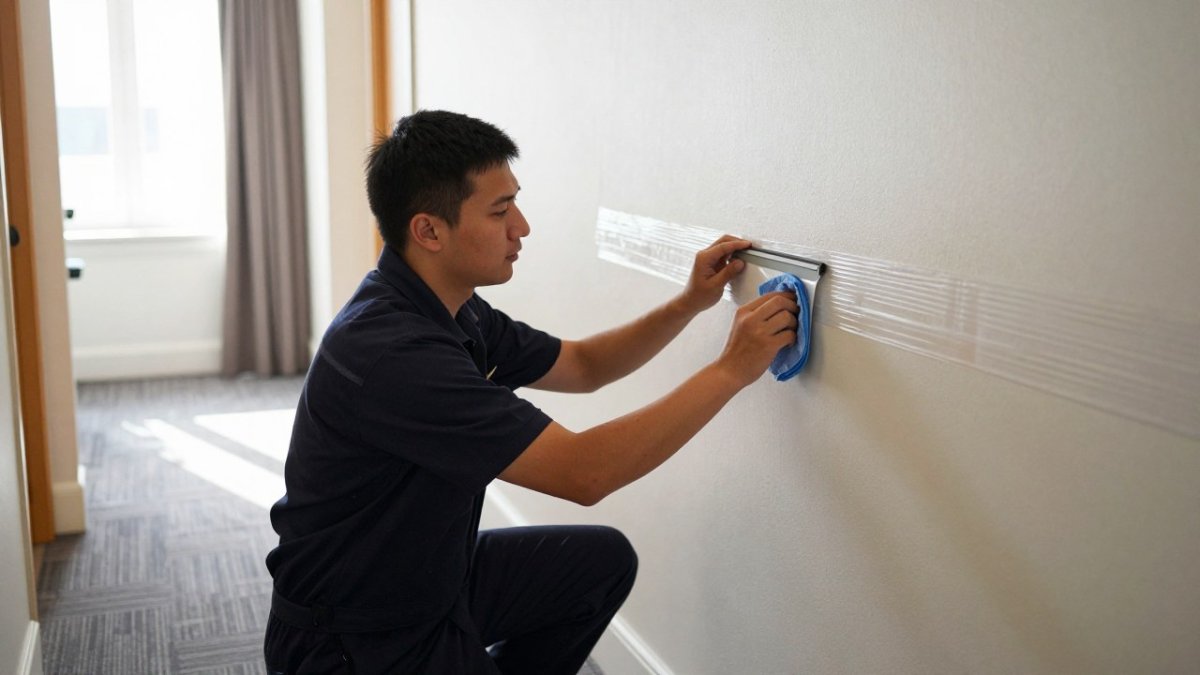
Start with a damp cloth and a little warm water. Wipe the mark in short, light strokes. For stubborn marks, add a small amount of mild washing-up liquid to the water. Rinse the cloth often and wipe the area dry.
Avoid abrasive scourers and strong solvents. These can strip the finish and leave a shiny or patchy mark. If a mark does not shift, test a cleaner on a hidden area first and wait for it to dry before you judge the result.
If the paint has already been removed or the plaster is damaged, cleaning will not fix it. In that case, the wall needs repair rather than cleaning.
Booking a Professional Assessment for Damaged Surfaces
Some damage goes beyond what a guard or a clean can fix. Chipped baths, cracked shower trays, scratched worktops, burnt laminate and damaged uPVC frames can often look worse than they are, and replacement can be disruptive.
Surface Magic Repairs repairs damaged surfaces in place, colour matched and refinished to blend with the surrounding area. Repairs are normally completed on site, which avoids the disruption of a full replacement. Whether a repair is suitable depends on the material, the damage and where it is. An honest assessment will tell you if replacement would be the better choice.
To get a quotation, send clear photographs of the damage, the complete item and the surrounding area, along with your full address and postcode. You can also call 0800 085 7773 or visit surfacemagicrepairs.co.uk. Surface Magic Repairs will assess whether a repair is suitable and provide a quotation.

Frequently Asked Questions
How do you stop walls getting scuffed?
Fit wall guards, crash rails or corner protectors at the heights where trolleys, pushchairs, furniture and wheelchairs make contact, usually around 300mm to 600mm from the floor. Choose a durable finish such as a washable or scrubbable emulsion in a satin or eggshell sheen for the rest of the wall, as these resist marks better than flat matt paint. Add protection to doorways and corners first, since these take the most knocks. Regular cleaning also helps, because grit left on a surface can increase abrasion.
Are wall guards effective at preventing scuffs?
Yes, when they are fitted at the right height and sized for the traffic they receive. Rubber and foam guards absorb impacts from trolleys and carts, while steel or heavy-duty plastic rails suit busier commercial corridors. Guards cannot stop every mark, particularly from low-level furniture or shoes, so they work best alongside a washable paint finish and a maintenance routine. Check the fixings and replace any guard that has become loose or damaged.
Can scuff marks be removed from painted walls?
Most light scuffs can be removed with a damp microfibre cloth and a mild detergent solution, wiped gently in one direction. Avoid abrasive pads and strong solvents, as these can dull or strip the paint. If a mark has worn through the finish or left a dent, the area may need touching up or a professional repair so the colour and sheen blend with the surrounding surface. Surface Magic Repairs can advise whether a repair is suitable and provide a quotation based on photographs.