Table of Contents
- Bath repair vs replacement: quick comparison
- Signs your bath needs replacing
- Professional bath resurfacing cost and what affects pricing
- Full bath replacement: costs and timeline
- Bath enamel repair kit vs professional service
- Factors that determine repair versus replacement
- Making your decision: repair or replace?
- Frequently Asked Questions
Last Updated: September 3, 2026
Bath repair vs replacement: quick comparison
When your bath develops chips, cracks, or discolouration, you face a fundamental choice: repair it or replace it entirely. The decision hinges on three factors: the extent of damage, your budget, and how long you need the fixture to last. Understanding the cost of bath repair vs replacement 2026 means weighing not just the upfront expense, but also disruption, timeline, and longevity.
A professional repair typically costs a fraction of full replacement and takes hours rather than days. Replacement offers a brand-new fixture with warranty coverage, but involves plumbing work, waste removal, and potential knock-on costs for tiling and decoration. For most homeowners and property managers, the choice isn't obvious until you understand what each option actually involves.
Surface Magic Repairs has handled thousands of damaged baths across residential and commercial properties, and the pattern is clear: most damage that looks terminal can be repaired. But not all repairs make sense. Some baths are genuinely beyond economical repair, and replacement becomes the only practical option.
Below, we'll break down the real costs, timelines, and decision criteria for both approaches. You'll see exactly when repair makes financial sense and when replacement is the better investment.
| Repair Type | Typical Timeline | Best For | Key Advantage |
|---|---|---|---|
| Professional resurfacing | 1-2 days | Cosmetic damage, chips, scratches | Minimal disruption, low cost |
| DIY enamel kit | 2-3 days | Budget-conscious homeowners | Lowest upfront cost |
| Full replacement | 3-7 days | Structural damage, severe wear | Brand new fixture with warranty |
Signs your bath needs replacing
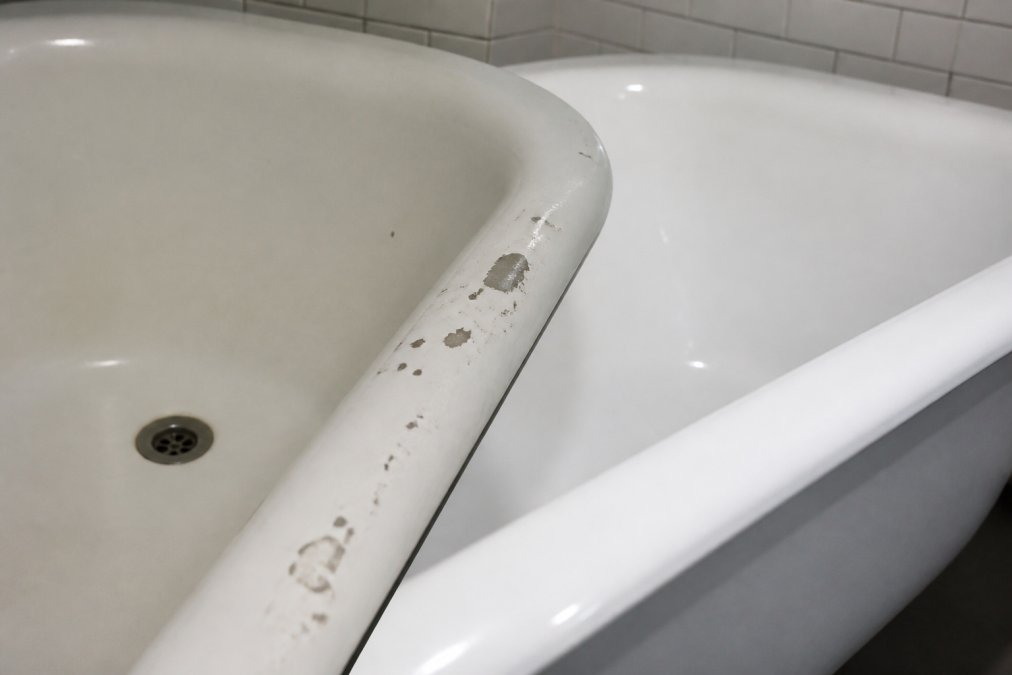
Not every damaged bath should be replaced. The decision depends on whether the damage is cosmetic or structural. Cosmetic damage, chips, scratches, discolouration, minor cracks in the surface, can be repaired. Structural damage requires replacement.
Look for these signs that repair won't work: deep cracks that penetrate the bath material itself (not just the surface coating), visible rust or corrosion spreading beneath the surface, water leaking from the base or sides, or damage to the plumbing fixtures attached to the bath. If water is seeping into the structure, repair becomes a temporary fix at best. Moisture trapped inside will eventually cause mould, deterioration, and more serious problems.
Age also matters. A bath over 30 years old with multiple issues across its surface may be approaching the end of its useful life (the NIH). Repairing one area won't prevent problems in another. A newer bath with isolated damage is almost always worth repairing.
One common misconception is that visible cracks always mean replacement is needed. Many surface cracks in enamel or acrylic can be filled and refinished professionally, restoring both appearance and function. The critical question is whether the crack goes through the structural material. A professional assessment can tell you definitively.
Professional bath resurfacing cost and what affects pricing
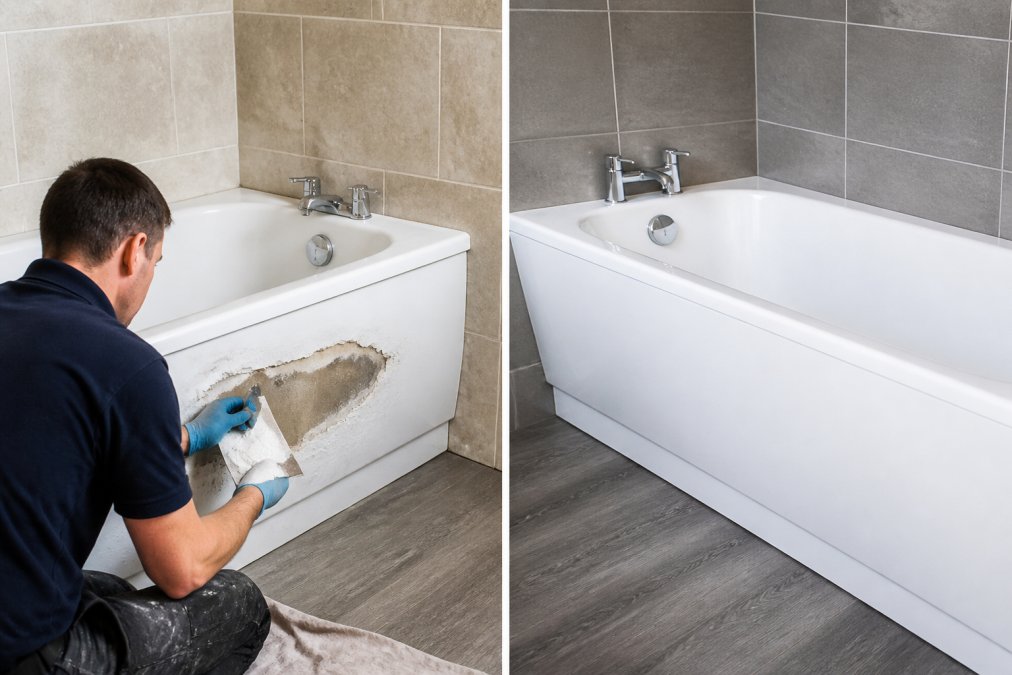
Professional bath resurfacing, also called refinishing or re-enamelling, involves cleaning, filling damage, colour-matching, and applying a protective coating. The process takes 1-2 days depending on the extent of damage and the size of the bath (the CDC).
Several factors affect the cost of professional resurfacing. The type of material matters: ceramic, porcelain, acrylic, and steel baths all require different techniques and products. The amount of damage makes a significant difference too. A single chip costs less to repair than extensive crazing or multiple deep cracks across the surface. Colour-matching complexity also plays a role, older baths with faded or unusual finishes may require more skilled work to blend repairs invisibly.
Location within the property can affect pricing as well. A bathroom that's easily accessible costs less to work on than one requiring specialist access or protective measures. Commercial properties like hotels may incur additional costs if work must happen outside standard hours to minimise guest disruption.
Most professional resurfacing services quote on a per-job basis after assessing the damage. The cost of professional bath resurfacing typically reflects the labour, specialist materials, and expertise required to achieve a durable, colour-matched finish. Surface Magic Repairs provides free assessments and detailed quotes based on the specific damage and your requirements, so you know exactly what you're paying for before work begins.
The durability of professional resurfacing is generally good. A properly applied professional finish can last for many years with normal use.
Full bath replacement: costs and timeline
Replacing a bath involves removing the old fixture, disposing of waste, installing new plumbing connections, fitting the new bath, and often re-tiling or decorating the surrounding area. The entire process typically takes 3-7 days depending on the complexity of plumbing work and whether additional issues are discovered during removal (the American Dental Association).
The cost of full bath replacement includes the new fixture itself, labour for removal and installation, plumbing work, waste disposal, and any remedial work to walls or flooring. If the old bath was sealed with silicone or grout, removal can be time-consuming. If the surrounding area needs re-tiling or redecorating, costs multiply quickly.
The timeline for replacement extends beyond the physical work. You'll need to source and purchase a suitable replacement bath, arrange delivery, coordinate with plumbers and potentially other trades, and manage the disruption to your bathroom during the work. For rental properties or commercial spaces, this downtime translates directly into lost revenue or guest dissatisfaction.
The primary advantage of replacement is that you get a brand-new fixture with full warranty coverage. Modern baths offer improved insulation, better drainage, and updated styling. If your existing bath is genuinely at the end of its life or you want to upgrade the aesthetic of your bathroom, replacement makes sense. But if the bath is structurally sound and the damage is only cosmetic, replacement is an expensive solution to a problem that repair solves at a fraction of the cost.
Bath enamel repair kit vs professional service
DIY enamel repair kits offer an appealing low-cost entry point. These products are widely available at hardware retailers and consist of two-part epoxy coatings designed to adhere to existing bath surfaces. The application is straightforward: prepare the surface, mix the epoxy, apply it with a brush or roller, and let it cure.
The appeal is obvious: a DIY kit costs significantly less than hiring a professional. However, the results depend entirely on your application skill. Surface preparation is critical and often rushed. If the existing surface isn't properly cleaned and abraded, the new coating won't adhere properly and will chip or peel within months. Ventilation during application is essential; inadequate airflow results in a finish that never fully hardens.
Professional bath resurfacing uses the same fundamental approach but with superior materials, controlled conditions, and skilled application. Professionals spend significant time on surface preparation, ensuring every trace of old coating, soap residue, and contaminants is removed. They apply coatings in controlled humidity and temperature, allowing proper curing. They colour-match precisely using specialist tinting techniques. The result is a finish that looks intentional and lasts substantially longer.
The honest assessment: a DIY kit might work if you're repairing a single small chip on a bath you don't use frequently. For anything more extensive, or for properties where appearance matters (rental properties, commercial spaces, your own home), professional resurfacing delivers better value. You pay more upfront but avoid the frustration and expense of redoing a failed DIY attempt.
Factors that determine repair versus replacement
The decision between repair and replacement depends on five key factors. First, the type and extent of damage. Cosmetic damage, chips, scratches, discolouration, surface cracks, always favours repair. Structural damage, rust, or leaks favour replacement.
Second, the age of the bath. A relatively new bath with isolated damage is almost always worth repairing. A bath over 25 years old with multiple problem areas may be approaching the end of its economic life, making replacement more sensible despite higher upfront cost.
Third, your budget and timeline. If you need the bathroom functional within 24-48 hours, repair is your answer. Replacement takes longer and costs more. If you're planning a comprehensive bathroom renovation anyway, replacement makes sense as part of the larger project.
Fourth, the material and finish. Some materials are easier to repair than others. Acrylic baths repair well. Cast-iron baths can be challenging. Older baths with discontinued finishes may be difficult to colour-match perfectly, though professional repair still improves appearance dramatically.
Fifth, the intended use. A bath in a busy hotel or holiday let experiences high traffic and wear. The durability of professional repair matters more in this context. A bath in a low-use guest bedroom or holiday home can be repaired knowing it won't face constant heavy use.
For rental properties specifically, the calculation shifts. A repair extends the life of an asset without capital expenditure, maintaining cash flow. For owner-occupied homes, the decision is more personal: do you want to invest in repair, or is this the right time to upgrade to a new fixture?
Making your decision: repair or replace?
Start with a professional assessment. This is the single most important step and it's free. A qualified surveyor can tell you definitively whether damage is cosmetic or structural, whether repair is viable, and what you can realistically expect from either option.
If repair is viable, compare the cost of professional resurfacing against the cost of replacement including all associated work. In most cases, repair is a significantly more cost-effective option than replacement.
Consider your timeline. If the bathroom needs to be functional quickly, between tenancies, before guest arrivals, during a commercial operation, repair wins decisively. Replacement involves sourcing, delivery, plumbing coordination, and potential remedial work. Repair can often be completed in a single day.
Think about the long-term plan for the property. If you're planning a full bathroom renovation in the next 2-3 years, temporary repair makes sense now. If this bath needs to last another 10+ years, the durability and warranty of replacement may justify the investment.
For most homeowners and property managers, professional repair is the right choice. It's cost-effective, quick, and extends the useful life of a perfectly serviceable fixture. Replacement makes sense when damage is structural, the bath is genuinely at the end of its life, or you're undertaking a comprehensive upgrade anyway.
Surface Magic Repairs provides honest assessments and realistic expectations. We'll tell you whether your bath is worth repairing and what results you can expect. Many baths that look beyond hope can be restored to full function and significantly improved appearance through professional repair. We've completed over 46,000 surface repairs in the last year alone, and the vast majority were restorations that homeowners and property managers thought would require replacement.
=== FAQ ANSWERS (audit these too, same rules) ===
[1] Q: How much does it cost to repair a chip in a bath in 2026? A: Professional bath repair costs depend on the size, location, and material of the damage. Pricing varies based on the extent of preparation required, colour-matching complexity, and your location. For an accurate quote tailored to your specific damage, contact a professional resurfacing specialist who can assess the chip and provide a detailed estimate.
[2] Q: Is it worth repairing an old enamel bath? A: Repairing an old enamel bath is often worthwhile if the structural integrity is sound and damage is cosmetic. Professional resurfacing restores appearance at a fraction of replacement cost and causes minimal disruption. However, if the bath has underlying water damage, persistent leaks, or significant structural issues, replacement may be the more practical long-term solution.
[3] Q: How long does a professional bath repair last? A: A professionally completed bath repair typically lasts several years when properly maintained. Durability depends on the material, finish type, damage severity, and how well the surface is cared for. Professional repairs using specialist techniques and colour-matching generally outlast DIY kits significantly, though results vary based on usage patterns and cleaning methods.
[4] Q: What are the hidden costs of replacing a bath? A: Beyond the new bath and installation labour, replacement costs often include waste removal, plumbing adjustments, resealing, and surrounding tile or wall repairs. If old fixtures reveal water damage or structural issues, remedial work may be necessary. Bathroom decoration, flooring adjustments, and temporary accommodation during works also add to the total expense.
Frequently Asked Questions
How much does it cost to repair a chip in a bath in 2026?
Professional bath repair costs depend on the size, location, and material of the damage. Pricing varies based on the extent of preparation required, colour-matching complexity, and your location. For an accurate quote tailored to your specific damage, contact a professional resurfacing specialist who can assess the chip and provide a detailed estimate.
Is it worth repairing an old enamel bath?
Repairing an old enamel bath is often worthwhile if the structural integrity is sound and damage is cosmetic. Professional resurfacing restores appearance at a fraction of replacement cost and causes minimal disruption. However, if the bath has underlying water damage, persistent leaks, or significant structural issues, replacement may be the more practical long-term solution.
How long does a professional bath repair last?
A professionally completed bath repair typically lasts several years when properly maintained. Durability depends on the material, finish type, damage severity, and how well the surface is cared for. Professional repairs using specialist techniques and colour-matching generally outlast DIY kits significantly, though results vary based on usage patterns and cleaning methods.
What are the hidden costs of replacing a bath?
Beyond the new bath and installation labour, replacement costs often include waste removal, plumbing adjustments, resealing, and surrounding tile or wall repairs. If old fixtures reveal water damage or structural issues, remedial work may be necessary. Bathroom decoration, flooring adjustments, and temporary accommodation during works also add to the total expense.
The right choice depends on your specific situation, but professional assessment removes the guesswork. Get an instant quote from Surface Magic Repairs and discover whether your bath can be restored cost-effectively, or whether replacement is genuinely the better option. We'll give you a clear recommendation based on the damage, the bath material, and your requirements, not on what generates the larger invoice.