Table of Contents
- Yes, Most Chipped Porcelain Tiles Can Be Repaired In Situ
- Repairing Ceramic vs Porcelain Tiles: Key Differences
- How Professionals Fix a Chipped Porcelain Tile
- Porcelain Tile Chip Repair Cost vs Replacement
- When Replacement Is the Better Option
- What to Send for an Accurate Repair Quotation
- Conclusion: A Cost-Effective Alternative to Full Replacement
- Frequently Asked Questions
Last Updated: September 9, 2026
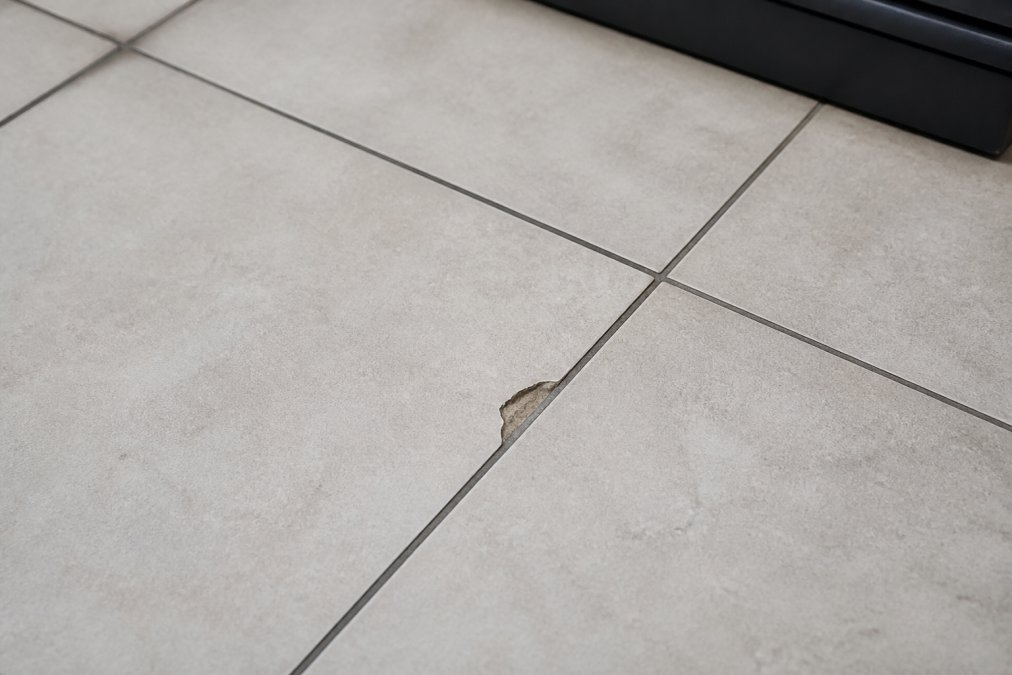
A single chipped tile can ruin the look of an entire kitchen or bathroom. Professional cosmetic repairs can fix most chipped porcelain tiles in situ, restoring the surface without the mess and expense of replacement. Below, we explain exactly how the process works, what it costs compared to replacement, and when a repair might not be the right choice.
The good news is that a chipped porcelain tile is often one of the most straightforward repairs we handle. Because porcelain is dense and non-porous, it holds repair materials well, and a skilled technician can rebuild the chip, blend the colour and apply a finish that resists moisture and daily wear. The key question is not whether the tile can be fixed, but whether the repair will blend convincingly with the surrounding surface. That depends on the tile's colour, pattern and gloss level, which is why an honest assessment matters before any work begins.
Yes, Most Chipped Porcelain Tiles Can Be Repaired In Situ
Porcelain tile chip repair is a well-established cosmetic technique. A professional technician rebuilds the damaged edge or corner using specialist fillers, then colour matches and textures the repair to sit flush with the original surface. The tile stays exactly where it is, which means no removal, no adhesive mess and no risk of damaging neighbouring tiles during extraction.
Most chips, cracks and edge damage on porcelain tiles respond very well to this approach. The repair is suitable for wall tiles in bathrooms and kitchens, floor tiles with light to moderate foot traffic, and decorative borders or feature walls. In practice, the main limitation is the extent of the damage. A small chip or hairline crack is almost always repairable. A tile that has shattered into multiple pieces, or that has lost a large structural section, may be beyond cosmetic repair.
The benefits of repairing rather than replacing go beyond cost. You avoid the need to source a matching tile, which can be difficult or impossible if the original batch is discontinued. You also avoid the risk of damaging the waterproofing layer behind the tiles, which is a real concern when removing and replacing a single wall tile. Keeping the original tile in place preserves the integrity of the whole installation.
Repairing Ceramic vs Porcelain Tiles: Key Differences
Understanding the difference between ceramic and porcelain tiles matters because it affects how the repair is approached and how durable the result will be. Porcelain is fired at a higher temperature than ceramic, making it denser, harder and less porous. Ceramic tiles are generally softer and more absorbent, which can make them easier to chip but also slightly more forgiving during the repair process.
For the technician, the practical differences are significant. A porcelain tile's low porosity means the surface must be properly prepared and primed before any filler is applied, otherwise the repair will not adhere correctly. Ceramic tiles, being more porous, sometimes allow the filler to grip more readily, but they may also require a more flexible filler to cope with slight movement. The finish also differs: porcelain tiles often have a through-body colour or a glazed surface that needs careful matching, while ceramic tiles typically have a simpler glaze.
| Tile Type | Porosity | Chip Resistance | Repair Approach | Typical Result |
|---|---|---|---|---|
| Porcelain | Very low | High | Prime surface, apply dense filler, colour match | Durable, moisture-resistant finish |
| Ceramic | Moderate | Lower | Flexible filler, careful glaze matching | Good finish, may need more care |
The distinction matters most for floor tiles, where durability is critical. A repaired porcelain floor tile will generally withstand everyday foot traffic well, provided the repair is carried out with appropriate materials and sealed correctly. Ceramic floor tiles, being softer, may be more prone to further chipping in high-traffic areas, so the repair location should be considered carefully.
How Professionals Fix a Chipped Porcelain Tile
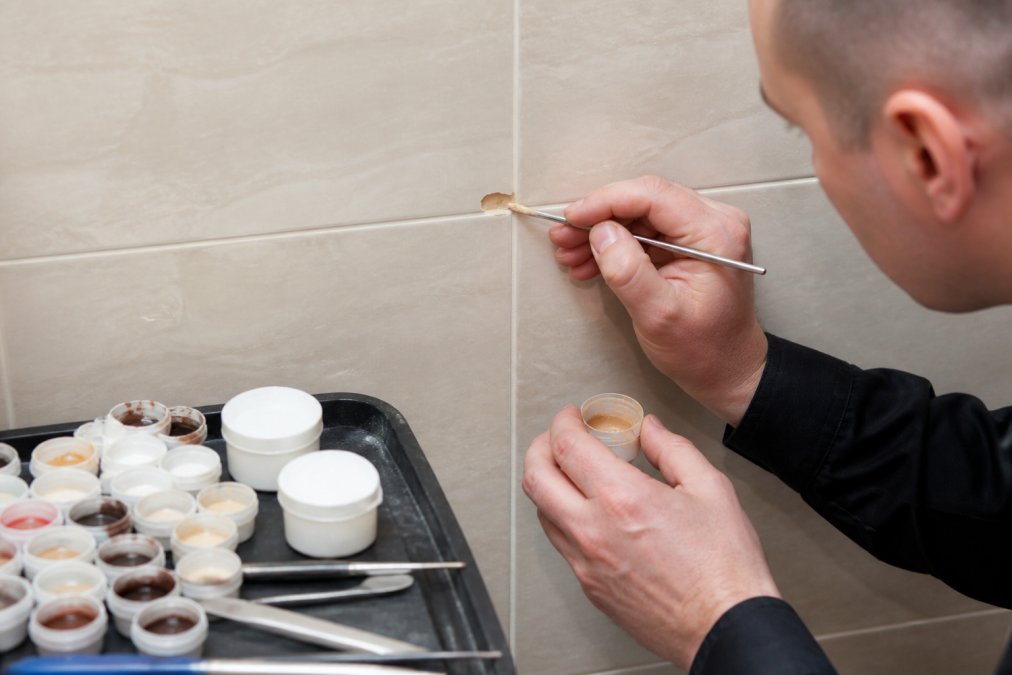
A professional porcelain tile repair is a precise, multi-stage process that typically takes between 30 and 60 minutes per tile, depending on the size of the chip and the complexity of the colour match. The work is completed entirely on site, with no need to remove the tile or disturb the surrounding area. Here is what happens during a typical repair.
Step 1: Assessment and Preparation
The technician first examines the chip, checking its depth, location and whether the tile is structurally sound. The damaged area is then thoroughly cleaned to remove any grease, soap scum or debris that could prevent the filler from bonding. The surrounding surface is masked off to protect it, and the repair area is lightly keyed or primed to give the filler a secure grip.
Preparation is the single most important stage. If the area is not perfectly clean and dry, the repair will not last. A professional will also assess the tile's colour, pattern and finish at this stage, mixing the pigments that will be needed later.
Step 2: Filling and Rebuilding
Once prepared, the technician applies a specialist filler or resin to rebuild the missing section of tile. This is built up in thin layers, allowing each layer to cure before the next is added. This prevents shrinkage and ensures the filler bonds firmly to the porcelain. For deeper chips, the technician may use a backing material first, then finish with a surface-grade filler.
The goal at this stage is to rebuild the chip so that it is slightly proud of the surrounding surface. This allows the technician to sand it back flush, recreating the original contour of the tile edge or corner. Careful attention is paid to the profile of the tile, whether it has a sharp edge, a slight bevel or a rounded corner.
Step 3: Colour Matching and Finishing
The final stage is where the repair becomes invisible. The technician applies colour-matched pigments to the filled area, building up the shade in thin layers to match the surrounding tile exactly. For patterned tiles, this may involve replicating a marble veining or a subtle mottled effect. For glazed tiles, a compatible topcoat is applied to match the gloss level (tcnatile.com).
Once the colour and finish are correct, the repair is allowed to cure fully. The result is a surface that blends with the surrounding tile and is resistant to moisture, cleaning products and everyday wear. The technician will advise on how long to wait before the area can be used or cleaned.
Porcelain Tile Chip Repair Cost vs Replacement
The cost of porcelain tile chip repair depends on several factors. These include the size and depth of the chip, the complexity of the colour match, the number of tiles needing attention, and whether the tile is easily accessible. A single small chip on a plain white wall tile is a quick job, while a large chip on a heavily patterned floor tile requires more skill and time.
Replacement, by contrast, involves several hidden costs beyond the new tile itself. The damaged tile must be removed, which risks damaging neighbouring tiles and the substrate beneath (thisoldhouse.com). The adhesive must be chiselled away, the new tile bedded and levelled, and the grout lines matched. You also need to source a matching tile, which may be impossible if the original batch has been discontinued, and you may need to redecorate the surrounding area if the removal causes damage.
| Factor | Repair In Situ | Full Replacement |
|---|---|---|
| Cost of materials | Minimal (fillers, pigments) | New tile, adhesive, grout |
| Labour time | 30-60 minutes per tile | Several hours plus drying time |
| Disruption | None (tile stays in place) | Dust, noise, possible water isolation |
| Risk to surrounding tiles | Very low | High (damage during removal) |
| Matching the original | Colour matched on site | Often impossible if discontinued |
For landlords, facilities managers and hotel operators, the difference in disruption is often the deciding factor. A repair can be completed during a room turnaround with no downtime, whereas a replacement may take the room out of service while the adhesive cures. For a full picture of how pricing compares for your specific damage, send photographs to Surface Magic Repairs for an honest assessment.
When Replacement Is the Better Option
Cosmetic repair is not always the right answer. If the tile is cracked through its full thickness, with the crack visible from the other side or running across the majority of the tile, the structural integrity may be compromised (naturalstoneinstitute.org). Similarly, if the tile has shattered or if a large section has broken away, a repair may not provide a durable result. In these cases, replacement is the more sensible choice.
Another consideration is the condition of the surrounding tiles. If the damage is part of a wider pattern of wear, or if the grout is failing across the whole wall or floor, repairing a single tile may simply highlight the age of the rest of the installation. A professional will advise honestly if replacement of a larger area would give a better long-term result.
- Tile is cracked through its full thickness
- Damage extends across more than half the tile
- The tile is loose or has lost its bond with the substrate
- Multiple tiles are damaged beyond cosmetic repair
- The surrounding installation is failing or badly worn
Surface Magic Repairs will always give an honest opinion. If a repair is not suitable, or if replacement would be more durable, we will tell you. There is no benefit to either party in carrying out a repair that will not last.
What to Send for an Accurate Repair Quotation
Getting an accurate quotation for chipped porcelain tiles is straightforward. Send clear, well-lit photographs of the damage from a few different angles, along with a photo of the complete tile and the surrounding area. This allows a technician to assess the size of the chip, the tile's colour and pattern, and the context of the damage.
Include details of the surface type if you know it, whether the tile is on a wall or floor, and the approximate age of the installation. Your full address and postcode are also needed so availability can be confirmed. For commercial clients with multiple damaged tiles across different units or properties, mention the scale of the work and any deadlines you are working to, such as a tenant handover or a hotel room reopening.
Send your photographs and details to Surface Magic Repairs for a no-obligation assessment. The team can confirm whether a repair is suitable and provide a quotation, usually without the need for a site visit on straightforward jobs.
Conclusion: A Cost-Effective Alternative to Full Replacement
Chipped porcelain tiles do not have to mean a disruptive and expensive replacement project. Professional cosmetic repairs restore the tile in place, matching the colour and finish so the damage disappears, and they do so at a lower cost and with far less disruption than taking the wall or floor apart.
The decision comes down to the extent of the damage and the condition of the surrounding tiles. For a single chip or crack on an otherwise sound tile, repair is almost always the smarter choice. It keeps the original installation intact, avoids the risk of damaging neighbouring tiles, and can often be completed within the hour.
If you have a chipped porcelain tile, send clear photographs of the damage, the complete tile and the surrounding area, together with your full address and postcode. Surface Magic Repairs can assess whether a repair is suitable and provide a quotation. Call 0800 085 7773 or visit surfacemagicrepairs.co.uk to get started and see why replace when you can repair.
Frequently Asked Questions
How long does a professional porcelain tile chip repair last?
A professionally repaired porcelain tile is designed to be durable and long-lasting. The materials used create a hard, water-resistant finish that bonds to the existing surface. With normal household or commercial use, a properly colour-matched and finished repair should last for many years. The longevity depends on the original damage, the location of the tile, and the quality of the preparation. Surface Magic Repairs uses specialist-grade products and has completed more than 46,000 surface repairs in the last year.
Will the colour match on my repaired porcelain tile be noticeable?
Professional repair technicians are skilled in colour matching. They blend pigments to match the specific shade, pattern, and finish of your existing tile, whether it is gloss, matt, or textured. The repaired area is then refinished to blend with the surrounding surface. While the aim is to make the repair as invisible as possible, the final result depends on the tile's unique pattern and the damage's extent. An honest assessment before work is booked will set realistic expectations.
What information is needed for a porcelain tile repair quote?
To provide an accurate quotation, send clear photographs of the damaged tile, the complete surrounding area, and a close-up of the chip. Include your full address and postcode. This allows a technician to assess the material, the extent of the damage, and the location of the tile. For example, a chip on a floor tile may be assessed differently from one on a wall. With these details, Surface Magic Repairs can advise on suitability and provide a quotation.