Table of Contents
- Why Hotel Bathroom Surfaces Age Faster Than You Expect
- What You'll Need: Building a Surface Maintenance Programme
- Step 1: Audit Every Room and Record Existing Damage
- Step 2: Set Cleaning and Chemical Rules for Housekeeping
- Step 3: Repairing Chips in a Porcelain Bathtub Before They Spread
- Step 4: Commercial Bathroom Surface Maintenance Across a Live Property
- Step 5: Protect Shower Trays, Vanity Tops and Grout Lines
- Common Mistakes That Shorten Surface Life
- Repair or Replace? Deciding Room by Room
- Frequently Asked Questions
Last Updated: October 2, 2026
Why Hotel Bathroom Surfaces Age Faster Than You Expect
Hotel bathrooms take a beating that domestic bathrooms never see. A single guest room might host 300 different people in a year, each one using the bath, shower tray, vanity top and tiles in ways a homeowner never would. Extending the lifespan of hotel bathroom surfaces is not about buying tougher materials. It is about managing the daily wear that destroys them.
At Surface Magic Repairs, we have repaired more than 46,000 surfaces in the last year alone, and hotel bathrooms are one of the most common jobs we attend. The pattern is always the same. A small chip in a porcelain bathtub goes unreported. Housekeeping scrubs it with an abrasive cleaner. Six months later, the chip has spread into a crack and the whole bath needs replacing.
Hotel bathroom surfaces are the finished hard surfaces in a guest bathroom: the bath, shower tray, sink, vanity top, tiles, grout lines and surrounding panels. These surfaces face three threats at once: chemical attack from cleaning products, physical impact from guests, and constant moisture.
The good news is that most damage is preventable or repairable in place. Below, we break down a five-step programme that keeps rooms in service and avoids unnecessary strip-outs.
What You'll Need: Building a Surface Maintenance Programme
A surface maintenance programme is a written plan that sets out how each bathroom surface is cleaned, inspected and repaired. It turns reactive repairs into planned work.
You do not need specialist equipment to start. You need a system. Here is what a workable programme includes:
- A room-by-room condition record for every bathroom
- An approved list of cleaning products for each surface type
- A simple damage reporting route for housekeeping staff
- A repair threshold that triggers action before damage spreads
- A named person responsible for booking repairs
- A photographic record before and after any repair
The programme should cover both guest-facing rooms and back-of-house areas. It should also account for high-turnover periods when rooms are cleaned quickly and damage is easier to miss.
For commercial properties, a planned approach means repairs can be grouped into single visits rather than booked one at a time. That reduces disruption and keeps costs predictable. Surface Magic Repairs works with hotels, serviced accommodation and property managers to schedule multiple repairs across a site in one visit.
Step 1: Audit Every Room and Record Existing Damage
Start with a full audit. Walk every bathroom and record what you find. This takes time upfront but saves far more later.
Use a simple scoring system for each surface. Rate the damage as minor, moderate or severe. Photograph anything you flag.
- Minor: light scratches, small chips, faint staining
- Moderate: visible chips, hairline cracks, worn finish, discoloured grout
- Severe: deep cracks, missing material, structural movement, water ingress
Record the surface type alongside the damage. A chip in a porcelain bathtub behaves differently from a chip in an acrylic tray. Porcelain is hard and chips cleanly, but the sharp edge can spread under thermal shock. Acrylic flexes and cracks more easily under impact.
The audit also gives you a baseline. Without it, you cannot tell whether your cleaning rules are working or making things worse.
Step 2: Set Cleaning and Chemical Rules for Housekeeping
Cleaning products cause more hotel bathroom damage than guests do. The wrong chemical, used daily, will dull a finish, bleach a colour match and eat into grout.
Set clear rules for each surface type and put them in writing. Housekeeping teams change often, so the rules need to be simple and posted where they are used.
- Use pH-neutral cleaners on porcelain, enamel and solid-surface vanity tops
- Avoid abrasive powders and scouring pads on any polished finish
- Never use bleach-based products on coloured grout or tinted surfaces
- Use a separate cloth for each chemical to prevent cross-contamination
- Rinse and dry after cleaning to stop water spotting and limescale
The Health and Safety Executive guidance on cleaning substances is a useful reference for safe handling and storage of cleaning chemicals in commercial premises.
Scale is the other enemy. In hard-water areas, limescale builds quickly and traps dirt against the surface. A weekly descale on shower screens and trays prevents the finish from etching.
Step 3: Repairing Chips in a Porcelain Bathtub Before They Spread
A chip in a porcelain bathtub is repairable, and repairing it early is far cheaper than waiting. Once water gets behind the enamel, the damage spreads and the bath may need replacing.
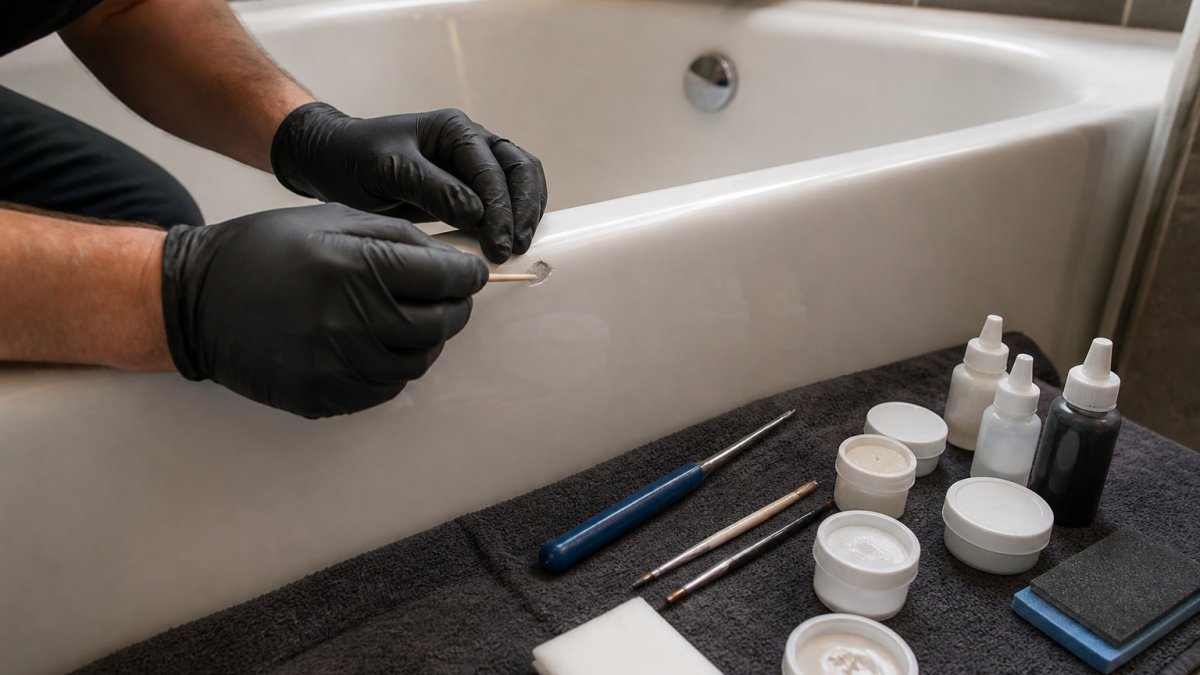
The repair is completed in place. No strip-out, no retiling, no room out of service for days. A technician prepares the damaged area, fills and rebuilds the chip, then reproduces the colour and gloss so it blends with the surrounding enamel.
Suitability depends on the material, the condition of the bath and how far the damage has spread. A shallow chip on a sound bath is usually straightforward. A crack that has reached the substrate, or a bath with widespread enamel loss, may be better replaced. Surface Magic Repairs will say so honestly if that is the case.
The Royal Society for Public Health resources on hygiene in hospitality settings notes that repaired and well-maintained surfaces support hygiene standards when the finish is intact and cleanable.
Step 4: Commercial Bathroom Surface Maintenance Across a Live Property
Commercial bathroom surface maintenance means keeping every room usable while repairs are carried out. In a live hotel, you cannot take a floor out of service for a week.
The practical answer is to group repairs. Instead of booking a technician for one chipped tray, list every damaged surface across the property and book them together. A single visit can cover multiple rooms, back-of-house areas and public washrooms.
- Schedule repairs during low-occupancy windows
- Group rooms by floor to reduce travel and setup time
- Repair in place so fixtures stay connected and tiling stays intact
- Complete colour matching on site to blend repairs with existing surfaces
- Record each repair so future damage can be tracked
For larger portfolios, a rolling programme works better than one-off jobs. Repairs are booked in batches, rooms return to service the same day, and the maintenance team gets a clear record of what was done.
That explains the theory. The reality is that grouping repairs is what makes the programme affordable.
Step 5: Protect Shower Trays, Vanity Tops and Grout Lines
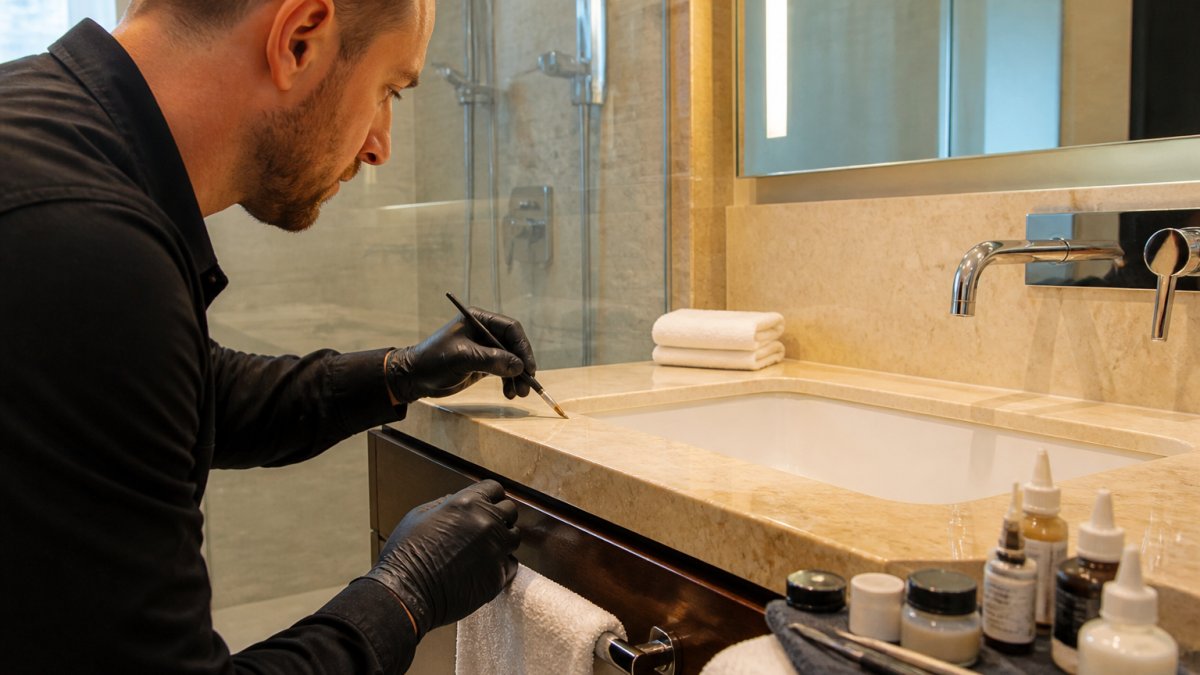
Shower trays and vanity tops fail in predictable ways. Trays crack under point load, usually from a guest standing on the edge or dropping something heavy. Vanity tops chip at the front edge and around the basin cut-out.
Grout lines are the quiet problem. Grout is porous, and in a wet room it stays damp. Once grout cracks, water gets behind the tiles and the damage spreads out of sight.
- Fit a non-slip mat or treatment to reduce slip risk and impact damage
- Check tray edges and waste surrounds monthly for hairline cracks
- Seal vanity top edges where they meet the wall
- Re-grout or repair grout lines as soon as they crack
- Keep a stock of matching tiles for future repairs
Anti-slip treatments can be applied to suitable baths and shower trays. This improves grip without changing the look of the surface, which matters in a guest bathroom.
Common Mistakes That Shorten Surface Life
The same mistakes show up in hotel after hotel. Fixing them costs nothing.
| Mistake | What It Causes | The Fix |
|---|---|---|
| Abrasive cleaners on polished surfaces | Dull finish, visible scratches | Switch to pH-neutral products |
| Ignoring small chips | Cracks spread, replacement needed | Repair as soon as damage is logged |
| One cleaner for every surface | Chemical damage to grout and colour | Match product to surface type |
| No audit or record | Damage found too late | Room-by-room condition record |
| Booking repairs one at a time | High disruption, higher cost | Group repairs into single visits |
The single biggest mistake is treating repairs as a last resort. In a hotel, a repair done early is a repair that stays cheap.
Repair or Replace? Deciding Room by Room
Repair is usually the right call, but not always. The decision comes down to four factors: material, condition, location and extent of damage.
Repair is the better option when the surface is sound, the damage is cosmetic and the finish can be matched. Replacement makes more sense when the surface has failed structurally, when water has got behind it, or when repeated repairs are no longer holding.
- Repair: chips, scratches, burns, dents, worn finishes, cracked grout
- Repair: cracked shower trays where the structure is intact
- Replace: deep cracks reaching the substrate
- Replace: widespread enamel loss or delamination
- Replace: surfaces where water has caused hidden damage
The Waste and Resources Action Programme guidance on construction waste highlights that repairing rather than replacing keeps serviceable materials out of landfill. That matters for hotels working to reduce waste.
For a hotel, the repair-versus-replace decision is also a downtime decision. A repair keeps the room in service. A replacement takes it out.
Hotel bathrooms will always take heavy use, but heavy use does not have to mean constant replacement. The properties that keep their rooms looking sharp are the ones that audit early, control their cleaning chemicals, and repair small damage before it spreads.
Surface Magic Repairs Limited repairs baths, shower trays, vanity tops, tiles and grout lines in place, with colour and finish matched to the surrounding surface. We work across Greater Manchester, the wider North West and nationwide on commercial hotel and property-portfolio projects. Our team brings more than 25 years of combined trade experience, and we assess honestly before any work is booked.
Send clear photographs of the damage, the complete item and the surrounding area, together with your full address and postcode. Surface Magic Repairs can assess whether a repair is suitable and provide a quotation. Call 0800 085 7773 or visit surfacemagicrepairs.co.uk to get started and keep your rooms in service.
Frequently Asked Questions
How can hotels reduce bathroom maintenance costs?
The biggest saving comes from repairing damage before it spreads. A small chip in a bath or vanity top is far quicker and less disruptive to fix than a full replacement, which also means strip-out, new materials, tiling and decorating. Planned commercial bathroom surface maintenance, where a technician works through rooms on a schedule, catches faults early and keeps more original fittings in service for longer.
Is it better to repair or replace a chipped hotel bath?
In most cases a chip can be repaired in place, provided the bath itself is structurally sound. A technician fills and rebuilds the damaged area, matches the colour and finish, then seals it so the repair blends with the surrounding surface. Replacement only makes sense when the bath is cracked through, flexing badly, or the damage is so extensive that a repair would not hold up in a busy room.
How do you prevent damage to hotel bathroom vanity tops?
Most vanity top damage comes from housekeeping rather than guests. Abrasive creams, bleach-based sprays and scouring pads dull the finish and open up scratches over time. Train staff on the correct cloths and neutral cleaners for each material, use mats or trays for toiletries, and fit protective pads under anything heavy. Prompt repair of small chips in a porcelain basin or worktop stops water getting into the substrate.
How often should hotel bathroom surfaces be professionally inspected?
A full walk-round inspection every three to six months works well for most hotels, with a quick check at every room turnaround. High-turnover rooms and spa or poolside bathrooms may need checking more often. The aim is to catch chips, worn sealant and dull patches while they are still cosmetic, because a repair at that stage is faster and keeps the room available for guests.