Table of Contents
- Common Flooring Damage in New Build Properties
- Assessing Damage: When to Repair and When to Replace
- Cosmetic Repair vs Floor Replacement: The Key Differences
- New Build Snagging List Flooring: Identifying Issues Early
- NHBC Warranty Flooring Claims: What's Covered and How to Report
- DIY Repair Methods for Minor Damage
- When to Call a Professional
- Preventing Future Flooring Damage
- Frequently Asked Questions
Last Updated: September 1, 2026
Common Flooring Damage in New Build Properties
New build properties often arrive with cosmetic flooring damage ranging from superficial scratches to significant chips and cracks, typically caused during construction, transportation, or installation.
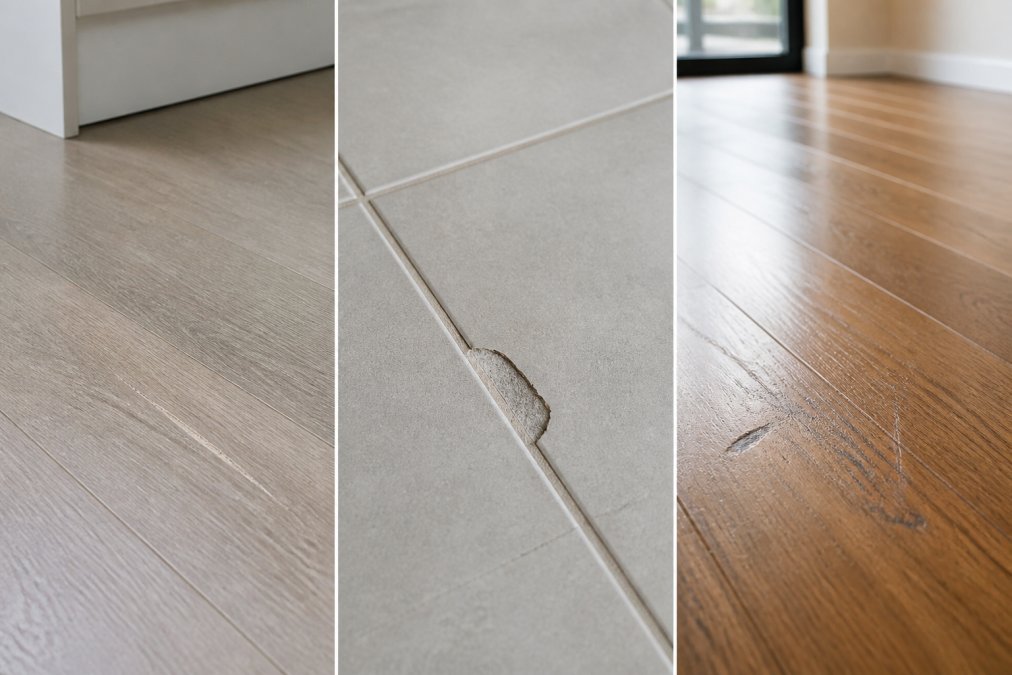
The most common issues include laminate scratches from tools or foot traffic, chipped tiles from dropped materials, dents in solid wood floors, and staining on carpet or vinyl. Laminate shows damage most visibly because the top layer is thin and any impact that penetrates it exposes the core. Ceramic and porcelain tiles chip at edges during handling and installation. Solid wood floors dent more easily than expected, particularly in softer species like pine or ash. Vinyl and carpet can tear, stain, or show compression marks from heavy equipment.
Some damage appears immediately upon taking possession, while stress fractures in grout or hairline cracks in wood emerge weeks or months later as the building settles. A thorough snagging inspection before handover catches far more than a casual walk-through.
Surface Magic Repairs assesses new build properties and finds that the majority of flooring damage falls into categories that can be repaired without full replacement.
Assessing Damage: When to Repair and When to Replace
The decision between repair and replacement hinges on three factors: the extent of damage, the material type, and the cost-benefit calculation.
Minor damage, surface scratches, small chips, light staining, almost always favours repair. These issues affect appearance without compromising structural integrity or water resistance. The time and cost of removal, replacement, and reinstallation far outweigh the cost of a targeted fix.
Extensive damage, large areas of cracking, widespread water damage, deep gouges affecting multiple boards or tiles, typically requires replacement. If damage affects the floor's function or water resistance, or spans a significant portion of a room, replacement becomes more practical.
Material type shapes the calculation. Laminate cannot be traditionally repaired; you can cover it or replace the affected plank (nwfa.org). Ceramic and porcelain tiles can be individually replaced if one or two are damaged. Solid wood can be sanded and refinished, or individual boards replaced. Vinyl can be patched or the damaged section replaced. Carpet can be patched or the affected area replaced.
Get quotes for both repair and replacement before deciding. Repair is almost always cheaper for isolated damage, but the savings narrow as damage becomes more widespread.
Cosmetic Repair vs Floor Replacement: The Key Differences
Cosmetic repair targets the appearance and usability of the damaged area without removing the existing floor. Specialist techniques, filling, colour-matching, texturing, and refinishing, restore the surface to a significantly improved state. Repair typically takes hours rather than days, and the property remains accessible during and immediately after work.
The realistic expectation is that damage is substantially improved and the area functions normally again. Depending on the material, finish, and surrounding pattern, the repair may be virtually invisible or noticeably present but far less obvious than the original damage.
Floor replacement removes the damaged flooring entirely and installs new material. This is more disruptive, takes time, creates mess, and requires the space to be empty and inaccessible for the duration of work. Replacement guarantees a uniform appearance but disrupts the property for days and generates waste.
For new build properties, repair often makes sense because damage is usually isolated rather than widespread, and the goal is to fix defects before handover.
New Build Snagging List Flooring: Identifying Issues Early
Identifying flooring damage during the pre-handover inspection is critical. Issues caught early are often addressed more easily, and the developer has responsibility for rectification before you take possession.
A structured snagging inspection should cover scratches, chips, dents, staining, and uneven surfaces in every room. Check under furniture and in corners where damage might be hidden. Look at grout lines for cracks or missing grout. Examine edges of laminate or vinyl for lifting or separation. Test carpet for compression marks or visible seams.
Use consistent lighting; daylight reveals issues that artificial light misses. Get down to floor level; many defects are invisible from standing height. Take photographs of any damage, including close-ups and wider shots showing location in the room.
Document everything on your snagging list with precise descriptions. Rather than "scratch on kitchen floor," write "3cm scratch on laminate at 1.5m from kitchen door, penetrating top layer." Specific descriptions help the developer understand what needs fixing.
For new build properties, fixing damaged flooring should be a standard part of pre-handover rectification. If the developer's preferred contractor can't address the issue satisfactorily, you have the right to engage a specialist. Surface Magic Repairs works with developers and site managers to assess and repair flooring damage during the defect rectification phase.
NHBC Warranty Flooring Claims: What's Covered and How to Report
The NHBC Buildmark warranty covers structural defects in the building fabric, including damage to the flooring substrate, the underlying structure that flooring sits on (nhbc.co.uk). If the concrete screed beneath laminate or vinyl is cracked, or if timber joists supporting floorboards are damaged, this falls within structural cover. However, cosmetic damage to the flooring surface itself, scratches, chips, staining, typically falls outside the warranty unless caused by a structural failure.
If your laminate is scratched because someone dropped a tool during construction, that's not a warranty claim. If your laminate is damaged because the underlying screed is uneven or cracked, causing premature failure, that's potentially a structural issue covered by the warranty.
To make an NHBC claim, report the issue in writing to the developer or NHBC directly. During the first two years (the Buildmark Defects Period), the developer is responsible for rectification (nhbc.co.uk). After two years, claims go directly to NHBC. Provide clear documentation: photographs, dates, and a description of the damage and its likely cause.
For cosmetic flooring damage, the NHBC warranty typically won't apply, but the developer may still address it under customer-care obligations. Many developers use specialist contractors to rectify cosmetic defects before handover to avoid warranty disputes later.
If uncertain whether an issue qualifies as structural or cosmetic, get a professional assessment. A surveyor or specialist contractor can determine whether flooring damage is a surface issue or a symptom of a deeper problem.
DIY Repair Methods for Minor Damage
Minor flooring damage can often be repaired without professional help, though results depend on your skill level, the material, and the damage type.
Laminate Flooring Repairs
Laminate scratches that don't penetrate the top layer can be concealed with laminate repair markers or touch-up pens. Clean the scratch thoroughly, apply the marker along the damage, wipe away excess, and allow it to dry. The result is often convincing for minor scratches.
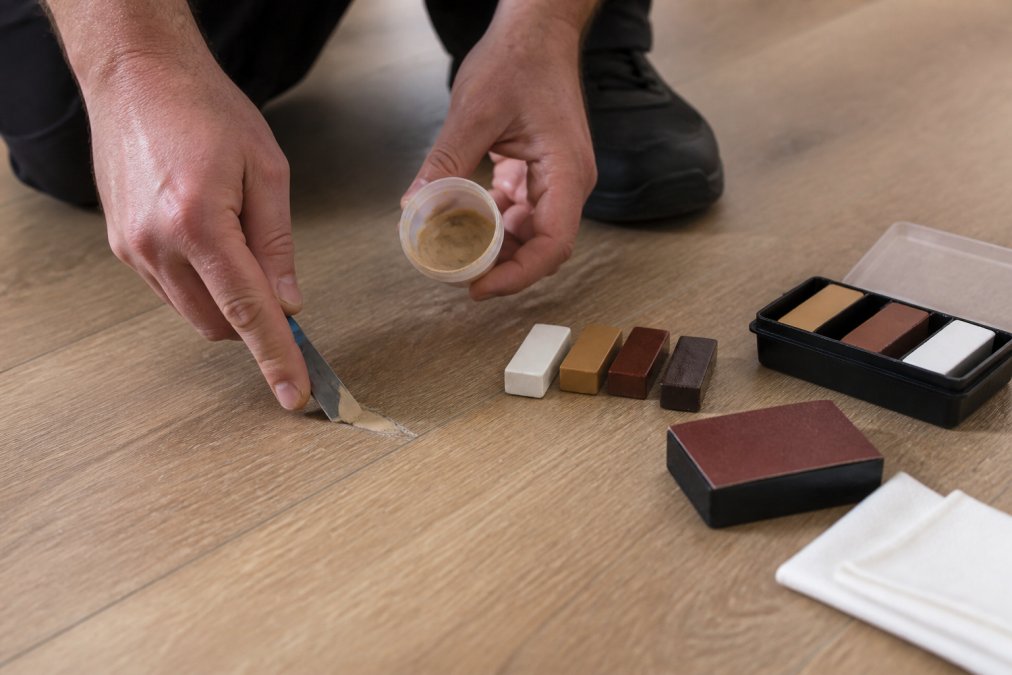
For scratches that penetrate the core, laminate repair kits exist, but results are variable. The process involves cleaning the damaged area, filling it with provided compound, sanding it smooth once dry, and applying a finishing coat. Success depends on matching the colour accurately and achieving a smooth surface that blends with surrounding laminate.
Solid Wood Flooring Repairs
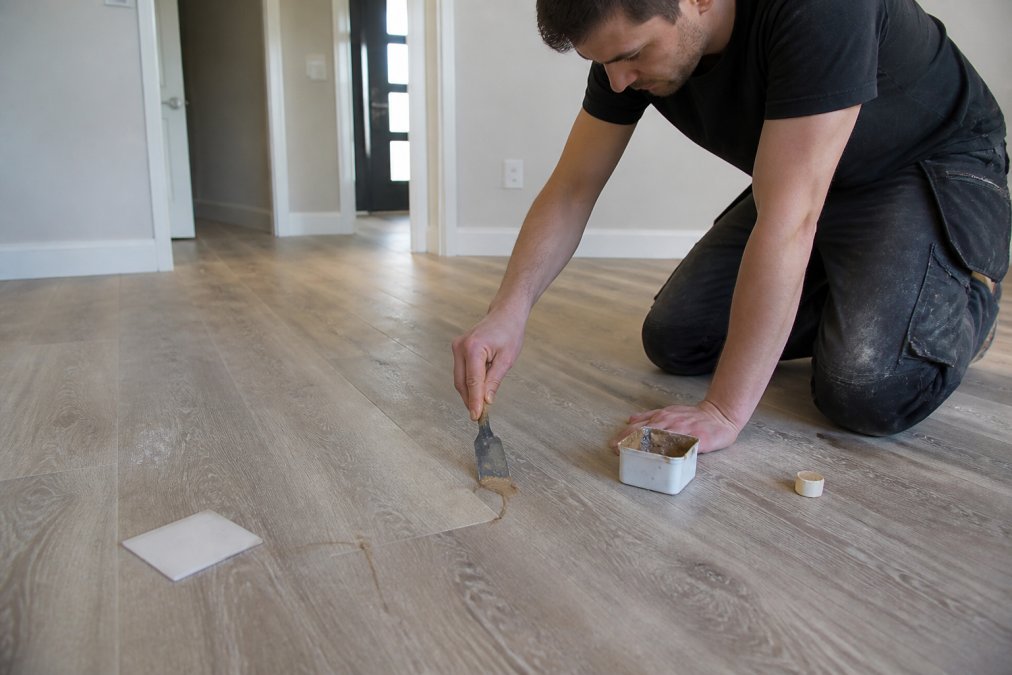
Dents and minor scratches on solid wood can be improved with wood repair markers or touch-up stains that match the wood colour. For deeper scratches or gouges, apply wood filler using a filling knife, allow it to dry completely, sand it level with the surrounding floor, and apply matching stain or finish. The challenge is colour matching.
For dents that don't involve splintered or raised wood, you can sometimes raise the dent by applying steam or moisture to the wood, which causes the fibres to swell slightly. Place a damp cloth over the dent and apply heat with an iron on medium setting.
Vinyl and Carpet Repairs
Vinyl scratches and scuffs can be cleaned and concealed with vinyl repair markers or touch-up pens. For larger damaged areas, vinyl repair patches or adhesive vinyl sheets can be applied over the damage.
Carpet stains can sometimes be removed with appropriate cleaning solutions, depending on the stain type and how long it's been present. Fresh stains respond better to immediate treatment. Carpet repairs for tears or burns are more involved; small tears can be glued with carpet adhesive, but burns typically require patching with matching carpet.
When to Call a Professional
Professional repair becomes sensible when damage is extensive, the material is difficult to match, or DIY attempts have failed.
Call a professional if damage affects a large area, spans multiple materials, or involves materials you're unfamiliar with. Professionals have access to specialist tools, colour-matching technology, and finishing techniques that produce results DIY methods can't achieve. For ceramic or porcelain tiles, solid wood floors with complex finishes, or patterned vinyl and carpet, professional repair is often worth the cost.
Surface Magic Repairs assesses flooring damage on new build properties and determines whether repair or replacement is the right choice. For damage that falls within the repair category, specialist techniques restore appearance and function without the disruption of replacement.
Preventing Future Flooring Damage
Protecting new flooring from damage starts during construction and continues after handover.
During the construction and fit-out phase, temporary protective coverings, plywood sheets, cardboard, or specialist floor protection films, shield flooring from dropped tools, heavy equipment, and foot traffic. Ensure contractors understand that flooring is finished and requires care.
After handover, prevention is about maintenance and awareness. Use floor protectors under furniture legs to prevent dents. Clean spills promptly to prevent staining. Use appropriate cleaning methods for each material type; laminate and vinyl need less water than some homeowners use, and excessive moisture causes swelling and warping. Place doormats at entrances to reduce dirt and grit that scratches floors.
For new build properties, the first months are when most damage occurs during final construction, decoration, and handover processes. Protecting flooring during this critical period pays dividends.
Flooring damage in new build properties is common, but rarely catastrophic. Most damage falls into categories that can be repaired cost-effectively, restoring the floor's appearance and function without the disruption of replacement. Identifying damage early through a thorough snagging inspection, understanding your warranty coverage, and knowing when repair makes sense versus replacement are the keys to managing the issue efficiently.
If you're facing flooring damage on a new build property and want a professional assessment of your options, Surface Magic Repairs provides specialist evaluation and repair for cosmetic flooring damage. Whether you need a single room assessed or multiple properties across a development evaluated, the team can determine the most practical and cost-effective solution for your situation. Get an instant quote and find out what's possible for your flooring.
Frequently Asked Questions
Q: Are flooring defects covered under the NHBC 10-year warranty?
NHBC warranty coverage for flooring defects depends on the type and cause of damage. Structural issues like significant gaps, lifting, or subsidence are typically covered within the first two years. Surface cosmetic damage such as scratches and minor stains usually falls outside warranty protection. Always report suspected defects during the snagging period and check your specific warranty documentation, as coverage varies by builder and policy terms.
Q: What causes gaps and lifting in new build flooring?
New build flooring often experiences gaps and lifting due to moisture changes and settlement in the first year. Laminate and wood floors expand and contract with humidity fluctuations, whilst inadequate acclimatisation before installation can worsen the problem. Poor subfloor preparation, insufficient expansion gaps during fitting, and uneven floor bases also contribute. Professional assessment during your snagging inspection can identify whether these issues require structural correction or cosmetic repair.
Q: Is it better to repair or replace damaged flooring in a new build?
Cosmetic repair is often the better choice for surface-level damage like scratches, chips, and minor burns. Repairs cost significantly less, cause minimal disruption, and preserve your existing flooring. Replacement is necessary only when damage is structural, affects safety, or is so extensive that repair isn't practical. For new builds, professional cosmetic repair can address pre-handover defects quickly, allowing you to take possession on schedule without costly replacement delays.
Q: How do I report flooring damage during the new build snagging period?
Document all flooring damage with photographs and notes, then submit a formal snagging list to your housebuilder within the agreed time frame, typically before completion. Be specific about location, damage type, and severity. Keep copies of all correspondence. Most builders have a snagging period for defects to be remedied. If your builder cannot resolve issues satisfactorily, contact the NHBC or your warranty provider for guidance on next steps.
This article was written using GrandRanker