Table of Contents
- What Hiring Professional Bathtub Resurfacing Services for Hotels Involves
- What to Look for in a Bathtub Resurfacing Provider
- Hotel Bath Repairs: Which Damage Can Be Resurfaced and Which Cannot
- Bath Resurfacing Versus Replacement: How to Decide Room by Room
- How a Professional Bath Resurfacing Job Runs, Step by Step
- Hotel Room Maintenance Planning Around Guest Bookings
- Multi-Room Surface Repair Programmes for Larger Properties
- What to Send When Requesting a Quotation
- Frequently Asked Questions
Last Updated: October 6, 2026
What Hiring Professional Bathtub Resurfacing Services for Hotels Involves
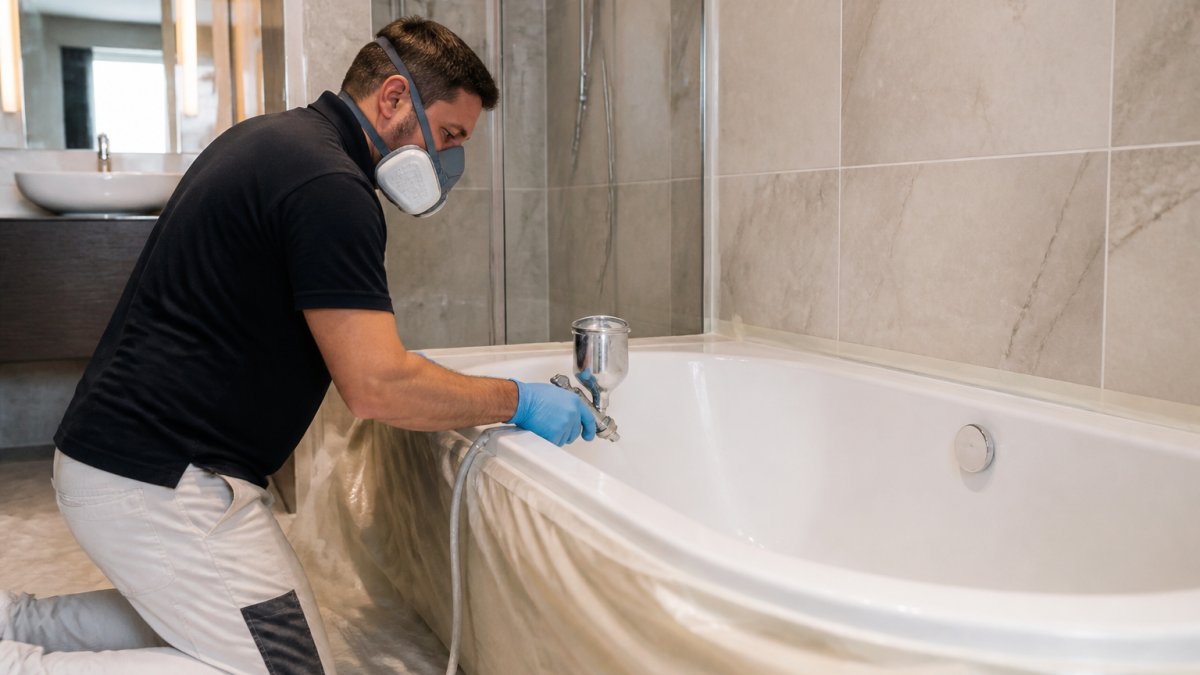
Hiring professional bathtub resurfacing services for hotels means bringing a specialist to repair and refinish damaged baths in place, rather than stripping out and replacing them. A technician prepares the damaged area, rebuilds or fills it, reproduces the colour and finish, and seals the repair so it blends with the surrounding surface. Surface Magic Repairs works on occupied hotel floors where rooms need to be back in service quickly, and the whole point is avoiding the strip-out, retiling and decorating that replacement drags behind it.
Bathtub resurfacing is the process of restoring a damaged or worn bath surface using specialist filling, colour matching and refinishing techniques, carried out on site without removing the bath. It suits chips, scratches, burns, cracks and tired finishes, though suitability depends on the material, the location of the damage and how far it has spread.
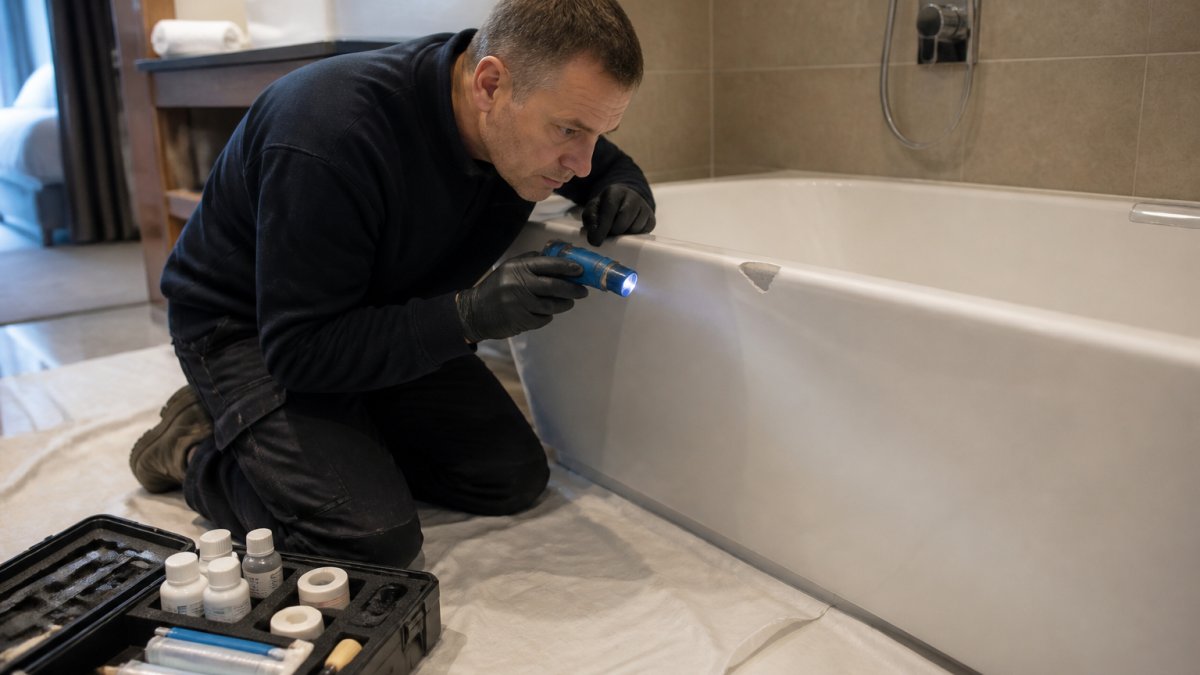
That distinction matters commercially. A bath that can be repaired in a morning keeps the room sellable. A bath that needs replacing takes the room out of the inventory, and it usually pulls tiling, sealing and decorating along with it.
What to Look for in a Bathtub Resurfacing Provider
Look for a provider who assesses honestly before quoting, works in occupied buildings, and can show that the finish will hold up to hotel use. The cheapest quote is rarely the deciding factor. What decides it is whether the repair still looks right after a year of daily cleaning and heavy turnover.
Ask how colour and finish matching is handled. A bath that is patched but visibly patchy is worse than no repair at all, because guests notice it immediately. Ask whether the work is done in place, and what access the team needs. Ask what happens if a surface turns out to be unsuitable once the technician is on site.
Evidence to ask for before booking
- Public liability insurance cover
- Trade accreditations such as CHAS, SafeContractor or SMAS Worksafe
- A quality management certification, for example ISO 9001 (ISO 9001 Certification: A Path to Improved Quality)
- Examples of completed commercial work, not just domestic jobs
- A written scope stating what will be repaired and what will not
- A clear statement on expected cure times before the room can be used
Accreditation schemes such as CHAS exist specifically so buyers can check a contractor's compliance before work starts. It takes minutes to verify and it removes most of the risk from the decision.
Hotel Bath Repairs: Which Damage Can Be Resurfaced and Which Cannot
Most cosmetic damage to hotel baths can be resurfaced, but structural failure cannot. A chip, scratch, burn, crack or worn finish is usually a candidate. A bath that has flexed and cracked through the base, or one where the substrate has failed, is not.
The dividing line is straightforward. If the damage is in the surface, repair is normally viable. If the bath itself has lost its structural integrity, replacement is the honest answer. Surface Magic Repairs would rather tell a hotel that than book work that will not last.
How suitability is assessed
Assessment looks at four things:
- Material: acrylic, enamel, ceramic and stone-composite baths all behave differently under repair.
- Condition: isolated damage is easier to match than widespread wear across the whole tub.
- Location: damage near the waste, overflow or a curved edge is harder to disguise.
- Extent: a single chip is a small job; a network of cracks usually points to replacement.
Send clear photographs of the damage, the complete bath and the surrounding area. In most cases we can give a realistic view on suitability from those alone, before anyone travels.
Bath Resurfacing Versus Replacement: How to Decide Room by Room
Resurfacing wins on cost, downtime and waste in the large majority of hotel cases. Replacement wins when the bath is structurally compromised or when the room is due a full refurbishment anyway.
Here is how Surface Magic Repairs would work through it:
| Situation | Recommended route | Why |
|---|---|---|
| Isolated chip or scratch | Resurface | Keeps the room sellable, no strip-out |
| Burn or scorch mark on the rim | Resurface | Cosmetic damage, finish can be matched |
| Hairline crack in the base | Assess on site | Depends on whether the bath flexes |
| Cracked through the structure | Replace | Repair will not hold under load |
| Widespread wear across the tub | Resurface or replace | Cost comparison decides it |
| Room already scheduled for refurbishment | Replace | Repair would be wasted work |
The waste argument is not sentimental. Baths, tiles and sanitaryware that are ripped out go to landfill, and replacement pulls in new materials, new labour and new decorating. Repairing in place avoids all of it.
How a Professional Bath Resurfacing Job Runs, Step by Step
A typical hotel bath repair runs in a single visit, with the room back in use once the finish has cured. The exact sequence varies with the damage, but the shape of the job is consistent.
- Assessment on site. The technician confirms the damage is repairable and agrees the scope with your maintenance lead.
- Protection. The surrounding bathroom is masked and sheeted so there is no overspray or dust on tiles, screens or fittings.
- Preparation. The damaged area is cleaned back and prepared so the repair material bonds properly.
- Rebuilding. Chips, cracks and holes are filled and built back to the original profile.
- Colour and texture matching. The repair is tinted and textured to match the surrounding surface.
- Refinishing. A suitable finish is applied and blended into the existing surface.
- Cure and handover. The room stays out of service until the finish has cured, then it is inspected and signed off.
Hotel Room Maintenance Planning Around Guest Bookings
Plan repairs around occupancy, not around the contractor's diary. The most effective approach is to group rooms by floor or wing and repair them in a single block, so one set of rooms is out of service rather than several scattered across the building.
Shoulder seasons and low-occupancy windows are the obvious slots. Beyond that, look at your booking pattern and find the days where a handful of rooms sit empty anyway. A repair that takes a room out for a morning costs you very little if that room was not going to sell.
Keep a running condition list per room. When a guest reports a chipped bath, log it, photograph it, and add it to the next repair block rather than booking a one-off visit.
Multi-Room Surface Repair Programmes for Larger Properties
For larger properties, a planned programme beats reactive call-outs on every measure. Instead of fixing one bath at a time, you book a block of rooms and have baths, shower trays, worktops, tiles and furniture assessed and repaired in the same visit.
That approach suits hotels, student accommodation, build-to-rent operators, housing associations and property portfolios. It also suits housebuilders working through a snagging list, where the same defect appears across multiple units and separate visits would be slow and expensive.
Surface Magic Repairs handles this kind of work as a scheduled programme, with the team working alongside site managers, customer-care departments and maintenance teams. Surface Magic Repairs is Bolton-based and travels to sites across the region, with nationwide work available for suitable commercial and multi-site projects. Send the job details and postcode and we can confirm availability.
What to Send When Requesting a Quotation
Send clear photographs of the damage, the complete item and the surrounding area, together with your full address and postcode. That is enough for an initial assessment in most cases.
Photographs should show:
- The damage close up, in good light
- The whole bath, so the finish and colour can be judged
- The surrounding area, including tiles and any adjacent surfaces
- The number of rooms involved, if it is a multi-room job
Cost depends on the surface, the damage, the location, the access, the finish required and the number of repairs. Surface Magic Repairs does not quote blind, and will say plainly if a bath is beyond repair. You can reach the team on 0800 085 7773 or at surfacemagicrepairs.co.uk.
A chipped bath does not have to mean a lost room and a full replacement. The challenge is finding a provider who assesses honestly, matches the finish properly and works around your bookings rather than against them. Surface Magic Repairs repairs baths and other hard surfaces in place, with colour and finish matched to the existing surface and no strip-out required, so rooms return to service quickly and serviceable materials stay out of landfill. Send your photographs, address and postcode to info@surfacemagicrepairs.com and we will confirm whether a repair is suitable and provide a quotation.
Frequently Asked Questions
Can a chipped or scratched hotel bath be repaired in place?
In many cases, yes. Chips, scratches, cracks and worn finishes on baths can often be repaired without removing the bath, provided the material, condition and extent of damage allow it. A technician prepares the damaged area, rebuilds or fills it, then reproduces the colour and finish to blend with the surrounding surface. Suitability depends on factors such as the bath material, the location of the damage and how deep it goes. Send photographs of the damage, the complete bath and the surrounding area for an honest assessment before booking.
How do hotels choose a professional bath repair service?
Start by checking that the provider handles commercial hotel work, not just domestic jobs. Ask how they match colour and finish, whether repairs are done on site, and how they schedule work around occupancy. Request evidence of relevant accreditations and experience, and ask for a clear scope of what will be repaired. A provider that assesses photographs first and gives an honest view on whether repair or replacement is more suitable is usually the safer choice. Surface Magic Repairs Limited works with hotels and commercial clients across the UK.
How long does a professional bath repair usually take?
Most individual bath repairs are completed in a single visit, though the drying or curing time before the bath can be used again depends on the materials and finish applied. For hotels, the practical question is how long a room must stay out of service, so ask the provider to confirm this before booking. Where several rooms need work, a multi-room programme can often be scheduled across consecutive days to keep disruption predictable. Surface Magic Repairs can confirm timings once the damage and access have been assessed.
Can bath repairs be scheduled to reduce disruption to hotel guests?
Yes. Repairs are normally completed in place, so there is no strip-out, no retiling and no knock-on decorating. That means a room can often be worked on between check-out and the next check-in, or during a planned maintenance window. For larger properties, a multi-room surface repair programme lets you group rooms by floor or wing and work around peak periods. Provide your room availability and the provider can advise on a schedule that keeps occupied rooms undisturbed.