Table of Contents
- Can Chipped Bathroom Tiles Be Repaired? The Direct Answer
- What You'll Need Before You Start
- Step 1: Assess the Chip and Decide If It Is Safe to Repair
- Step 2: Prepare the Chipped Area
- Chipped Ceramic Tile Repair: What to Expect
- Porcelain Tile Chip Repair: Why It Is Different
- Tile Repair Kit for Chips: What They Can and Cannot Do
- Repair or Replace a Chipped Tile: How to Decide
- Common Mistakes to Avoid When Repairing Tile Chips
- When to Call a Professional Tile Repair Service
- Frequently Asked Questions
Last Updated: 17 October 2026
Can Chipped Bathroom Tiles Be Repaired? The Direct Answer
Yes, most chipped bathroom tiles can be repaired. A cosmetic chip on a glazed tile is usually a straightforward repair. The damaged area is filled, coloured and refinished so it blends with the surrounding glaze.
The caveat matters, though. Suitability depends on the material, the depth of the damage and where the tile sits. A shallow chip on a wall tile is a very different job from a crack running through a shower tray tile.
Cosmetic chips versus structural damage
A cosmetic chip removes glaze and a little of the tile body. The tile stays fixed and watertight. It looks bad but performs fine.
Structural damage is different. That means a crack through the tile, a loose tile, or damage that has broken the seal behind it. Water can get in. Grout lines can fail. In that case, a surface repair may not be the right answer, and we will say so.
So the first question is never "how do I fill this?" It is "is this tile still doing its job?" Everything else follows from that.
What You'll Need Before You Start
Before you touch a chipped tile, gather the right information and the right kit.
Here is a sensible pre-repair checklist:
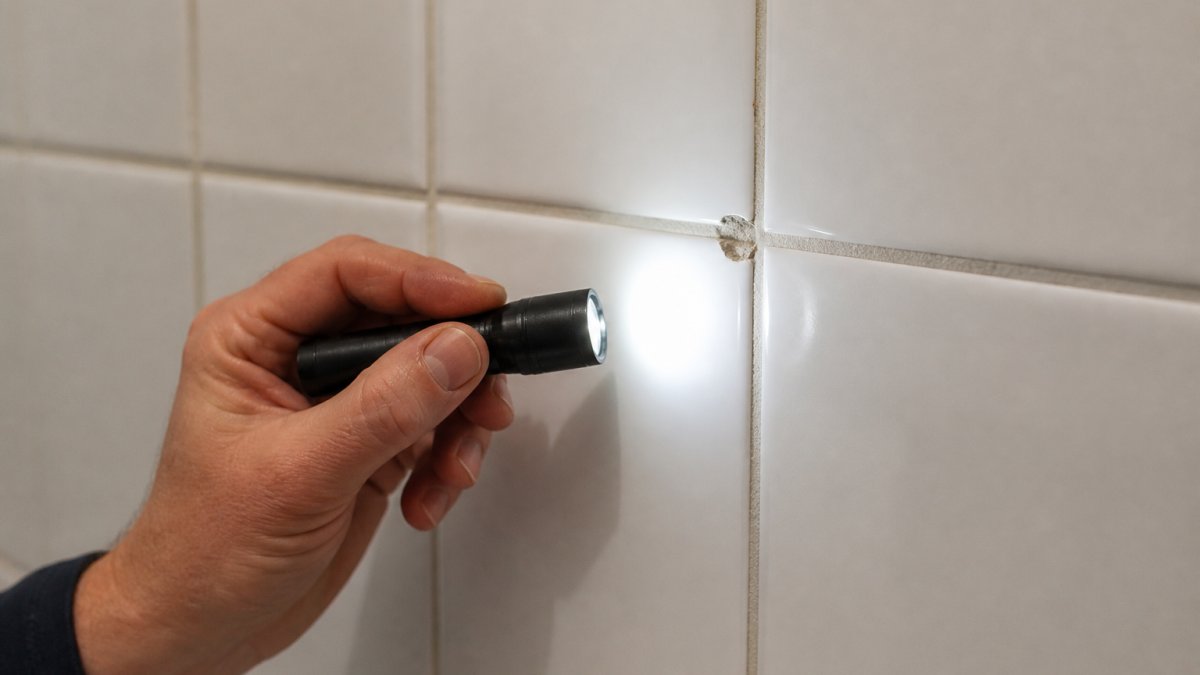
- A bright torch or phone light to inspect the chip closely
- A soft pencil to mark the extent of the damage
- Clear photographs of the chip, the whole tile and the surrounding area
- Your address and postcode if you are requesting a quotation
- Knowledge of the tile type (ceramic, porcelain or natural stone)
- A note of whether the tile is on a wall, floor, shower area or splashback
Photographs matter more than most people realise. A repairer can often tell from a clear photo whether a chip is cosmetic or structural, and whether the finish can be matched.
Step 1: Assess the Chip and Decide If It Is Safe to Repair
Start by looking at the chip under good light. Run a fingertip gently around the edge. You are checking three things: depth, movement and moisture.
Ask yourself:
- Does the chip feel shallow, or does it go deep into the tile body?
- Does the tile move or sound hollow when tapped?
- Is there any sign of damp, staining or soft grout nearby?
- Is the chip in a wet zone, such as inside a shower or beside a bath?
If the tile is firm, dry and the chip is shallow, you are likely looking at a repairable cosmetic chip. If the tile moves, sounds hollow or sits in a constantly wet area with failed grout, get it assessed before doing anything else.
This is also the point to decide whether to attempt it yourself.
Step 2: Prepare the Chipped Area
Preparation decides whether a repair lasts. A filler applied over dust, soap residue or loose glaze will lift, discolour or fall out.
The preparation stage involves:
- Cleaning the area thoroughly and letting it dry completely
- Removing any loose, flaking glaze around the chip edge
- Degreasing the surface, especially in a shower or splashback
- Masking the surrounding tiles if a refinish is needed
- Keeping the area dry and dust-free until the repair is applied
The goal is a clean, sound, slightly keyed surface for the repair material to bond to. Nothing more aggressive than that.
Chipped Ceramic Tile Repair: What to Expect
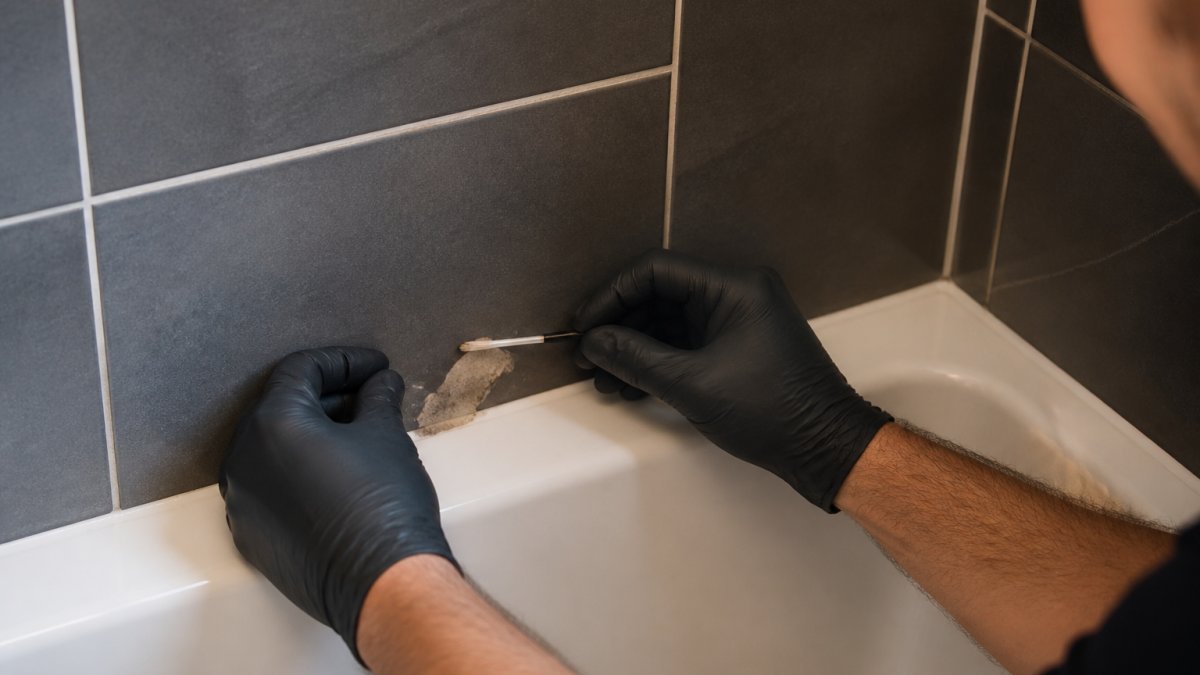
Chipped ceramic tile repair is usually the most forgiving of the tile repairs. Ceramic tiles have a glazed surface over a softer body, and the glaze can often be colour matched and refinished convincingly.
What to expect:
- The chip is cleaned and the edges stabilised
- A fine filler rebuilds the missing glaze and body
- Colour is matched to the surrounding tile
- A protective finish is applied and blended in
- The repair is left to cure before the area is used
Results vary. A plain gloss white tile can come up very well. A heavily patterned or mottled glaze is harder to match, and the repair may be visible on close inspection even when it looks good from standing height. We never promise an invisible repair.
For landlords and letting agents, this matters. A quick, tidy repair between tenancies is often far more sensible than retiling a whole wall for one chip.
Porcelain Tile Chip Repair: Why It Is Different
Porcelain tile chip repair is a tougher job than ceramic, and it is worth understanding why. Porcelain is denser, harder and less porous. That density is great for durability but awkward for repairs, because fillers and finishes bond differently and the surface is less forgiving.
Key differences:
- Porcelain chips tend to have sharper, harder edges
- Colour runs through the tile body, which can help or hinder matching
- The surface is less absorbent, so preparation and adhesion matter more
- Polished porcelain shows every imperfection in the finish
A chip on a matt porcelain floor tile is often repairable with a good colour match. A chip on a polished porcelain tile is more demanding, because the sheen has to be reproduced as well as the colour. That is a job for someone who does it regularly.
Tile Repair Kit for Chips: What They Can and Cannot Do
The gap between a kit and a professional repair is mostly in the colour and finish matching. A kit gives you a close-enough colour. A trained repairer builds up colour, texture and sheen in layers until the repair blends with the surrounding surface. That is the difference between "you can see where it was" and "you have to look for it".
Repair or Replace a Chipped Tile: How to Decide
Deciding whether to repair or replace a chipped tile comes down to four factors: damage type, tile availability, location and disruption. Use this table as a quick guide.
| Situation | Better option | Why |
|---|---|---|
| Shallow cosmetic chip, plain tile | Repair | Quick, low disruption, blends well |
| Deep chip or crack in a wet zone | Assess first, often replace | Water ingress risk behind the tile |
| Patterned or metallic glaze | Professional repair or replace | Colour match is difficult |
| No matching spare tiles available | Repair | Replacement risks a visible mismatch |
| Single chipped tile in a large run | Repair | Avoids breaking out and retiling |
| Loose or hollow-sounding tile | Replace | The tile is no longer bonded |
The spare tile question catches people out. If you have no matching spares and the range is discontinued, replacing one tile can mean retiling a whole wall to keep it consistent. In that situation, a good repair is often the smarter move.
For a hotel or a landlord with a room to turn around, repair also wins on downtime. No strip-out, no retiling, no drying time for adhesive and grout.
Common Mistakes to Avoid When Repairing Tile Chips
- Skipping the clean and dry stage. Dust and moisture under a filler cause lifting and clouding.
- Using the wrong filler. Standard fillers can shrink, crack or discolour in a wet bathroom.
- Matching colour under the wrong light. A repair that looks right in daylight can look wrong under bathroom lighting.
- Over-sanding the surrounding glaze. This dulls the tile and makes the repair more obvious, not less.
- Ignoring a crack because it looks small. A hairline crack in a wet zone can let water behind the tile.
- Attempting specialist coatings without training. Some repair materials need proper handling and safety precautions.
When to Call a Professional Tile Repair Service
Call a professional tile repair service when the chip is deep, the glaze is patterned, the tile sits in a wet zone, or you simply want a finish that blends properly. A trained repairer can assess suitability honestly and tell you when replacement is the better answer.
At Surface Magic Repairs, we repair chipped bathroom tiles in place, with no strip-out and no retiling. The repair is colour matched and refinished to blend with the surrounding surface. We work with homeowners, landlords, letting agents, hotels and facilities managers, and we have completed more than 46,000 surface repairs in the last year.
Suitability always comes first. If a tile is loose, cracked through or sitting on a failing substrate, we will tell you, because a cosmetic repair on a failing tile is a waste of your money.
We are based in Bolton and cover Greater Manchester and the wider North West, with nationwide work available for suitable commercial and multi-site projects. For domestic jobs further afield, send the details and postcode and we will check availability.
Send clear photographs of the damage, the complete item and the surrounding area, together with your full address and postcode. Surface Magic Repairs can assess whether a repair is suitable and provide a quotation. Call 0800 085 7773 or visit Surface Magic Repairs.
For general guidance on tiling standards and bathroom ventilation, the British Standards Institution publishes relevant standards, and GOV.UK guidance on building regulations covers ventilation requirements for bathrooms.
Frequently Asked Questions
Can you repair a chipped bathroom tile without replacing it?
In many cases, yes. A cosmetic chip on a ceramic or porcelain tile can often be filled, colour matched and refinished in place, so you avoid removing the tile and disturbing the surrounding grout and tiles. Suitability depends on the material, how deep the chip is and where it sits. A chip on a tiled splashback is usually straightforward; a deep chip near a shower valve or on a floor tile may need replacement. A professional assessor can confirm whether repair is realistic before any work is booked.
What is the best filler for a chipped ceramic tile?
The best filler for a chipped ceramic tile depends on the specific damage and tile type. A professional assessor can recommend the most suitable material.
Can chipped porcelain tiles be repaired, and will the finish match?
Porcelain tile chip repair is possible, but the dense, low-porosity surface makes colour and gloss matching harder than on ceramic. A repairer will fill the chip, build up the colour in layers and apply a finish that mimics the tile's sheen. Results are usually very good on plain or lightly patterned porcelain, though heavily patterned tiles are harder to blend. No repair can be guaranteed invisible, so ask for an honest assessment of how close the match will be before work starts.
When should a chipped bathroom tile be replaced rather than repaired?
Choose replacement when the tile is cracked through, loose, or the chip exposes the substrate behind it, because water can get in and cause damp or further movement. Also replace if the chip sits in a high-wear floor area or around a shower where a repair may not last. A repair or replace chipped tile decision should weigh the cost and disruption of retiling against the likely lifespan of a repair. If a repair is unlikely to hold, a professional will say so.
A chipped tile is rarely a reason to rip out a bathroom. In most cases it is a small, contained repair that can be done in place, often in a single visit. If you are unsure whether your chip is cosmetic or structural, send us a few clear photos and we will give you an honest answer. Get started with Surface Magic Repairs and restore the tile instead of replacing it.