Table of Contents
- Is It Possible to Repair Bathroom Tile Grout?
- How to Repair Cracked Grout
- How to Repair Crumbling Grout
- Grout Repair Tools You Will Need
- Grout Repair Drying Time Explained
- Common Mistakes That Cause Grout to Fail Again
- When to Call a Specialist for Bathroom Tile Grout Repair
- Frequently Asked Questions
Last Updated: 13 October 2026
Is It Possible to Repair Bathroom Tile Grout?
Yes, it is possible to repair bathroom tile grout in many cases, and it is often the sensible first option. Grout is the cement-based or epoxy filling between tiles. When it cracks, crumbles or discolours, the tiles themselves are usually still sound underneath.
That matters because replacement is disruptive. Tiles have to come off, the wall or floor is made good, and the whole area is retiled and regrouted. Repair keeps the existing tiling intact and deals only with the failed grout.
This guide from Surface Magic Repairs explains how to repair bathroom tile grout, when it can be saved, when it cannot, and the mistakes that cause a repair to fail within months. Surface Magic Repairs has repaired more than 46,000 surfaces in the last year, and grout and tile damage is one of the most common jobs we see.
The short answer, before the detail:
- Loose or cracked grout with solid tiles is usually repairable
- Crumbling grout across a wide area often points to a deeper problem
- Grout that keeps failing after repair usually means movement or water behind the tiles
Here is the part most guides skip. Grout rarely fails on its own. It fails because something underneath it moved, got wet, or was never given room to expand. Fix the grout without understanding why it failed, and it will fail again.
Signs Your Grout Can Be Saved
Look at the tiles, not just the grout. If the tiles are firmly fixed, the grout is the only problem, and that is good news.
Grout is usually worth repairing when:
- The crack is a single line or a small localised area
- The grout is powdery or missing in patches, but the tiles feel solid
- The damage is cosmetic, such as staining or discolouration
- The problem appeared after a one-off event, like a heavy impact or a leak that has since been fixed
Grout is usually not worth repairing when:
- Tiles sound hollow when tapped
- Water is getting behind the tiles
- Grout is failing across an entire wall or floor
- There is movement in the substrate, such as a springy floor
In those cases, regrouting or retiling may be the more durable answer. We would rather tell a customer that than take on a repair that will not last.
How to Repair Cracked Grout
Cracked grout is the most repairable type. The crack is a clean break, and the surrounding grout is usually still sound.
The process works like this:
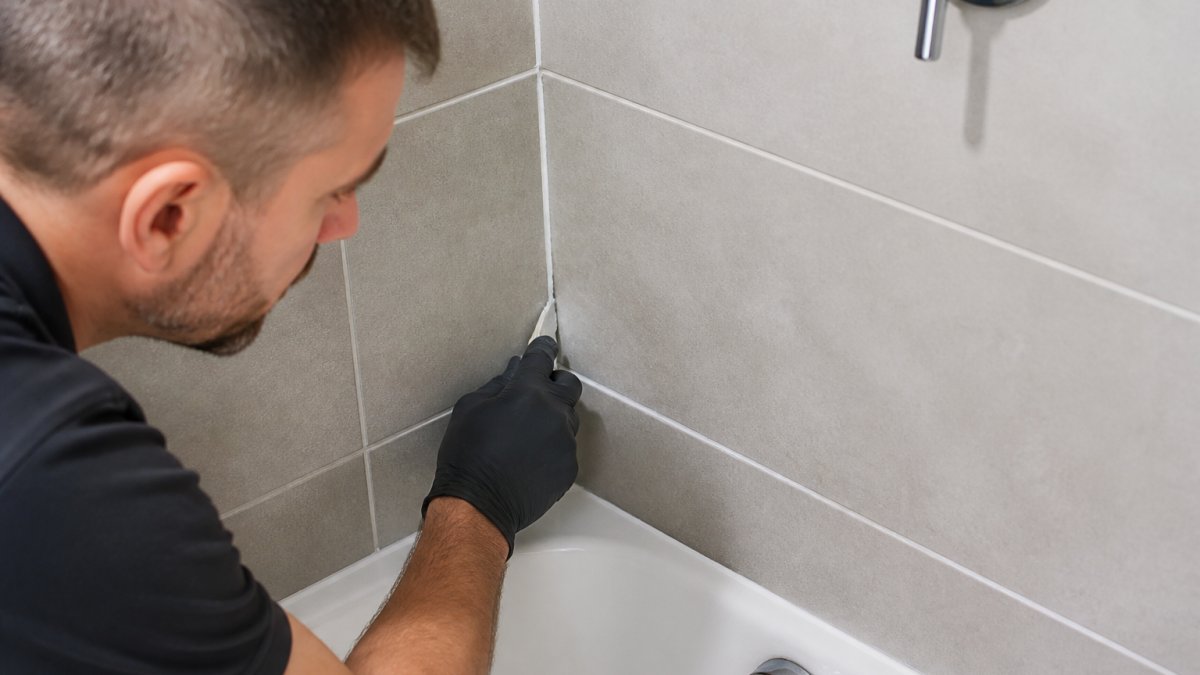
- Remove the loose material. The cracked grout is raked or cut out along the joint, back to solid grout on both sides.
- Clean the joint. Dust and residue are cleared so the new grout can bond properly.
- Check for movement. If the crack runs along a joint that flexes, the cause needs addressing first.
- Fill the joint. New grout is worked into the gap and packed tight.
- Match the finish. Colour and texture are matched to the existing grout so the repair blends in.
- Allow it to cure. The repaired area is left undisturbed for the full curing period.
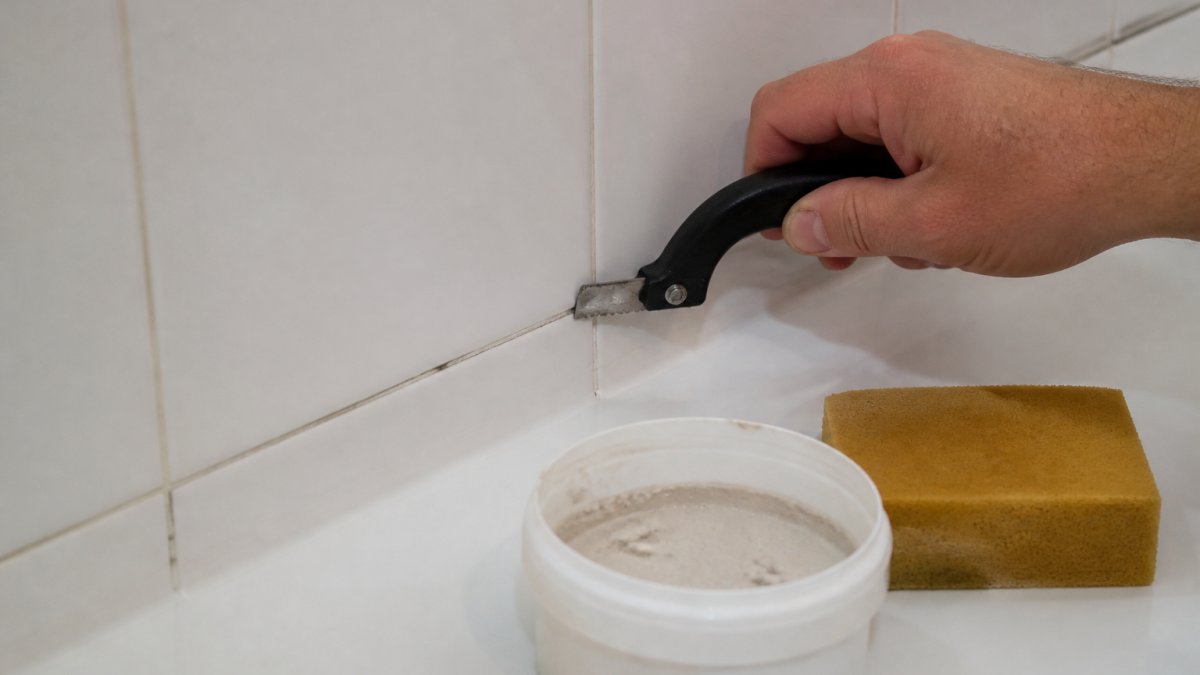
A single cracked line is often a quick job. A crack that runs the length of a wall, or one that reappears in the same spot, tells you the joint is moving. That is a different problem.
How to Repair Crumbling Grout
Crumbling grout is a warning sign, not just a cosmetic issue. When grout turns to powder or falls away in chunks, moisture is usually involved.
The repair follows the same basic steps as a crack, but with more preparation:
- All loose and soft grout is removed, not just the visibly missing sections
- The joint is dried thoroughly before any new material goes in
- The area is checked for damp, leaks or failed sealant nearby
- New grout is packed in and finished to match
If the crumble is widespread, the honest answer is often that the grout needs replacing across the whole area rather than patching. Patching crumbling grout in one spot while the rest is failing just moves the problem along the wall.
Grout Repair Tools You Will Need
A grout repair needs the right tools, and the list is short. Most of it is about clean removal and a tidy finish.
- Grout saw or rake: for cutting out old, cracked grout
- Grout float: for pressing new grout into the joint
- Mixing tub and paddle: for consistent grout consistency
- Sponge and clean water: for wiping the surface before it sets
- Grout sealer: for protecting the finished joint
- Safety glasses and gloves: grout dust and chemicals irritate skin and eyes
One point worth making. Specialist colour-matching and refinishing work is a different skill from basic grouting. If the grout colour has to match an unusual shade, or the tiles themselves are chipped, that is where a surface repair specialist adds value.
Grout Repair Drying Time Explained
Grout repair drying time is not one number. It depends on the grout type, the joint width and the conditions in the room.
As a general guide:
| Stage | Typical Time | Notes |
|---|---|---|
| Initial set | 30 minutes to 2 hours | Do not touch or wipe the joint |
| Foot traffic (floors) | 12 to 24 hours | Depends on grout type |
| Water exposure (showers) | 24 to 72 hours | Wait before using the shower |
| Full cure | 3 to 7 days | Sealing should wait until fully cured |
Cool, damp bathrooms slow drying. Warm, well-ventilated rooms speed it up. A shower that is used too soon is one of the most common reasons a repair fails.
Common Mistakes That Cause Grout to Fail Again
Most repeat failures come down to a handful of avoidable errors. Here are the ones we see most often.
- Grouting over damp joints. New grout will not bond to a wet surface.
- Skipping the removal step. Patching over old grout traps the failure underneath.
- Ignoring movement. If the joint flexes, the grout will crack again.
- Using the shower too soon. Water exposure before full cure ruins the bond.
- Wrong grout type. Kitchen and bathroom areas need the right formulation for the job.
- No sealing. Unsealed grout stains and absorbs water faster.
- Mismatched colour. A repair that does not match stands out more than the original damage.
Fixing the cause matters more than fixing the crack. A crack in a solid wall is a straightforward repair. A crack above a moving floor is a symptom, and it will return.
When to Call a Specialist for Bathroom Tile Grout Repair
Call a specialist when the grout keeps failing, when tiles are chipped as well as the grout, or when the area is large. A surface repair specialist can assess whether repair or replacement is the better route.
At Surface Magic Repairs, we repair tile chips and cosmetic tile damage alongside grout work, and we colour match the finished area to blend with the surrounding surface. Repairs are done in place, so there is no strip-out and no need to retile the whole wall.
We work with homeowners, landlords, letting agents, hotels, housing providers and contractors. For commercial clients, keeping a room or unit in use matters as much as the finish. For domestic customers, we give an honest assessment before any work is booked.
Send clear photographs of the damage, the complete item and the surrounding area, together with your full address and postcode. Surface Magic Repairs can assess whether a repair is suitable and provide a quotation. Call 0800 085 7773 or visit surfacemagicrepairs.co.uk.
Frequently Asked Questions
Can you repair bathroom tile grout without removing all of it?
Yes. If most of the grout is sound and only isolated sections are cracked or crumbling, you can rake out just the damaged areas and apply new grout to those sections. This is quicker and less messy than removing every line. However, if grout is failing across a large area or the backing board is moving, a full regrout is usually more reliable.
How long does bathroom grout take to dry after repair?
Grout repair drying time depends on the product and conditions. Most cement-based grouts are touch-dry in 2 to 4 hours and fully cured in 24 to 72 hours. Epoxy grouts set faster but still need 24 hours before heavy use. Avoid splashing the area for at least 24 hours, and keep the room ventilated to help it cure properly.
Why does bathroom grout keep cracking?
Grout cracks when there is movement behind the tiles, when the grout mix was too dry, or when the joints were not properly filled. In showers, constant temperature changes and water ingress can also weaken grout over time. If cracks return quickly after repair, the underlying cause, such as a flexing substrate or missing sealant at joints, needs addressing.
When should damaged bathroom grout be replaced rather than repaired?
Replacement is the better option when grout is crumbling across large areas, when tiles are loose or hollow-sounding, or when mould has penetrated deep into the grout. If the damage is widespread or the substrate is failing, a patch repair will not last. A specialist can assess whether repair or full replacement is more sensible.
Grout that keeps cracking or crumbling is telling you something is wrong underneath, and patching it again rarely solves it. Surface Magic Repairs assesses the cause, repairs the grout and any tile damage in place, and matches the finish so the repair blends in. We work across Bolton, Greater Manchester and the wider North West, with nationwide coverage for commercial and multi-site projects. Get started with Surface Magic Repairs and sort the problem properly rather than papering over it.