Table of Contents
- Repairing vs Replacing Bathroom Tile Surfaces: The Short Answer
- Repair or Replace? A Side-by-Side Comparison
- When Cosmetic Tile Repair Services Are the Right Call
- How Professionals Repair Chipped and Cracked Tiles
- The Cost of Replacing Bathroom Tiles Compared With Repair
- Sustainable Bathroom Renovation: What Repair Keeps Out of Landfill
- New Build Snagging Tile Damage: Repairing Before Handover
- When Replacement Is the More Sensible Choice
- Conclusion
- Frequently Asked Questions
Repairing vs Replacing Bathroom Tile Surfaces: 2026 Guide
A chipped tile does not automatically mean a new bathroom. Repairing vs replacing bathroom tile surfaces comes down to three things: how deep the damage goes, how many tiles are affected, and whether the substrate behind them is still sound. This guide from Surface Magic Repairs explains where cosmetic repair works, where replacement is the honest answer, and what each route really costs you in money, downtime and waste. Pricing for repair depends on the surface, the extent and location of the damage, access, the finish required and how many repairs are booked in one visit.
The short answer: a single chipped or cracked tile in an otherwise sound bathroom is almost always a repair job. When tiles are drummy, lifting, or the damage runs through the waterproof layer, replacement becomes the sensible route.
Repairing vs Replacing Bathroom Tile Surfaces: The Short Answer
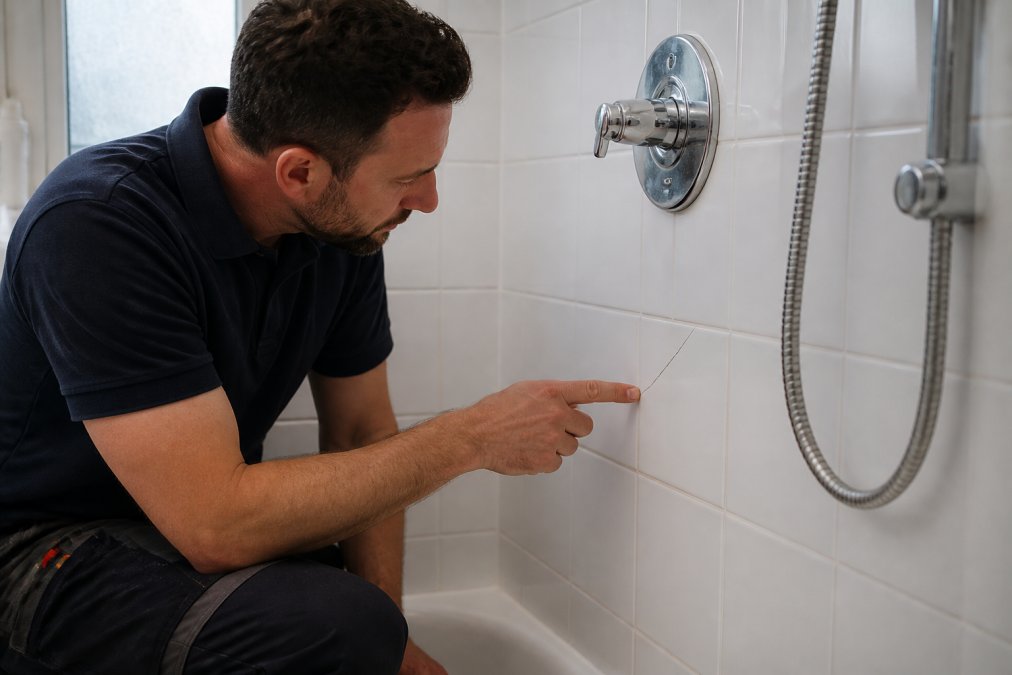
Cosmetic tile repair services exist for exactly this situation: damage that affects how a tile looks but not how the bathroom performs. A chip on the edge of a wall tile, a scratch across a glazed finish, or a small crack that has not spread is a candidate for repair.
Repair involves filling, colour matching and refinishing the damaged area in place. No tiles come off the wall. No waterproofing gets disturbed. The bathroom stays usable.
Replacement means removing the damaged tile, and often its neighbours, then refitting and regrouting. It restores a perfect finish, but it also opens up the wall behind.
The deciding factor is rarely the chip itself. It is what sits underneath it.
Repair or Replace? A Side-by-Side Comparison
The table below summarises how the two routes differ across the factors that matter most to homeowners, landlords and facilities managers.
| Factor | Cosmetic Repair | Full Replacement |
|---|---|---|
| Disruption | Minutes to hours per tile | Days, often a full room |
| Strip-out required | None | Tiles, adhesive, sometimes board |
| Colour matching | Matched to existing tile | Only if matching stock exists |
| Waterproofing | Left intact | Reinstated after removal |
| Waste generated | Minimal | Old tiles to landfill (Dispose of waste to landfill) |
| Best for | Isolated chips, cracks, scratches | Drummy, lifting or widespread damage |
What Each Route Actually Involves
A repair visit starts with assessment. The technician checks whether the tile is firmly bonded, how deep the chip goes, and whether the glaze has fractured beyond the visible damage. From there, the area is cleaned, filled, colour matched and refinished so it blends with the surrounding tiles.
Replacement is a building job by comparison. The damaged tile is broken out, old adhesive is chipped back, the substrate is checked and repaired if needed, a new tile is cut and fitted, and the joints are regrouted and sealed. Matching a discontinued tile is a common problem.
The Pros and Cons of Each Option
Repair:
- Keeps the original tile and its pattern
- No strip-out, no dust sheets across the landing
- Far less disruption to a working bathroom or a let property
- Suitability depends on the extent of the damage
Replacement:
- Delivers a genuinely new surface
- The right call when tiles are loose or the wall behind is wet
- Higher cost once labour, materials and waste removal are counted
- Longer downtime and possible knock-on decorating
When Cosmetic Tile Repair Services Are the Right Call
Cosmetic tile repair services make sense when the damage is contained. Look for these signals:
- The tile sounds solid when tapped (bsigroup.com)
- The chip or crack is on the surface, not through the body of the tile
- Only one or two tiles are affected
- The surrounding grout is intact and dry
- The bathroom is in use and cannot be taken out of service
That last point matters commercially. Hotels, student accommodation and rental properties cannot absorb a multi-day retiling between guests or tenancies. A repair that finishes the same day keeps the room earning.
Surface Magic Repairs works with landlords, letting agents and facilities teams across Greater Manchester and the wider North West on exactly this kind of reactive work, alongside single domestic jobs.
How Professionals Repair Chipped and Cracked Tiles
Repairing a chipped tile is a finishing job, not a filling job. The difference between a repair that disappears and one that looks patchy comes down to preparation and colour work.
The process typically runs in stages. The damaged area is cleaned and any loose material removed. The chip is rebuilt with a suitable filler, then sanded back flush with the tile face. Colour is built up in layers to match the tile body and glaze, and the pattern is reproduced where the tile has a mottled or veined finish. A final coating seals the repair and restores the sheen.
This is specialist work. Colour matching on a gloss glaze or a patterned porcelain tile takes practice, and the materials involved are not the sort of thing to experiment with on a live bathroom. That is the honest reason to bring in a professional rather than a DIY kit for anything beyond a tiny, hidden chip.
The Cost of Replacing Bathroom Tiles Compared With Repair
The cost of replacing bathroom tiles involves various factors beyond just the tiles themselves, such as adhesive, grout, waterproofing, labour, waste removal, and any subsequent decorating.
Repair removes most of those line items. There is no strip-out, no skip, no reboarding, and no redecoration. One visit, one invoice.
Pricing for repair depends on the surface, the extent and location of the damage, access, the finish required and how many repairs are booked in one visit. That is why no reputable surface repair company quotes blind over the phone. Surface Magic Repairs assesses from clear photographs and your address and postcode before confirming a quotation, and will say plainly if replacement would be the more durable choice.
Sustainable Bathroom Renovation: What Repair Keeps Out of Landfill
A sustainable bathroom renovation starts with the question of what can stay. Ceramic and porcelain are fired products. Once a tile is removed and broken, it cannot be refitted, and the energy and material that went into making it are lost.
Keeping a sound tiled wall in place and repairing the damage avoids that entirely. No tiles to a skip, no adhesive and board waste, no replacement tiles manufactured and transported for a single chip.
For housing associations, property managers and portfolio owners, that shift in approach adds up across hundreds of units. Repairing rather than replacing also fits the wider move toward retaining serviceable materials in occupied buildings rather than stripping them out on a scheduled cycle.
New Build Snagging Tile Damage: Repairing Before Handover
New build snagging tile damage is one of the most common handover issues, and one of the easiest to resolve before a buyer walks in. Chipped tiles around a bath, a cracked tile behind a basin, or scuffed grout lines from a busy site are cosmetic problems with a cosmetic fix.
The alternative is a customer care ticket, a return visit from the tiling contractor, and a delay to completion. None of that is necessary for a chip.
Surface Magic Repairs works with housebuilders, developers and main contractors on snagging and handover repairs, assessing multiple units in a single site visit rather than booking each plot separately. Repairs are completed in place, which means occupied plots and finished show homes stay presentable.
When Replacement Is the More Sensible Choice
Repair is not always the answer, and any company that says otherwise is not being straight with you. Replacement is the better route when:
- Tiles are drummy, lifting or hollow when tapped
- Water has got behind the tiles and the substrate is damp
- Cracks run through the tile and into the wall
- Damage covers a large area or several tiles in a run
- The tiles are already failing across the room
In these cases a cosmetic repair would only hide a problem that will return. Surface Magic Repairs assesses each job honestly and will recommend replacement where that is the more durable option.
Conclusion
Deciding between repairing vs replacing bathroom tile surfaces is a judgement call, and it deserves a proper assessment rather than a guess. Chips, cracks and scratches on sound tiles are usually a same-day repair. Loose, drummy or water-damaged tiling is a replacement job.
Surface Magic Repairs repairs damaged tiles in place, with colour and finish matched to the existing surface, no strip-out and no unnecessary waste. The team also handles baths, shower trays, sinks, worktops, uPVC frames, doors and furniture, so a single visit can clear a whole snagging list. With more than 46,000 surfaces repaired in the last year, the team works with homeowners, landlords and commercial clients from its Bolton base across Greater Manchester and the wider North West, with nationwide coverage for larger commercial and multi-site projects.
Send clear photographs of the damage, the complete item and the surrounding area, together with your full address and postcode. Surface Magic Repairs can assess whether a repair is suitable and provide a quotation. Call 0800 085 7773 or visit surfacemagicrepairs.co.uk.
Frequently Asked Questions
Is it worth repairing a chipped bathroom tile?
For a single chip on an otherwise sound tile, repair is usually worth it. A technician fills and colour matches the damaged area in place, so there is no strip-out, no matching new tiles and no knock-on grouting or decorating. Suitability depends on the material, the depth of the chip and whether the tile is still firmly fixed. If the tile is loose or the crack runs through the substrate, replacement may be the more durable option, which is why an honest assessment comes first.
Can you repair a cracked tile without replacing it?
Often, yes. Hairline and cosmetic cracks in ceramic or porcelain can be filled, tinted and refinished so they blend with the surrounding surface. Repairing in place avoids the risk of damaging neighbouring tiles during removal and keeps the bathroom usable. A crack that has spread, a hollow-sounding tile or one with water behind it is a different matter, and replacement is usually advised so the underlying problem is fixed properly.
What affects the cost of replacing bathroom tiles versus repairing them?
The cost of replacing bathroom tiles depends on tile type, area size, removal and disposal, adhesive and grout, any substrate repairs, and labour. Repair pricing depends on the number of damaged tiles, the material, access and how closely the finish must be matched. Both vary by job, so send clear photographs of the damage, the whole tiled area and the surrounding room, plus your address and postcode, and Surface Magic Repairs can assess suitability and quote.
How do cosmetic tile repair services help with new build snagging tile damage?
New build snagging tile damage often means a handful of chips, scuffs or grout marks across several plots rather than a failed installation. Cosmetic tile repair services visit site, treat each damaged tile in place and colour match the finish, so plots can be signed off without retiling. Surface Magic Repairs works alongside site managers and customer-care teams and can assess multiple units in one visit. Send the snagging list, plot numbers and postcode to check availability.