Quick Summary
In most cases, yes. Chips, scratches, cracks and burns on suitable surfaces can usually be repaired in place before handover, avoiding replacement, strip-out and disruption. Suitability depends on the material, condition and extent of the damage, so a surface repair assessment is the best starting point.
- Chips, scratches, cracks and burns can often be repaired in place before handover.
- Suitability depends on the material, condition and extent of the damage.
- Repair avoids strip-out, new fittings and decorating that replacement can involve.
- Send clear photographs of the damage, the full item and surroundings for a quotation.
- Deep cracks or structural damage may need a different solution to a cosmetic repair.
Table of Contents
- Why Surface Repair for Property Handover Often Beats Replacement
- Which Surfaces Can Be Repaired Before a New-Build Handover
- Repair or Replace Damaged Surfaces: How to Decide
- New-Build Snagging Repairs: Dealing With Cosmetic Damage Across Units
- How Long Surface Repairs Take and Whether They Can Be Done On Site
- How a Surface Repair Process Works in Practice
- What to Send With Your Surface Repair Quotation Photographs
- Common Mistakes That Delay Handover Repairs
- Booking Surface Repairs Before Your Next Handover Date
- Frequently Asked Questions
Why Surface Repair for Property Handover Often Beats Replacement
Can surface damage be repaired before a property handover? In most cases, yes. Surface Magic Repairs, a Bolton-based surface repair and restoration company, repairs chips, scratches, cracks, burns and other cosmetic damage in place, so the item stays where it is. The outcome depends on the material, the condition and the extent of the damage.
This matters at handover because the timetable is tight. Replacing a bath, a worktop or a set of tiles can mean strip-out, new fittings, decorating and days of disruption. A repair avoids unnecessary removal and strip-out.
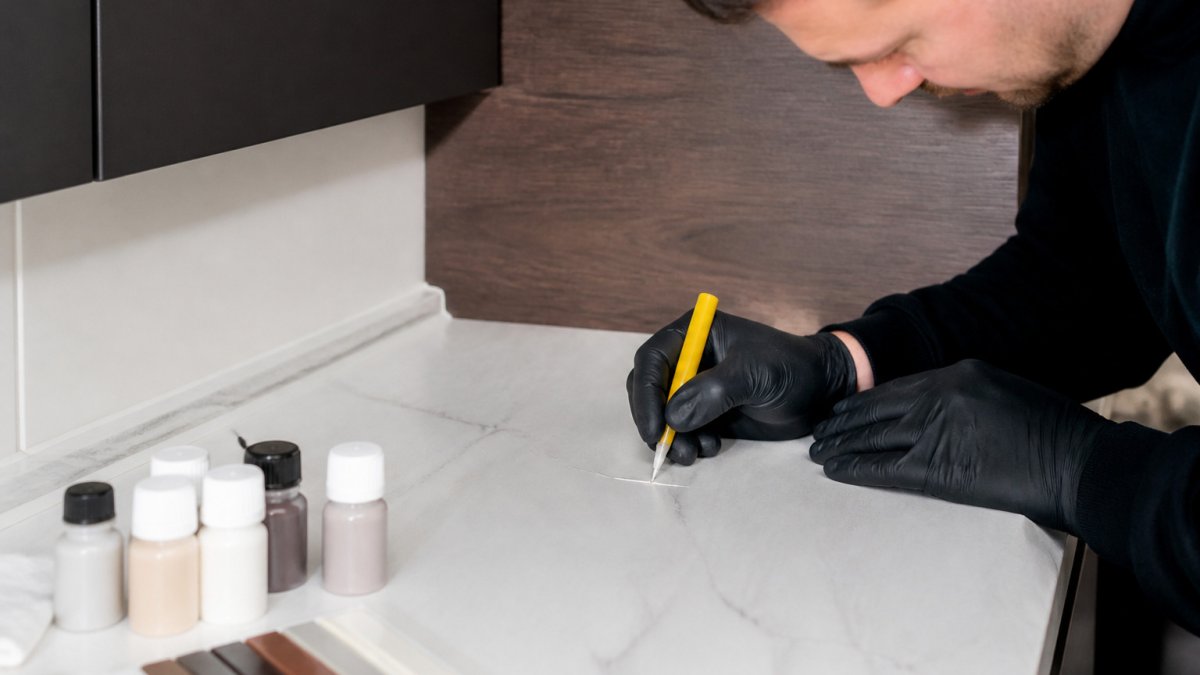
Depending on the job, a repair may involve filling or rebuilding the damaged area, matching its colour or texture and applying a suitable finish. Repairs are completed in place, keeping the original item intact.
Repair can be a practical and cost-effective alternative to replacement, reducing waste and disruption. Pricing depends on the surface, the damage, access and the finish, so the best starting point is a quotation based on clear photographs.
Which Surfaces Can Be Repaired Before a New-Build Handover
Suitability depends on the material, condition and extent of the damage. Baths, shower trays, sinks, laminate and solid-surface worktops, ceramic tiles, uPVC frames, doors, cabinets and fitted furniture are among the surfaces Surface Magic Repairs repairs.
Some surfaces are more straightforward than others:
- Acrylic and enamel baths: chips and scratches are often repairable in place.
- Laminate and solid-surface worktops: chips, scratches and small burns are commonly repairable.
- Ceramic and porcelain tiles: cosmetic chips can usually be treated without re-tiling.
- uPVC frames and doors: scuffs, scratches and small dents can often be restored.
- Fitted furniture and panels: surface chips and scratches are usually suitable.
Deep cracks, structural damage or damage to the underlying substrate may need a different solution. A cosmetic repair improves appearance and usability but does not replace structural work. Surface Magic Repairs will say honestly when replacement would be more durable.
For a clear picture of the work involved, see our crack and cosmetic surface repair service.
Suitability varies by material, so the article sets out which common surfaces are usually straightforward to repair.
| Surface | Repair outlook | Note |
|---|---|---|
| Acrylic and enamel baths | Often repairable in place | Chips and scratches |
| Laminate and solid-surface worktops | Commonly repairable | Chips, scratches and small burns |
| Ceramic and porcelain tiles | Usually treatable | Cosmetic chips, no re-tiling |
| uPVC frames and doors | Often restorable | Scuffs, scratches and small dents |
| Fitted furniture and panels | Usually suitable | Surface chips and scratches |
| Deep cracks or structural damage | May need a different solution | Cosmetic repair does not replace structural work |
Repair or Replace Damaged Surfaces: How to Decide
Deciding between repair and replacement comes down to four questions:
- Is the surface sound? A repair needs a stable base to bond to.
- How large is the damage? A few chips rarely justify replacement. Widespread damage might.
- Will the colour and finish match? Results depend on the material, finish, damage and surrounding pattern.
- What disruption would replacement cause? Removal, reinstallation and making good can outweigh the cost of the item itself.
Whether repair or replacement is appropriate depends on the material, condition and extent of the damage.
Surface Magic Repairs will give an honest assessment of whether a repair is suitable and advise if replacement would be more appropriate or durable.
For a practical guide to making this call on baths, worktops and tiles, read our article on repair or replace decisions for baths, worktops and tiles.
New-Build Snagging Repairs: Dealing With Cosmetic Damage Across Units
New-build handover work can involve cosmetic damage to baths, worktops, tiles and doors. Surface Magic Repairs provides new-build snagging and handover repairs in place, helping reduce replacement costs and disruption.
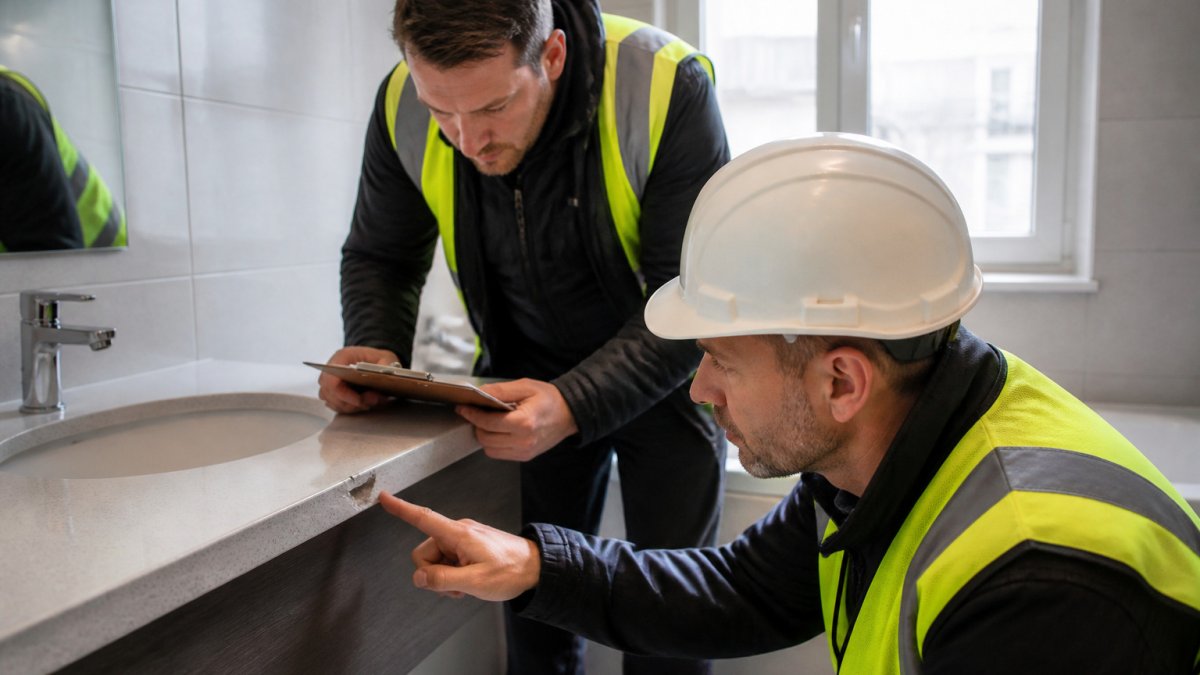
For developers and main contractors, photographs of each defect, with the unit number and location, can help describe the work when requesting a quotation.
Our on-site cosmetic snagging repairs are completed in place, subject to suitability.
Clear documentation can help record each defect with a date, location and photograph.
For guidance on recording damage before a visit, see our guide on documenting snagging issues in new builds.
How Long Surface Repairs Take and Whether They Can Be Done On Site
Repair time depends on the surface, the amount of damage and the finish required. Ask Surface Magic Repairs about timing when requesting a quotation.
Repairs are completed in place, avoiding unnecessary removal or strip-out.
For developers and housebuilders, see our surface repairs for housebuilders and property developers.
How a Surface Repair Process Works in Practice
Depending on the job, a repair may involve:
- Assessment: The damage is reviewed from photographs, then confirmed on site if needed.
- Preparation: The damaged area is cleaned and prepared so the repair can bond properly.
- Filling or rebuilding: The damage is filled or rebuilt to restore the surface.
- Colour and texture matching: The repair is coloured and textured to blend with the surrounding area.
- Finishing: A suitable final finish is applied and allowed to cure.
- Check: The repair is inspected against the surrounding surface.
Results vary. A repair on a pattern-rich laminate or an older surface may be more noticeable than one on a plain, uniform material. The technician will explain the likely outcome before work begins.
Do not attempt specialist chemical or coating repairs yourself.
What to Send With Your Surface Repair Quotation Photographs
For a quotation, send:
- A clear photo of the damage, taken straight on and close enough to show the detail
- A wider photo of the complete item, such as the full bath or worktop
- A photo of the surrounding area, so the colour and pattern can be assessed
- Your full address and postcode, so availability can be checked
Where several defects are involved, label each photo with its location and unit number.
Pricing depends on the surface, the damage, the location, access, the finish and the number of repairs.
Common Mistakes That Delay Handover Repairs
Several points are worth considering when arranging handover repairs:
- Waiting too long to book. Repairs need access and time. Booking early keeps the handover on schedule.
- Sending unclear photographs. Blurred or distant images make assessment harder and can delay the quotation.
- Treating every defect as a replacement. Many cosmetic defects are repairable, which is quicker and less disruptive.
- Trying to repair it first. Home attempts can make a professional repair harder, especially on decorative or patterned finishes.
- Leaving defects undocumented. Without records of location and date, it is harder to agree and close out the work.
Booking Surface Repairs Before Your Next Handover Date
If you have a handover approaching, send clear photographs of the damage, the complete item and the surrounding area, together with your full address and postcode. Surface Magic Repairs can assess whether a repair is suitable and provide a quotation.
You can send your photographs and details through our website at surfacemagicrepairs.co.uk, or call 0800 085 7773. Office enquiry hours are Monday to Friday, 9:00am to 3:00pm.
Surface Magic Repairs will advise honestly if replacement would be more appropriate or durable.
Frequently Asked Questions
What surface damage should be repaired before a property handover?
Surface Magic Repairs can assess cosmetic damage to baths, shower trays, sinks, worktops, laminate, tiles, uPVC frames, doors and panels. Suitability depends on the material, condition and extent of the damage. Repairs are completed in place, and results depend on the material, finish, damage and surrounding pattern.
Can surface repairs be completed on site?
Repairs are completed in situ, subject to suitability. Depending on the job, the damaged area may be prepared, filled or rebuilt, colour matched, textured and refinished. Surface Magic Repairs will advise honestly if replacement would be more appropriate or durable.
What information is needed to arrange a surface repair?
Customers can usually receive a quotation by sending clear photographs of the damage, the complete item and the surrounding area, together with their full address and postcode. Cost depends on the surface, damage, location, access, finish and number of repairs. You can call 0800 085 7773 or visit surfacemagicrepairs.co.uk to start the process.
Can cosmetic damage be repaired without replacing the whole item?
Some chips, scratches, cracks, dents, burns and staining may be suitable for repair without replacing the whole item. Suitability depends on the material, condition and extent of the damage. Surface Magic Repairs will advise honestly if replacement would be more appropriate or durable.