Table of Contents
- The Hidden Costs of Replacing Damaged Surfaces
- What Professional Cosmetic Repair Actually Involves
- On-Site Cosmetic Repair Benefits for Homes and Businesses
- Repair vs Replace Kitchen Worktop: What Decides the Answer
- How Long a Professional Cosmetic Repair Lasts
- The Environmental Case for Repairing Instead of Replacing
- How to Get a Surface Repair Quote
- Frequently Asked Questions
Last Updated: September 13, 2026
The Hidden Costs of Replacing Damaged Surfaces
A chipped bath or a burnt worktop rarely costs only the price of its replacement. The real expense sits in the labour, the strip-out, the making good and the days of lost use that follow. That is the core reason professional cosmetic repair is cost effective: it removes almost every one of those secondary costs before they are incurred. This guide from Surface Magic Repairs explains where the hidden money goes, what a repair involves and when replacement is genuinely the better answer.
Replacement starts with removal. A bath has to be disconnected, lifted out and disposed of, then a new unit fitted, sealed and made good around the edges. Worktops are worse. A laminate or solid-surface worktop is usually cut to the shape of the room, so replacing it often disturbs splashbacks, upstands, tiling and sometimes the units beneath. The government guidance on construction and demolition waste classifies much of this removed material as waste that must be handled and disposed of properly, which adds cost and paperwork to every rip-out.
Labour, Tiling and Making Good
Skilled trades do not work for free, and a replacement job pulls in several of them. A plumber disconnects and reconnects sanitaryware. A tiler replaces damaged tiles and re-grouts. A decorator touches up the surrounding walls. Each trade adds a call-out, a day rate and a return visit. A cosmetic repair keeps all of that untouched, because the existing surface stays exactly where it is.
Downtime You Cannot Invoice
For a hotel, a landlord or a facilities team, a room out of action is money lost. A bathroom stripped for replacement can sit unusable for days. A repaired bath or shower tray is typically back in service the same day, which is often the single largest saving on a commercial job.
What Professional Cosmetic Repair Actually Involves
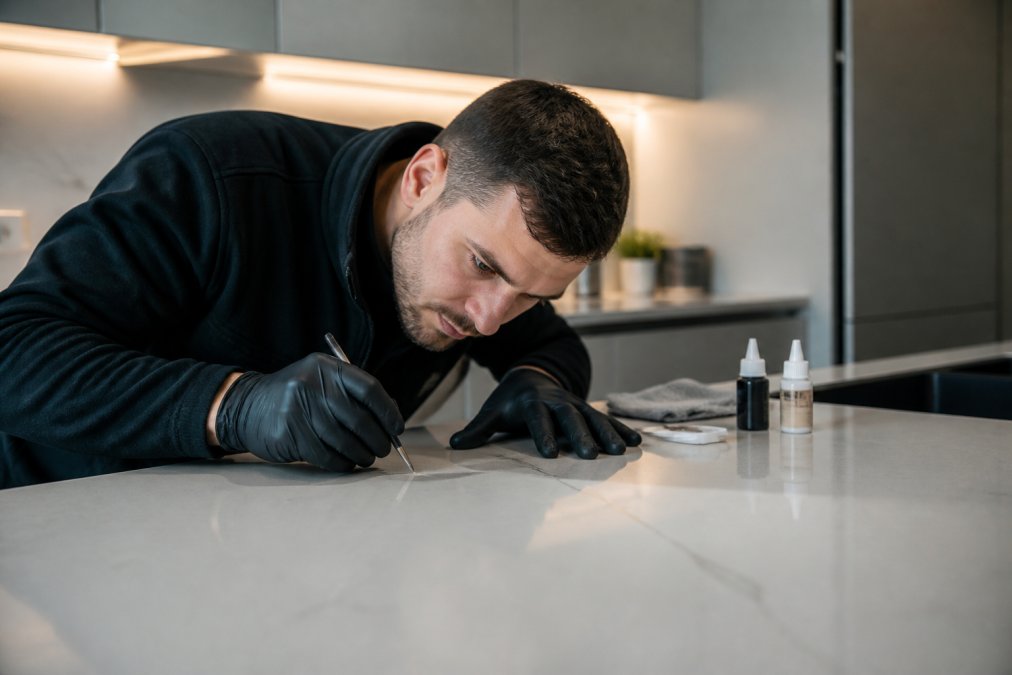
Professional cosmetic repair is the process of restoring a damaged surface in place, matching its colour, texture and finish so the repair blends with the surrounding material. It is carried out on site with specialist fillers, tints and coatings rather than by removing the item. Depending on the job, a technician prepares the damaged area, rebuilds or fills it, reproduces the colour and pattern, then applies a suitable finish.
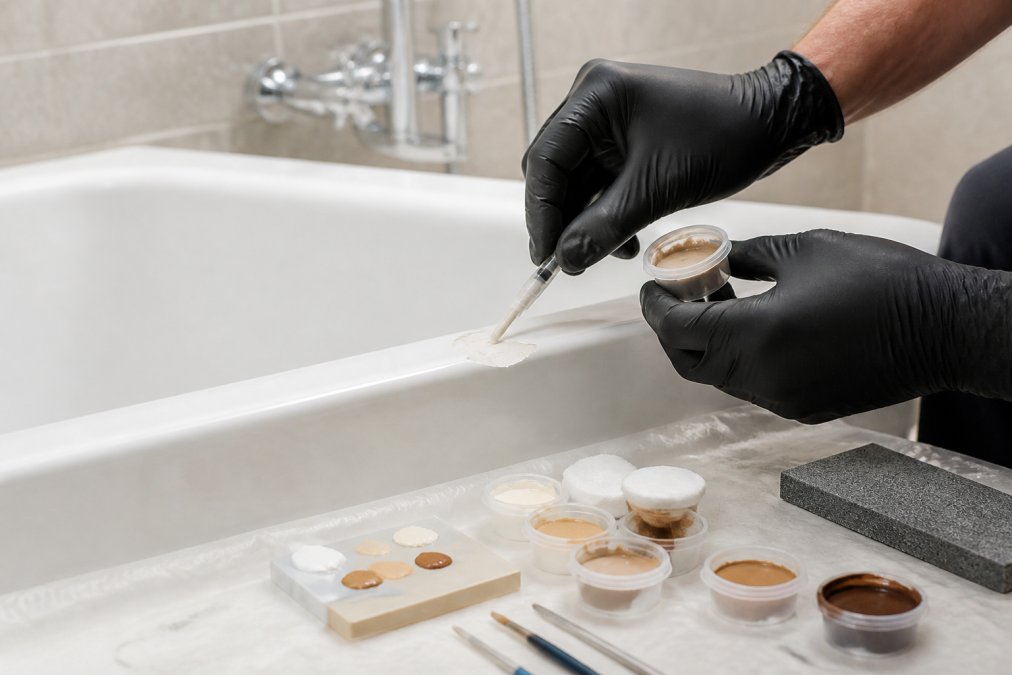
The scope is wider than most people expect. Surface Magic Repairs works on baths, shower trays, sinks and sanitaryware, laminate and solid-surface worktops, ceramic and porcelain tiles, uPVC frames and cills, doors, fitted furniture and many other finished surfaces. Repairs are completed in place, with no strip-out required.
On-Site Cosmetic Repair Benefits for Homes and Businesses
The main benefit of on-site cosmetic repair is that it keeps the existing fixture or fitting in use. Nothing is disconnected, nothing is skipped, and no surrounding tiling or decorating is disturbed. For a homeowner that means a working bathroom by the evening. For a commercial client it means a guest room, a retail unit or a managed property stays occupied and revenue-generating.
There are practical advantages beyond cost:
- No removal or strip-out, so no knock-on damage to adjacent surfaces
- Colour and finish matched to the existing surface
- Fast turnaround, often within a single visit
- Less waste going to landfill
- Suitable for occupied homes and live commercial buildings
A common mistake is booking a replacement before a repair has even been assessed. Many surfaces that look beyond saving are perfectly repairable once a specialist has seen them.
Repair vs Replace Kitchen Worktop: What Decides the Answer
When weighing repair against replacing a kitchen worktop, the deciding factors are the material, the depth and type of damage, and whether the surface is still structurally sound. A burn, chip or scratch on a laminate or solid-surface worktop is usually repairable. A worktop that has swollen from water ingress or cracked through its core often is not.
| Factor | Favours Repair | Favours Replacement |
|---|---|---|
| Damage type | Chips, burns, scratches, stains | Swelling, structural cracking |
| Material | Laminate, solid surface, stone | Water-damaged MFC or chipboard core |
| Extent | Isolated or localised damage | Damage across most of the surface |
| Disruption | Occupied kitchen, quick fix needed | Kitchen already being refitted |
| Matching | Existing worktop hard to match | Matching replacement available |
When Replacement Genuinely Wins
Honesty matters here. If a worktop has swollen and lost its integrity, or a bath has a structural crack that compromises its safety, replacement is the more durable answer. Surface Magic Repairs will say so rather than book work that will not last. Suitability always depends on the material, condition, location and extent of the damage.
How Long a Professional Cosmetic Repair Lasts
A correctly carried out cosmetic repair is a durable repair, not a temporary patch. Longevity depends on the surface, how well it is prepared, the finish applied and how the repaired area is treated afterwards. A bath or shower tray repair in a busy hotel will see more wear than one in a spare bathroom, so the finish chosen should suit the environment.
To protect a professionally repaired surface, avoid abrasive cleaners and scouring pads, wipe spills promptly and use a mild, non-abrasive product. Treated sensibly, a good repair extends the working life of the original fixture by years rather than months. That extended life is what turns a one-off repair cost into a long-term saving against replacement.
The Environmental Case for Repairing Instead of Replacing
Repairing a surface keeps a serviceable item in use and out of the waste stream. Every bath, worktop or tiled area that is repaired rather than replaced is one fewer item manufactured, transported and eventually landfilled. The UK waste and resources guidance sets out the waste hierarchy, which places reuse and repair above recycling and disposal. Cosmetic repair sits firmly at the top of that hierarchy.
For organisations reporting on environmental performance, that matters. A repair programme reduces the volume of construction and demolition waste a business generates, which supports waste-reduction targets without compromising the appearance of the property. It is one of the few cost-saving measures that also improves an environmental position.
How to Get a Surface Repair Quote
Getting a surface repair quote is straightforward and usually starts with photographs. Send clear images of the damage, the complete item and the surrounding area, together with your full address and postcode. Surface Magic Repairs can then assess whether a repair is suitable and provide a quotation.
What to include:
- A close-up of the damage itself
- A wider shot showing the whole item
- A shot of the surrounding surface for colour matching
- Your full address and postcode
- The number of surfaces needing repair
- Any access or timing constraints
Cost depends on the surface, the type and extent of damage, the location, access, the finish required and the number of repairs. That is why a photograph-led assessment gives a far more accurate figure than a generic estimate. For commercial or multi-site work, send the details and postcode so availability can be checked.
A damaged surface does not automatically mean a replacement bill. Labour, tiling, making good and downtime are the costs that make replacement expensive, and cosmetic repair removes them. Surface Magic Repairs has completed more than 46,000 surface repairs in the last year, working on site with colour and finish matching across domestic and commercial properties. Send clear photographs of the damage, the complete item and the surrounding area, together with your full address and postcode, and Surface Magic Repairs can assess whether a repair is suitable and provide a quotation. Call 0800 085 7773 or visit surfacemagicrepairs.co.uk.
Frequently Asked Questions
Is it cheaper to repair a damaged worktop than replace it?
In most cases, yes. A professional cosmetic repair tackles the burn, chip or scratch in place, so you avoid the cost of a new worktop, the labour to remove the old one, and any tiling or decorating that follows. Replacement also means downtime while the kitchen is out of action. Suitability depends on the material, the extent of the damage and where it sits, so an honest assessment comes first. Send photographs and Surface Magic Repairs can confirm whether repair or replacement is the better route.
Can you repair chips and cracks in laminate worktops?
Many laminate chips, burns and surface cracks can be repaired. A technician rebuilds the damaged area, reproduces the colour and pattern, then applies a suitable finish so it blends with the surrounding surface. Deep damage that has compromised the core, or cracking across a wide area, may not be worth repairing. The deciding factors are depth, location and how well the pattern can be matched. Photographs of the damage and the full worktop help Surface Magic Repairs assess this before booking.
What are the benefits of on-site surface restoration?
On-site restoration means the damaged item stays where it is. There is no strip-out, no removal of a bath or worktop, and no knock-on tiling, sealing or decorating. For a hotel, that can mean a room back in service the same day rather than being closed for a full refit. For a landlord, it means a repair between tenancies without ripping out a serviceable fitting. Fewer trades on site, less waste to landfill and a finish colour matched to what is already there.
How long does a professional cosmetic repair last?
A properly prepared and finished repair holds up well in normal use, including busy bathrooms and kitchens. Longevity depends on the material, the repair materials used, how the surface is treated afterwards and the environment it sits in. A repaired bath or shower tray in a hotel sees heavy use, so correct preparation matters more than speed. Surface Magic Repairs will explain realistic expectations for your specific surface rather than promising a permanent, invisible fix.