Table of Contents
- The Real Cost Difference: Refinishing vs Replacement
- How Long Does Bathtub Refinishing Last?
- What Drives the Cost of Replacing a Bath and Tiles?
- Pros and Cons of Refinishing Your Existing Bath
- When Replacement Is the Right Call
- Is Bathtub Resurfacing Worth It for Landlords and Hotels?
- Conclusion: Weighing Up the Costs
- Frequently Asked Questions
Last Updated: September 5, 2026
When a bath starts looking tired, chipped, or stained, the question of whether to refinish or replace it comes with a significant price tag attached. The cost comparison of bathtub refinishing vs replacement usually settles on one decisive factor: replacement can cost several times more once you account for labour, plumbing, and the inevitable knock-on tiling work, making professional refinishing the clear financial winner for most cosmetic damage. At Surface Magic Repairs, we repair thousands of surfaces every year, and we see too many landlords and homeowners rip out perfectly serviceable baths because they assume replacement is the only option. Below, we break down the real numbers, longevity, and practical trade-offs so you can make a decision that suits your property and your budget.
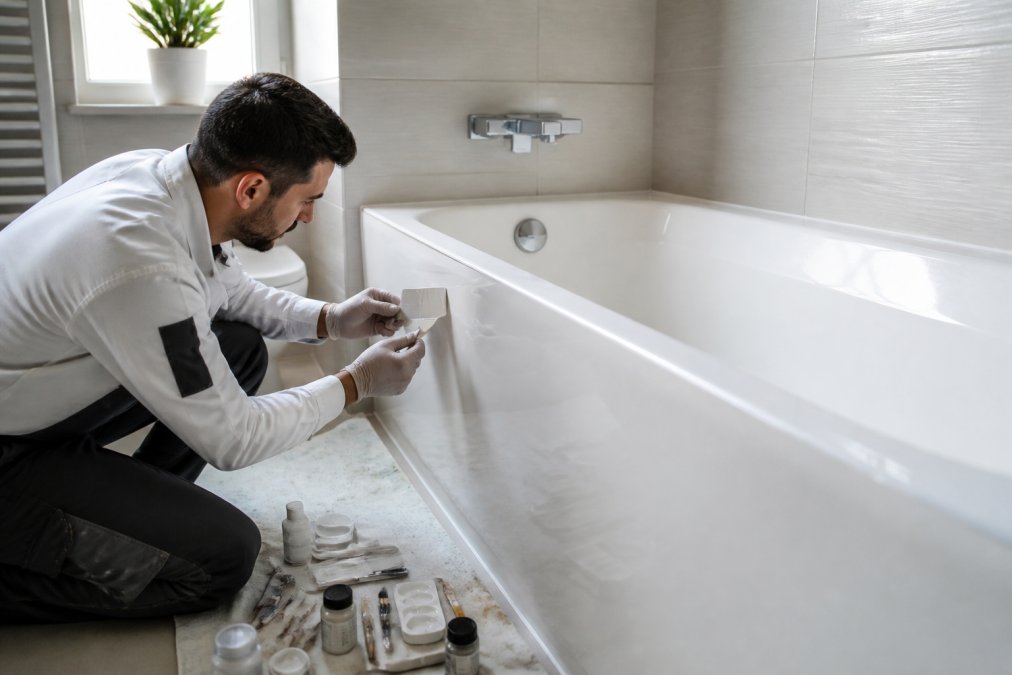
Bathtub refinishing is the process of restoring the existing surface of a bath in situ, repairing chips, scratches, and staining while matching the original colour and finish. It keeps the bath in place, avoids plumbing disruption, and eliminates the need for new tiling. The cost comparison of bathtub refinishing vs replacement is not just about the unit price; it is about the total project cost, including labour, waste removal, and the condition of your surrounding tiles.
The Real Cost Difference: Refinishing vs Replacement
The headline figure is straightforward: refinishing the bath you already own costs a fraction of buying, delivering, and installing a new one. A full replacement means paying for the new unit, a plumber to disconnect and reconnect the waste and taps, and often a tiler to repair the damage caused by removing the old bath.
Replacement costs can escalate quickly because of what sits around the bath. Removing a unit frequently damages the tiles above it, meaning you are not just buying a bath, you are funding a mini-renovation. Refinishing avoids all of that. The existing tiles stay untouched, the bath stays put, and the work is completed in a single visit.
| Cost Factor | Refinishing | Replacement |
|---|---|---|
| New bath unit | Not required | Required |
| Plumber labour | Not required | Required |
| Tiling repairs | Typically avoided | Often required |
| Waste removal | Minimal | Required |
| Room downtime | Hours | Days |
How Long Does Bathtub Refinishing Last?
A professionally applied refinish is not a temporary cover-up (peer-reviewed research). With proper preparation and quality materials, a refinished bath can last several years of daily use before it needs attention again. The durability depends heavily on how well the surface was prepared and the quality of the product used.
The question of how long bathtub refinishing lasts is usually answered by the condition of the original bath. A bath that is structurally sound with only cosmetic wear is an ideal candidate. A bath with deep cracks or flexing will not hold a new finish, and that is where replacement becomes necessary. For rental properties and hotels, a good refinish can bridge several tenancies before a full refurbishment is due.
What Drives the Cost of Replacing a Bath and Tiles?
The cost of replacing a bath and tiles is driven by more than the price of the new porcelain. Labour rates for plumbers and tilers vary significantly by region, and the condition of the existing bathroom dictates how much prep work is required before the new unit can go in.
Removing an old bath often reveals problems you cannot see until it is lifted: corroded pipework, uneven floors, or water damage behind the tiles. Each of these adds time and materials to the job. The cost of replacing a bath and tiles also includes disposing of the old unit and making good the walls, which is rarely a clean, one-day job. For a landlord, this means longer void periods between tenancies, which adds an indirect cost that is easy to underestimate.
Pros and Cons of Refinishing Your Existing Bath
The advantages of refinishing go beyond the upfront saving. A professional refinish is completed in hours, not days, meaning the bathroom is back in use quickly. It also avoids the risk of damage to surrounding tiles, which is almost inevitable when a bath is physically removed.
- Lower cost: Refinishing costs a fraction of replacement
- Minimal disruption: No need to strip out the bath or disconnect plumbing
- Faster turnaround: The surface is usually ready for use within a day
- Less waste: Keeps the existing bath out of landfill
- Preserves tiling: No risk of cracking tiles during removal
The main limitation is that refinishing cannot fix structural problems. If the bath flexes, has deep cracks, or the enamel is failing across the whole surface, a new unit is the only sound option. For cosmetic damage, scratches, chips, and staining, refinishing restores the bath to a like-new appearance without the cost and hassle of replacement.
When Replacement Is the Right Call
Replacement is the correct choice when the bath is structurally unsound. If the unit flexes when you stand in it, has cracks that run through the material, or shows signs of water damage to the floor beneath, no surface treatment will solve the problem.
A new bath also makes sense when you are already planning a full bathroom renovation. If the tiles, floor, and sanitaryware are all being replaced, installing a new bath at the same time is logical. The same applies when you want to change the style or size of the bath entirely. Refinishing restores what you have; it cannot turn a standard tub into a freestanding feature.
For most other scenarios, the cost comparison of bathtub refinishing vs replacement favours keeping the existing bath. If the damage is cosmetic and the structure is sound, paying for a full replacement is spending money where it is not needed.
Is Bathtub Resurfacing Worth It for Landlords and Hotels?
For property professionals, the question of whether bathtub resurfacing is worth it comes down to downtime and void periods. A hotel room that is out of action for a week for a full replacement loses revenue every single night (hvs.com). A bath that is refinished in a day keeps the room bookable almost immediately.
Landlords managing multiple properties face a similar calculation. The cost of replacing a bath and tiles in a rental property often exceeds a month of rent, and the disruption can delay a new tenancy (nachi.org). Resurfacing between tenancies is a fast, cost-effective way to present a fresh bathroom without the capital outlay. Facilities managers and housebuilders also use in situ repairs to address snagging lists and defect rectification without holding up handover dates.
Conclusion: Weighing Up the Costs
The decision between refinishing and replacement ultimately comes down to the condition of the bath and your timeline. If the unit is structurally sound and the damage is cosmetic, refinishing delivers a professional finish at a fraction of the cost of replacement, with minimal disruption and no knock-on tiling work. If the bath is damaged beyond repair, replacement is unavoidable.
At Surface Magic Repairs, we specialise in in situ cosmetic repairs for baths, tiles, worktops, and sanitaryware across the UK. Our team matches colour and finish to your existing surface, completing repairs quickly and cleanly. With 46,000+ surfaces repaired in the last year, we have the experience to assess your bath honestly and tell you whether a repair will deliver the result you need. Get in touch for a quote and see how much you can save by keeping your existing bath.
Frequently Asked Questions
How much does it cost to refinish a bathtub compared to replacing it?
Refinishing is nearly always the lower-cost option because it avoids the expense of a new unit, plumbing work, and labour for removal and installation. Replacement also often forces you to retile, adding to the total. The final figure for either depends on your bath material, location, and the extent of damage. For a precise cost comparison for your property, request a quote from Surface Magic Repairs to get accurate, current pricing.
How long does a refinished bathtub last?
A professionally refinished bathtub typically lasts several years with normal use. Its lifespan depends on the quality of the preparation, the products used, and how the bath is cleaned afterwards. Avoiding abrasive cleaners and heavy impacts will help the finish stay in good condition for longer. For high-traffic environments like hotels, a technician can advise on the best approach to maximise durability between guest stays.
Does replacing a bathtub require retiling the bathroom?
Often, yes. Removing a bath usually damages the tiles around the lip where it meets the wall, and the new bath may sit at a slightly different height or depth. This means you should budget for new tiles, adhesive, grout, and potentially a plasterer to repair the wall behind them. This knock-on work is a major part of the cost of replacing a bath and tiles, and it is a key reason why in-situ repair is so cost-effective.
Is bathtub resurfacing worth it?
For chips, scratches, stains, or a worn finish, resurfacing is usually worth it because it restores the bath's appearance at a fraction of the time and cost of replacement. It is especially valuable when the bath itself is in good structural condition. However, if the bath is structurally unsound, has serious rust, or you are planning a full bathroom remodel anyway, replacement may be the better investment.
This article was written using GrandRanker