Table of Contents
- Why Repairing vs Replacing Fixtures Is Rarely a Straight Swap
- The Real Cost of Replacing Kitchen Worktops and Other Fixtures
- Downtime, Disruption and the True Cost of Strip-Out
- What Professional Bath Chip Repair Actually Involves
- Repairing Laminate Worktop Burns: What's Possible and What Isn't
- New Build Snagging Repairs: Why Repair Beats Replacement on Site
- Environmental Impact: Waste, Landfill and Material Lifespan
- When Replacement Is the Better Option
- Frequently Asked Questions
Last Updated: September 22, 2026
Why Repairing vs Replacing Fixtures Is Rarely a Straight Swap
A chipped bath or a burnt worktop looks like a simple problem with a simple answer: rip it out and start again. In practice, the decision is rarely that clean. The benefits of repairing vs replacing fixtures come down to a mix of cost, disruption, material condition and how long the repair will realistically last.
This guide from Surface Magic Repairs sets out where the money actually goes, what a professional repair involves, and when replacement genuinely is the better call.
The short answer: repair usually wins on cost, downtime and waste, but only when the damage is cosmetic and the underlying material is sound. If a bath is flexing, a shower tray is leaking through a structural crack, or a worktop has swollen at its core, replacement is the honest recommendation.
Below, we break down each factor so you can judge your own situation rather than guess.
The Real Cost of Replacing Kitchen Worktops and Other Fixtures
The cost of replacing kitchen worktops rarely stops at the worktop itself. Removal, disposal, templating, fitting, new upstands, silicone, and making good the surrounding units all add to the bill before anything is even installed.
Where the Money Actually Goes
A replacement quote typically bundles several separate jobs into one figure:
- Stripping out and disposing of the old surface
- New material, cutting and templating
- Fitting, sealing and finishing
- Repairs to units or tiles damaged during removal
- Redecorating where the new item doesn't quite meet the old line
Each stage carries labour, and labour is where replacement costs climb fastest.
The Hidden Costs Nobody Quotes For
The quiet expenses are the ones that catch people out. A sink or hob may need disconnecting and refitting. Tiles behind a worktop often crack on removal. In a rental property, the void period while work happens is lost rent. In a hotel, it's a room that can't be sold. Those costs rarely appear on the original quote, but they are real.
Downtime, Disruption and the True Cost of Strip-Out
Downtime is the cost that never shows on an invoice. A full replacement takes a room out of use for days, sometimes longer if materials are on lead time. An in-place repair keeps the room, the kitchen or the unit in service the same day in most cases.
For landlords, that difference is measured in lost rent and void periods. For hotels and holiday lets, it's unsold room nights. For facilities managers, it's complaints from building users who can't access a washroom or kitchen.
A repair avoids the knock-on sequence entirely. No strip-out means no dust, no skipped materials, no damaged tiles, and no redecoration afterwards. The surrounding surface stays untouched, which is often the strongest argument for repairing vs replacing when the item is otherwise in good order.
What Professional Bath Chip Repair Actually Involves
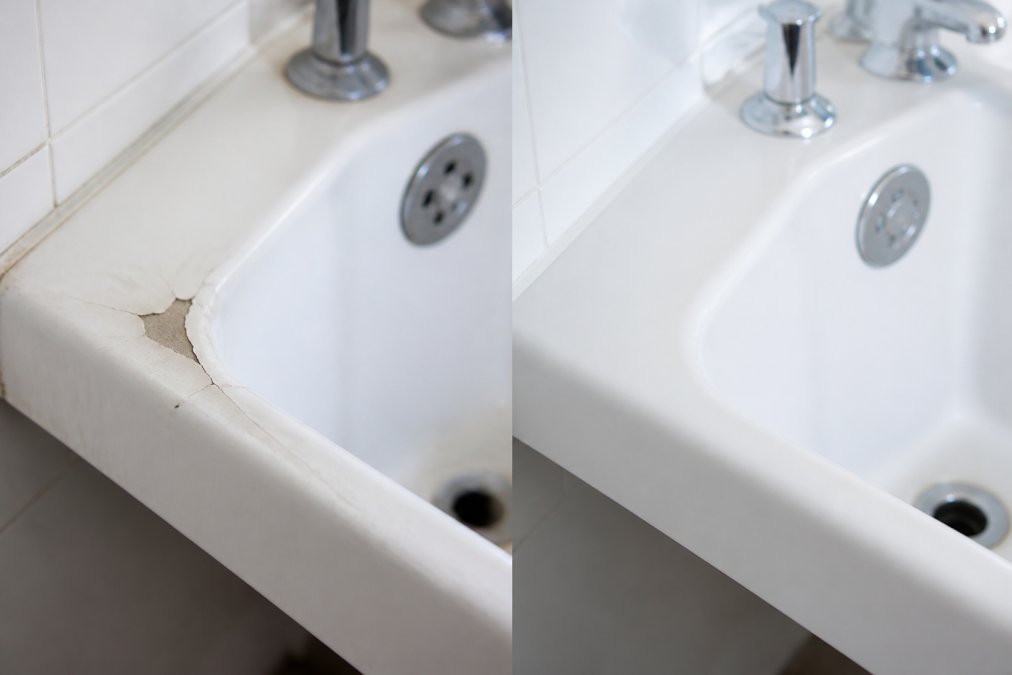
Professional bath chip repair is the process of filling, colour matching and refinishing a damaged area in place so it blends with the surrounding surface. It is not a dab of filler from a tube; it is a staged process using specialist materials.
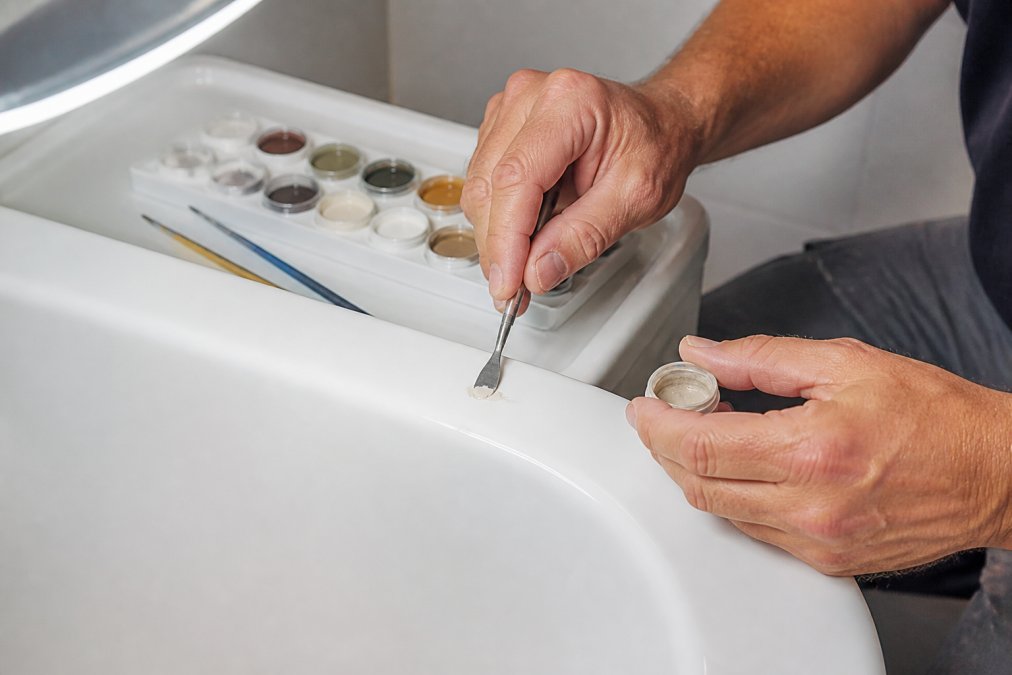
A technician typically prepares the damaged area, rebuilds or fills it, reproduces the colour and texture, then applies a suitable finish. Drying and curing times vary with the product and the environment.
How Colour and Finish Matching Works
Colour matching is done by eye and by sample against the actual surface, not against a paint chart. Baths, trays and worktops fade and shift with age, so the target is the colour the item is now, not the colour it was when new.
Repairing Laminate Worktop Burns: What's Possible and What Isn't
Repairing laminate worktop burns is possible in many cases, but it depends on how deep the burn has gone. A surface scorch from a hot pan can often be sanded back and refinished. A burn that has charred through to the core board is a different problem.
Suitability comes down to three things: depth, area, and whether the laminate has lifted or swollen around the damage. Swelling is the usual deal-breaker, because the core has absorbed moisture and won't sit flat again.
Where a repair is suitable, the technician removes the charred material, fills and levels the area, then reproduces the pattern and finish. Where it isn't, replacement of that section or the whole worktop is the more durable answer, and a good provider will tell you that upfront rather than take the job anyway.
New Build Snagging Repairs: Why Repair Beats Replacement on Site
New build snagging repairs are where in-place surface repair pays for itself fastest. On a live site, replacing a chipped bath or scratched door means ordering a new unit, waiting for delivery, booking a trade, and hoping nothing else gets damaged in the swap.
A cosmetic repair removes all of that. The technician attends, repairs the damaged surface where it sits, and the plot moves towards handover without a materials order or a second visit from another trade.
For housebuilders and developers, this matters because handover dates are fixed and customer-care teams are measured on how quickly defects close. For fit-out contractors, it means damaged panels, doors and worktops can be corrected after the heavy trades have finished rather than replaced at full cost.
Surface Magic Repairs works with housebuilders, developers and contractors on exactly this kind of defect rectification, attending sites to assess and repair multiple damaged surfaces in a single visit.
Environmental Impact: Waste, Landfill and Material Lifespan
Every replaced fixture becomes waste, and most of it is not easily recycled. Baths, trays and worktops are bulky, mixed-material items that typically go to landfill or energy recovery rather than back into a material stream.
Repairing vs replacing changes that equation. A repair extends the working life of an item that is structurally sound and only cosmetically damaged, which means the material, the energy and the carbon already invested in it stay in use for longer.
The [Waste and Resources Action Programme guidance on construction waste(/blog/7-ways-to-reduce-construction-waste-at-home) | wrap.org.uk] has long pushed for keeping serviceable materials in use rather than discarding them. For commercial clients with sustainability targets, planned repair programmes are one of the simpler wins available, because they cut waste without touching the building's operation.
When Replacement Is the Better Option
Replacement is the right call when the damage is structural, not cosmetic. A repair restores appearance and usability; it does not restore strength that has already failed.
Consider replacement when:
- The item is cracked through in a load-bearing or water-containing area
- A shower tray is leaking because the tray itself has failed
- A worktop has swollen or delaminated at its core
- The fixture is already at the end of its serviceable life
- A repair would cost close to replacement for a worse long-term result
Surface Magic Repairs assesses each job honestly and will say when replacement is the more sensible route. A repair that fails in a month helps nobody.
| Situation | Repair | Replace | Why |
|---|---|---|---|
| Surface chip or scratch | Yes | Rarely | Cosmetic damage only, material sound |
| Deep burn through laminate core | Sometimes | Often | Swollen core won't sit flat again |
| Cracked shower tray, leaking | No | Yes | Structural failure, water ingress risk |
| Scratched uPVC frame | Yes | Rarely | Cosmetic, frame still sound |
| Snagging damage pre-handover | Yes | Rarely | Fast, no materials order needed |
| Fixture at end of serviceable life | No | Yes | Repair won't extend life meaningfully |
Frequently Asked Questions
Is it cheaper to repair or replace a damaged worktop?
Repairing is almost always cheaper than replacing a kitchen worktop. Replacement involves the cost of the new worktop, removal and disposal of the old one, labour for fitting, and often knock-on work to tiles, splashbacks or plumbing. A professional repair addresses only the damaged area, usually in a single visit. Pricing depends on the surface material, the extent of the damage and access, so send photographs for an accurate quotation.
Can a chipped bath be repaired professionally?
Yes, most chipped baths can be professionally repaired. A technician fills and rebuilds the damaged area, then colour matches and refinishes it to blend with the surrounding surface. Suitability depends on the material, the size and depth of the chip, and its location. Surface Magic Repairs will assess the damage honestly and advise if replacement would be more durable. Send clear photographs of the chip and the surrounding area for a quotation.
How do I know if a fixture is beyond repair?
A fixture is usually beyond cosmetic repair when the damage is structural, when the material has failed through the full thickness, or when the unit is already at the end of its serviceable life. Cracks that affect water tightness, large sections of missing material, or delamination across a wide area often point towards replacement. A professional assessment will confirm whether a repair will hold up or whether replacement is the more sensible long-term choice.
Does professional surface repair match the original colour?
Professional repair involves colour matching the repaired area to the existing surface, including texture and pattern where relevant. Results depend on the material and finish. On a plain gloss bath or a solid-surface worktop, a well-executed repair blends closely. On heavily patterned laminate or stone, the match is designed to be visually consistent rather than completely invisible. Surface Magic Repairs will set realistic expectations before any work is booked.