Table of Contents
- Why Surface Restoration Costs Less Than Replacement
- How Cosmetic Hard-Surface Repairs Work
- The Cost of Surface Restoration vs Replacement
- Repairing Chipped Kitchen Worktops: A Practical Example
- Which Surfaces Can Be Restored, and Which Cannot
- The Sustainability Case for Repair Over Replacement
- Restoration Methods Compared: Strengths and Limits
- Commercial Projects: Less Downtime, Quicker Handovers
- When Replacement Is the Better Option
- Conclusion
- Frequently Asked Questions
Last Updated: September 21, 2026
Why Surface Restoration Costs Less Than Replacement
Surface restoration is the practice of repairing cosmetic damage in place rather than removing and replacing the affected item. For most chips, scratches, burns and cracks, it offers a lower-cost, sustainable alternative to replacement, because the existing material stays where it is and only the damaged area is refinished.
The cost gap comes down to what you are not paying for. Replacement means strip-out, disposal, a new unit, and often tiling, sealing or decorating to make the new item blend in. Restoration skips all of it. One visit, one repaired area, one colour-matched finish.
At Surface Magic Repairs, we have completed more than 46,000 surface repairs in the last year, and the pattern is consistent: the bigger the disruption a replacement would cause, the wider the saving from repairing instead. A chipped bath in an occupied flat is a small repair. Ripping that bath out is a project.
Below, we break down how these repairs work, where the real costs sit, and when replacement genuinely is the better call.
How Cosmetic Hard-Surface Repairs Work
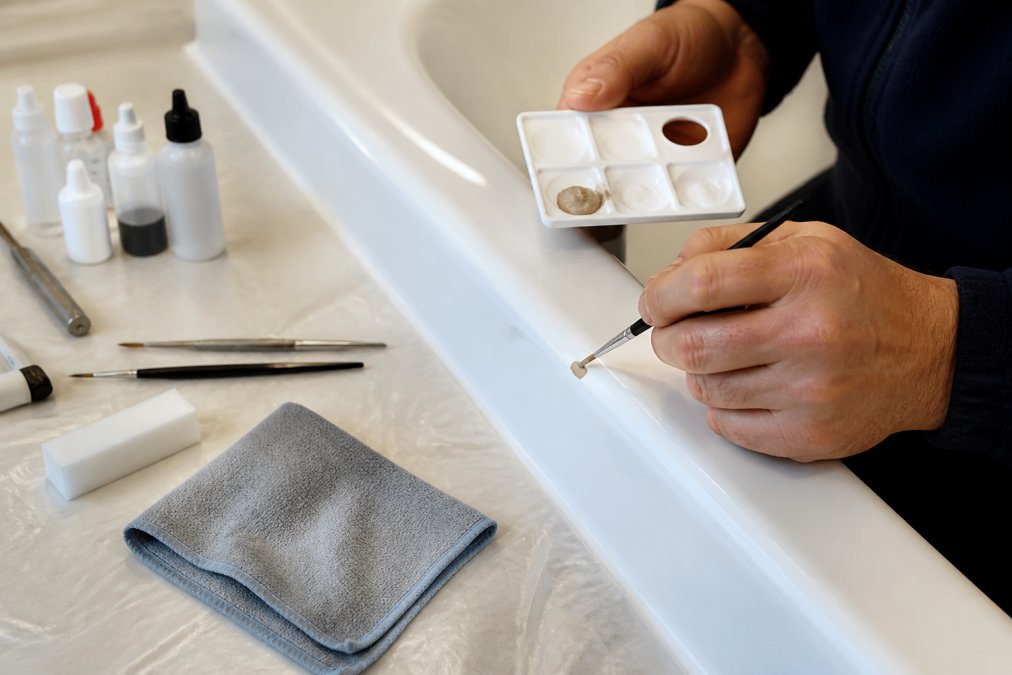
Cosmetic hard-surface repairs restore the appearance and usability of a damaged surface without removing it. A technician prepares the damaged area, rebuilds or fills it, reproduces the colour and texture of the surrounding surface, then applies a suitable finish.
That sequence matters. A chip in a bath is not just a hole; it is a break in a coloured, glossy coating. Filling it is the easy part. Matching it so the repair disappears into the surrounding surface is the skilled part.
What Happens During a Repair Visit
Most single repairs are completed in one visit. The technician protects the surrounding area, prepares the damage, fills or rebuilds it, then tints and refines the finish until it blends with the rest of the surface.
You should expect:
- A clear assessment before any work starts, including whether a repair is suitable at all
- Colour and finish matched to the existing surface, not a generic shade
- Work carried out on site, with no strip-out and no removal of the item
- A realistic conversation about the result, because some damage will always leave a trace
The Cost of Surface Restoration vs Replacement
The cost of surface restoration vs replacement is not a simple comparison of two invoices. Restoration is priced on the repair itself. Replacement is priced on the repair plus everything the replacement drags in with it.
That second category is where budgets quietly break. A damaged worktop is not just a worktop. It is the plumbing or wiring underneath it, the tiling behind it, the sealant line, the decorating, and the disposal of the old unit. None of that appears in the price of the new item, and all of it appears on the final bill.
Where the Hidden Replacement Costs Build Up
Replacement costs spread across several areas that are easy to underestimate:
- Strip-out and disposal. Removing the old item takes labour, and skip hire or trade waste collection costs money.
- Making good. Tiles crack on removal. Sealant lines fail. Paintwork gets marked. Each one is a separate trade.
- Downtime. A hotel room, rental property or office kitchen out of action has a cost that never shows on a quote.
- Matching the rest of the room. A new bath in an old bathroom rarely matches the suite, so one replacement often pulls another.
Restoration avoids every item on that list. The surface stays, the surrounding finishes stay, and the room goes back into use the same day in most cases.
Repairing Chipped Kitchen Worktops: A Practical Example
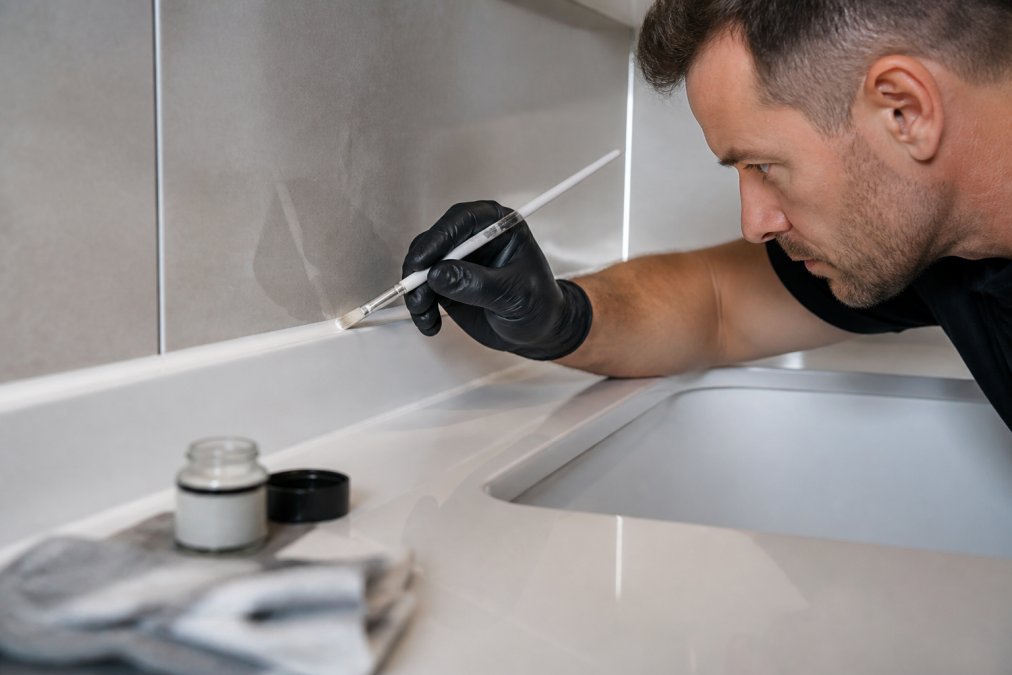
Repairing chipped kitchen worktops is one of the clearest cases where restoration wins. A chip or burn on a laminate or solid-surface worktop looks like a replacement job, but in most cases it is a localised repair.
Picture a burnt laminate worktop beside the hob. The damage is a scorch mark the size of a coin, and the rest of the worktop is fine. Replacing it means cutting out the old section, disconnecting and reconnecting the sink or appliance, re-sealing the joints and disposing of the old top. Repairing it means filling and refinishing the scorched area and colour-matching it to the surrounding pattern.
One of those is an afternoon. The other is a project with several trades involved.
The same logic applies to chipped sinks, cracked shower trays and scratched uPVC frames. The damage is small and local. The replacement is large and disruptive. That mismatch is the whole argument for restoration.
Which Surfaces Can Be Restored, and Which Cannot
Most finished hard surfaces can be restored, but not all damage can. Suitability depends on the material, the condition of the item, its location and how far the damage extends.
Surfaces that are commonly repairable include:
- Baths, shower trays, sinks and sanitaryware with chips, cracks or scratches
- Laminate, solid-surface, quartz, granite and stone worktops, subject to assessment
- Ceramic and porcelain tiles with chips or cosmetic damage
- uPVC window frames and cills with scratches or scuffs
- Doors, door frames, panels, cladding and fitted furniture
- Brickwork requiring cosmetic tinting, and scratched glass requiring polishing
Where a repair is not sensible, the honest answer is replacement. Deep structural cracking, damage that has compromised the integrity of the item, or a finish that cannot be matched will usually point that way. Surface Magic Repairs will say so before work is booked rather than after.
The Sustainability Case for Repair Over Replacement
Repair keeps materials in use and out of landfill, which is the core of why it counts as sustainable surface restoration rather than just a cheaper option. Every repaired bath is a bath that was not manufactured, transported, installed and then replaced.
The environmental maths mirrors the financial maths. A replacement generates waste at both ends: the old item goes to waste, and a new one is produced, packaged and delivered. A repair generates a small amount of consumable material and nothing else.
For organisations tracking their waste and carbon reporting, this is not a soft benefit. It is measurable. Housing providers, hotel groups and contractors under pressure to reduce construction waste can point to repairs as a direct reduction, and the UK government guidance on waste and recycling sets out the wider framework these organisations report against.
There is a durability question worth answering honestly here. A professionally repaired surface is a repair, not a new item, and it will hold up in normal use when it is done properly. It is not indestructible, and it is not a permanent fix for damage that keeps recurring.
Restoration Methods Compared: Strengths and Limits
Different restoration methods suit different surfaces and different damage. The table below compares the main approaches, what each is best at, and where each falls short.
| Method | Best For | Main Strength | Main Limit |
|---|---|---|---|
| Cosmetic chip and crack repair | Baths, trays, sinks, tiles | Repairs in place, colour matched | Not suited to structural damage |
| Burn and scratch refinishing | Worktops, laminate, solid surface | Blends into existing pattern | Deep damage may still show faintly |
| Respraying and refinishing | Worn or faded finishes | Restores a consistent finish | Needs proper preparation to last |
| Surface polishing | Stone, glass, solid surface | Removes scratches without filling | Limited by depth of the scratch |
| Brick tinting | Brickwork and mortar | Matches surrounding brick | Cosmetic only, not structural |
| Anti-slip treatment | Suitable baths and trays | Improves grip on existing surface | Not suitable for every finish |
The pattern across all of them is the same. Restoration works best on cosmetic damage to sound surfaces. The moment the damage affects how the item functions, replacement moves ahead.
Commercial Projects: Less Downtime, Quicker Handovers
For commercial clients, the deciding factor is usually downtime rather than the invoice. A hotel room out of action, a rental void between tenancies or a handover date slipping all cost more than the repair itself.
This is where in-place working changes the calculation. A technician can repair baths, worktops, tiles, doors and furniture in occupied buildings without closing the room or the floor. For facilities managers at hotels and holiday parks, that can mean a room back in service the same day rather than a week of strip-out and reinstatement.
The same applies to new-build snagging. Rather than logging dozens of damaged surfaces across multiple plots and booking separate trades, a single planned visit can cover a snagging list across several units. Housebuilders and fit-out contractors get a quicker route to handover without pulling other trades back to site.
Surface Magic Repairs works with landlords, letting agents, housing associations, hotel groups and main contractors on this basis, with nationwide coverage available for larger multi-site and portfolio projects.
When Replacement Is the Better Option
Replacement is the right answer when the damage is structural, when the item is already at the end of its life, or when the finish genuinely cannot be matched.
Look for replacement rather than repair when:
- The crack or damage affects the structural integrity of the item
- The surface is failing across a wide area, not just at one point
- Water has penetrated behind the finish and caused underlying damage
- The item is due for replacement anyway as part of a wider refurbishment
- A repair would cost nearly as much as a new unit and last less time
An honest assessment should always cover this. A repair that will not hold is worse than no repair at all, because it costs money twice.
Conclusion
The pressure to replace damaged surfaces usually comes from habit rather than necessity. Most chips, burns, cracks and scratches are local problems on otherwise sound items, and treating them as replacement jobs adds cost, disruption and waste that nobody asked for.
Where the damage suits restoration, repairing in place is the cheaper, faster and lower-waste route. Where it does not, Surface Magic Repairs will tell you so.
Send clear photographs of the damage, the complete item and the surrounding area, together with your full address and postcode. Surface Magic Repairs can assess whether a repair is suitable and provide a quotation. Call 0800 085 7773 or visit surfacemagicrepairs.co.uk to get started.
Frequently Asked Questions
Is it cheaper to repair or replace a damaged worktop?
Repair is usually the lower-cost route because the existing worktop stays in place. Replacement means buying a new worktop, paying for removal and disposal, and often covering knock-on tiling, sealing and decorating. Surface restoration avoids that strip-out entirely. The exact difference depends on the surface, the damage, access and the number of repairs, so send clear photographs of the damage and the surrounding area for an accurate quotation.
Can professional surface repairs match the original finish?
In most cases, yes. Technicians prepare the damaged area, rebuild or fill it, then reproduce the colour, texture or pattern before applying a suitable finish. On plain surfaces such as white baths or solid-surface worktops, a good repair blends closely with the surrounding area. On patterned or heavily grained surfaces, the match depends on the material and the extent of the damage. Suitability is always assessed honestly before work is booked.
How does surface repair help reduce landfill waste?
Every repaired bath, worktop, tile or door is one less item sent for disposal. Replacement generates waste from the removed item, its packaging and often surrounding materials such as tiles or sealant. Repairing in place keeps the existing surface intact and avoids that chain of waste. For landlords, hotels and housebuilders managing multiple properties, choosing restoration across a portfolio keeps a meaningful volume of serviceable material out of the waste stream.
What information is needed to get a surface repair quote?
Send clear photographs of the damage close up, the complete item, and the surrounding area so the finish and pattern can be seen. Include your full address and postcode, the number of damaged surfaces, and any access notes such as occupied rooms or site restrictions. With those details, Surface Magic Repairs can assess whether a repair is suitable and provide a quotation. For commercial or multi-site work, list each location so visits can be planned efficiently.