Quick Summary
Protective sealants for high use home surfaces are flexible products that fill joints and gaps to keep out moisture and grime. Silicone is the usual choice for wet areas such as baths, showers and worktop joins, while polyurethane and hybrid polymer products suit paintable joints. Sealants cannot correct chips or cracks, so damaged surfaces may need repair first.
- Silicone sealant stays flexible and resists water, making it the usual choice for baths and showers.
- Remove all old sealant and dry the joint fully before applying fresh material to prevent early failure.
- Polyurethane and hybrid polymer sealants usually accept paint, suiting joints where a paintable finish is needed.
- Decorators' caulk is for dry interior finishing only and will break down in constantly wet areas.
- Sealant will not hide chips or cracks, so damaged surfaces often need professional repair first.
Table of Contents
- What Protective Sealants Do on High Use Home Surfaces
- Sealants, Sealers and Coatings: Knowing the Difference
- The Main Types of Sealant and Their Properties
- Best Kitchen Sealant for Worktops and Splashbacks
- Best Bathroom Sealant for Baths, Showers and Sinks
- Waterproof Sealant for Tiles and Grout
- Surface-Specific Selection Matrix
- Wear, Abrasion and Cleaning-Chemical Resistance
- Preparation, Application and Curing Guidance
- How Long Does Bathroom Sealant Last and When to Renew It
- Food-Contact and Indoor-Air Safety
- Indoor Versus Outdoor Use and Weather Exposure
- When Damage Calls for Repair Rather Than More Sealant
- Choosing Your Next Step for a Damaged Surface
- Frequently Asked Questions
Best Protective Sealants for High Use Home Surfaces
Last Updated: November 6, 2026
What Protective Sealants Do on High Use Home Surfaces
Protective sealants are products applied to kitchen worktops, bathroom surfaces, tiles and other frequently used parts of the home to block moisture, resist staining and make everyday wear easier to manage. Surface Magic Repairs, a Bolton-based surface repair company, can help when damage has already occurred, and the first step is understanding what a sealant can and cannot do.
A sealant fills gaps and joints, forming a flexible barrier that stops water and grime getting underneath a surface. A protective coating or sealer, by contrast, sits on or soaks into a material to repel spills and make cleaning easier. The distinction matters because the wrong product can trap moisture or fail where movement is constant.
Sealants are most useful where two materials meet, such as the join between a worktop and a splashback, or the edge of a bath and the wall tiles. These are the points where water gets in first and where cracks tend to open as the house moves with temperature changes.
Protective products are not a substitute for correct cleaning or for repairing physical damage. A sealant applied over a chip or crack will not hide the problem for long, and a surface that has already been badly damaged may need professional attention before any product is applied.
Sealants, Sealers and Coatings: Knowing the Difference
Homeowners often use these three terms interchangeably, yet each works in a different way and suits different jobs.
A sealant is a flexible, elastic material that fills joints and gaps. It bonds two surfaces together and accommodates movement. Silicone and polyurethane products are typical examples. Sealants are the usual choice for the edges around baths, sinks and shower trays.
A sealer is usually a penetrating liquid that soaks into a porous material such as stone, grout or unglazed tile. It reduces absorption rather than forming a visible layer. Sealers are often used on natural stone worktops, though suitability varies by stone type and manufacturer guidance should be checked.
A coating forms a film on the surface. Coatings can add a protective and sometimes decorative layer, but they can also peel or scratch if they are not suited to the material or the amount of use the surface receives.
Choosing correctly depends on the surface and the job. A sealer that works well on natural stone may do nothing useful in a gap around a shower tray, where a sealant is needed.
The Main Types of Sealant and Their Properties
Most household sealants fall into a few broad families. Each has strengths and limits, and the right choice depends on where the sealant will sit, how much it will move and whether it will be exposed to water or cleaning products.
Silicone Sealant: Flexibility and Water Resistance
Silicone sealant is the most common choice for wet areas. It stays flexible over a wide temperature range, resists water well and handles the small movements that occur around baths and showers. Many silicone products are formulated with anti-fungal additives for bathrooms and kitchens, which is a useful feature where condensation is frequent.
Silicone does not take paint well, so it is best left unpainted. It also adheres poorly to some plastics and certain stone surfaces without a suitable primer, so checking compatibility with the substrate before application matters.
Polyurethane and Hybrid Polymer Sealants
Polyurethane sealants offer strong adhesion and good durability, and they can usually be painted. They suit joints in areas that receive less direct water, such as around window frames and between some building materials. Hybrid polymer sealants combine properties of silicone and polyurethane, offering good flexibility and paintability in a single product. They are often recommended where a paintable, moisture-resistant finish is needed.
Decorators' Caulk for Interior Finishing
Decorators' caulk is a water-based, paintable filler intended for small gaps in dry interior areas, such as skirting boards, picture rails and window trim. It is easy to smooth and paint over, but it is not designed for constantly wet areas and will break down if exposed to repeated water. Use it for dry interior finishing rather than as a waterproof seal.
Best Kitchen Sealant for Worktops and Splashbacks
The kitchen is where sealants face the most demanding combination of heat, spills, cleaning chemicals and food residue. For the joint between a worktop and a wall, or around a sink, a mould-resistant silicone is generally the most practical choice. It stays flexible, resists water and handles the movement that comes with regular use.
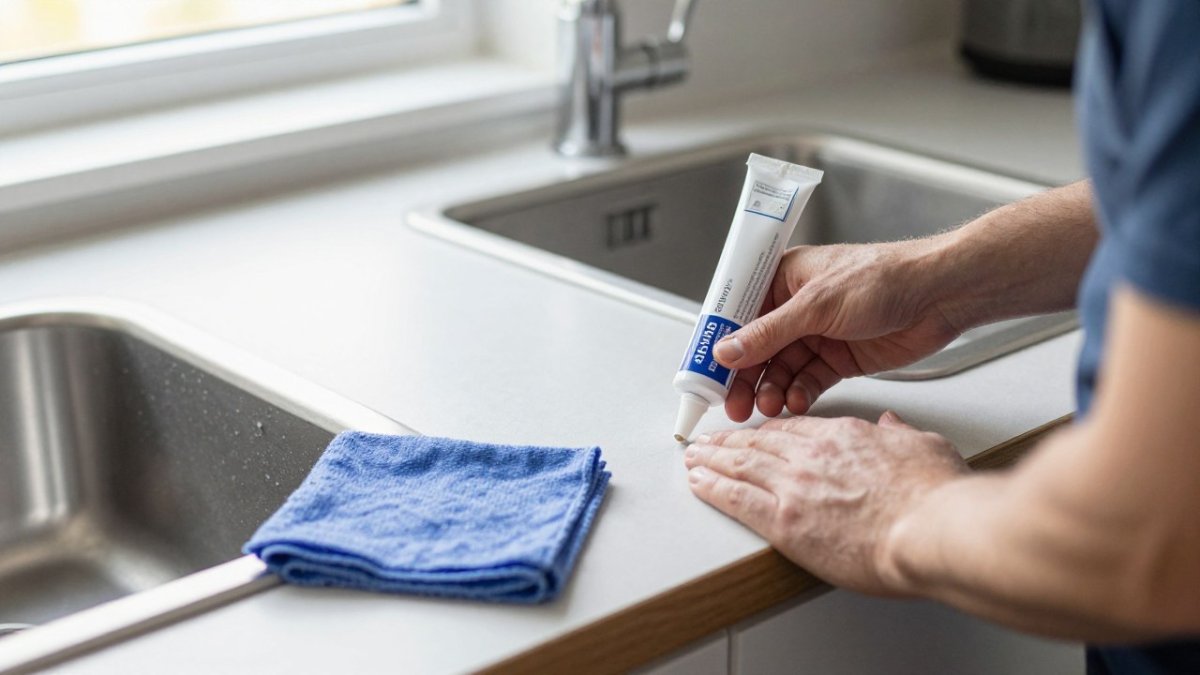
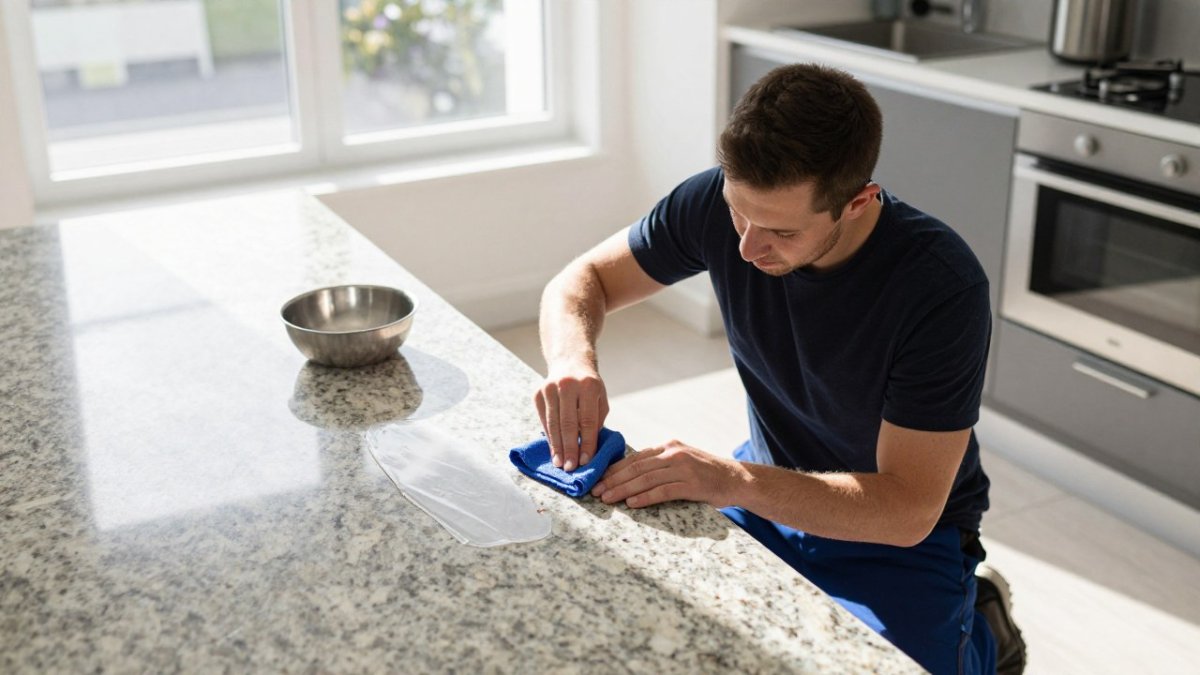
Worktop edges are where failures usually start. Water that seeps into a gap can swell chipboard or laminate, and the damage can spread beneath the surface where it is not visible. Keeping the joint sealed and checking it every few months helps prevent this.
Where the worktop itself is damaged, a sealant will not fix the problem. Chips, cracks and burns in laminate or solid-surface worktops often need professional repair. Surface Magic Repairs provides in-situ worktop repairs, and an assessment is a sensible first step before deciding whether to reseal or repair. You can find out more on the worktop repair page.
Best Bathroom Sealant for Baths, Showers and Sinks
Bathrooms combine standing water, steam and frequent cleaning, so the sealant needs to handle constant moisture. A silicone sealant with anti-fungal properties is the usual recommendation for the joints around baths, shower trays and basins.
Preparation makes a large difference. The old sealant must be fully removed, the surface cleaned and dried, and the joint masked for a neat line. Applying sealant over old, mouldy material is one of the most common reasons joints fail early.
Acrylic and stone-resin shower trays can crack or chip under impact, and sealant cannot correct that. If a tray is damaged, repair may be possible for suitable materials, which can be less disruptive than replacing the whole unit. Our shower tray repair service explains what can be fixed while the enclosure stays in place. Surface Magic Repairs carries out shower tray repairs, with the enclosure left in place.
Waterproof Sealant for Tiles and Grout
Tiled walls and floors need protection where water collects, particularly around showers, baths and kitchen splashbacks. Two approaches are common. The first is sealing the joints between tiles and against sanitaryware with a flexible silicone. The second is treating grout, which is porous, with a penetrating sealer to reduce water and stain absorption.
Grout is more absorbent than the tile face and stains more readily, so sealing it helps keep it clean. If you are unsure whether damaged grout can be fixed, read our guide to repairing bathroom tile grout. However, a sealer cannot repair cracked or crumbling grout. Where grout is damaged, repair or replacement is usually the answer.
Unglazed and natural stone tiles absorb more water and need suitable sealers. Glazed tiles generally need less protection, and the grout is the part most in need of attention.
Surface-Specific Selection Matrix
The right product depends on the material beneath it, and the consequences of choosing wrongly range from a joint that peels away within months to permanent staining or trapped moisture. This matrix gives a general guide, but always check the manufacturer's instructions for compatibility and test on an inconspicuous area first.
| Surface | Typical joint or area | Suitable sealant type | Points to check |
|---|---|---|---|
| Bath or shower tray (acrylic, stone resin) | Edge to wall, floor join | Mould-resistant silicone | Remove old sealant fully; some acrylics need a primer for adhesion |
| Laminate worktop | Worktop to wall, sink edge | Silicone or hybrid polymer | Keep edges dry to prevent swelling; avoid solvent cleaners on laminate |
| Solid-surface worktop | Sink and wall joints | Compatible silicone | Confirm product suits the material; some solid surfaces stain from solvent-based sealants |
| Glazed tile | Tile joints, sanitaryware | Silicone | Use for flexible wet joints; avoid grout in movement joints |
| Grout | Tile gaps | Penetrating grout sealer | Sealer does not repair cracks; reapply as wear shows |
| uPVC frame | Window and door joints | Polyurethane or hybrid | Check for paintability needs; some silicones do not adhere to uPVC without primer |
| Natural stone | Surface and edges | Stone-specific sealer | Test on an inconspicuous area; solvent sealants can darken or stain porous stone |
| Timber (skirting, frames) | Gaps and joints | Decorators' caulk or hybrid | Caulk for dry interior finishing; hybrid where movement or moisture is expected |
| Metal (splashbacks, trims) | Joints and edges | Silicone or hybrid | Some metals need a primer; check for corrosion risk at cut edges |
| Concrete or masonry | Exterior joints | Polyurethane or hybrid | Check UV and weather resistance; primer may be needed on dusty surfaces |
A few compatibility cautions are worth repeating because they cause most of the failures seen in practice. Silicone does not adhere well to some plastics, certain stone surfaces and freshly painted substrates without a suitable primer, and it cannot be painted over. Polyurethane and hybrid products generally accept paint, but they can discolour some natural stones and may need a primer on absorbent or dusty surfaces. Decorators' caulk is for dry interior finishing only and will break down in constantly wet areas.
Where a primer is specified, skipping it is a common reason for early failure. Primer requirements vary by product and substrate, so the technical data sheet is the reliable source rather than guesswork. On natural stone, always test a sealer on a spare tile or an inconspicuous corner, because some products darken or enhance the colour of the stone.
Movement is the other variable the matrix cannot capture. Joints that open and close with temperature or structural movement need a flexible sealant, while rigid fills will crack. If a joint has failed repeatedly, the cause is often movement or trapped moisture rather than the product itself, and a repair assessment may be more useful than another tube of sealant.
Wear, Abrasion and Cleaning-Chemical Resistance
Most sealant guides measure performance by waterproofing alone, but on high-use surfaces the real test is how a product copes with repeated scrubbing, spills, detergents and everyday impact. A sealant that keeps water out but breaks down under cleaning chemicals will fail just as surely as one that lets moisture through.
Abrasion is the gradual loss of a surface layer through contact, grit and cleaning. Silicone is generally soft and can be scuffed or torn by abrasive pads and sharp tools, though it recovers its shape well. Polyurethane and hybrid products tend to be tougher and more resistant to mechanical wear, which is why they are often chosen for joints that see frequent contact. Coatings and sealers wear faster in areas that take heavy use, such as worktop corners and bath edges, and a product rated for the level of use is a sensible starting point. Many domestic products are not designed for the abrasion seen in commercial settings, so a sealant that performs well in a family bathroom may not last in a busy rental property or hotel.
Cleaning chemicals are the second threat. Strong bleach, acidic descalers and solvent-based cleaners may soften, discolour or break down certain silicones and coatings. A common pattern is a joint that looks sound but feels tacky or has lost its colour after repeated use of a harsh bathroom cleaner. Milder cleaners and prompt wiping of spills extend the life of any sealed joint, and reading the product label before reaching for a strong chemical is worthwhile. On natural stone and some solid surfaces, solvent-based sealants can also stain or darken the material, so compatibility matters as much as cleaning routine.
Heat and moisture add to the load. Joints around hobs and worktop edges near ovens face repeated warming and cooling, which stresses the bond. In wet areas, constant moisture and condensation encourage mould growth in any gap, even in products with anti-fungal additives. Anti-fungal silicones reduce the problem but do not eliminate it if water sits behind the seal.
Protecting a sealed surface is simpler than repairing one. Wipe spills promptly, use cutting boards and trivets, avoid abrasive pads on sealed areas, and check joints every few months for early signs of wear. Where a joint has already failed, resealing over the top rarely lasts; the old material needs removing and the cause of failure addressing. If the surface beneath is chipped, cracked or swollen, a sealant will not correct it, and professional repair is usually the more durable answer.
Preparation, Application and Curing Guidance
Good preparation is the single biggest factor in how long a sealant lasts. Start by removing all old sealant with a suitable tool, taking care not to scratch the surface. Clean the joint with a recommended solvent or cleaner, rinse and allow it to dry completely. Trapped moisture is a common cause of failure.
Apply the sealant in one continuous bead, pressing it into the joint so it adheres to both sides. Smooth it with a suitable tool or a wet finger before the skin forms. Remove masking tape while the sealant is still soft for a clean edge.
Curing times vary by product and conditions. Most silicones form a skin within minutes but take longer to cure fully, often 24 hours or more. Avoid exposing the joint to water until the manufacturer's recommended time has passed. Cool, damp conditions slow curing.
Where a surface has been damaged, fill and repair it before sealing. Sealing over unrepaired damage traps the problem and rarely produces a lasting result.
How Long Does Bathroom Sealant Last and When to Renew It
Bathroom sealant lifespan depends on a variety of factors, including the product used, how well the surface was prepared and how much moisture the room sees. Sealant around a bath or shower is often one of the first things to need attention in a home.
Signs that renewal is due include:
- Cracking or shrinking along the joint
- Gaps opening between the sealant and the surface
- Black or green staining that cleaning does not remove
- Soft or spongy sealant that gives under pressure
- Water tracking behind the bath or tray
Renewing the sealant promptly prevents water reaching the substrate. Removing the old sealant and applying fresh material is usually straightforward, provided the surface beneath is sound. If water has already caused swelling or rot, the underlying material may need repair first.
Food-Contact and Indoor-Air Safety
Kitchen sealants sit close to food preparation areas, so it is worth checking the product label. Look for clear statements on food-contact suitability where a joint is near a prep surface, and follow the manufacturer's guidance on curing before the area is used.
Indoor-air quality is also a consideration. Some solvent-based products release fumes during application and curing (Construction hazardous substances: Solvents). Ventilating the room, keeping windows open and avoiding use in confined spaces reduces exposure. Products labelled as low-emission are generally a better choice for enclosed rooms, but the label should be checked for the specific product rather than assumed.
Where you are unsure about a product's suitability for a food-prep area, check the manufacturer's technical data sheet before use.
Indoor Versus Outdoor Use and Weather Exposure
Sealants used outdoors face UV light, rain, freeze-thaw cycles and larger temperature swings than those indoors. Not every indoor product is suitable outside, and some exterior sealants are not appropriate for interior wet areas.
Outdoor joints, such as those around window frames and external doors, need products rated for weather exposure and for movement. Polyurethane and hybrid products are often chosen here for their durability and paintability. Check the label for UV and weather resistance.
Protective products for patios, driveways and masonry are designed for different conditions again. Their suitability depends on the material and the exposure, and the manufacturer's guidance should always be followed.
When Damage Calls for Repair Rather Than More Sealant
A sealant cannot correct physical damage. If a surface is chipped, cracked, burnt or stained beneath the seal, resealing will only hide the problem until it worsens.
Repair is usually the better option when:
- A bath, sink or shower tray has a chip or crack that water can reach
- A worktop has a burn mark, deep scratch or swollen edge
- Tiles are cracked or loose
- A uPVC frame or door has impact damage or a split edge
In these situations, professional repair often avoids the cost and disruption of replacement. For guidance on damage found before a move, see whether surface damage can be repaired before a property handover. Surface Magic Repairs carries out in-situ repairs to baths, shower trays, worktops, tiles, uPVC and other finished surfaces, using colour matching and refinishing to blend the repair with the existing surface. Suitability depends on the material, the extent of the damage and its location, so an honest assessment before any work is booked is the sensible starting point.
Choosing Your Next Step for a Damaged Surface
If you are weighing up sealant against repair, start by identifying the material and the type of damage. A surface that is intact but worn around its joints usually needs resealing. A surface that is chipped, cracked, burnt or swollen usually needs professional attention first.
Send clear photographs of the damage, the complete item and the surrounding area, together with your full address and postcode. You can contact our surface repair team directly to get started. Surface Magic Repairs can assess whether a repair is suitable and provide a quotation. You can also call 0800 085 7773 or visit surfacemagicrepairs.co.uk.
Frequently Asked Questions
What is the best sealant for high-use surfaces in the home?
No single sealant suits every high-use surface. Silicone sealant is generally the first choice for wet areas such as baths, shower trays and sinks because it stays flexible and resists water. Hybrid polymer and polyurethane products are often chosen where paintability or adhesion to varied materials matters more. The right choice depends on the surface, the movement it experiences and how much water, cleaning and wear it will face.
Which sealant is best for kitchen worktops?
For joints between a worktop and a wall or sink, a flexible kitchen-grade silicone sealant is usually the practical choice. Check that the product is suitable for food-preparation areas and resists mould. Protective sealers or coatings are a separate matter: they treat the surface itself and should only be used where the manufacturer's instructions permit. Where a worktop is chipped, burnt or deeply scratched, professional repair may be more effective than another layer of product.
Can you apply sealant over old sealant?
Generally, no. New sealant does not bond well to old, mouldy or contaminated sealant, so it can peel away quickly. The old material should be removed as completely as practical, the surface cleaned and allowed to dry, and then the new sealant applied. Some products have specific guidance on this, so always read the label before starting.
How do you choose a sealant for natural stone?
Natural stone can be sensitive to certain chemicals and may stain if the wrong product is used. Look for a sealant recommended for stone, check compatibility with the specific stone type, and test in an inconspicuous area first. Because stone repairs and treatments can be specialist work, a professional assessment is sensible before treating valuable or heavily used stone surfaces.