Table of Contents
- What Affects the Cost of Professional Kitchen Worktop Restoration
- Worktop Restoration vs Replacement: The Cost Comparison
- Kitchen Worktop Repair Cost: What You're Actually Paying For
- The Professional Worktop Repair Process and Its Impact on Cost
- How Long Does Worktop Repair Take and Why It Matters to Cost
- Types of Worktop Damage and Their Repair Costs
- When Repair Makes Sense and When Replacement Is Better
- Getting a Quotation for Your Worktop Repair
- Frequently Asked Questions
Last Updated: October 10, 2026
What Affects the Cost of Professional Kitchen Worktop Restoration
The cost of professional kitchen worktop restoration depends on several factors that vary significantly from one job to the next. Understanding what drives pricing helps you budget realistically and know what to expect when you contact a repair specialist.
Material type and finish
Different worktop materials respond differently to repair techniques, and that directly affects the time and skill required.
Laminate worktops are generally among the most straightforward to restore. Damage like burns, chips and scratches can be filled, colour-matched and refinished relatively quickly. Solid-surface materials like Corian respond well to repair too, since they're uniform throughout and blend seamlessly once restored.
Stone worktops, granite, quartz and marble, present more complexity. The natural variation in the stone means colour matching requires careful attention. Cracks in stone may need specialist assessment to determine whether repair is suitable or whether the damage has compromised the structural integrity. Polished finishes demand more precision than honed surfaces.
Ceramic tile worktops involve individual tiles, so a chip or crack might affect just one tile, or damage might span multiple tiles. The grout lines also factor in. Repairing one damaged tile is simpler than addressing widespread damage across several tiles.
Damage severity and extent
A small burn mark on a laminate worktop takes less time and skill than a deep scorch that's burnt through the surface layer. A single scratch differs vastly from multiple scratches scattered across the work surface.
Localised damage, confined to one small area, costs less to address than widespread damage. A chip at the edge of the worktop is one repair job. Multiple chips, burns and scratches across the full length means more time on site and more restoration work.
Deep cracks raise questions about whether repair is truly suitable. A surface crack might be cosmetic and repairable. A structural crack that's affecting the worktop's stability might be better addressed by replacement.
Location and access
A worktop in a kitchen that's actively in use during the repair requires different planning than one in a property between tenancies. Some repairs need the room to be undisturbed for a period while finishes cure or set.
Access to the worktop matters too. A kitchen island is straightforward to work on. A worktop that's hemmed in by appliances or cabinetry on both sides may require more careful preparation and take longer to complete.
Worktop Restoration vs Replacement: The Cost Comparison
Deciding between repair and replacement comes down to comparing disruption, waste and overall expense. Repair typically costs a fraction of what replacement involves, but the comparison isn't just about the repair cost itself.
Replacement means removing the old worktop, a process that often requires disconnecting appliances, disturbing the cabinetry underneath, and managing disposal of the old material. Once the old worktop is gone, the new one has to be fitted, which can involve adjustments to the base units or reinstallation of appliances. If the new worktop is a different thickness or style, you might face additional work on splashbacks, tiling or redecorating.
For rental properties or commercial spaces, replacement means the room is out of action for days or sometimes longer. Guests can't use the kitchen. Tenants are displaced. Staff have to work around the disruption.
Repair, by contrast, is usually completed on site with minimal disruption. The worktop stays in place. The technician prepares the damaged area, restores it and refinishes it to match the surrounding surface. Most repairs are finished within a single day or across a couple of visits. The kitchen remains usable.
The comparison also includes waste. A damaged worktop that's still structurally sound and fit for purpose doesn't need to go to landfill just because of cosmetic damage. Repair extends the life of the existing worktop and avoids the environmental cost of manufacturing and transporting a replacement.
For most people facing cosmetic damage to a worktop that's otherwise in good condition, repair makes sense financially, practically and environmentally. The honest assessment comes first: Surface Magic Repairs will advise if the damage is repairable or if replacement would genuinely be more appropriate.
Kitchen Worktop Repair Cost: What You're Actually Paying For
When you contact a repair specialist, the cost reflects the technician's time, expertise and materials. Understanding what goes into the work helps explain why repair costs what it does.
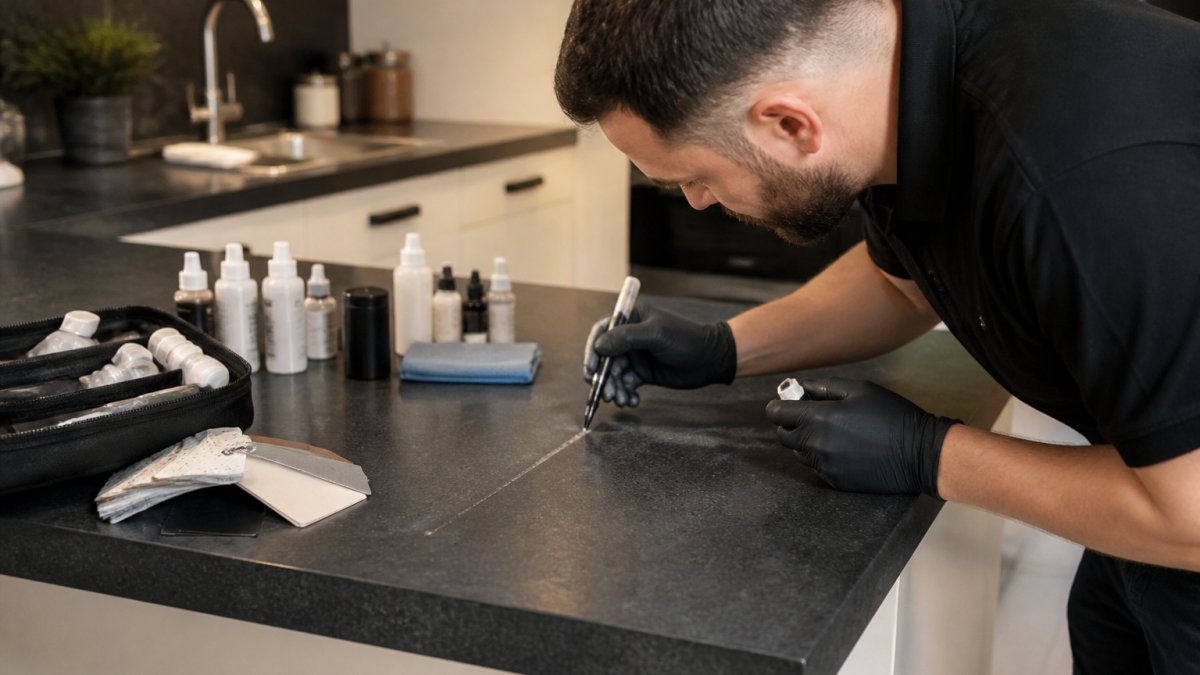
Preparation is the foundation. The damaged area has to be cleaned, assessed and prepared properly so the repair materials bond correctly and the finish matches. This might involve sanding, cleaning away debris or removing any loose material.
Rebuilding or filling comes next. Depending on the damage, the technician may use specialist filling compounds, resins or other materials to restore the shape and structure of the damaged area. This isn't a simple fill-and-paint job, it's precision work that requires the repair to be level, smooth and properly integrated with the surrounding surface.
Colour matching is where skill and experience show. The technician studies the existing worktop finish, its colour, sheen and any texture or pattern. They then mix or select materials to match as closely as possible. For natural materials like stone, this can be particularly challenging because of inherent variation.
Finishing and refinishing complete the job. The repair area is sanded smooth, sealed if necessary, and polished or treated to match the surrounding finish. For some materials, this means applying a protective coating. For others, it means careful polishing to restore the sheen.
Materials cost money, but labour is the primary component. A technician with extensive trade experience commands a rate that reflects their skill. You're paying for the ability to make a repair blend seamlessly with the existing surface, not just to patch it over.
The Professional Worktop Repair Process and Its Impact on Cost
The repair process itself influences how long the work takes and therefore what it costs. A straightforward repair follows a predictable sequence. A complex one, involving multiple damage types or challenging colour matching, takes longer.
Initial assessment is the first step. The technician examines the worktop, the damage, the material and the finish. They determine whether repair is suitable, what techniques will work best and what the result is likely to be. This assessment informs the quotation.
Once work begins, the damaged area is prepared. Loose material is removed, the area is cleaned and any necessary sanding or surface preparation is done. The goal is a clean surface ready for repair materials to bond properly.
Filling or rebuilding follows. For chips and cracks, this might involve specialist filling compounds. For burns or deep damage, the technician may need to rebuild the surface layer. The work is done carefully to create the right shape and texture.
Colour matching and blending happen next. If the repair is to be invisible, the colour has to match exactly and the finish has to blend. This is where experience counts. A technician who's worked on hundreds of worktops knows how different materials behave and how to achieve the closest match.
Finishing is the final stage. Sanding, polishing, sealing or coating is applied as needed. The repair area is brought to the same standard as the surrounding surface.
The entire process, from assessment to completion, is designed to make the repair blend with the existing worktop. That takes time and skill, which is reflected in the cost.
How Long Does Worktop Repair Take and Why It Matters to Cost
Repair time varies depending on the damage and the material. A simple scratch on a laminate worktop might be completed in a couple of hours. A burn mark involving colour matching could take longer. Multiple repairs across the worktop take proportionally more time.
For most domestic repairs, the work is completed within a single visit. The technician arrives, completes the repair and leaves. The kitchen is back in use the same day.
Commercial jobs sometimes span multiple visits if the work is extensive or if the property is occupied. A hotel might schedule a repair during quieter hours. A property developer might have multiple repairs across several units, which could involve a planned schedule of visits.
Time affects cost directly. A half-day repair costs less than a full day. Multiple repairs across several worktops cost more than a single repair. Complex colour matching or structural rebuilding takes longer than cosmetic scratches.
This is why quotations are based on the specific job. Surface Magic Repairs assesses the damage, the material, the extent of the work and the time likely required, then provides a quotation based on that assessment.
Types of Worktop Damage and Their Repair Costs
Different types of damage present different repair challenges and therefore different costs.
Burns and heat marks
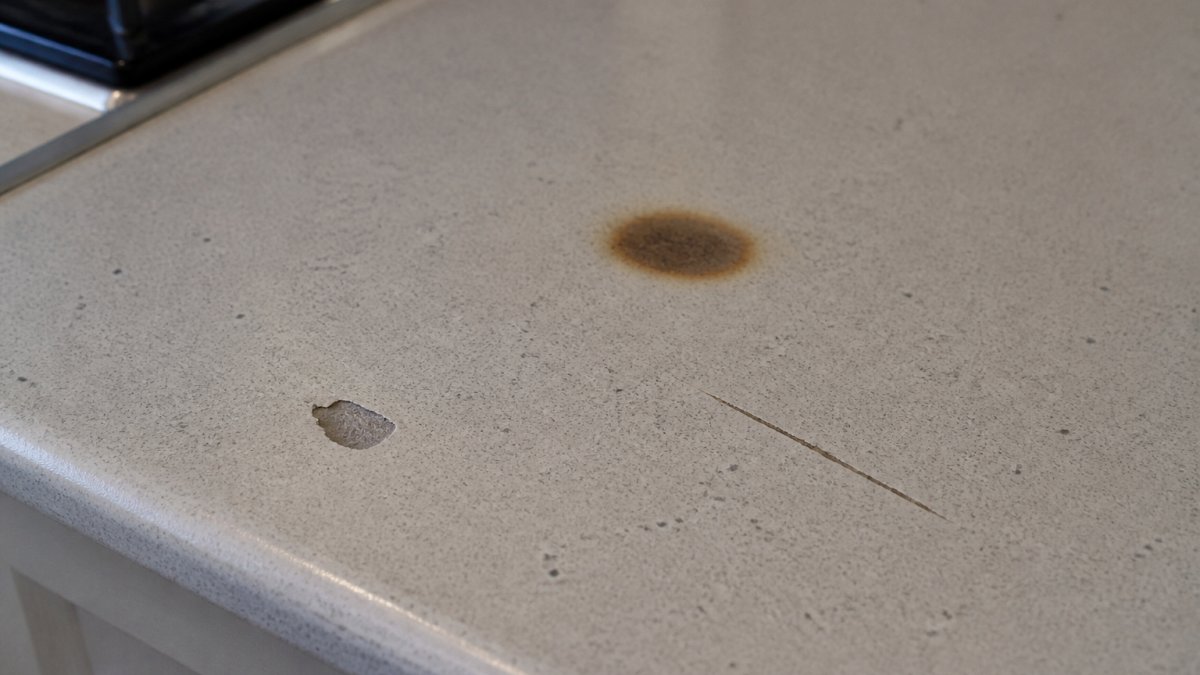
Heat damage ranges from light scorch marks to deep burns that've gone through the surface layer. Light burns are often the quickest to repair, they may just need careful sanding and refinishing. Deep burns that've damaged the underlying material require more substantial rebuilding.
Laminate worktops are particularly susceptible to burn damage because the surface layer is relatively thin. A hot pan or a cigarette can leave a mark. Solid-surface materials like Corian can often be sanded and refinished if the burn is shallow. Deep burns that've gone through the material might not be repairable.
Chips, scratches and impact damage
Impact damage, a dropped object, a bang from a heavy pan, often creates chips or dents. These are usually straightforward to repair. The damaged area is filled, colour-matched and refinished.
Scratches vary in depth. Surface scratches that haven't penetrated the protective layer might just need polishing. Deeper scratches that've gone through the finish need filling and refinishing.
Multiple chips or scratches across the worktop involve more work than a single isolated repair, so they cost more. But repairing several chips on one visit is more economical than multiple separate visits.
Cracks and structural damage
Cracks are assessed carefully. A surface crack in laminate or solid-surface material can often be repaired. A crack in stone needs evaluation, it might be purely cosmetic, or it might indicate structural weakness.
Deep cracks that run through the thickness of the worktop, or cracks near edges or seams, may be beyond repair. In those cases, replacement is more appropriate. Surface Magic Repairs provides honest assessment: if a crack is repairable, repair happens. If replacement is genuinely the better option, that's what's recommended.
When Repair Makes Sense and When Replacement Is Better
Repair is the sensible choice when the worktop is structurally sound and the damage is cosmetic or superficial. A burn mark, a chip, a scratch, these are all candidates for repair if the underlying material is intact.
Repair also makes sense when the worktop is relatively new or when you want to preserve it. If you've invested in a quality stone or solid-surface worktop, repair extends its life rather than replacing it prematurely.
Replacement becomes the better option when the damage is extensive, multiple deep cracks, widespread structural damage, or damage that affects the worktop's function. If the worktop is old and worn, and you're considering updating the kitchen anyway, replacement might align with your plans.
Damage near seams or joins can be tricky to repair invisibly, depending on the material. Some damage is simply too extensive or too structural for repair to be suitable.
The honest assessment from a professional repair company tells you which option is right. Surface Magic Repairs won't recommend repair if replacement would genuinely serve you better. That straightforward advice helps you make the right decision for your situation.
Getting a Quotation for Your Worktop Repair
To get a quotation, send clear photographs of the damage, the complete worktop and the surrounding area. Include your full address and postcode so the specialist can assess whether the job is within their service area and confirm availability.
Photographs should show the damage clearly, close-up shots of the burn, chip or crack, and wider shots showing the worktop's overall condition and finish. If the worktop has a pattern or distinctive finish, include that in the photos so colour matching can be assessed accurately.
Include details about the worktop material if you know it. Is it laminate, solid-surface, stone, or something else? What's the finish, gloss, satin, matt? These details help the specialist understand what they're working with.
Once the specialist has the photographs and details, they can assess the job, determine whether repair is suitable and provide a quotation based on the work involved. The quotation reflects the damage, the material, the time required and the specialist's expertise.
Surface Magic Repairs handles quotations by email or telephone. Send photographs and details to info@surfacemagicrepairs.com or call 0800 085 7773 (Monday to Friday, 9:00am-3:00pm). The team can often provide an initial assessment and quotation from photographs alone, without needing a site visit.
Damaged kitchen worktops don't have to be replaced. When cosmetic damage affects an otherwise sound worktop, professional repair restores the appearance and extends the worktop's life while avoiding the disruption and expense of replacement. Surface Magic Repairs assesses worktop damage honestly, advises whether repair is suitable and completes the work on site with colour and finish matching. Send clear photographs of the damage, your address and postcode to info@surfacemagicrepairs.com or call 0800 085 7773 to discuss your worktop repair.
Frequently Asked Questions
How much does professional kitchen worktop restoration cost?
Cost depends on the worktop material, damage type, extent and location. Laminate, solid-surface and stone worktops have different repair requirements and finishes. A small chip or scratch costs less to repair than extensive burn damage or multiple repairs across the same surface. Surface location, kitchen access and whether colour matching is needed also affect the final cost. Send photographs of the damage and your postcode to Surface Magic Repairs for an honest assessment and quotation.
Is it cheaper to restore a worktop or replace it?
Professional restoration is typically far less expensive than replacing the entire worktop. Replacement involves removal, disposal, new material, fitting, and often knock-on work like redecorating or adjusting adjacent surfaces. Restoration addresses only the damaged area, leaving the rest of the worktop untouched. However, if the damage is severe, structural or covers a large area, replacement may be more durable long-term. Surface Magic Repairs will advise honestly whether repair or replacement is the better choice for your situation.
How long does professional worktop repair take?
Most cosmetic worktop repairs are completed within a single visit, typically a few hours depending on damage extent and the type of finish required. Burns, chips and scratches on laminate or solid-surface worktops are usually quicker than repairs to stone or specialist finishes. Colour matching and refinishing add time but are essential for a professional result that blends with the surrounding surface. Emergency repairs for rental properties or hospitality environments can often be prioritised to minimise downtime.
Can a deep burn or stain in a worktop be repaired?
Shallow and medium burns can usually be repaired through careful filling, colour matching and refinishing. Deep burns that have damaged the underlying structure or removed large amounts of material may not be suitable for repair, and replacement could be more practical. The same applies to staining that has penetrated the surface. An honest assessment requires photographs showing the damage and the surrounding worktop. Surface Magic Repairs will advise whether a repair will achieve a satisfactory result or if replacement is the better option.