Table of Contents
- When Resurfacing Kitchen Worktops Makes Sense
- Repair or Replace Kitchen Worktops: The Key Differences
- Laminate Worktop Repair: What's Possible
- Worktop Chip Repair and Other Common Damage
- How Long Do Resurfaced Worktops Last?
- Solid-Surface and Specialist Worktops
- The Real Cost of Resurfacing vs Replacement
- When Replacement Is the Better Option
- Getting an Honest Assessment
- Frequently Asked Questions
Last Updated: October 10, 2026
When Resurfacing Kitchen Worktops Makes Sense
Deciding whether it is worth resurfacing old kitchen worktops depends on three things: the damage type, the worktop material, and how much disruption you can tolerate. Many homeowners assume that a damaged worktop means replacement. In reality, whether it's worth resurfacing old kitchen worktops often comes down to honest assessment of what's repairable and what isn't.
Resurfacing works best when the damage is cosmetic. Scratches, burns, chips, and stains on laminate or solid-surface worktops can often be restored without removing the entire surface. The substrate underneath must be sound, no soft spots, water damage, or structural failure. If the worktop is structurally compromised, resurfacing won't help.
Surface Magic Repairs assesses damaged worktops and finds that many are suitable for repair when homeowners expect replacement. The key is understanding what your specific damage looks like and whether the material can be worked with.
Repair or Replace Kitchen Worktops: The Key Differences
The choice between repairing or replacing a kitchen worktop hinges on cost, convenience, and durability expectations. A full replacement involves removing the old surface, potentially stripping out units, and installing new material, often with associated decoration or tiling work. A repair addresses the damage in place without removing anything.
Repairs typically take hours rather than days. You can use the kitchen within hours of completion. Replacement often means the kitchen is out of action for several days, with potential for associated costs like new edging, splashback work, or unit adjustment.
The trade-off is durability. A repaired surface restores appearance and usability but is a cosmetic fix. A brand-new worktop offers a fresh start. However, many worktops are repaired successfully and can remain in service for years without further issues, especially when the damage was isolated rather than widespread wear.
| Aspect | Repair | Replacement |
|---|---|---|
| Time to completion | Hours | Days to weeks |
| Kitchen downtime | Minimal | Significant |
| Disruption level | Low | High |
| Associated work | None usually | Possible edging, splashback |
| Cost approach | Lower typically | Higher investment |
| Suitability | Cosmetic damage only | Any condition |
Laminate Worktop Repair: What's Possible
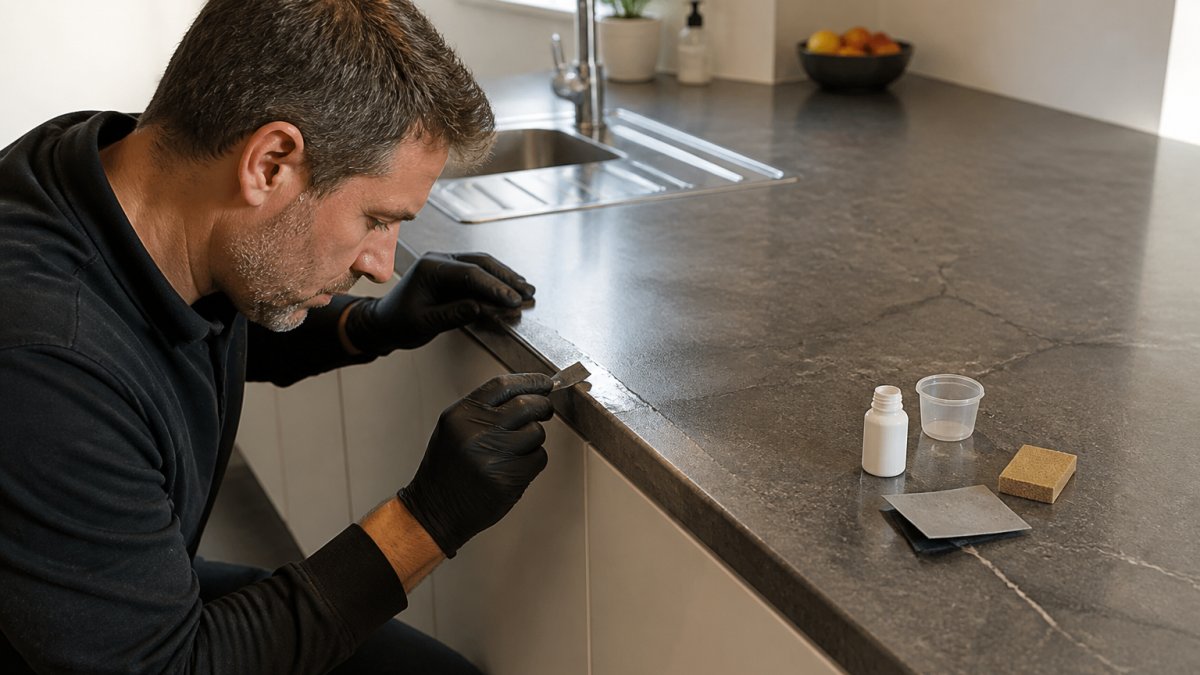
Laminate is one of the most commonly repaired worktop materials. Burns, scratches, chips, and impact damage respond well to specialist repair techniques. A technician can rebuild damaged areas, colour match the repair, and refinish it to blend with the surrounding surface.
Laminate can be tricky because the repair must account for the pattern and sheen. A solid colour is easier to match than a wood grain or speckled finish. Deep burns that go through to the substrate may not be fully repairable if the damage is extensive, but surface-level burns often respond to resurfacing work.
Water damage is the main limitation. If laminate has swollen, delaminated, or soft spots have developed, repair becomes unrealistic. The substrate is compromised and no amount of surface work will restore structural integrity. In those cases, replacement is more practical.
Worktop Chip Repair and Other Common Damage
Chips and small cracks are among the easiest worktop problems to address. A technician can fill the damage, match the colour and texture, and refinish the area. Most chips disappear completely or become barely noticeable once properly repaired.
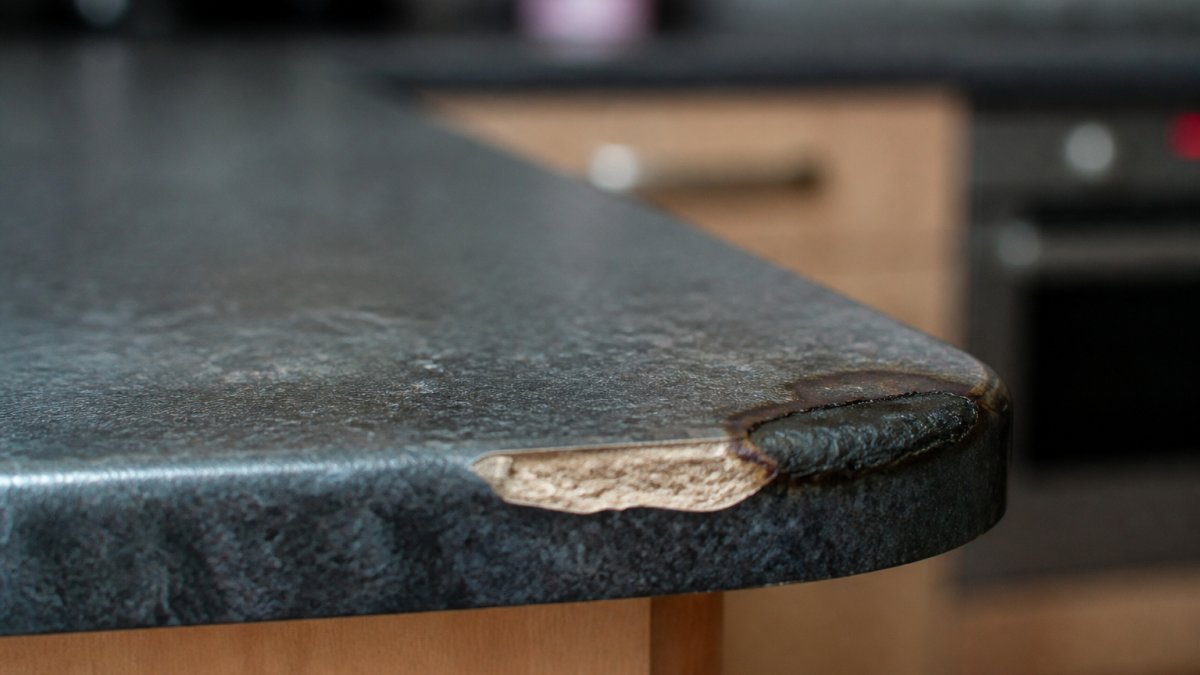
Burn marks vary in severity. Surface burns, where heat has discoloured the laminate without penetrating, usually respond well to repair. Deeper burns that have charred or melted the material may be trickier. The technician will assess whether the damage can be rebuilt and refinished or whether it's too extensive.
Stains and discolouration can sometimes be addressed through specialist cleaning or refinishing, depending on the cause. Stubborn stains that have penetrated the surface may not fully disappear, but the appearance often improves significantly.
Impact dents and gouges follow similar logic. Shallow damage is easier to repair than deep gouges that affect the structural layer. A technician will advise honestly if a particular defect is beyond sensible repair.
How Long Do Resurfaced Worktops Last?
A professionally repaired worktop can last for years. The durability depends on the repair quality, the material, and how heavily the worktop is used. A repair that blends well and uses appropriate materials should hold up to normal kitchen use, chopping, hot pans, occasional spills.
Repaired areas are generally as durable as the surrounding surface, provided the underlying material is sound. If the original worktop is 10 years old and still serviceable, a repair can last several more years without issue.
The one exception is if the underlying cause isn't addressed. A repair to a worktop that has ongoing water ingress, for example, may fail because the substrate continues to deteriorate. This is why honest assessment of the root cause matters. A technician should identify whether the damage is isolated or symptomatic of a larger problem.
Solid-Surface and Specialist Worktops
Solid-surface materials like Corian respond exceptionally well to repair. These materials can be sanded, filled, and refinished in a way that makes repairs nearly invisible. Scratches, burns, and chips often disappear completely after professional work.
Quartz and granite worktops are harder to repair cosmetically. These materials can be polished and minor scratches addressed, but deep chips or cracks in stone are more difficult to hide. Assessment is essential because the repair approach depends on the specific stone and the damage type.
Solid-surface materials offer a practical advantage: repairs can be carried out in place without removal, and the cost is typically lower than replacement. This makes resurfacing genuinely appealing for these materials.
The Real Cost of Resurfacing vs Replacement
Cost is often the deciding factor, but it's complicated by variables. A repair depends on the damage extent, material, and access. A replacement depends on the worktop size, material choice, installation complexity, and any associated work like edging or splashback.
Generally, resurfacing costs less than replacement because no removal or installation is involved. There's no skip hire, no unit adjustment, and no secondary work. However, the savings are meaningful only if the repair is suitable. A poor repair that fails within months becomes a false economy.
The disruption cost matters too. If your kitchen is out of action for a week during replacement, that has real consequences, especially for commercial properties like hotels or rental homes between tenancies. A repair completed in hours has obvious value.
Without verified pricing data for specific jobs, the honest answer is: request quotations. Send clear photographs of the damage, your full address and postcode to Surface Magic Repairs at info@surfacemagicrepairs.com or call 0800 085 7773. A technician can assess suitability and provide a realistic quotation based on your specific situation.
When Replacement Is the Better Option
Replacement makes sense when the damage is widespread, the substrate is compromised, or the worktop is nearing the end of its natural life anyway. If multiple areas are damaged, or if the surface has general wear beyond isolated chips and burns, replacement often delivers better value long-term.
Water damage is a clear indicator for replacement. Swollen laminate, delaminated edges, or soft spots mean the substrate is failing. Repair won't address the root cause and the problem will likely recur.
Structural damage, cracks that go deep, warping, or movement, also points toward replacement. These issues affect the worktop's function, not just appearance. A repair addresses cosmetics only.
If the worktop is already 15-20 years old and showing general deterioration, replacement offers a fresh start and modern materials. The cost of multiple repairs over the next few years might exceed the cost of one replacement now.
Getting an Honest Assessment
The best way to know whether resurfacing is worth considering is to ask a specialist. Surface Magic Repairs assesses worktops honestly, if repair isn't suitable, the team will say so. There's no pressure to proceed with work that won't deliver good results.
Send clear photographs showing the full worktop, the damaged area, and the immediate surroundings. Include your location and postcode. A technician can usually advise on suitability from photographs alone and provide guidance on next steps.
If you're in the Greater Manchester area or across the North West, Surface Magic Repairs can arrange an on-site visit. For locations further afield, the team handles nationwide work for commercial projects and can discuss your specific circumstances.
The question "is it worth resurfacing old kitchen worktops" doesn't have a one-size answer. It depends on your material, your damage, your location, and your priorities. An honest assessment removes the guesswork.
Damaged kitchen worktops don't always mean replacement. Many are suitable for professional repair that restores appearance, saves money, and avoids disruption. Surface Magic Repairs specialises in colour-matched worktop repairs for laminate, solid-surface, and specialist materials, completing work in place with minimal downtime. Send photographs of the damage, your address and postcode to info@surfacemagicrepairs.com, call 0800 085 7773 during office hours (Monday to Friday, 9:00am-3:00pm), or visit surfacemagicrepairs.co.uk to discuss your worktop repair.
Frequently Asked Questions
Is resurfacing a worktop better than replacing it?
Resurfacing is often better when the damage is cosmetic and the underlying structure is sound. It costs less, causes far less disruption to your kitchen, and avoids the mess of removal and installation. However, if the worktop is structurally damaged, warped, or has widespread deterioration, replacement may be more durable and practical in the long term.
Can chipped or scratched laminate worktops be repaired?
Yes. Laminate worktop repair is a common service. Chips and scratches can be filled, colour-matched and refinished to blend with the surrounding surface. The success depends on the depth and location of the damage. A professional assessment can confirm whether your particular laminate worktop is suitable for repair.
How long does kitchen worktop resurfacing last?
A professionally resurfaced worktop can last several years with normal use. Durability depends on the material, the quality of the repair, and how well you protect the surface afterwards. Avoiding excessive heat, moisture and impact helps extend the life of the repair. For heavy-use kitchens, resurfacing may eventually need refreshing, but it typically provides good value in the interim.
Can burns on a kitchen worktop be repaired?
Burns can often be repaired if they are surface-level or shallow. Deep burns that have charred the material right through may not be suitable for repair. A specialist assessment is needed to establish whether the burn damage can be filled, colour-matched and refinished, or whether replacement would be more appropriate.