Table of Contents
- Why scratches on laminate worktops happen
- Assessing whether a scratch can be repaired
- DIY options for minor scratches
- What professional laminate worktop repair service involves
- Repairing burnt laminate worktops and deep damage
- Professional surface restoration cost and repair versus replacement
- How to protect your laminate worktop after repair
- When to replace rather than repair
- Conclusion
- Frequently Asked Questions
Last Updated: 19 September 2026
Scratches on laminate worktops are one of the most common problems homeowners and landlords face. They catch the eye, make a surface look worn, and often prompt thoughts of expensive replacement. But most scratches don't need to end in a new worktop. Whether you're dealing with light surface marks or deeper damage, there are practical steps you can take to restore appearance and protect your investment.
This guide covers how to fix scratches on laminate worktops, from quick DIY solutions to professional repair options. You'll learn what's actually repairable, what methods work best for different damage types, and when replacement makes more sense than repair.
Why scratches on laminate worktops happen
Laminate is durable but not scratch-proof. Daily use creates the conditions for damage. Chopping without a board, dragging pans across the surface, placing hot utensils directly on the laminate, and abrasive cleaning products all leave marks.
Scratches happen in layers. Light surface scratches only affect the printed decorative layer. Deeper scratches penetrate into the core material beneath. Understanding the depth matters because it determines whether a repair will hold and look acceptable.
Laminate worktops also age differently in different areas. High-traffic zones near the hob or sink show damage faster. Corners and edges, where impact is more likely, collect chips and gouges. Sunlight can fade the colour around scratches, making repairs more visible.
The material itself is relatively forgiving. Laminate doesn't splinter like solid wood, and it doesn't stain as easily as porous surfaces. This makes many scratches candidates for repair rather than replacement.
Assessing whether a scratch can be repaired
Not every scratch needs professional attention, but not every scratch is worth a DIY attempt either. The first step is honest assessment.
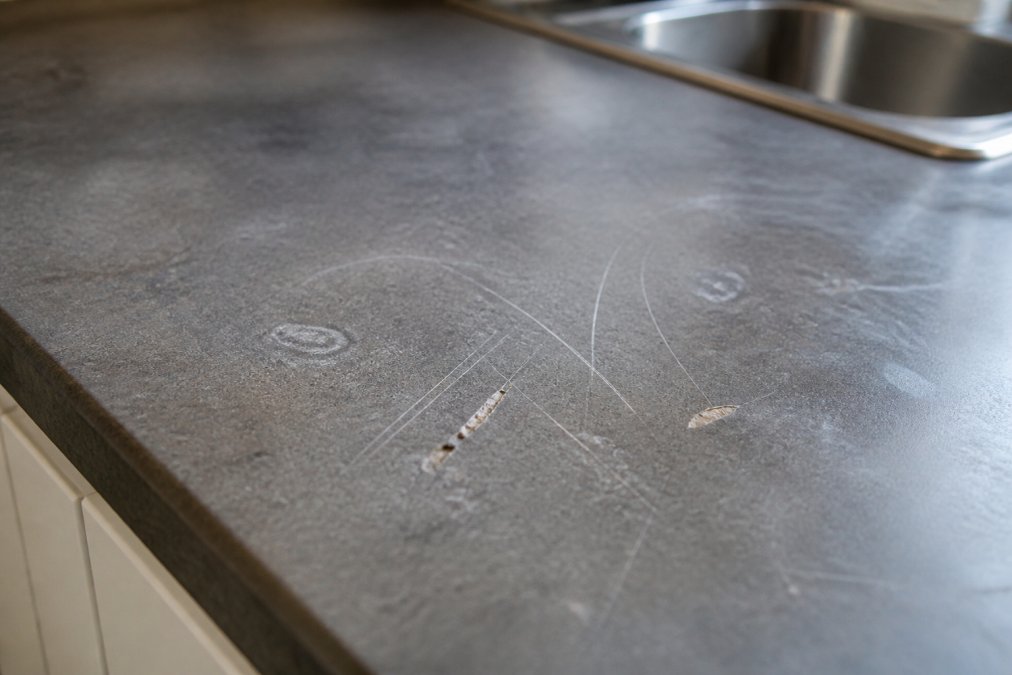
Look at the depth. Run your fingernail across the scratch. If it catches, the damage has gone through the decorative layer. Light scratches that don't catch are surface-level and respond well to polishing or touch-up pens. Deeper scratches that expose the core material are more complex.
Check the length. A short scratch (under 5 centimetres) is straightforward. Long scratches or multiple marks in one area suggest either heavy wear or a pattern of damage that repair alone won't prevent recurring.
Examine the colour. Does the scratch reveal a different colour underneath? If the core material shows through, colour-matching becomes essential. Scratches that stay within the printed layer are easier to disguise.
Consider the location. Scratches near seams or edges are harder to repair invisibly. Damage in the centre of a plain-coloured section is usually simpler. Patterned laminates hide repairs better than solid colours.
Most light to medium scratches are repairable. Deep gouges, burns, or extensive damage across large areas may be better addressed through replacement. Surface Magic Repairs assesses suitability honestly; if a repair won't deliver a lasting result, the team advises replacement rather than a temporary fix.
DIY options for minor scratches
For light surface scratches, several household and shop-bought approaches can improve appearance without professional help.
Scratch-filling compounds and touch-up markers
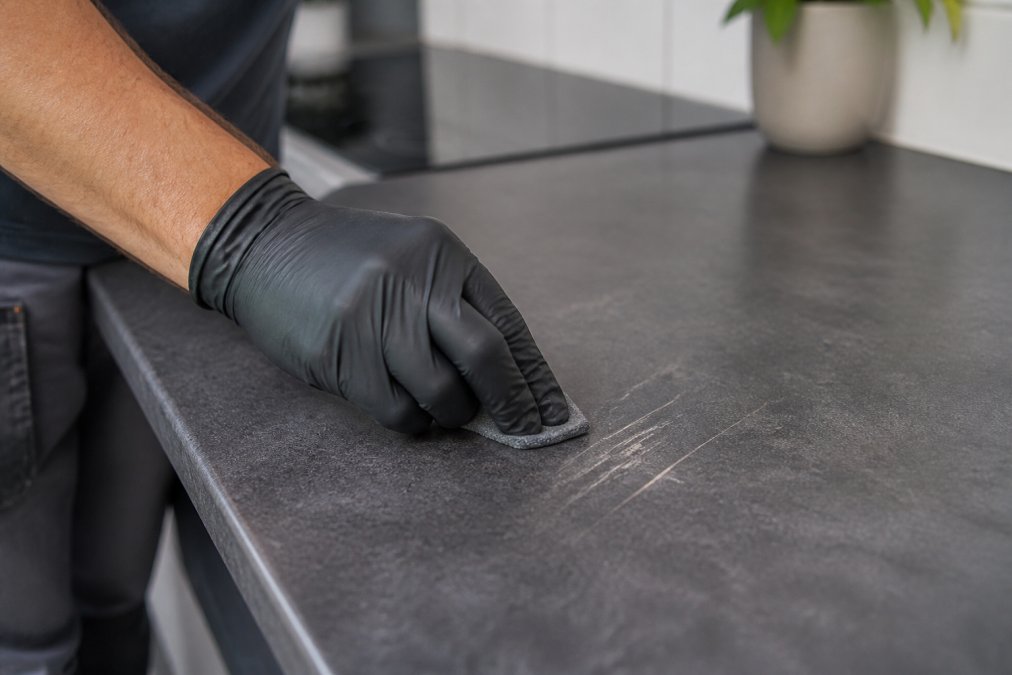
Laminate touch-up pens are the simplest option. These markers contain colour-matched ink that fills light scratches. They work best on scratches that don't catch your fingernail.
How to use them:
- Clean the area thoroughly with a damp cloth and dry it completely
- Test the colour on an inconspicuous area first (colours vary by lighting)
- Apply the pen along the scratch in thin, even strokes
- Allow the ink to dry fully before touching the surface
- Buff gently with a soft cloth if needed
Laminate repair kits include filler compounds alongside colour-matched markers. These kits work for shallow gouges that need filling before colour application.
Steps:
- Clean and dry the damaged area
- Apply the filler compound with a small spatula, slightly overfilling the scratch
- Allow it to cure (usually 30 minutes to several hours, depending on the product)
- Sand the area smooth once fully hardened
- Apply colour-matched marker or pen over the repair
- Finish with a protective clear coat if included in the kit
Results depend on the scratch depth and your care during application. Fine scratches often disappear entirely. Visible gouges may show improvement but remain noticeable, especially in certain lighting.
Polishing and buffing techniques
Polishing can reduce the appearance of light scratches by restoring shine and blending the mark with surrounding areas.
Use a laminate-specific polish or furniture polish:
- Clean the worktop with a damp cloth and dry it
- Apply a small amount of polish to a soft cloth
- Buff the scratched area in circular motions, working outward
- Continue until the shine matches the surrounding surface
- Buff the entire worktop to create an even finish
This approach works best on scratches that are more about lost shine than actual material removal. It won't repair deep gouges but often makes light damage far less noticeable.
Buffing with fine abrasives (very fine sandpaper or steel wool) can smooth rough edges around shallow scratches. This is a delicate technique; too much pressure or coarse abrasive will make the damage worse.
Only attempt this if you're confident. Use 0000-grade steel wool or 2000+ grit sandpaper, work gently, and test on a hidden area first.
What professional laminate worktop repair service involves
Professional repair of scratches on laminate worktops uses specialist techniques beyond household products.
A technician starts by preparing the damaged area. This means cleaning away debris, and sometimes sanding the scratch to remove loose material or rough edges. The goal is a stable surface to work from.
Next comes filling or rebuilding. For deeper scratches, a specialist filler compound is applied. This isn't the same as DIY kits, professional-grade materials bond more reliably and cure harder.
Colour-matching is where professional work shows its value. A technician assesses the laminate's colour, pattern, and sheen in natural and artificial light. They mix or select colour to match precisely, then apply it in layers if needed. This step determines whether a repair blends invisibly or remains visible.
Texture reproduction comes next for patterned or textured laminates. A smooth laminate needs a smooth finish. Textured laminates need the texture recreated. This requires skill and the right tools to avoid making the repair obvious.
Finally, a protective finish is applied. This seals the repair, restores shine, and protects the area from future damage.
The entire process usually takes a few hours for a small repair. Larger areas or multiple scratches may take longer. Most repairs are completed on site, meaning no removal or disruption to your kitchen.
Repairing burnt laminate worktops and deep damage
Burnt marks and deep gouges sit at the boundary between repair and replacement. Whether they're repairable depends on how much material is lost and how visible the damage is.
Light burn marks (surface discolouration without material loss) respond well to repair. These are treated similarly to scratches, the area is cleaned, colour is matched, and a protective finish is applied.
Deep burns that have charred the laminate or melted the surface are more challenging. If the damage has removed significant material or distorted the surface shape, a repair may not restore full function or appearance. In these cases, replacement is often the more durable choice.
Gouges and impact damage follow the same principle. Small, shallow gouges are repairable. Large gouges or those near seams or edges may not hold a repair long-term, especially in high-traffic areas.
The honest assessment matters here. A temporary repair that fails after a few months costs more in the long run than replacement. Surface Magic Repairs evaluates deep damage carefully and recommends the approach most likely to succeed.
Professional surface restoration cost and repair versus replacement
The cost comparison between repair and replacement depends on several factors: the size of the damage, the laminate quality, the location of the worktop, and your local market.
Repairs can be less expensive than replacement, as they avoid the labour of removal, the cost of new materials, and the disruption of installation. There's no need to disconnect utilities, remove fittings, or rearrange your kitchen.
Replacement involves stripping out the old worktop, disposing of it, fitting new worktop material, reconnecting appliances, and often redecorating the wall above. The time and cost add up quickly.
For a single scratch or minor damage, repair is the obvious choice. For extensive damage across a large area, or for worktops nearing the end of their useful life, replacement may offer better value and durability.
The decision also depends on the age of the worktop. A newer laminate with one or two repairs will likely serve well for years. An older, heavily damaged worktop might fail again soon after repair, making replacement the better investment.
Send clear photographs of the damage, the complete worktop, and the surrounding area, together with your address and postcode. Surface Magic Repairs can assess suitability and advise whether repair or replacement makes more sense for your situation.
How to protect your laminate worktop after repair
Once a scratch is repaired, protecting the worktop prevents future damage and keeps the repair looking good.
Use chopping boards. This is the single most effective habit. A board protects the laminate from knife marks and impact damage. It's faster than repairing scratches repeatedly.
Avoid direct heat. Don't place hot pans or kettles directly on the laminate. Use trivets or mats. Heat can damage the surface and weaken the bond of a recent repair.
Wipe spills promptly. Liquids can seep into scratches and damage the core material. Quick cleanup prevents this.
Clean gently. Abrasive scourers and harsh chemicals can scratch laminate or damage a repair finish. Use soft cloths and mild cleaning products.
Avoid dragging items. Sliding heavy pans or appliances across the surface creates friction and scratches. Lift and place instead.
Use placemats or coasters. These protect against both scratches and moisture rings.
These habits are simple but effective. They protect both repaired areas and the rest of your worktop.
When to replace rather than repair
Repair isn't always the right answer. Replacement makes sense in several situations.
Extensive damage across the worktop. If multiple areas are deeply scratched, burnt, or gouged, repair becomes a series of individual fixes rather than a lasting solution. Replacement offers a fresh start.
Damage near seams or edges. Repairs in these areas are harder to make durable. Movement or flexing can cause a repair to fail. Replacement eliminates this risk.
Worktops nearing the end of their lifespan. If the laminate is already peeling, discolouring, or failing in other areas, repairing one scratch is like fixing a small leak in an old roof. Replacement is the practical choice.
Damage that affects function. If a gouge or burn has created a rough edge, sharp point, or area where moisture collects, repair may not restore safe, functional use. Replacement is safer.
Repeated damage in the same area. If you've already repaired a spot and it's damaged again, the underlying cause (perhaps a hob placement or work habit) isn't being addressed. Replacement won't help unless the cause changes.
Aesthetic expectations. If you need the repair to be invisible and the damage is deep or in a visible location, professional repair may not meet your standard. Replacement guarantees a perfect finish.
Honest assessment is key. A repair that buys you five more years of use is worthwhile. A repair that fails in six months isn't.
Conclusion
Most scratches on laminate worktops don't require replacement. Light to medium damage responds well to DIY touch-up products or professional repair. The choice depends on the scratch depth, your confidence with repairs, and how much improvement matters to you.
For deep damage, extensive scratching, or worktops showing other signs of wear, replacement may offer better long-term value. The decision isn't always obvious, which is why honest assessment before committing to either approach is essential.
Scratches and minor damage don't have to mean a new worktop. Surface Magic Repairs assesses laminate worktop damage and completes repairs on site, colour-matching the repair to blend with the surrounding surface. The team handles everything from light scratches to deeper damage, and advises honestly if replacement would be more durable.
Send clear photographs of the damage, the complete worktop, and the surrounding area, together with your full address and postcode to info@surfacemagicrepairs.com, or call 0800 085 7773 (Monday to Friday, 9:00am-3:00pm). Surface Magic Repairs can assess suitability and provide a quotation. Visit surfacemagicrepairs.co.uk for more information.
Frequently Asked Questions
Can you repair deep scratches in laminate worktops?
Shallow scratches that don't penetrate the protective surface layer can usually be repaired with DIY touch-up products or professional refinishing. Deep scratches that expose the chipboard core or damage the underlying structure may be beyond repair. A professional assessment will determine whether the scratch is repairable or if replacement would be more durable. Send photographs of the damage to get an honest evaluation.
Is it cheaper to repair or replace a scratched laminate worktop?
Repair costs depend on the damage extent, location, and whether professional colour matching is needed. Replacement involves removing the old worktop, disposing of it, and installing new material, plus associated labour and disruption. Repairs are typically far less expensive and cause minimal disruption, but the actual saving depends on your specific situation. Contact Surface Magic Repairs with photographs and your postcode to receive a quotation.
What information do I need to provide for a professional worktop repair quote?
Send clear photographs showing the scratch from above, from the side, and of the surrounding worktop area to show colour and pattern. Include a photo of the complete worktop if possible. Provide your full address and postcode. This allows the technician to assess damage severity, colour match requirements, and whether the repair is suitable before visiting. Email photos to info@surfacemagicrepairs.com or call 0800 085 7773 during office hours.
How long does a professional laminate worktop repair take?
Most repairs are completed on site within a single visit, typically taking a few hours depending on damage complexity and the number of repairs. The technician prepares the surface, fills or rebuilds the damaged area, applies colour matching, and refinishes it to blend with the surrounding worktop. You can usually use the worktop the same day, though some finishes may need a few hours to cure fully.