Last Updated: October 27, 2026
Quick Summary
Preventing hotel bathroom mould and mildew comes down to moisture control: run the extractor fan during every shower and for at least 20 minutes afterwards, keep the room warm and ventilated, and dry surfaces after each checkout. A written cleaning checklist plus a monthly inspection catches sealant splits and grout staining before growth takes hold.
- Run the extractor fan during every shower and for at least 20 minutes afterwards.
- A written housekeeping checklist splits daily surface cleaning from weekly or monthly deep cleaning.
- Keep the bathroom heated to a steady level, especially in winter, to reduce condensation.
- Act on grout and sealant growth within days, not months, before roots take hold.
- A monthly walk-through catches sealant splits, grout staining and chips before they spread.
Table of Contents
- Why Mould Keeps Coming Back in Hotel Bathrooms
- Mistake 1: Skipping the Hotel Housekeeping Bathroom Cleaning Checklist
- Mistake 2: Treating Hotel Bathroom Ventilation as Optional
- Mistake 3: Ignoring Bathroom Condensation Prevention Basics
- Mistake 4: Leaving Mould on Bathroom Grout and Sealant Too Long
- Mistake 5: Cleaning the Visible Growth and Missing the Source
- Mistake 6: Replacing Baths and Shower Trays When Repair Would Do
- Mistake 7: No Inspection Routine Between Guest Check-Outs
- Booking a Bathroom Surface Assessment for Your Hotel
- Frequently Asked Questions
Why Mould Keeps Coming Back in Hotel Bathrooms
Preventing hotel bathroom mould and mildew comes down to one thing: moisture control. Mould needs damp, still air and a food source to grow, and a busy hotel bathroom supplies all three unless housekeeping and maintenance work together.
More than 46,000 surfaces were repaired by our team in the last year.
The pattern repeats across hotels. A guest showers, steam fills the room, the extractor fan is weak or switched off, and condensation settles on grout, sealant and tray edges. Clean the visible growth and it returns within weeks.
Below, we break down the seven mistakes that keep the cycle going, and what to do instead.
Mistake 1: Skipping the Hotel Housekeeping Bathroom Cleaning Checklist
The biggest cause of recurring growth is a cleaning routine that varies by whoever is on shift. A written checklist removes that guesswork and makes sure every bathroom gets the same treatment.
A proper hotel housekeeping bathroom cleaning checklist covers two levels of work. Daily cleaning handles surfaces guests see. Deep cleaning reaches the places mould actually starts.
What Belongs on the Daily and Deep-Clean List
Daily tasks:
- Wipe shower walls and screens after each checkout
- Dry the bath rim, tray edges and taps
- Squeegee glass and leave the door ajar
- Replace damp bath mats
- Check sealant lines for new dark spots
Deep-clean tasks, weekly or monthly:
- Scrub grout lines with a suitable bathroom cleaner
- Clean behind the toilet base and under the sink
- Clear extractor fan grilles of dust
- Check silicone sealant around baths and trays
- Pull out and clean shower curtains or screens
For product choices that will not damage tiles, acrylic trays or chrome, see our guide to cleaning products for hotel bathroom fixtures.
The checklist splits into daily work on what guests see and deeper work on where mould actually starts.
| Level | Tasks | Frequency |
|---|---|---|
| Daily | Wipe shower walls and screens after each checkout | Every checkout |
| Daily | Dry bath rim, tray edges and taps | Every checkout |
| Daily | Squeegee glass and leave the door ajar | Every checkout |
| Daily | Replace damp bath mats | Every checkout |
| Daily | Check sealant lines for new dark spots | Every checkout |
| Deep clean | Scrub grout lines with a suitable bathroom cleaner | Weekly or monthly |
| Deep clean | Clear extractor fan grilles of dust | Weekly or monthly |
| Deep clean | Check silicone sealant around baths and trays | Weekly or monthly |
Mistake 2: Treating Hotel Bathroom Ventilation as Optional
Hotel bathroom ventilation is not a nice extra. It is the main tool for removing moisture before it settles. A weak or noisy fan gets switched off, and the room stays damp for hours.
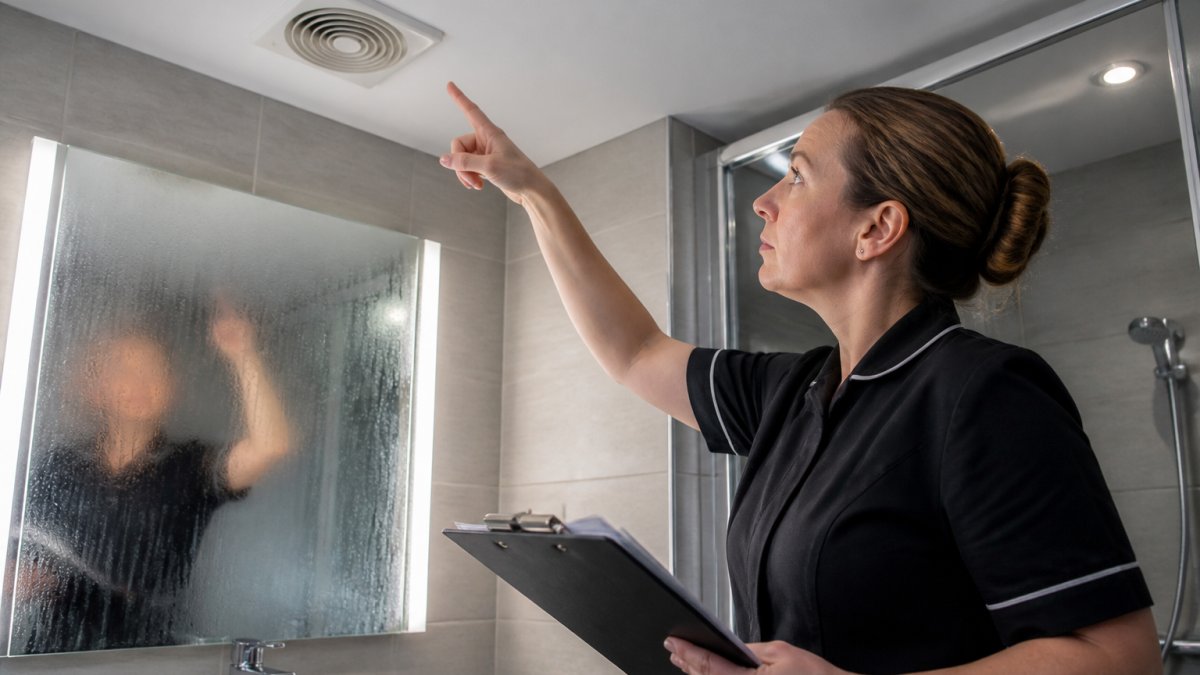
The fix is simple: run the fan during every shower and for at least 20 minutes afterwards (Preventing condensation in your home). Fit a timer or humidity sensor so guests do not have to remember.
Signs an Extractor Fan Is Underperforming
- The mirror stays fogged for more than ten minutes after a shower
- The fan is quiet enough that you cannot hear it running
- Dust and fluff build up on the grille
- Walls feel cold and clammy to the touch
- Damp patches appear near the ceiling or above the shower
Any of these means the fan needs cleaning, servicing or replacing. A cheap fan that fails is far more expensive than a good one that works.
Mistake 3: Ignoring Bathroom Condensation Prevention Basics
Bathroom condensation prevention is about stopping water vapour from settling on cold surfaces. Every degree of warmth and every bit of airflow helps.
Start with temperature. A cold bathroom condenses more than a warm one, so keep the room heated to a steady level, especially in winter (Energy efficiency - improving my home). Then add airflow:
- Keep the window cracked open where one exists
- Leave the bathroom door open after use
- Run the fan for longer in humid weather
- Dry towels and mats outside the room
Small habits add up. A bathroom that dries within an hour of use will not grow mould on grout or sealant. One that stays damp all day will.
Mistake 4: Leaving Mould on Bathroom Grout and Sealant Too Long
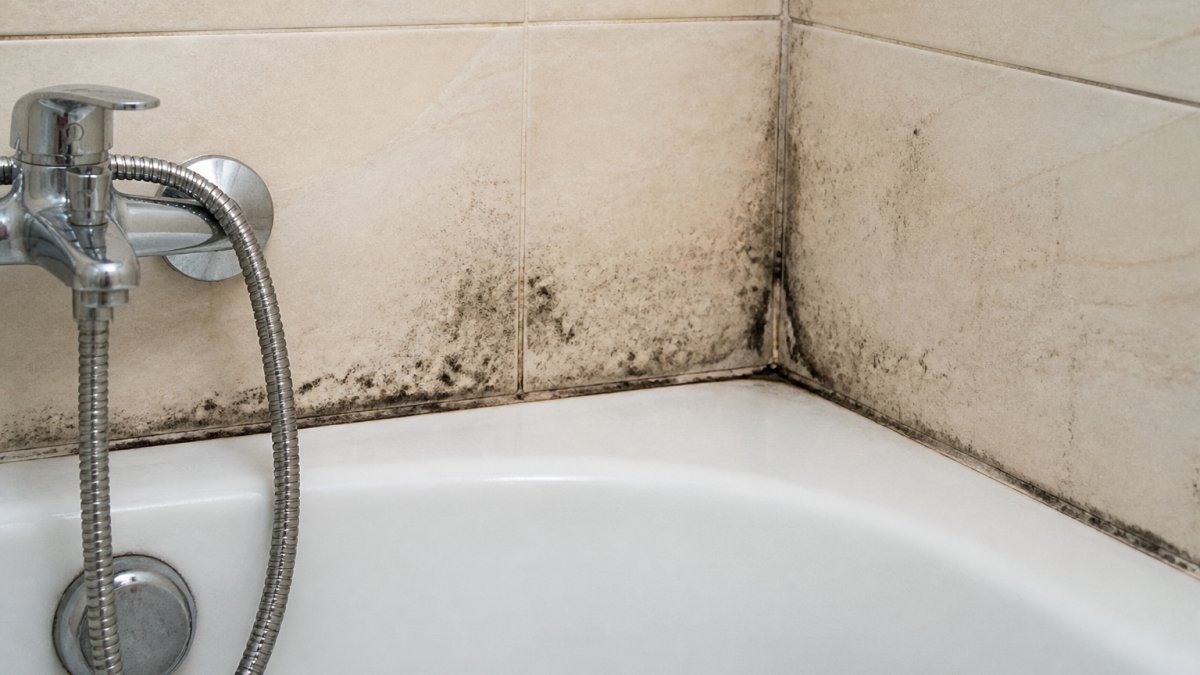
Hotel bathroom mould on grout and sealant is a warning sign, not a cosmetic problem. Once growth takes hold in porous grout, surface cleaning only removes the top layer. The roots stay behind.
Act within days, not months. Wipe down grout lines with a suitable cleaner and dry them fully. If the grout is stained black or crumbling, it may need replacing or repairing rather than cleaning.
Sealant around baths, trays and sinks is another weak point. A split or peeling seal lets water behind the fixture, and that is where damp becomes a real problem.
Our guide on whether bathroom tile grout can be repaired covers the options when cleaning no longer works.
Mistake 5: Cleaning the Visible Growth and Missing the Source
A visible patch may not be the whole problem. Mould can stem from moisture behind walls, beneath floors or in ventilation equipment, as guidance on mould in hotels points out.
That means cleaning the surface alone rarely solves it. If the same corner keeps returning, look for the source:
- A leaking pipe or waste connection
- Failed sealant behind a bath or tray
- A blocked or undersized extractor
- Cold bridging on an external wall
Find the source and fix it first. Then treat the surface. Otherwise you are cleaning the same spot every month.
For practical ways to keep fixtures going longer, see our advice on extending the lifespan of hotel bathroom surfaces.
Mistake 6: Replacing Baths and Shower Trays When Repair Would Do
A chipped bath or cracked tray does not always need replacing. Where the damage is cosmetic and the fixture is sound, an in-place repair can be a practical alternative to replacement.
Replacement means stripping out the fixture, retiling, resealing and taking the room out of service for days. Repair can often be done between check-outs, with the enclosure left in place.
Surface Magic Repairs handles shower tray repairs for localised chips, scratches and worn areas on suitable acrylic, stone-resin and composite trays. The area is colour-matched and refinished to blend with the surrounding surface.
Not every fixture can be repaired. Suitability depends on the material, the extent of the damage and the condition of the surrounding surface. We will say honestly if replacement is the better answer.
Watch out: a cracked tray that is still leaking through to the floor below needs proper assessment before any cosmetic repair, because water damage behind the fixture will not fix itself.
Mistake 7: No Inspection Routine Between Guest Check-Outs
Small problems become big ones when nobody checks. A monthly walk-through of every bathroom catches sealant splits, grout staining and chips before they spread.
Build a simple inspection routine:
- Check sealant lines around baths, trays and sinks
- Look for dark spots on grout
- Test the extractor fan by holding up a tissue
- Check for chips, cracks and worn patches
- Look for damp patches on walls and ceilings
- Note any loose tiles or lifting edges
Log what you find and fix items in batches. Planned, batched visits can help reduce disruption compared with calling someone out for every small job.
Surface Magic Repairs runs commercial surface maintenance programmes for hotels, retail, offices and managed property, covering planned and reactive cosmetic repairs across multiple rooms and sites.
Booking a Bathroom Surface Assessment for Your Hotel
Mould and mildew in hotel bathrooms can come back if the cause is not fixed. Cleaning routines, ventilation and inspection habits are relevant to managing the problem.
Where surfaces are already damaged, repair can be an alternative to replacement. Surface Magic Repairs repairs baths, shower trays, tiles, worktops, doors and furniture in place, with colour and finish matched to the existing surface. Work is carried out on site, helping reduce disruption and avoid unnecessary strip-out and waste.
We are Bolton-based and travel to hotels across Greater Manchester, the wider North West and nationwide for commercial and multi-site projects. Accreditations include ISO 9001, CHAS Premier, SMAS Worksafe and SafeContractor Approved.
Send clear photographs of the damage, the complete item and the surrounding area, together with your full address and postcode. Surface Magic Repairs can assess whether a repair is suitable and provide a quotation. Call 0800 085 7773 or visit Surface Magic Repairs.
Get started with Surface Magic Repairs.
Frequently Asked Questions
How can hotels prevent mould and mildew in bathrooms?
Routine cleaning and inspection can be part of managing bathroom mould and mildew. Run extractor fans during and after showers, wipe condensation from tiles, glass and sealant after housekeeping, and inspect grout lines regularly. A written hotel housekeeping bathroom cleaning checklist can help staff keep track of tasks. Leaks and failed sealant may need attention. If mould has stained sealant or grout, consider whether cleaning, repair or replacement is appropriate.
Does bathroom ventilation help prevent mould in hotels?
Ventilation can help remove moist air from a hotel bathroom. Extractor fans and vents may need attention if moisture lingers, but a fogged mirror or damp-feeling wall alone does not establish that a fan is underperforming.
What should hotel staff do if they find mould in a bathroom?
Record where mould is found and consider whether the area needs further assessment. A stained or damaged bath or shower tray surface can be assessed for repair. The appropriate response to widespread growth depends on the circumstances.
When should a hotel call a professional to assess bathroom mould?
Consider seeking an assessment when growth returns after cleaning, spreads beyond grout and sealant, or affects multiple rooms. These signs do not by themselves establish the cause. Surface Magic Repairs can assess whether damaged bath, shower tray or tiled surfaces are suitable for in-place repair rather than replacement.