Table of Contents
- How to Find Reclaimed Materials for Home Projects: Where to Start
- Where to Buy Reclaimed Building Materials in the UK
- How to Assess Reclaimed Materials Before You Buy
- Reclaimed Timber for Home Projects: What to Look For
- Reclaimed Bricks and Paving: Sourcing and Suitability
- How to Incorporate Reclaimed Materials into Your Home
- Common Mistakes to Avoid When Sourcing Reclaimed Materials
- Getting Professional Help with Damaged Surfaces
- Conclusion
- Frequently Asked Questions
Last Updated: October 8, 2026
How to Find Reclaimed Materials for Home Projects: Where to Start
Learning how to find reclaimed materials for home projects starts with knowing where to look, what to check and when to walk away. Salvage yards, reclamation centres, online marketplaces and demolition contractors are the main sources. This guide from Surface Magic Repairs covers each one, plus how to judge quality before you part with money.
Reclaimed materials are building products recovered from one property and reused in another. They include timber, bricks, tiles, stone, metal, doors and sanitaryware.
Why bother? Because salvage often costs less than new stock, and it carries a character that new materials cannot copy. Older timber is frequently denser than modern fast-grown equivalents. Old bricks may match a period property far better than anything currently made. And every reused item keeps usable material out of landfill, which matters when you consider that construction, demolition and excavation produce the largest waste stream in the UK, according to UK Government waste and recycling statistics.
But first, here is what most guides get wrong: they treat reclamation as a treasure hunt. It is not. It is a sourcing exercise with real risks, and the best buyers work from a list, not a whim.
What Counts as Reclaimed Material?
Reclaimed material is any building product taken from an existing structure and made fit for reuse. Common examples:
- Structural and decorative timber, including beams and floorboards
- Bricks, pavers, cobbles and roof tiles
- Stone flags, kerbs and walling
- Doors, windows and ironmongery
- Sanitaryware such as sinks and cast-iron baths
- Metalwork, including railings and radiators
Reclaimed differs from "recycled". Recycled material is reprocessed into something new. Reclaimed material is used again largely as it was.
Why Reclaimed Materials Are Worth the Effort
Three reasons come up again and again.
- Cost. Salvage is often cheaper than new, though not always once you add cleaning and preparation.
- Character. Weathered brick and aged timber bring a depth that new stock rarely matches.
- Waste reduction. Reusing materials avoids unnecessary landfill and the emissions tied to manufacturing replacements.
The trade-off is time. You will spend longer sourcing reclaimed stock than ordering from a merchant. That is the honest cost of the exercise.
Where to Buy Reclaimed Building Materials in the UK
The best places to buy reclaimed building materials are specialist salvage yards, architectural reclamation centres, online marketplaces and direct deals with demolition contractors. Each has strengths. Yards let you inspect before buying. Online sellers widen your search but demand careful checks.
Salvage Yards and Architectural Reclamation Centres
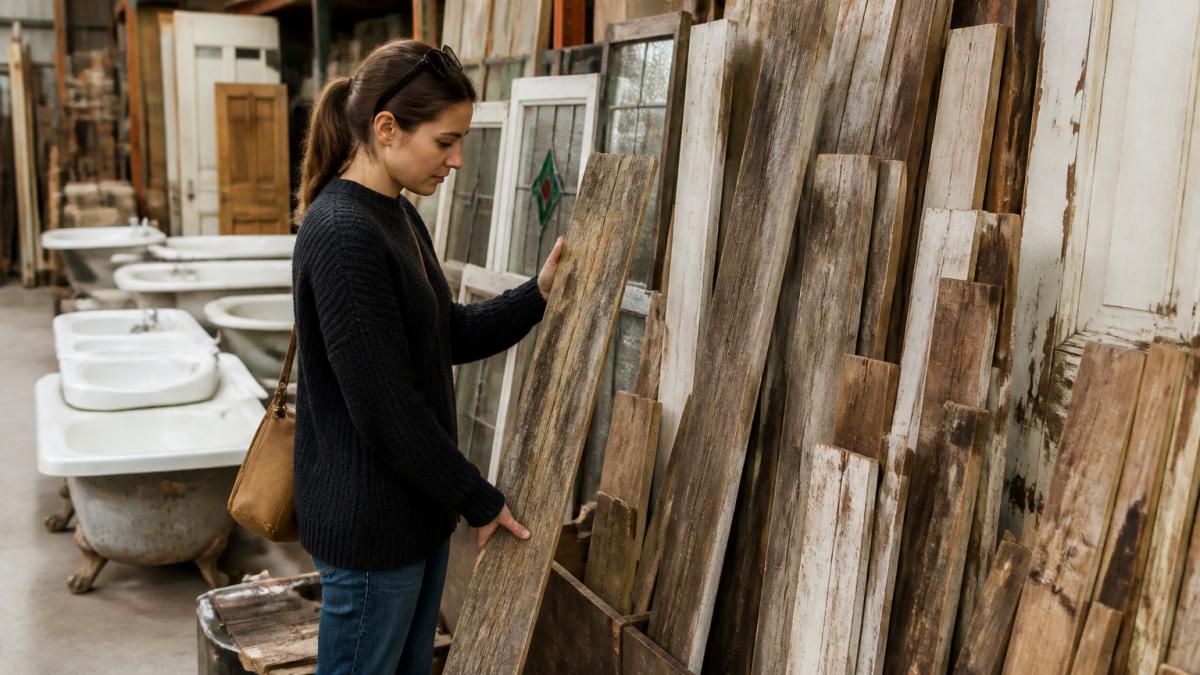
Salvage yards are the traditional route, and still the best for anything structural. You can handle the timber, tap the brick and check for cracks on the spot.
What to expect:
- Stock changes constantly, so visit regularly rather than once
- Prices vary by yard and by material, so compare before committing
- Some yards deliver; many expect you to arrange transport
Architectural reclamation centres sit at the higher end. They stock cleaned, sorted and sometimes graded materials, often with period fixtures. You pay more, but you save hours of preparation.
Online Marketplaces and Auction Sites
Online marketplaces suit buyers who know exactly what they need. Auction sites reward patience and punish impulse.
Practical tips:
- Ask for extra photographs before bidding
- Confirm dimensions in millimetres, not "roughly"
- Check whether the seller will hold items for collection
- Read the listing for signs of damage the photos hide
For anything expensive, view in person. A photograph cannot show you rot, bowing or a hairline crack.
How to Assess Reclaimed Materials Before You Buy
Assessing reclaimed materials means checking three things: structural soundness, hidden defects and whether the item suits your project. Skip any one of these and you risk buying stock that fails within a season.
Here is a quick reference for judging salvage:
| Check | What to Look For | If It Fails |
|---|---|---|
| Structure | Cracks, bowing, delamination | Walk away |
| Moisture | Damp patches, soft spots, staining | Test before buying |
| Infestation | Frass, bore holes, live insects | Reject the batch |
| Contamination | Paint, oils, asbestos risk | Get specialist advice |
| Suitability | Size, finish, colour match | Measure twice |
Checking for Structural Integrity and Safety
Start with the basics. Look along the length of any timber for bowing. Tap bricks to listen for a hollow ring, which can signal internal cracking. Check stone for hairline fractures that will spread under load.
Then apply the honest test: would you trust this item to carry weight, hold water or take a fixing? If the answer is anything other than a clear yes, treat it as decorative stock only.
Spotting Hidden Problems: Rot, Infestation and Contamination
The visible face of a reclaimed item tells you very little. The problems hide underneath.
- Rot. Prod suspect timber with a screwdriver. Soft, spongy wood means fungal decay.
- Infestation. Fine dust, small bore holes or live beetles point to woodworm or worse.
- Contamination. Old paint, oils and unknown coatings can be hazardous, especially on items from industrial sites.
For timber, check the end grain first. That is where moisture sits and where decay usually begins.
Reclaimed Timber for Home Projects: What to Look For
Good reclaimed timber is dry, straight and free from active infestation. Old-growth softwood and hardwood are often denser than modern equivalents, which makes them excellent for shelving, worktops, beams and furniture.
What to check:
- Moisture. Damp timber will move and crack as it dries. Buy dry where possible.
- Straightness. Sight along the edge. A slight bow can be planed out; a twist rarely can.
- Nails and fixings. Old metal will blunt your tools and can stain a finished surface.
- Species. Oak, elm and pitch pine behave differently. Match the timber to the job.
One insider point: reclaimed timber is often sold by volume or by the piece, and pricing depends on species, condition and quantity. Ask for a quote based on your actual measurements rather than guessing from a listing.
Reclaimed Bricks and Paving: Sourcing and Suitability
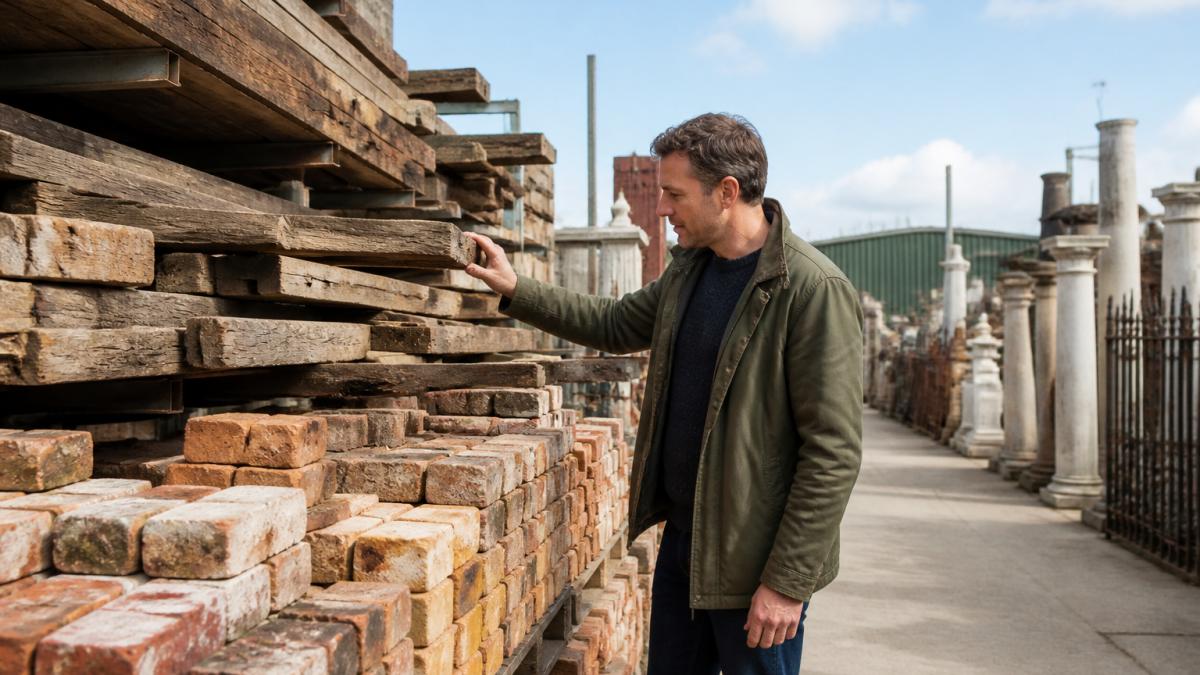
Reclaimed bricks and paving work best when you need a match for an older property or a weathered finish. New brick rarely blends with period masonry, and salvaged stock often does.
Key checks before you buy:
- Mortar residue. Heavy cement mortar is hard to remove without damaging the brick face.
- Frost damage. Spalling faces will crumble after a hard winter.
- Consistency. Buy the whole batch from one source so colour and size match.
- Quantity. Order more than you need. Breakages happen during cleaning and laying.
For paving, check thickness as well as face condition. Thin flags crack under foot traffic and vehicle weight.
How to Incorporate Reclaimed Materials into Your Home
Blend reclaimed stock with new materials rather than using it everywhere. A reclaimed beam above a modern kitchen, or salvaged brick on a single feature wall, reads as deliberate. A whole room of mismatched salvage reads as chaos.
Practical ways to use it:
- Reclaimed timber for shelving, mantels and open storage
- Salvaged brick for feature walls and garden landscaping
- Old doors stripped and refinished as interior doors
- Stone flags for paths, patios and hallways
- Reclaimed tiles for splashbacks where sizes allow
Preparation matters more than installation. Clean, de-nail and dry your materials before they go anywhere near the project. Rushing this stage is the most common reason reclaimed schemes disappoint.
Common Mistakes to Avoid When Sourcing Reclaimed Materials
Most problems with salvaged stock trace back to four mistakes.
- Buying before measuring. Measure your space first, then shop. Never the other way round.
- Skipping the moisture check. Wet timber and damp brick cause movement, mould and failed finishes.
- Under-ordering. Reclaimed batches sell out. Buy your full quantity in one go.
- Ignoring hidden damage. A cheap price is no bargain if the item fails within a year.
There is a fifth, subtler mistake: assuming every damaged surface needs replacing. Often it does not. Chipped tiles, scratched worktops and marked sanitaryware can frequently be repaired in place rather than ripped out, which saves both money and waste.
Getting Professional Help with Damaged Surfaces
Not every surface problem calls for new materials. Some call for repair.
If you have salvaged stock that arrived with chips, scratches or small cracks, or if existing surfaces in your home have picked up damage, replacement is not always the answer. Surface Magic Repairs restores damaged hard surfaces in place, including baths, shower trays, sinks, worktops, tiles, uPVC frames, doors and brickwork. The team colour matches and refinishes the repaired area so it blends with the surrounding surface.
That approach fits the same logic as reclamation itself: keep what is serviceable and avoid unnecessary waste. It also avoids the disruption of strip-out and the knock-on decorating that replacement usually brings.
Suitability depends on the material, the condition, the location and how far the damage extends. Surface Magic Repairs will say so honestly if replacement would be the more durable choice.
Conclusion
Sourcing reclaimed materials takes patience, a tape measure and a willingness to walk away from poor stock. Do those three things and you will end up with materials that cost less, look better and keep usable resources in circulation.
Where damage has already happened, Surface Magic Repairs can help. The Bolton-based team repairs chips, scratches, cracks and burns in place, with colour and finish matching, no strip-out and far less disruption than replacement. With more than 46,000 surfaces repaired in the past year and over 25 years of combined trade experience, they work with homeowners, landlords, hotels and contractors across the North West and nationwide on commercial projects.
Send clear photographs of the damage, the complete item and the surrounding area, together with your full address and postcode. Surface Magic Repairs can assess whether a repair is suitable and provide a quotation. Call 0800 085 7773 or visit surfacemagicrepairs.co.uk.
Frequently Asked Questions
Where can I find reclaimed materials for home projects?
Salvage yards, architectural reclamation centres, online marketplaces, and local demolition sites are the main sources. Specialist reclamation yards often stock reclaimed timber, bricks, tiles, and sanitaryware. Online platforms let you search by material and location. Always visit in person where possible to inspect quality before buying. For smaller items, community reuse schemes and charity shops that specialise in building materials can be worth checking.
How do I check the quality of reclaimed building materials?
Inspect for structural damage, rot, insect infestation, and excessive wear. For timber, check for soft spots, splits, and signs of woodworm. For bricks, look for cracks, spalling, and mortar residue. For paving, check for chips and uneven surfaces. Ask about the material's previous use and whether it has been treated. If you are unsure, a builder or surveyor can help assess suitability before you commit.
What should I check before buying reclaimed timber?
Look for straightness, moisture content, and any signs of rot or insect damage. Reclaimed timber can be cupped, twisted, or split. Check for old nails, screws, or embedded metal that could damage tools. Ask whether it has been stored under cover. Some reclaimed timber may need planing or treatment before use. Avoid timber that feels soft or crumbles when probed.
Are reclaimed materials suitable for every home project?
No. Reclaimed materials work well for many projects, but suitability depends on the material's condition, the project's requirements, and building regulations. Structural elements may need certification. Some reclaimed materials are fine for decorative use but not for load-bearing applications. Always check with a qualified tradesperson if you are unsure. For damaged surfaces that are otherwise sound, professional repair can be a better option than replacement.