Table of Contents
- What Counts as a Sustainable Building Material
- Lower Embodied Carbon Across the Whole Life of a Building
- Repair Versus Replace Sustainability: Keeping Materials in Service
- Reducing Construction Waste in the UK: Where the Tonnage Actually Goes
- Meeting UK Regulations and Planning Expectations
- Healthier Indoor Environments for Occupants
- The Commercial Case: Cost, Programme and Handover
- Where Sustainable Materials Fall Short
- Conclusion
- Frequently Asked Questions
Last Updated: October 3, 2026
What Counts as a Sustainable Building Material
Sustainable building materials are those whose environmental impact is measured across their whole life, from extraction or manufacture through installation, use and end of life. That definition matters because it moves the conversation away from recycled content alone and towards total impact, including embodied carbon, durability and what happens when the material is damaged.
This guide from Surface Magic Repairs examines the benefits of choosing sustainable building materials, and one benefit gets far less attention than it deserves: keeping materials in service rather than replacing them. The UK construction industry sends vast quantities of material to landfill every year, much of it still functional, and a significant share of that waste begins as cosmetic damage. A chipped bath, a burnt worktop or a scratched panel is often treated as waste when it is really a repairable surface.
Three broad categories cover most of what gets specified:
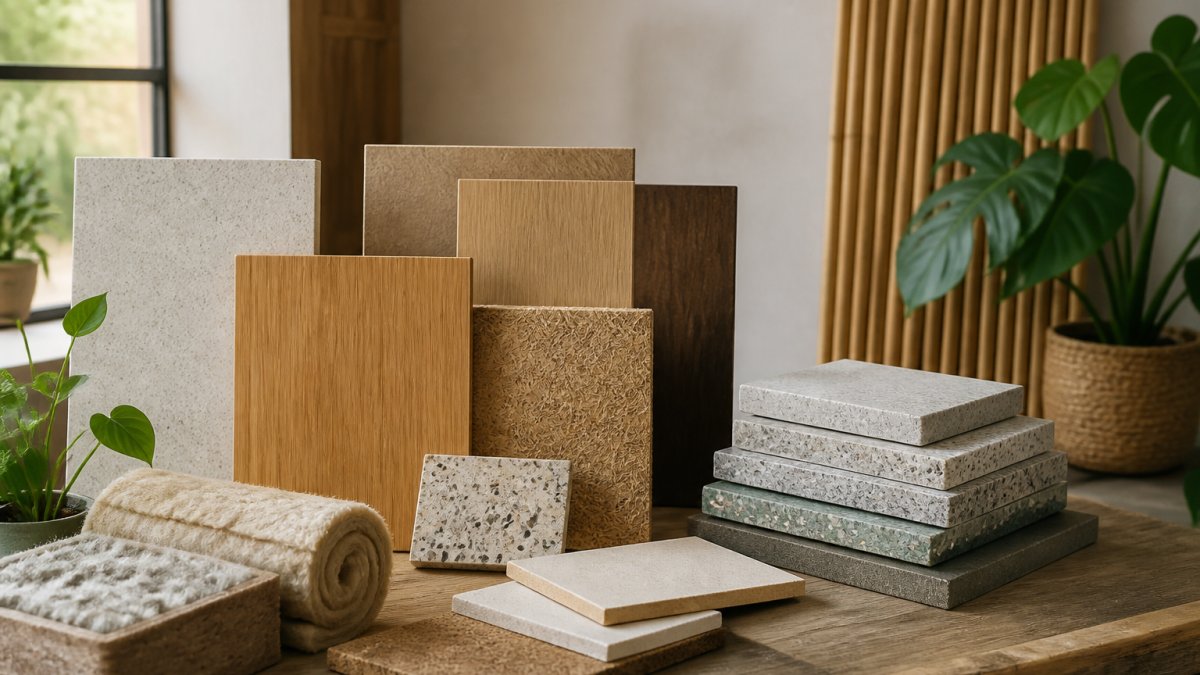
- Bio-based materials such as hempcrete, wood fibre insulation and modified timber, which store carbon and often regulate moisture
- Recycled and low-carbon variants such as concrete blends using recycled aggregate, or insulation made from recovered stone wool
- Durable, long-life materials that stay in place for decades and can be maintained or refinished rather than swapped out
The third category is where repair and restoration sit, and it is the one most specifications overlook.
Lower Embodied Carbon Across the Whole Life of a Building
Embodied carbon is the total greenhouse gas emissions associated with a material's extraction, manufacture, transport, installation, maintenance and disposal. A material with low upfront carbon but a short service life can carry higher lifetime emissions than a durable alternative that lasts three times as long.
That is the argument for looking beyond the product datasheet. According to UK Green Building Council guidance on embodied carbon, the industry's own body has pushed for whole-life carbon assessment to become standard practice on projects, precisely because upfront figures hide the replacement cycle. A worktop replaced twice in twenty years carries three times the embodied carbon of one that is repaired and refinished instead.
Durability and repairability are therefore carbon strategies, not just maintenance preferences.
Repair Versus Replace Sustainability: Keeping Materials in Service
Repair versus replace sustainability comes down to one question: does the damaged item still perform its function? If a bath holds water, a worktop is structurally sound and a door closes correctly, cosmetic damage is a finish problem, not a failure.
Surface Magic Repairs repairs chips, cracks, scratches, burns and impact damage in place, using specialist filling, colour matching, texturing and refinishing. The existing fixture stays where it is. There is no strip-out, no skip, and no knock-on tiling or decorating.
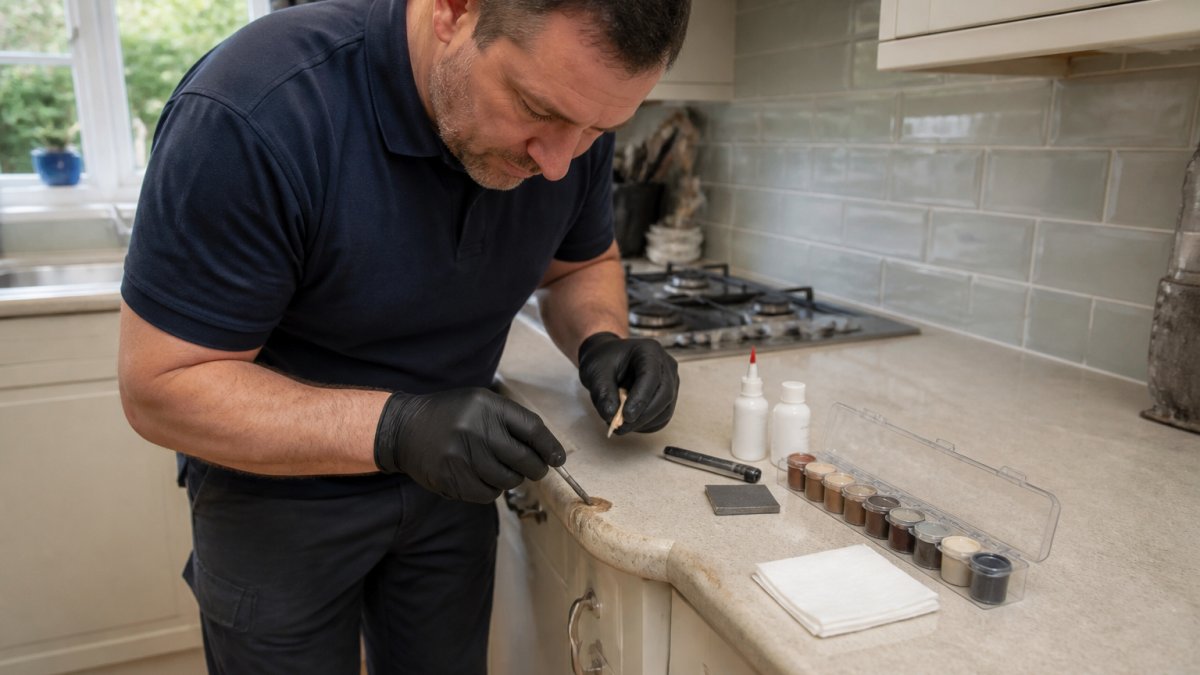
The sustainability case is straightforward. A repaired surface avoids the manufacture of a new item, the transport of that item, and the landfill space taken by the old one. On a hotel refurbishment or a housing scheme, that effect multiplies across dozens or hundreds of units.
Suitability always depends on the material, the condition, the location and how far the damage extends. Not every surface can be repaired, and an honest assessment should say so.
Reducing Construction Waste in the UK: Where the Tonnage Actually Goes
Reducing construction waste in the UK starts with recognising that a large share of it never needed to become waste. Construction, demolition and excavation arisings are among the largest waste streams in the country, and the Environment Agency guidance on construction and demolition waste sets out the duty of care that applies to how those materials are handled, stored and disposed of.
Cosmetic damage sits awkwardly in that system. A chipped bath or a scratched door is recorded as waste because it cannot be sold as new, even though it remains perfectly usable. Repairing it in place removes it from the waste stream entirely.
A simple way to think about it:
- Avoid the damage in the first place through protection during construction
- Repair cosmetic damage before it is written off as defective
- Reuse fixtures and fittings that are sound but marked
- Recycle only what genuinely cannot be salvaged
Most site waste plans jump straight to recycling and skip the first three.
Meeting UK Regulations and Planning Expectations
Building regulations and planning policy increasingly expect applicants to demonstrate how a project limits its environmental impact. Whole-life carbon, waste reduction and material reuse now appear in planning statements and sustainability strategies on schemes of all sizes.
For contractors and developers, this creates a practical pressure point. Waste targets are easier to hit when fewer materials are discarded, and repair is one of the few interventions that reduces waste without affecting the programme.
The same logic applies to retrofit and refurbishment. Where a building's existing fixtures are sound but tired, refinishing and repair keep the material in place and avoid the carbon and cost of replacement. That sits comfortably alongside the retrofit-first thinking that now shapes much public sector and housing association work.
Healthier Indoor Environments for Occupants
Many sustainable materials improve indoor air quality as a side effect of how they are made. Bio-based insulation and natural flooring products typically carry lower volatile organic compound emissions than their synthetic equivalents, and breathable wall systems help manage moisture rather than trapping it.
Repair contributes here too, in a less obvious way. Refinishing an existing surface uses a fraction of the material of a full replacement, which means fewer new products off-gassing in an occupied space. In a hotel, a care home or a school, that matters: rooms come back into use faster, and occupants are not breathing in the residue of a full strip-out.
For facilities managers, the practical benefit is turnaround. A repair can often be completed in a single visit, with the area back in service the same day.
The Commercial Case: Cost, Programme and Handover
Repair usually costs less than replacement, and the gap widens once you count the hidden costs of swapping something out. Removal, disposal, a new unit, labour to fit it, and making good the surrounding tiling or decoration all add to the final figure. A repair avoids every one of those line items.
Programme benefits are just as significant. Replacement means ordering, lead times and a room or unit out of action. Repair means a technician on site and the item back in use quickly.
| Approach | Typical Scope | Disruption | Waste Produced |
|---|---|---|---|
| Full replacement | Strip-out, disposal, new unit, refit, making good | Room or unit out of action for days | Old unit plus packaging and offcuts |
| Professional repair | Assessment, preparation, fill, colour match, refinish | Area back in use quickly | Minimal |
| Deferred replacement | Damage left, further deterioration, eventual swap | Ongoing complaint risk | Same as replacement |
Surface Magic Repairs has completed more than 46,000 surface repairs in the last year, working with homeowners, landlords, housing associations, housebuilders, hotels and facilities-management teams. Repairs are carried out in place, colour matched to the surrounding finish, and backed by ISO 9001, CHAS Premier, SMAS Worksafe and SafeContractor approvals.
Cost depends on the surface, the damage, access and the number of repairs, so we assess each job honestly before quoting.
Where Sustainable Materials Fall Short
Sustainable specification has real limits, and pretending otherwise helps nobody. Some bio-based materials cost more upfront than the conventional option. Some need specialist installation, which narrows the contractor pool. Availability varies by region, and a product specified early may not be obtainable when the programme reaches that stage.
Repair has its own boundaries. A surface that is structurally compromised, badly delaminated or damaged beyond the finish layer may not be a sensible candidate. In those cases, replacement is the more durable answer, and we will say so.
The honest position is that sustainability is a set of trade-offs, not a single answer. The strongest results come from combining durable materials, good protection during construction, and a repair-first approach to cosmetic damage.
Conclusion
Specifying sustainable materials is only half the job. The other half is keeping them in service once they are installed, and that is where cosmetic damage quietly undermines the best intentions. A repair-first approach protects the carbon already invested in a building, cuts waste, and keeps rooms, units and properties usable.
Surface Magic Repairs restores chipped baths, cracked shower trays, burnt worktops, damaged tiles, scratched uPVC, doors and fitted furniture in place, with colour and finish matched to the surrounding surface. We are Bolton-based and travel across Greater Manchester and the wider North West, with nationwide coverage for commercial and multi-site projects.
Send photographs of the damage with your address and postcode, call 0800 085 7773, or visit surfacemagicrepairs.co.uk to find out whether a repair is the right answer.
Frequently Asked Questions
What are the main benefits of using sustainable building materials?
The clearest benefits are lower embodied carbon, less material sent to landfill, and fewer replacement cycles over the life of a building. Many sustainable options also improve indoor air quality and thermal performance, which can reduce running costs. There is a practical commercial benefit too: durable, repairable finishes mean damaged surfaces can often be restored in place rather than stripped out and replaced, which cuts labour, downtime and waste on occupied sites.
How does repairing existing surfaces contribute to sustainability?
Repairing keeps the original material in service, so the carbon already invested in making and fitting it is not thrown away. It also avoids the knock-on waste of removing tiles, sealant, adhesive, plasterboard or worktop sections, and it removes the need to manufacture and transport a replacement. On a repair-versus-replace sustainability basis, restoring a chipped bath, cracked shower tray or burnt worktop usually produces far less waste than a full strip-out, and it can be done in place with minimal disruption.
Are sustainable building materials more cost-effective in the long run?
Often, yes, though it depends on the material and the project. Some sustainable products cost more upfront, but they tend to pay back through longer service life, lower maintenance and reduced replacement frequency. The bigger savings usually come from avoiding unnecessary replacement altogether. Where a surface is structurally sound and only cosmetically damaged, a professional repair is normally cheaper than removal and refitting, and it avoids secondary costs such as retiling, redecorating or disposing of the old item.
What role does repair play in modern property maintenance?
Repair is increasingly central to planned maintenance because it extends the life of existing fixtures and finishes without a full refurbishment. Landlords can turn a property around between tenancies in hours rather than days, hotels can keep rooms sellable, and housebuilders can clear snagging lists without ordering replacement units. Suitability always depends on the material, condition, location and extent of the damage, so it is worth sending clear photographs of the damage, the whole item and the surrounding area for an honest assessment before booking anything.