Table of Contents
- What Cosmetic Defect Rectification Actually Means
- The Main Benefits of Cosmetic Defect Rectification
- Surface Repair vs Replacement Cost: What Really Drives the Difference
- Cosmetic Snagging Repairs for New Builds: Faster Handovers
- Which Surfaces and Damage Types Suit Rectification
- When Replacement Is the Better Option
- What to Send for an Accurate Assessment
- Frequently Asked Questions
Last Updated: 23 September 2026
What Cosmetic Defect Rectification Actually Means
Cosmetic defect rectification is the repair of visible damage to a finished surface, carried out in place, so the item does not need to be removed or replaced. It covers chips, scratches, cracks, burns, dents and stains on baths, worktops, tiles, shower trays, doors, uPVC frames and similar hard surfaces.
The distinction that matters is between cosmetic and structural damage. A deep crack running through a shower tray is a safety and waterproofing problem. A chip on the rim of a bath is a cosmetic one. Rectification targets the second category, and it does so without a strip-out, a skip or a retile.
This guide from Surface Magic Repairs sets out the practical benefits of cosmetic defect rectification, the factors that drive cost differences against replacement, and the cases where replacement genuinely wins. Surface Magic Repairs has completed more than 46,000 surface repairs in the last year, so the patterns below come from real jobs rather than theory.
The short answer on benefits: rectification usually costs less, takes hours rather than days, keeps the property occupied, and diverts serviceable materials from landfill.
The Main Benefits of Cosmetic Defect Rectification
The core benefit is simple. You keep the item you already own and pay to restore its appearance rather than paying to remove, dispose of and replace it.
That single decision cascades into three practical advantages: lower cost, far less disruption, and less waste. Each one matters differently depending on whether you are a homeowner with one chipped bath or a facilities manager with forty hotel rooms.
Lower Cost Than Replacement
Replacement cost is never just the price of the new item. It includes removal, disposal, labour, and often the knock-on work of retiling, resealing or redecorating around the new fitting.
A replacement bath in an upstairs bathroom may not fit through the door without removing a wall section or a window. A worktop replacement means disconnecting services and possibly replacing splashbacks. Those hidden costs are where budgets blow out.
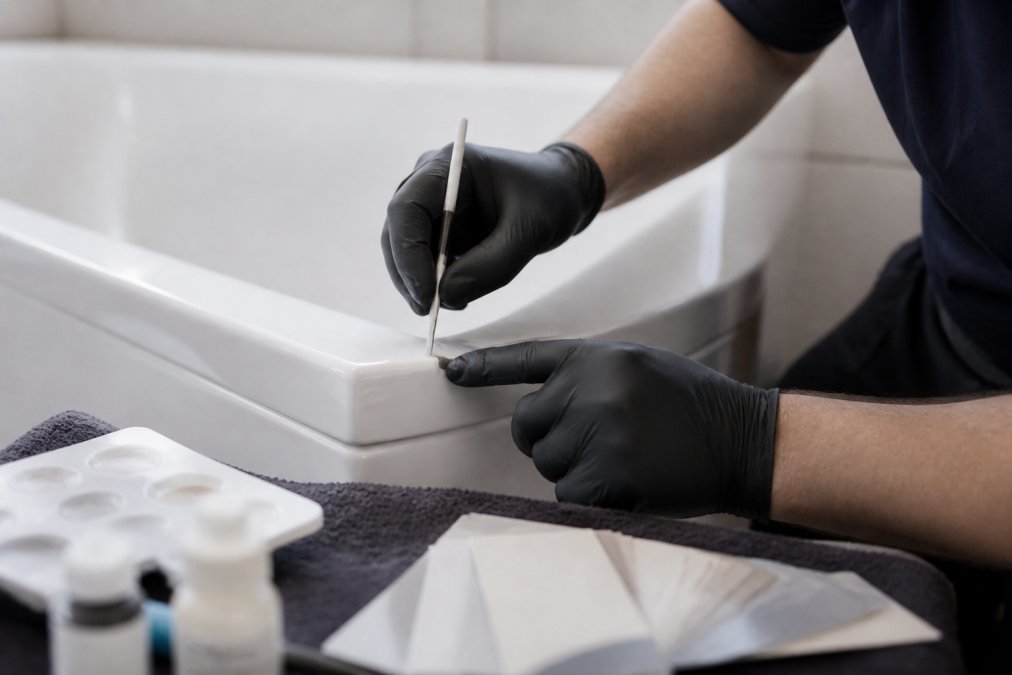
Rectification removes almost all of that. The damaged area is prepared, filled or rebuilt, colour matched, textured and refinished on site. No strip-out, no skip, no follow-on trades.
Less Disruption and Downtime
A hotel cannot sell a room while a bath is being ripped out and retiled. A landlord cannot relet a flat mid-refurbishment. A homeowner does not want a bathroom out of action for a week.
Rectification is normally completed in a single visit. The technician works around the existing fitting, and the room is typically back in use the same day once the finish has cured.
For commercial clients, that difference is measurable. A room out of action for three days is three nights of lost revenue. Multiply that across a snagging list or a portfolio and the disruption cost quickly exceeds the repair cost itself.
Less Waste and Fewer Materials Discarded
A serviceable bath, worktop or tray that gets replaced becomes waste. In many cases it is a perfectly sound item with one visible defect.
Repairing rather than replacing keeps that material in use and avoids the carbon and cost of manufacturing and transporting a replacement. It also avoids the packaging, the delivery mileage and the disposal trip.
For housing associations, developers and facilities teams working to waste-reduction targets, this is a straightforward win. The item stays, the defect goes.
Surface Repair vs Replacement Cost: What Really Drives the Difference
The gap between surface repair and replacement cost comes down to five variables: the surface material, the extent and type of damage, access to the item, the finish required, and how many repairs are needed in one visit.
Material matters because some surfaces are far more expensive to replace than others. A solid-surface or quartz worktop carries a high replacement cost and significant disruption. A standard ceramic tile is cheap to swap, but matching a discontinued tile can be impossible, which pushes the decision back toward repair.
Damage type matters too. A surface burn on a laminate worktop is repairable in most cases. A crack that has compromised the structural integrity of a shower tray is not.
Access is the variable most people overlook. If an item cannot be removed without damaging the surrounding décor, replacement becomes a much larger job than the item price suggests.
| Factor | Pushes Toward Repair | Pushes Toward Replacement |
|---|---|---|
| Material | Solid surface, quartz, stone, uPVC | Cheap, readily available standard fittings |
| Damage type | Chip, scratch, burn, cosmetic crack | Structural crack, failed waterproofing |
| Access | Fitted, tiled in, hard to remove | Freestanding, easy to disconnect |
| Finish match | Discontinued or patterned surface | Current stock, plain finish |
| Volume | Multiple small defects on one visit | Single item already at end of life |
Pricing for any individual job depends on all five. It is not possible to give a fixed figure without seeing the damage, which is why a photograph-based assessment is the sensible first step.
Cosmetic Snagging Repairs for New Builds: Faster Handovers
Cosmetic snagging repairs for new builds are one of the clearest cases for rectification over replacement. A snagging list typically contains dozens of small defects: chipped tiles, scratched worktops, marked doors, damaged uPVC frames, scuffed units.
None of those justify replacing the item. All of them hold up a handover if they are not resolved.
The problem with the traditional approach is coordination. Replacing a chipped tile means finding a matching tile, booking a tiler, and hoping the surrounding grout lines still look consistent. Multiply that by thirty plots and the programme slips.
A surface repair team can work through multiple units in a single site visit, addressing chips, scratches and marks across different surfaces without strip-out. For housebuilders and developers, that compresses the snagging phase and protects the handover date.
Surface Magic Repairs works alongside site managers and customer-care teams on new-build developments, assessing multiple damaged surfaces across different units in one visit rather than requiring separate bookings.
Which Surfaces and Damage Types Suit Rectification
Most hard, finished surfaces can be repaired if the damage is cosmetic rather than structural. Suitability always depends on the material, its condition, the location of the damage and how far it extends.
Surfaces that commonly suit rectification include:
- Baths and shower trays with chips, scratches or small cracks
- Sinks and sanitaryware with chips or surface marks
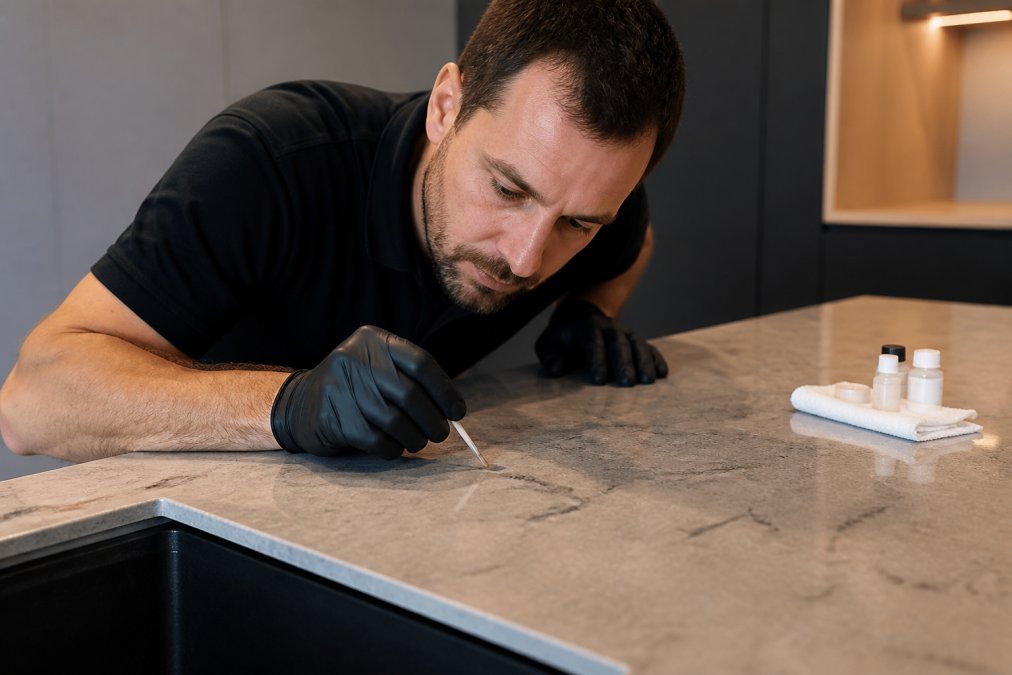
- Laminate, solid-surface, quartz and granite worktops with burns, chips or scratches
- Ceramic and porcelain tiles with chips or cosmetic damage
- uPVC window frames and cills with scratches or scuffs
- Doors, door frames and panels with dents or impact marks
- Laminate, MFC and fitted furniture with chips, burns or scratches
- Brickwork and stone with cosmetic staining or damage
The technician prepares the area, rebuilds or fills the damage, reproduces the colour, texture or pattern, and applies a suitable finish. On patterned surfaces such as granite-effect laminate, the repair is designed to blend with the surrounding pattern rather than sit as a flat patch.
Results vary. A repair is intended to significantly improve the damaged area and restore its appearance and usability, but it will not always be completely invisible. Honest expectations matter more than a sales pitch.
When Replacement Is the Better Option
Replacement is the right call when the damage is structural, when the item has failed in service, or when repair would not be durable enough for the way the item is used.
What to Send for an Accurate Assessment
A photograph-based assessment is usually enough to confirm whether a repair is suitable and to provide a quotation. Clear images save a site visit and speed up the process.
Send the following:
- A close-up of the damage itself, in focus and well lit
- A wider shot showing the complete item
- A shot of the surrounding area, so the finish and pattern can be matched
- Your full address and postcode
- A note of how many surfaces are affected and where they are
Frequently Asked Questions
Is it cheaper to repair a damaged worktop than replace it?
In most cases, yes. Cosmetic defect rectification avoids the cost of a new worktop, the labour to remove the old one, and any knock-on tiling or decorating. The exact saving depends on the material, the extent of the damage and access. Surface Magic Repairs assesses each job honestly and will say if replacement would be more durable. Send photographs of the damage, the full item and the surrounding area for a quotation.
Can professional surface repairs be colour matched to the original?
Yes. Surface Magic Repairs uses specialist filling, tinting and refinishing to match the colour, texture and pattern of the surrounding surface. Results depend on the material and finish, so a repaired area is significantly improved rather than guaranteed invisible. For patterned or heavily textured surfaces, the technician will explain realistic expectations before work is booked.
What types of surface damage can be repaired on-site?
Typical repairs cover chips, scratches, cracks, dents, burns, staining and impact damage to baths, shower trays, sinks, tiles, laminate and solid-surface worktops, kitchen units, uPVC frames, doors and fitted furniture. Repairs are completed in place, so there is no strip-out. Suitability depends on the material, condition, location and extent of the damage, and an honest assessment is always given first.
How does cosmetic defect rectification help reduce landfill waste?
Repairing a damaged bath, worktop or tile in place keeps the existing item in use instead of sending it to landfill. It also avoids the waste from packaging, offcuts and removed materials that come with replacement. For landlords, housebuilders and facilities managers managing multiple properties, this reduces both disposal costs and the environmental impact of unnecessary strip-out.