Table of Contents
- How to Polish Dull Laminate Kitchen Counters: What Actually Works
- Step 1: Clean the Surface Properly First
- Step 2: How to Clean and Shine Laminate Countertops Without Damage
- Step 3: Choosing a Laminate Worktop Polish
- Step 4: Buffing and Finishing the Surface
- Treating a Dull Laminate Worktop From Hard Water
- Faded or Bleached Laminate Worktop Repair: What Can Be Restored
- Common Mistakes to Avoid
- When to Call a Professional for Laminate Kitchen Counters
- Frequently Asked Questions
Last Updated: October 14, 2026
How to Polish Dull Laminate Kitchen Counters: What Actually Works
Dull laminate kitchen counters can usually be brought back with careful cleaning and a suitable polish. The key is knowing what caused the loss of shine before you reach for a product.
Most laminate worktops do not fail because the material is worn out. They fail because a harsh cleaner or an abrasive cloth has stripped the surface layer.
This guide shows you how to polish dull laminate kitchen counters without making the damage worse. It also explains when a polish will not be enough.
Why Laminate Loses Its Shine
Laminate worktops have a printed pattern layer sealed under a clear protective top. That top layer is what reflects light. Once it dulls, the whole worktop looks tired.
Common causes include:
- Cream cleaners and scouring pads that scratch the top layer
- Repeated use of bleach-based sprays
- Hot pans placed directly on the surface
- Limescale from hard water drying on the worktop
- General wear around sinks and prep areas
The good news is that mild dullness often responds well to polishing. Deep scratches and burns need a different approach.
What You'll Need Before You Start
You do not need much, and you do not need anything expensive. Gather these first:
- Two soft microfibre cloths
- A mild washing-up liquid
- Warm water in a bowl
- A dedicated laminate worktop polish
- A second dry cloth for buffing
Avoid anything labelled as abrasive, and put the scouring pad away. Check the manufacturer's guidance if you still have it, as some laminate brands specify approved cleaners.
Step 1: Clean the Surface Properly First
Polish will not fix a dirty surface. Any grit left on the worktop gets pushed around during buffing, which creates fine scratches. That is the opposite of what you want.
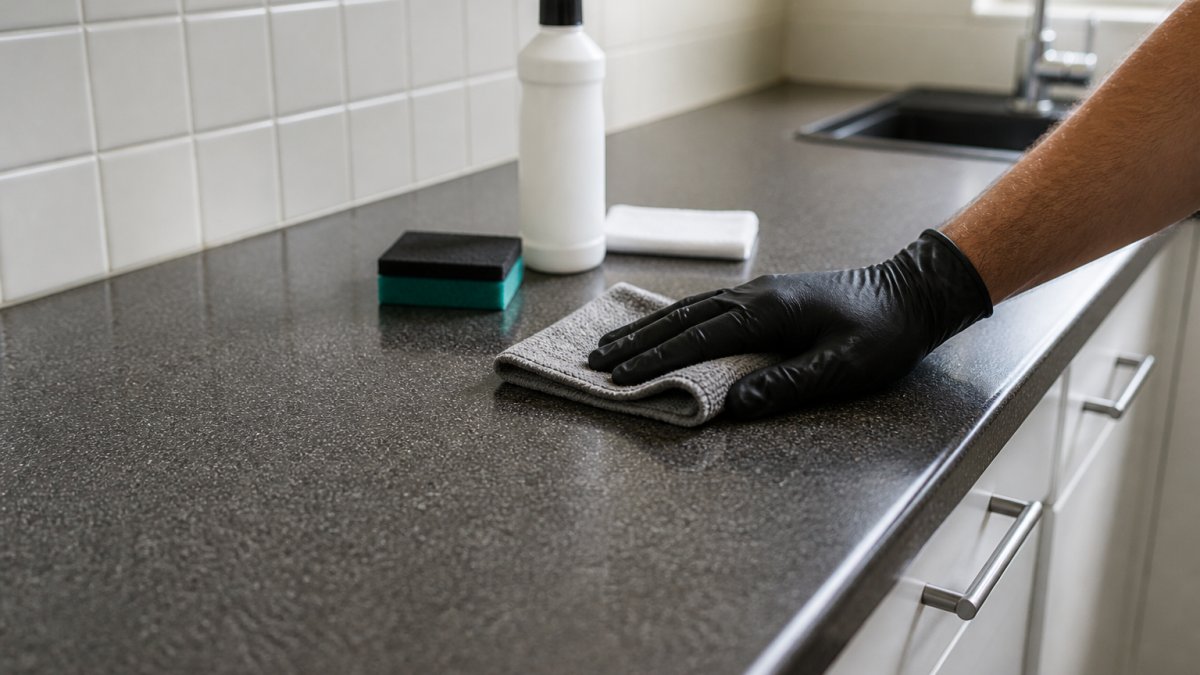
Start by clearing the worktop completely. Then wipe the whole surface with warm water and a small amount of washing-up liquid. Work in sections, and rinse the cloth often.
Pay extra attention to:
- The area around the sink, where limescale builds up
- Behind the hob, where grease collects
- Edges and joints, where dirt traps easily
Dry the worktop with a clean cloth. If the surface still feels rough or sticky, repeat the wash before moving on.
Step 2: How to Clean and Shine Laminate Countertops Without Damage
The safest method is a two-stage approach: clean first, then polish. This is also the answer to how to clean and shine laminate countertops without leaving streaks or scratches.
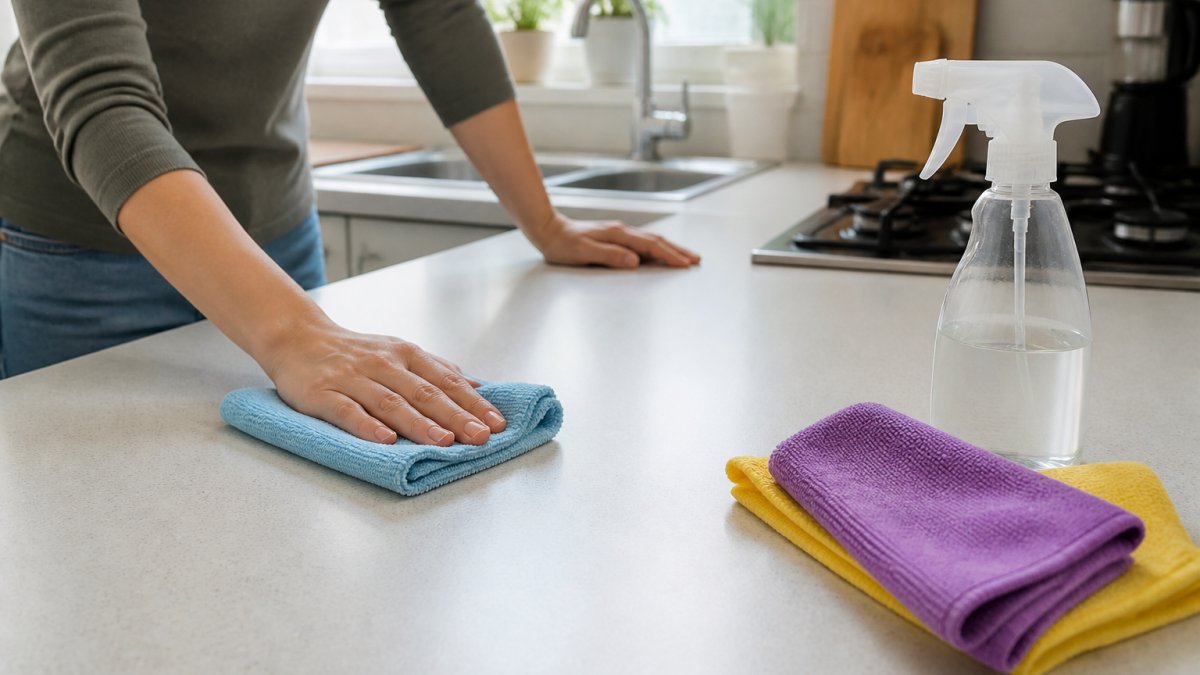
Once the worktop is clean and dry, apply a small amount of laminate worktop polish to a clean cloth. Never spray polish directly onto the surface, as it can run into joints and edges.
Work in small circles, covering one section at a time. Then buff with a dry cloth until the surface looks even. If the worktop looks patchy, you have used too much polish.
Products That Are Safe, and Products That Are Not
Choosing the right product matters more than technique. Here is a simple guide:
| Product Type | Safe on Laminate? | Why |
|---|---|---|
| Mild washing-up liquid | Yes | Lifts grease without stripping the top layer |
| Dedicated laminate polish | Yes | Designed to restore shine without abrasives |
| Cream cleaners | No | Fine grit scratches the protective layer |
| Scouring pads | No | Remove the shine permanently |
| Bleach-based sprays | No | Dull the surface over time |
| Acetone or nail varnish remover | No | Can soften or cloud the laminate |
If you are unsure about a product, test it on a small hidden area first.
Step 3: Choosing a Laminate Worktop Polish
A laminate worktop polish is a product designed to restore shine without abrasives. Look for one labelled as suitable for laminate or melamine surfaces.
What to check on the label:
- No abrasive particles listed
- Safe for sealed or laminated surfaces
- Suitable for kitchen use
- Clear instructions for buffing
Avoid furniture polish. It can leave an oily film that attracts dust, and it does not bond well to laminate. A dedicated product gives a cleaner, longer-lasting result.
If your worktop has a matt finish, check that the polish suits matt surfaces. Some polishes are designed for gloss and will make a matt worktop look uneven.
Step 4: Buffing and Finishing the Surface
Buffing is where the shine actually appears. Use a clean, dry microfibre cloth and light pressure.
Work in overlapping circles across the whole surface. Turn the cloth regularly so you are always using a clean section. Finish with a straight wipe in one direction for an even look.
A few practical points:
- Do not press hard. Pressure creates heat and can smear the polish.
- Change cloths when they become damp or greasy.
- Buff the edges last, as they hold excess product.
Once finished, leave the worktop for a short time before placing items back on it.
Treating a Dull Laminate Worktop From Hard Water
A dull laminate worktop from hard water needs a different first step. Limescale sits on the surface as a chalky film, and polish applied over it will look cloudy.
Remove the scale first. A cloth soaked in warm water and left on the area for a few minutes will soften most deposits. Wipe it away, then repeat if needed.
Do not scrape at limescale with a blade or a rough pad. That removes the scale and the shine together. Once the surface is clean and dry, polish as normal.
If the scale has been there for a long time, it may have etched the surface. In that case, polishing will improve the look but may not fully restore it.
Faded or Bleached Laminate Worktop Repair: What Can Be Restored
Faded or bleached laminate worktop repair depends on how deep the damage goes. If the colour has faded in the top layer, polishing will not bring it back.
Sunlight, harsh chemicals and heat can all bleach the pattern. You may notice:
- A lighter patch near a window
- A pale ring where a hot pan sat
- A bleached area around the sink
Surface polishing can help with light surface fading. Deeper bleaching usually needs specialist colour work to blend the pattern back in.
This is where professional repair makes sense. At Surface Magic Repairs, we colour match and refinish damaged areas so they blend with the surrounding surface. It is not always invisible, but it is often far better than living with a bleached patch or replacing the whole worktop. Suitability depends on the material, the extent of the damage and the pattern.
Common Mistakes to Avoid
Most failed attempts come down to a handful of mistakes. Avoid these and your worktop will look better for longer.
- Using too much polish, which leaves a streaky film
- Cleaning with abrasive products before polishing
- Polishing a wet surface, which traps water marks
- Buffing with a dirty or greasy cloth
- Ignoring burns and deep scratches and hoping polish will hide them
When to Call a Professional for Laminate Kitchen Counters
Some damage is beyond polish. If your laminate kitchen counters have burns, deep scratches, chips or lifted edges, a surface repair specialist can often restore them in place.
That matters for landlords, letting agents and facilities managers who need a kitchen back in use quickly. A repair avoids strip-out, avoids retiling, and avoids the disruption of a full replacement.
Surface Magic Repairs is based in Bolton and works across Greater Manchester and the wider North West, with nationwide cover for commercial and multi-site projects. We have repaired more than 46,000 surfaces in the last year, and our team brings over 25 years of combined trade experience.
If you are unsure whether a repair is suitable, send clear photographs of the damage, the complete worktop and the surrounding area, along with your full address and postcode. We will give you an honest assessment.
A dull worktop is frustrating, but it is rarely the end of the road. Regular gentle cleaning and a suitable polish will keep most laminate looking good. When burns, chips or bleaching go deeper than polish can reach, repair is often the smarter choice than replacement.
Surface Magic Repairs restores laminate worktops in place, with colour and finish matched to the existing surface, minimal disruption and no unnecessary strip-out. Send your photos and postcode to info@surfacemagicrepairs.com or call 0800 085 7773, and we will tell you honestly whether a repair is the right answer.
Frequently Asked Questions
How do you make a dull laminate worktop shine?
Clean the surface with warm water and a mild detergent, rinse and dry it fully, then apply a small amount of purpose-made laminate worktop polish with a soft cloth, working in the direction of the grain. Buff with a dry microfibre cloth to remove streaks. This restores shine on sound laminate, but if the dullness comes from worn or faded surfacing rather than surface film, polishing alone will not bring it back.
Can hard-water marks make a laminate counter look dull?
Yes. In hard-water areas, limescale deposits build up as a cloudy film that scatters light and makes the worktop look flat rather than glossy. A diluted white vinegar solution or a dedicated limescale remover suitable for laminate will lift most of it. Avoid abrasive creams or scouring pads, which scratch the surface and leave it duller than before. If the haze remains after descaling, the damage may be to the surface itself.
Can a faded or bleached laminate worktop be restored?
It depends on the cause. Sun bleaching and worn decorative layers cannot be polished back, because the colour layer itself has changed. In many cases a professional repair can refinish the affected area, matching the surrounding colour and pattern, which is usually faster and less disruptive than replacing the whole worktop. Suitability depends on the material, the extent of fading and the condition of the surrounding surface, so an honest assessment comes first.
When should a dull laminate worktop be professionally repaired or replaced?
If cleaning and polishing no longer make a difference, or the surface feels rough, has lifted edges, burn marks or deep scratches, the issue is usually beyond routine maintenance. A professional can assess whether refinishing is realistic or whether replacement would be more durable. Send clear photographs of the damage, the complete worktop and the surrounding area, plus your address and postcode, to get a quotation.