Table of Contents
- Can a Chip in a Porcelain Bathtub Be Repaired?
- What Causes Chips in Porcelain Baths
- How a Chipped Bath Repair Works
- Bath Repair Colour Matching and Finish
- How Long Does Bath Chip Repair Take?
- Chipped Bath Repair vs Using a Bath Chip Repair Kit
- Repair or Replace? When Replacement Makes Sense
- Getting a Quotation for Your Chipped Bath
- Protecting Your Repaired Bath
- Frequently Asked Questions
Last Updated: October 12, 2026
Can a Chip in a Porcelain Bathtub Be Repaired?
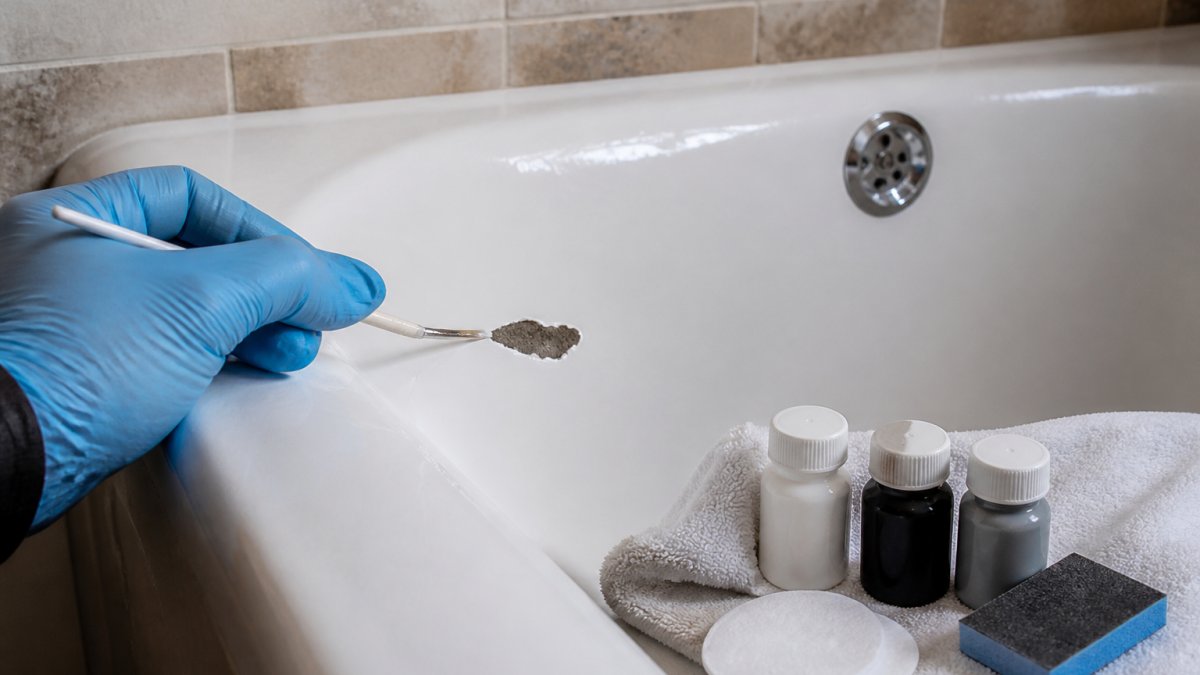
Yes, a chip in a porcelain bathtub can usually be repaired. Most chips and small cracks respond well to professional repair work. The damaged area is filled, colour-matched and refinished to blend with the surrounding porcelain.
Whether repairing chips in a porcelain bathtub is the right choice depends on the size, depth and location of the damage. A small surface chip at the rim or on the side wall is straightforward to repair. Deeper damage near the plug hole or in high-wear areas may require a more detailed assessment.
The key advantage of repairing rather than replacing is that the work happens in place. There's no need to remove the bath, disconnect plumbing, or disrupt your home. The repair typically takes a single visit, and the bath is ready to use once the finish has cured.
What Causes Chips in Porcelain Baths
Porcelain is durable but not indestructible. Chips develop when something strikes the surface with enough force to break through the glaze and into the underlying material.
Common causes include:
- Dropping heavy objects (bottles, razors, soap dishes)
- Impact from plumbing fittings or fixtures being installed
- Accidental damage during cleaning or maintenance
- Wear at the rim where people grip the edge
- Damage during new-build construction or snagging work
- Movement or settling that creates stress cracks
The location matters. A chip on the floor of the bath is less visible but more likely to trap water and bacteria. A chip on the rim is visible every time the bath is used but easier to keep clean.
How a Chipped Bath Repair Works
Repairing chips in a porcelain bathtub involves several steps.
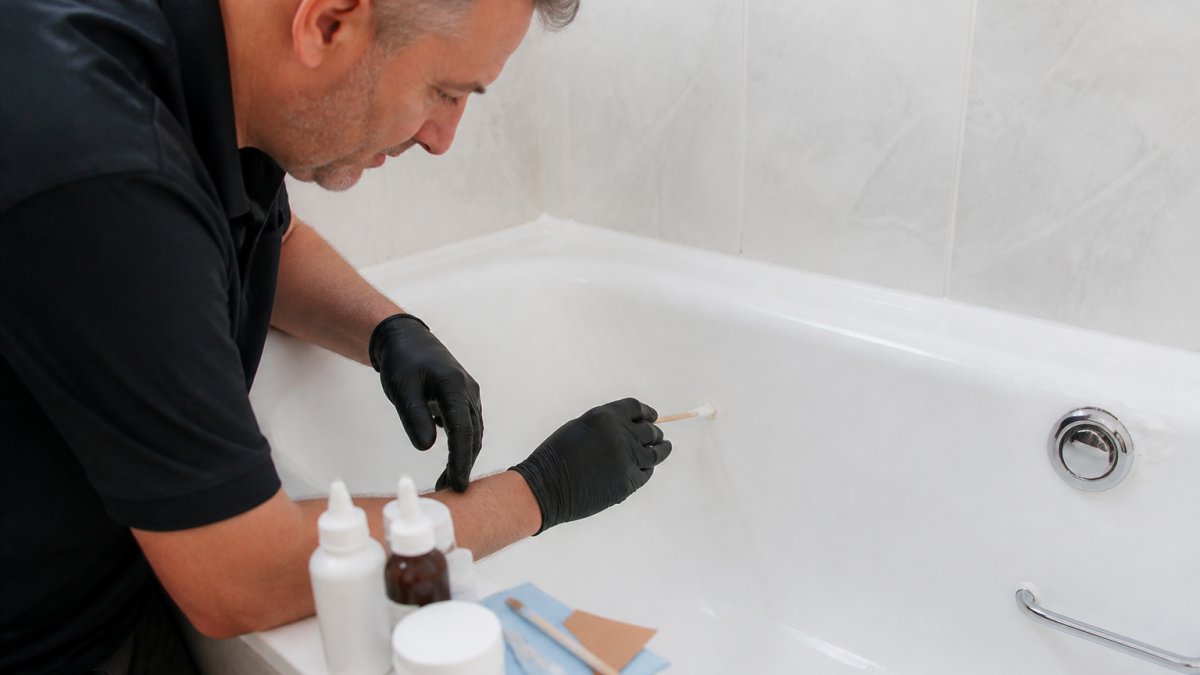
Surface Preparation
The first step is to prepare the damaged area. The technician cleans the chip thoroughly to remove any loose material, debris or old sealant.
The edges of the chip are gently abraded to help the new material bond. This doesn't mean grinding away large amounts of porcelain. It's a careful process that creates a key for the repair compound to grip.
The area is then dried completely. Any moisture trapped underneath will prevent the repair material from bonding properly.
Filling and Rebuilding
Once the surface is ready, the technician applies a specialist filling compound. This isn't a standard filler you'd buy at a DIY shop. It's a specialist filling compound designed to bond to porcelain and cure hard.
The material is applied in layers if the chip is deep. Each layer is allowed to cure before the next is added. This prevents shrinkage and creates a stronger repair.
For larger chips, the technician may rebuild the shape of the bath edge or rim. This requires skill to get the contour right so the repair doesn't feel or look uneven.
Finishing and Refinishing
Once the filler has cured, the technician sands the repair smooth. The goal is to make the repair blend seamlessly with the surrounding porcelain.
A primer is then applied to help the topcoat adhere. The colour-matched paint or glaze is applied next. Multiple thin coats are better than one thick coat, as they cure more evenly and produce a better finish.
The final step is to apply a protective sealant. This hardens the repair and protects it from water and daily wear.
Bath Repair Colour Matching and Finish
Getting the colour right is crucial. A repair that's the wrong shade stands out immediately.
Professional technicians use colour-matching systems to identify the shade of your bath. This might involve comparing samples under different lighting, as bathroom lighting can affect how a colour appears.
Older baths sometimes present a challenge. If the original glaze has yellowed or faded over years, matching the current colour is more important than matching the original. A repair that matches the surrounding area will blend in, even if the whole bath is slightly discoloured.
The finish also matters. Some porcelain has a high gloss, others a satin sheen. The repair must match this finish, not just the colour.
How Long Does Bath Chip Repair Take?
Most chipped bath repairs are completed in a single visit. A straightforward chip repair typically takes 2-4 hours, depending on the size and depth of the damage.
This includes surface preparation, filling, sanding, colour matching and applying the topcoat. The repair is then left to cure. Curing times vary by material but often take 24 hours before the bath can be used normally.
For very deep chips or damage to the rim, the work might take longer. If multiple areas need repair, the time increases accordingly.
The big advantage over replacement is speed. Replacing a bath involves disconnecting plumbing, removing the old bath, preparing the space, installing the new bath and reconnecting everything. This typically takes several days and requires a plumber.
A repair happens in place with minimal disruption. You don't need to empty the room or rearrange your schedule significantly.
Chipped Bath Repair vs Using a Bath Chip Repair Kit
You can buy DIY bath chip repair kits online. These are inexpensive and tempting if you're trying to save money.
The reality is that DIY kits rarely produce professional results. They're designed for very minor damage only. Most kits include a filler and paint, but the materials are generic.
Problems with DIY repair kits include:
- Colour matching is difficult without professional samples
- The filler often shrinks as it cures, leaving a depression
- The topcoat paint isn't as durable as specialist refinishing materials.
- The repair may be visible within months as the paint chips or peels
- Improper application can trap moisture.
A professional repair uses materials designed to bond to porcelain and withstand water exposure. The colour is matched. The finish is hardened and sealed.
If you've got a small cosmetic chip that doesn't bother you, a DIY kit might be acceptable temporarily. For a repair that needs to last and look good, professional work is worthwhile.
Repair or Replace? When Replacement Makes Sense
Not every damaged bath should be repaired. Sometimes replacement is the better choice.
Consider replacement if:
- The bath is very old and has multiple chips or cracks
- The damage is extensive (large cracks running across the base)
- The bath is already stained or discoloured beyond cleaning
- You're planning a bathroom refurbishment anyway
- The bath is cracked near a seam or joint (difficult to repair permanently)
- The material is acrylic that's become brittle with age
Repair makes more sense if:
- The damage is isolated to one or two small areas
- The bath is otherwise in good condition
- You want to avoid the disruption of replacement
- The bath is relatively new or mid-age
- You need a quick fix between tenancies or before a property handover
An honest assessment considers whether the repair will last. A technician can advise whether a repair is durable or whether the bath is reaching the end of its useful life.
Getting a Quotation for Your Chipped Bath
Surface Magic Repairs can assess whether repairing chips in a porcelain bathtub is suitable and provide a quotation.
Most quotations are based on photographs. Send clear images that show:
- The chip or damage from multiple angles
- The complete bath so the technician can assess the material and condition
- The surrounding area (tiles, walls, fixtures)
- Close-ups of the damage so the depth and extent are clear
Include your full address and postcode. This helps confirm that your location is within the service area and allows the technician to discuss access and any site-specific considerations.
You can send photographs by email to info@surfacemagicrepairs.com or call 0800 085 7773 during office hours (Monday to Friday, 9:00am-3:00pm).
A quotation will outline whether the repair is suitable, how long it will take and what the work involves. If replacement would be more appropriate or durable, that will be explained honestly.
Protecting Your Repaired Bath
Once the repair is complete, a few simple precautions help it last.
Allow the repair to cure fully before using the bath heavily. Most repairs need 24 hours, but some materials benefit from longer curing time. Ask the technician for specific guidance.
Avoid abrasive cleaners on the repaired area for the first week. Once fully cured, the repair can be cleaned normally.
Don't place heavy objects directly on the repaired area. Dropping something on the same spot again could damage the repair.
Regular gentle cleaning with mild soap and water keeps the repair looking good. The finish is sealed and durable, but like any surface, it benefits from reasonable care.
If the repair is in a high-wear area (like a rim where you grip the bath), it may show wear over time. This is normal. A professional repair typically lasts, but extremely heavy use can eventually require touching up.
A chip in a porcelain bathtub doesn't mean the bath needs replacing. Professional repair restores the appearance and function while avoiding the cost and disruption of removal and replacement.
Send clear photographs of the damage, the complete bath and the surrounding area, together with your full address and postcode. Surface Magic Repairs can assess whether repairing chips in a porcelain bathtub is suitable for your situation and provide a quotation. Call 0800 085 7773 or email info@surfacemagicrepairs.com to get started.
Frequently Asked Questions
Can a chip in a porcelain bathtub be repaired professionally?
Yes. Professional technicians can repair chips in porcelain bathtubs by preparing the damaged area, filling it with specialist materials, matching the colour and texture, and applying a durable finish. Suitability depends on the chip's size, location and depth. Small to moderate chips are typically repairable. Surface Magic Repairs assesses each bath individually and advises whether repair or replacement is the better option for your situation.
How long does a chipped bath repair take?
Most bath chip repairs take between 2 to 4 hours, depending on the chip's size and location. The technician prepares the surface, applies filling materials, matches the colour and texture, and applies protective finishes. Drying and curing times vary by material. For commercial properties and holiday lets, quick turnaround means minimal room downtime. Contact Surface Magic Repairs with photographs and your postcode to discuss timescales for your specific job.
Will a professionally repaired chip in my porcelain bath be noticeable?
Professional repair technicians use colour-matching techniques to blend the repaired area with the surrounding bath surface. The goal is to restore the bath's appearance and usability. Results depend on the chip's size, the bath's finish and pattern. Smaller chips typically become far less noticeable than larger ones. Surface Magic Repairs matches colour and texture carefully but advises honestly if a repair will be completely invisible or if replacement would be more appropriate.
Should I use a DIY bath chip repair kit or hire a professional?
DIY bath repair kits are available, but professional repair offers better durability and colour matching. Professional technicians have specialist materials, experience with different porcelain finishes and access to colour-matching equipment that DIY kits cannot replicate. For rental properties, hotels and commercial settings, professional repair ensures the bath looks good and lasts longer. For peace of mind and a better finish, professional repair is usually the more reliable choice.