Table of Contents
- Why Damaged uPVC Frames Matter When You Sell
- Which uPVC Frame Damage Can Be Repaired Before a Sale?
- Does Damaged uPVC Affect a Property Survey or Buyer Negotiations?
- uPVC Window Frame Scratch Repair Cost: What Affects the Price
- Repairing uPVC Window Cill Damage Before a Viewing
- What Professional uPVC Restoration Services Actually Do
- How to Prepare Your Windows Before Selling
- When to Repair and When to Replace uPVC Frames
- Frequently Asked Questions
Last Updated: 12 September 2026
Why Damaged uPVC Frames Matter When You Sell
A buyer's surveyor will flag damaged uPVC frames, and a flagged defect gives the buyer a reason to renegotiate. Repairing damaged uPVC window frames before selling is usually cheaper than replacement and can be done in place, without scaffolding, strip-out or redecorating.
Here's the direct answer most sellers want: scuffs, scratches, chips, small cracks and discoloured cills are commonly repairable, and a professional repair is normally completed on site with the colour and finish matched to the surrounding frame. Surface Magic Repairs has completed this kind of work on more than 46,000 surfaces in the last year, and window frames and cills are a regular part of that workload.
What most guides miss is that buyers rarely care about the frame itself. They care about what it signals. A cracked cill or a gouged frame reads as "this property has been neglected", and that impression colours everything else the buyer sees.
The exact phrase matters less than the principle: deal with visible damage before viewings, not after an offer.
Which uPVC Frame Damage Can Be Repaired Before a Sale?
Most cosmetic damage to uPVC frames and cills can be repaired in place, provided the frame is structurally sound and the damage is surface-level. Suitability depends on the material, the depth of the damage, its location and how much of the frame is affected.
Scratches, scuffs and surface marks
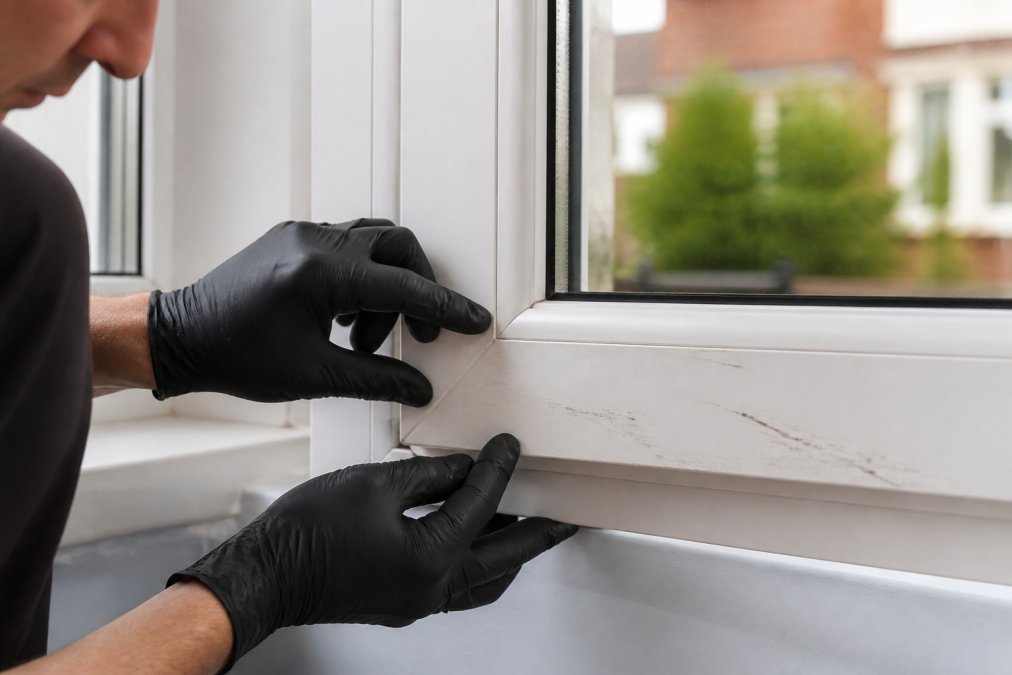
Surface scratches are the most straightforward category. These are marks that sit in the top layer of the profile without breaking through it. Ladder scuffs, keys, pets, moving furniture and general wear all produce this kind of damage.
A technician prepares the area, fills or smooths the scratch, then reproduces the colour and sheen so the repair blends with the surrounding frame. On white profiles this is usually significantly improved from normal viewing distance. On woodgrain or coloured frames, the grain pattern has to be matched, which is more involved but still achievable.
Cracks, chips and impact damage
Cracks and chips are more serious, and this is where honesty matters. A hairline crack or a chipped edge can often be rebuilt and refinished. A crack that runs through the frame, or damage near a hinge or locking point, may point to a structural problem that a cosmetic repair cannot solve.
Does Damaged uPVC Affect a Property Survey or Buyer Negotiations?
Yes. Surveyors report visible defects because it is their job to flag anything a buyer should know about, and damaged frames appear in the report as items requiring attention. That wording alone changes the tone of a negotiation.
The Royal Institution of Chartered Surveyors guidance on home surveys sets out how surveyors report defects and what buyers should understand about condition ratings. A frame noted as damaged gives the buyer a documented reason to ask for money off, and buyers routinely overestimate what replacement costs.
In practice, the deduction a buyer requests is often larger than the actual cost of a professional repair. That gap is the seller's problem, and it is entirely avoidable.
| Damage type | Typical repair route | Effect on a sale |
|---|---|---|
| Surface scratches and scuffs | Clean, fill, colour match, refinish | Removes a visible defect before viewings |
| Chips and small cracks | Rebuild area, texture, refinish | Removes a survey flag in most cases |
| Discoloured or stained cill | Clean, tint, refinish | Improves kerb appeal at the front elevation |
| Crack through frame or at hinge | Assessment first | May need replacement, not repair |
uPVC Window Frame Scratch Repair Cost: What Affects the Price
There is no single figure for uPVC window frame scratch repair cost. Pricing depends on the surface, the damage, the location, access, the finish required and the number of repairs, which is why a quotation follows an assessment rather than a phone call.
The factors that move the number most:
- Depth and type of damage. A light scuff takes far less time than a deep gouge that needs rebuilding.
- Finish complexity. White is the simplest to match. Woodgrain, metallic and coloured profiles take longer.
- Access. A ground-floor window is straightforward. Anything needing access equipment adds cost.
- Number of repairs. Multiple frames at one property are usually more economical per repair than a single isolated job.
- Cill and frame together. If both are damaged, treating them in one visit is more efficient than two separate bookings.
Compared with replacement, a repair avoids the cost of new frames, fitting labour, making good around the reveals and any redecorating that follows. That is the comparison that matters when you are weighing up whether to fix or replace.
Repairing uPVC Window Cill Damage Before a Viewing
Cill damage is the most visible defect on any window, because the cill is what a buyer sees first from the driveway. Repairing uPVC window cill damage before a viewing is often the single highest-return task on a pre-sale list.
Cills take the worst of the weather and the most contact. Common problems include chipped edges from ladders and bins, cracked corners where the cill meets the reveal, impact damage from garden tools, and staining or discolouration from years of exposure.
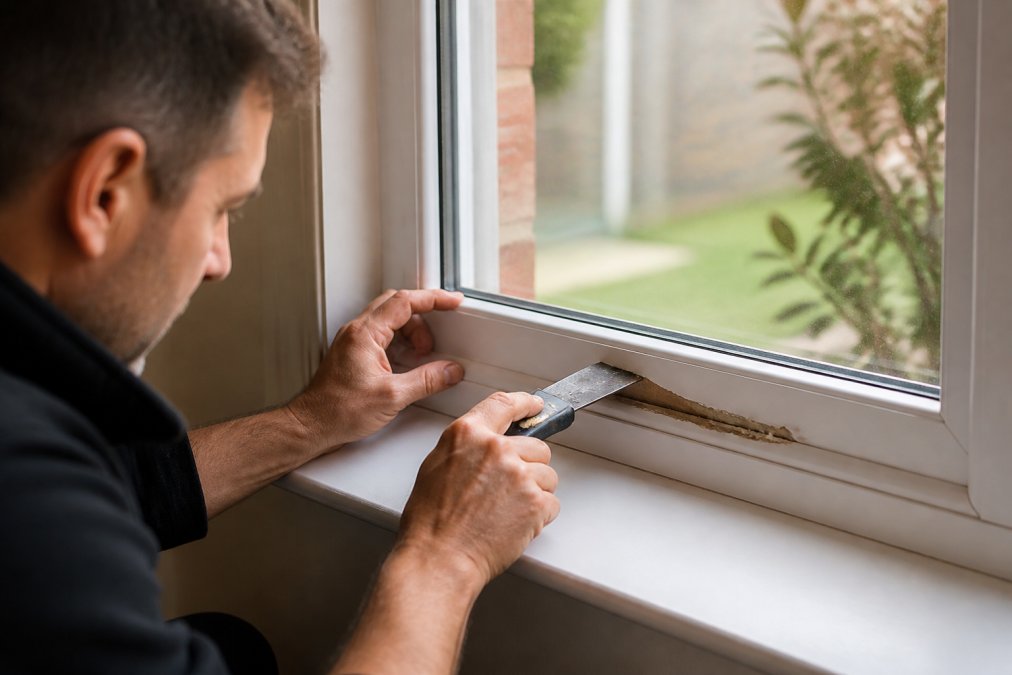
A professional repair on a cill follows the same principle as a frame: prepare the area, rebuild the damaged section, reproduce the colour and texture, then refinish so the repair blends with the rest of the cill. Where the cill is stained rather than physically damaged, refinishing can restore the appearance without any filling at all.
The Energy Saving Trust guidance on windows and glazing is worth reading if you are also weighing up whether the glazing itself needs attention, because that is a separate question from cosmetic frame damage.
What Professional uPVC Restoration Services Actually Do
Professional uPVC restoration services assess the damage, repair it in place and refinish the area so it matches the original profile. The work happens on site, with no removal of the frame and no strip-out.
The process varies by job, but it generally follows this sequence:
- Assessment. Confirm the damage is cosmetic and the frame is structurally sound.
- Preparation. Clean and prepare the damaged area so the repair bonds properly.
- Rebuilding. Fill or rebuild the damaged section to restore the profile's shape.
- Colour and texture matching. Reproduce the colour, grain or pattern of the surrounding frame.
- Finishing. Apply a suitable finish and blend the edges so the repair disappears.
This is specialist work involving coatings and colour matching, and it is not a job to attempt with a DIY filler and a touch-up pen. A poor repair is more visible than the original damage and will be flagged again.
Surface Magic Repairs is Bolton-based and travels across Greater Manchester and the wider North West, with nationwide coverage for suitable commercial and multi-site projects. The team holds ISO 9001, CHAS Premier, SMAS Worksafe and SafeContractor approvals.
How to Prepare Your Windows Before Selling
Preparation is mostly about order of operations. Fix the damage first, clean second, and photograph third, because you want the evidence of a well-maintained property, not a to-do list.
A practical pre-sale sequence:
- Walk the property and note every scratch, chip and crack on frames and cills
- Photograph each one, plus the whole window and the surrounding wall
- Send those photographs with your address and postcode for a quotation
- Book repairs well before photography and viewings, not the week of exchange
- Clean frames and glass after the repair has cured, not before
- Check handles, hinges and locks separately, since those are hardware, not surfaces
- Keep the repair paperwork to show a buyer if questions come up
When to Repair and When to Replace uPVC Frames
Repair is the right call for cosmetic damage on a sound frame. Replacement is the right call when the frame itself has failed, and no honest repair specialist should tell you otherwise.
Repair suits:
- Scratches, scuffs and surface marks
- Chips and small cracks that have not compromised the frame
- Discoloured, stained or weathered cills and frames
- Damage in one or two rooms rather than throughout
- Properties where the frames are otherwise in good order
Replacement suits:
- Cracks running through the frame or around hinges and locking points
- Frames that are warped, bowed or no longer close properly
- Failed sealed units, condensation between the panes, or draughts
- Widespread damage across most windows in the property
The British Standards Institution information on product standards is a useful reference point if you need to confirm what a replacement frame should comply with, which matters if you do end up replacing rather than repairing.
Surface Magic Repairs will say so directly if a repair is not the right answer for a particular window.
Selling a property with visible frame damage hands the buyer a negotiating tool, and the deduction they ask for is usually larger than the cost of putting it right. Surface Magic Repairs repairs uPVC frames and cills in place, with colour and finish matched to the existing profile, no strip-out and no knock-on decorating. Send clear photographs of the damage, the complete window and the surrounding area, along with your full address and postcode, to info@surfacemagicrepairs.com or call 0800 085 7773 during office hours, Monday to Friday, 9:00am to 3:00pm. Get an instant quote from Surface Magic Repairs and put the damage behind you before the first viewing.
Frequently Asked Questions
Can you repair deep scratches in uPVC window frames?
Deep scratches can often be repaired, but suitability depends on how far the damage has penetrated the frame. A technician will assess whether the scratch is surface-level or has cut through to a deeper layer. Surface scratches respond well to filling and refinishing, while very deep gouges may need more extensive work. Send clear photographs of the damage to Surface Magic Repairs for an honest assessment before booking.
Is it worth repairing window frames before selling a house?
It usually is. Damaged uPVC frames can prompt buyers to negotiate on price or request remedial work. Professional uPVC window repair restores the appearance of the frames in place, avoids the cost and disruption of full replacement, and helps the property present better during viewings. Suitability depends on the extent of the damage, so an assessment is always recommended first.
How do professionals fix damaged uPVC window cills?
Repairing uPVC window cill damage typically involves preparing the affected area, filling or rebuilding the damaged section, then colour matching and refinishing so the repair blends with the surrounding cill. The process is completed on site without removing the cill. Results depend on the material, the type of damage and the finish, and Surface Magic Repairs will confirm whether repair is the right option.
Does damaged uPVC affect a property survey?
A surveyor may flag damaged uPVC frames or cills as items needing attention, particularly if there are cracks, gaps or signs of water ingress. Cosmetic scratches and scuffs are less likely to cause concern, but visible damage can still influence a buyer's perception. Addressing it before the survey reduces the chance of it becoming a negotiation point.