Table of Contents
- Why Sustainable Bathroom Renovation Makes Commercial Sense for Hotels
- Water-Saving Bathroom Fixtures for Hotels
- Sustainable Bathroom Materials That Last Longer
- Repair or Replace Hotel Bathroom Fixtures: How to Decide
- Reducing Waste When a Bathroom Refurbishment Is Unavoidable
- How to Renovate Hotel Bathrooms With Minimal Guest Disruption
- Sustainable Hotel Renovation Checklist
- Conclusion
- Frequently Asked Questions
Last Updated: October 15, 2026
Why Sustainable Bathroom Renovation Makes Commercial Sense for Hotels
Sustainable bathroom renovation options for hotels start with one question: what can be kept rather than thrown away? A bathroom refurbishment is one of the most disruptive projects a hotel can run. Rooms come out of service, trades come in, and serviceable materials end up in skips.
This guide from Surface Magic Repairs looks at the options that cut waste without cutting standards. We repair damaged baths, shower trays, worktops, tiles and sanitaryware in place, so we see first-hand what gets replaced unnecessarily.
The commercial case is straightforward. Every fixture saved is a fixture not bought, delivered, fitted and disposed of. That means fewer labour hours, less downtime and a lower carbon footprint per room. Hotel managers rarely need convincing on the environmental point. They need convincing on cost and disruption, and that is where repair-first thinking wins.
Below, we break down the main sustainable options, from water-saving fixtures to materials that last, and explain how to decide between repairing and replacing.
Water-Saving Bathroom Fixtures for Hotels
Water-saving bathroom fixtures for hotels are the fastest sustainability win in any refurbishment. They cut running costs every day, not just at installation, and they need no structural work.
Low-Flow Shower Heads and Aerated Taps
Low-flow shower heads mix air into the water stream. The shower feels the same to a guest, but uses less water per minute. Aerated taps work on the same principle at the basin.
The benefits for a hotel are:
- Lower water bills across every occupied room
- Less energy needed to heat the water
- No change to the guest experience when specified well
- Fits standard fittings, so installation is quick
The one drawback is pressure. In older buildings with weak gravity-fed systems, some low-flow heads feel disappointing. Check the flow rate against your actual supply before ordering in bulk.
Dual-Flush and Reduced-Cistern Toilets
Dual-flush toilets give guests a short flush and a full flush. Reduced-cistern models simply hold less water. Both cut consumption without any change in how the bathroom works.
Retrofitting flush mechanisms to existing cisterns is often possible and avoids the waste of replacing a perfectly sound pan. Where the pan itself is fine and only the seat, lid or flush is worn, replacing those parts alone keeps most of the fixture out of landfill.
Sustainable Bathroom Materials That Last Longer
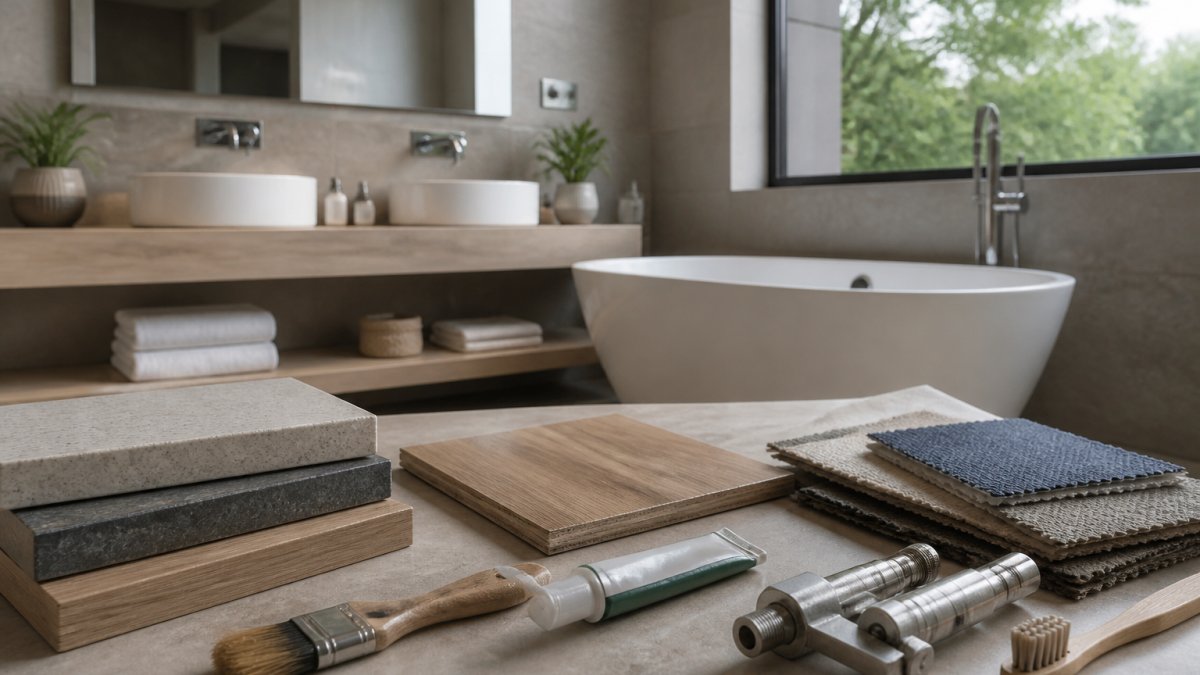
Sustainable bathroom materials are the ones you do not have to replace twice. Durability matters more than any eco label, because a surface that lasts 20 years uses far fewer resources than one replaced every five.
Solid-surface worktops, quality porcelain tiles and properly sealed stone all resist wear well. The catch is that damage still happens. A chipped tile, a scratched worktop or a burnt laminate edge does not mean the whole surface has failed.
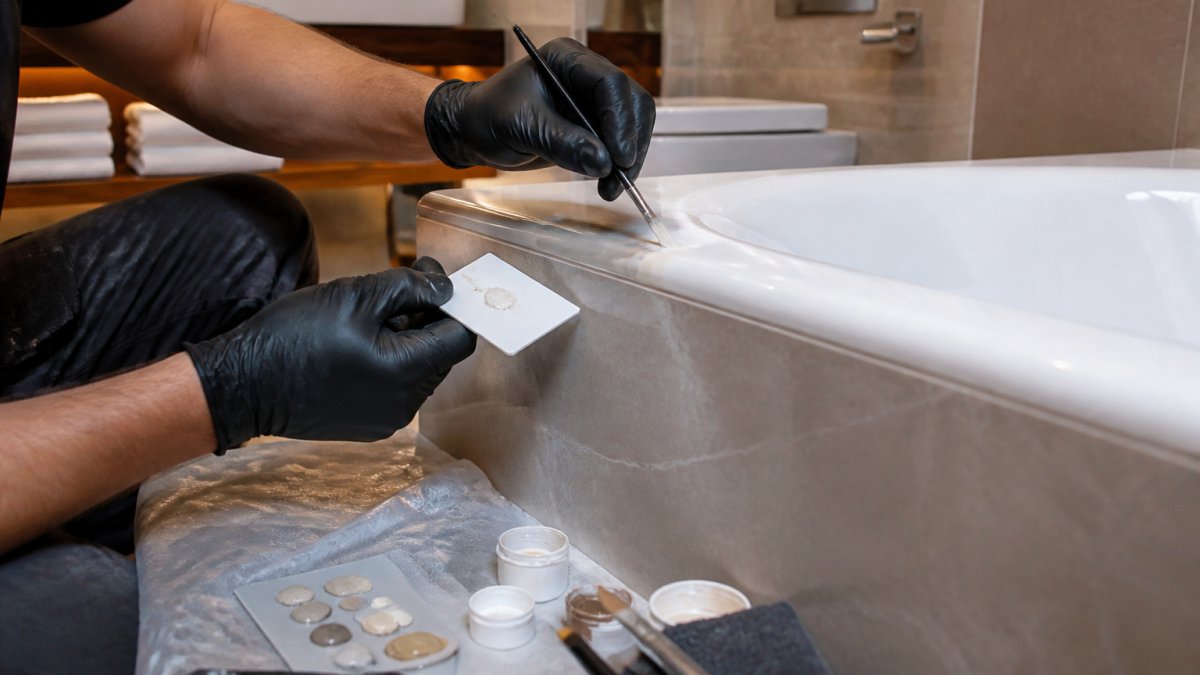
That is where repair changes the maths. Surface Magic Repairs restores chips, cracks, scratches and burns in place, matching the colour and finish to the surrounding area. The original material stays where it is, and no matching tiles or worktop runs need to be sourced.
A common mistake is ripping out a whole tiled wall because of two damaged tiles. If no spares exist, the entire wall goes. Cosmetic tile repair avoids that completely.
Repair or Replace Hotel Bathroom Fixtures: How to Decide
Repair or replace hotel bathroom fixtures is a judgement call, and it depends on the material, the condition, the location and how far the damage spreads. There is no blanket answer, and any company that gives you one without seeing the damage is guessing.
Use this as a starting point:
| Situation | Better Option | Why |
|---|---|---|
| Chip or crack in a sound bath | Repair | Keeps the fixture, no strip-out |
| Scratched or burnt worktop | Repair | Colour-matched finish, no replacement run |
| Two damaged tiles on a sound wall | Repair | Avoids sourcing matching tiles |
| Cracked shower tray with movement underneath | Assess first | May need replacement if the base is failing |
| Worn-out sealant and tired grout only | Repair or renew | No need to touch the fixture itself |
| Fixture cracked through with structural damage | Replace | Repair would not be durable |
We will always say so if replacement is the more sensible route. A repair that fails in six months helps nobody.
Reducing Waste When a Bathroom Refurbishment Is Unavoidable
Some refurbishments genuinely need to happen. When they do, the goal is to keep as much material in service as possible.
Practical steps that make a difference:
- Salvage sound fixtures for other rooms or back-of-house use
- Repair cosmetic damage before deciding anything is beyond saving
- Keep spare tiles and worktop offcuts for future repairs
- Separate waste streams so recyclable material does not go to landfill
- Group repairs into one visit rather than several small call-outs
The last point matters more than it sounds. A planned programme of surface repairs across a floor of rooms costs less in labour and disruption than booking each job separately.
For hotels and hospitality businesses, this is where an in-place repair service earns its keep. Surface Magic Repairs has completed more than 46,000 surface repairs in the last year, much of it in occupied buildings where rooms cannot stay out of service for long. We work alongside maintenance teams and contractors to get rooms back in use quickly.
How to Renovate Hotel Bathrooms With Minimal Guest Disruption
Minimal disruption comes from doing work in place and in the right order. A full strip-out means days per room. Repair-led work often means hours.
What keeps disruption down:
- Repair surfaces in situ rather than removing fixtures
- Work room by room, so only one key is out at a time
- Schedule noisy work outside peak check-in and check-out
- Use colour-matched finishes so no redecoration is needed afterwards
- Batch repairs across multiple rooms in a single visit
Hotels with guests checking in the next day cannot wait for a tiling job to cure. In-place repair avoids the knock-on decorating, tiling and making good that follows a replacement. That is the difference between a room out for half a day and a room out for a week.
Sustainable Hotel Renovation Checklist
A sustainable hotel renovation checklist keeps the project honest. Work through it before you order anything.
- Survey every bathroom and log each defect by type
- Separate cosmetic damage from genuine wear
- Check whether damaged surfaces can be repaired in place
- Confirm water-saving fixtures suit your actual supply and pressure
- Identify materials worth keeping and protecting
- Plan repairs in batches to cut labour and downtime
- Set up waste separation for anything genuinely removed
- Keep spares of tiles, worktop and flooring for future repairs
- Book an honest assessment before committing to replacement
Conclusion
The challenge for any hotel is balancing guest standards against cost, downtime and waste. Replacing sound fixtures to fix cosmetic damage rarely makes sense on any of those counts.
Surface Magic Repairs repairs chips, cracks, scratches and burns in place, with colour and finish matched to the surrounding surface. We work in occupied buildings, we assess honestly before booking, and we tell you when replacement is the better answer. Send clear photographs of the damage, the complete item and the surrounding area, along with your address and postcode, and we will confirm whether a repair is suitable and provide a quotation. Call 0800 085 7773 or visit surfacemagicrepairs.co.uk.
Frequently Asked Questions
What are the most sustainable bathroom upgrades for hotels?
The most effective upgrades combine water efficiency with material longevity. Fitting low-flow shower heads and aerated taps cuts water use without changing the guest experience. Choosing durable sustainable bathroom materials such as porcelain tiles and solid-surface worktops means fewer replacements over time. Repairing chips, scratches and burns rather than replacing entire fixtures also avoids sending serviceable items to landfill, which is where a sustainable bathroom renovation delivers the biggest environmental gain.
How can hotels reduce water use in guest bathrooms?
Installing water-saving bathroom fixtures for hotels is the quickest route. Aerated taps mix air into the water stream, so guests feel the same pressure while using less water. Low-flow shower heads rated at 6 to 8 litres per minute cut consumption significantly compared with older fittings. Dual-flush toilets and reduced-cistern mechanisms also help. These changes are straightforward to retrofit and typically pay back through lower utility bills within a reasonable period.
Can hotel bathroom fixtures be repaired instead of replaced?
Many can. Chipped baths, cracked shower trays, scratched worktops, damaged tiles and worn surfaces are often suitable for professional repair. A specialist assesses the material, condition, location and extent of damage before advising. Surface Magic Repairs completes repairs on site, colour matched and refinished to blend with the surrounding surface. Suitability depends on the individual case, and the company will say honestly if replacement would be more durable. Send photographs along with your address and postcode for an assessment.
How can hotels reduce waste during a bathroom refurbishment?
Start by repairing rather than replacing wherever the surface is structurally sound. A chipped bath or scratched worktop can often be restored in place, which avoids removing and discarding the whole item. When replacement is genuinely necessary, salvage reusable fittings such as taps, mirrors and towel rails. Choosing durable sustainable bathroom materials also reduces how often the room needs refurbishing again. Following a sustainable hotel renovation checklist helps keep waste reduction consistent across every room.