Table of Contents
- Why Repair Beats Replacement in a Cost-Effective Sustainable Home Renovation
- Sustainable Home Renovation Ideas That Cut Both Cost and Carbon
- Low-Cost Home Renovation Ideas That Still Look Professional
- How to Reduce Waste During Home Renovation Projects
- Energy-Efficient Home Improvements Worth Prioritising First
- Repair or Replace? A Decision Framework for Damaged Surfaces
- Where Surface Repair Fits Into a Sustainable Renovation Plan
- Planning a Cost-Effective Sustainable Home Renovation: What to Do Next
- Frequently Asked Questions
Last Updated: October 8, 2026
Why Repair Beats Replacement in a Cost-Effective Sustainable Home Renovation
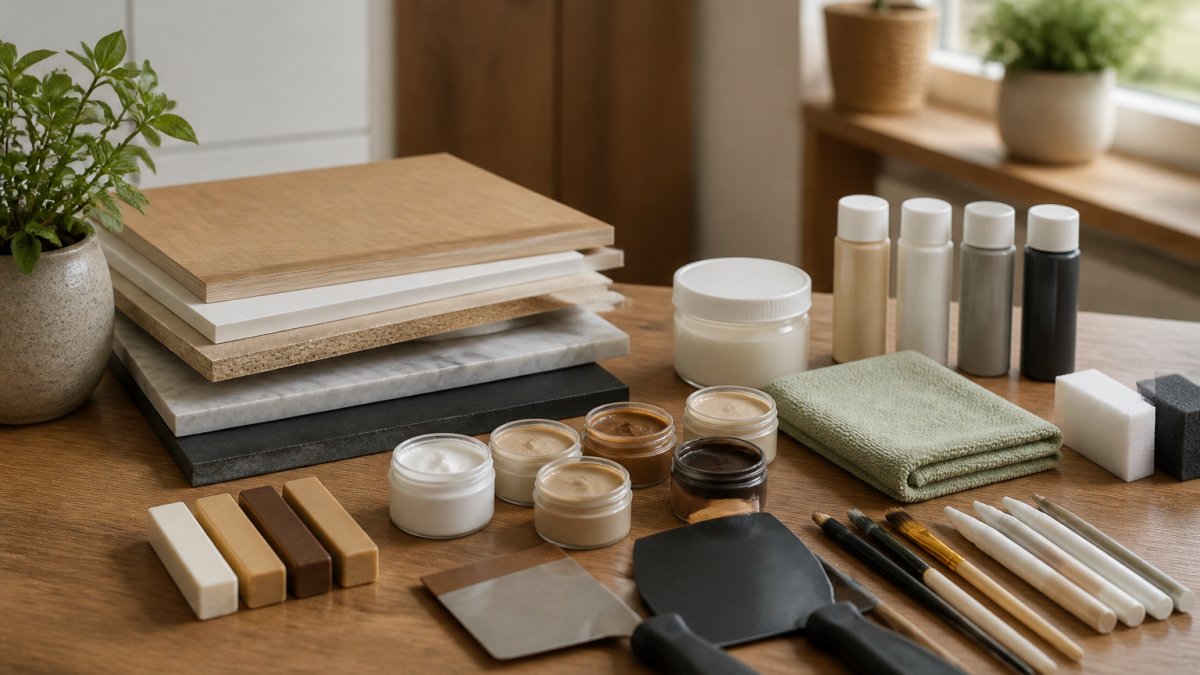
The most cost effective ways to renovate a home sustainably start with a simple question: does this actually need replacing? Surface Magic Repairs restores damaged items and surfaces rather than unnecessarily replacing them. Repairs are normally completed on site, with the repaired area colour matched and refinished to blend with the surrounding surface, saving money, time and waste on almost every renovation project.
Sustainable home renovation is the practice of improving a property while keeping existing materials in use for as long as possible. It treats what is already in the building as an asset, not rubbish.
Repair and reuse can often cost less and create less waste than strip-out and replacement. The catch is knowing what can realistically be saved.
The Hidden Costs of Ripping Out and Replacing
Replacing a bath or worktop often involves more than just the cost of the new item. There can be removal, skip hire, disposal, retiling, resealing, decorating and days of disruption. One damaged surface can trigger a whole chain of extra work.
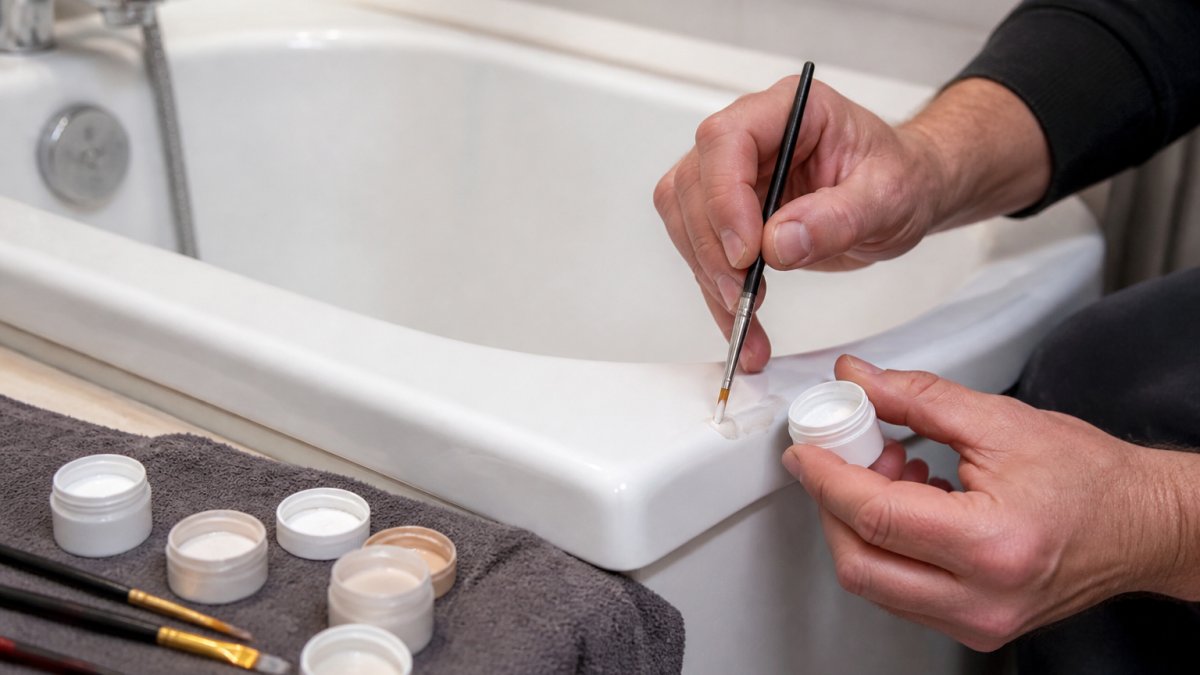
Repair can avoid that chain. A chip, crack, burn or scratch gets filled, colour matched and refinished on site, usually in a single visit.
- No strip-out or demolition
- No skip hire or landfill waste
- No retiling or redecorating next to the repair
- No room out of action for days
What Surface Repair Can and Cannot Fix
Suitability depends on the material, the condition, the location and how far the damage spreads. Honest assessment matters more than a quick yes.
Common repairs we handle include:
- Bath, shower tray and sink chips, cracks and scratches
- Worktop burns, chips and scratches on laminate and solid surface
- Tile chips and cosmetic tile damage
- uPVC frame, door and panel scuffs
- Cosmetic brick, stone and cladding damage
If the damage is structural, the material is failing, or replacement would genuinely last longer, Surface Magic Repairs will advise honestly if replacement would be more appropriate or durable. That is part of the service, not a sales pitch.
Sustainable Home Renovation Ideas That Cut Both Cost and Carbon
Keeping existing materials in use for as long as possible can be a sustainable approach. Every fixture you keep is one less item manufactured, transported and eventually landfilled.
This is where sustainable home renovation ideas get practical rather than aspirational. You are not choosing between a beautiful home and an ethical one. You are choosing to spend money on finishes and improvements instead of demolition.
Repairing Baths, Tiles and Worktops Instead of Replacing Them
A chipped bath does not need to come out. Neither does a scratched worktop or a cracked tile. These are cosmetic problems, and cosmetic problems have cosmetic solutions.
Repairing in place means:
- The existing item stays fitted and watertight
- Colour and finish are matched to the surrounding surface
- The job is usually done in one visit
- Nothing else in the room gets disturbed
Reusing and Refinishing What You Already Have
Refinishing can be a valuable part of low-cost renovation. Respraying, polishing and restoring worn surfaces can bring them back without new materials.
Surfaces that often respond well to refinishing include:
- Worn or dull worktops
- Scratched glass and panels
- Tired fitted furniture and cabinet fronts
- Faded or marked doors and frames
Low-Cost Home Renovation Ideas That Still Look Professional
Effective low-cost home renovation ideas often focus on improving what exists instead of adding new. New tiles, new units and new sanitaryware can carry a price that goes well beyond the materials.
Think about what actually makes a room look tired. Often it is a chipped bath edge, a burnt worktop corner, a scuffed door or a marked tile. None of those need a full replacement to look right again.
A practical order of priority:
- Fix visible damage first, because it drags down everything around it
- Refinish worn but sound surfaces second
- Replace only what is genuinely failing
That sequence keeps costs low and results high. It also means less mess, less dust and less time living around a building site.
How to Reduce Waste During Home Renovation Projects
To reduce waste during home renovation, keep materials in service. Construction and demolition waste is a significant stream going to landfill, and much of it can be perfectly usable.
The simplest waste-reduction habits:
- Repair before you remove
- Reuse fixtures in other rooms when they no longer suit their original spot
- Donate or sell sound items you do remove
- Avoid over-ordering tiles, boards and finishes
Repairing a surface in place removes an entire waste chain: no broken item, no packaging, no transport, no skip. For landlords and property managers turning properties around between tenancies, that also means faster turnaround and less downtime.
Energy-Efficient Home Improvements Worth Prioritising First
Energy-efficient home improvements pay you back every month, so they belong near the top of any renovation plan. Government guidance on home energy can be a useful starting point for what is available and what qualifies.
Government guidance on home energy improvements
Priorities that can be considered:
- Loft and wall insulation, which can cut heat loss directly
- Draught-proofing around windows, doors and frames
- Heating controls and thermostats that match use to demand
- LED lighting throughout, which can be a cost-effective and quick upgrade
- Window and frame repairs rather than full replacements where the unit is sound
That last point is easy to overlook. A scuffed or damaged uPVC frame does not always need a new window. Repairing the frame and cill can help keep the glazing, the fit and the thermal performance intact.
Repair or Replace? A Decision Framework for Damaged Surfaces
Use this framework before you commit to either route. It takes a few minutes and usually settles the question.
| Situation | Best Route | Why |
|---|---|---|
| Chip, crack or scratch on a sound surface | Repair | Cosmetic damage, item is structurally fine |
| Burn or stain on a worktop | Repair | Surface damage only, finish can be matched |
| Loose, soft or crumbling material | Replace | Repair will not hold |
| Damage across a large area or multiple panels | Assess first | Cost balance may shift toward replacement |
| Item is old, failing and due an upgrade anyway | Replace | Repair would only delay the inevitable |
| Rental turnaround with cosmetic damage | Repair | Fastest route back to lettable condition |
The pattern suggests that cosmetic damage on a sound item is often suitable for repair. Structural failure is not.
Where Surface Repair Fits Into a Sustainable Renovation Plan
Surface repair sits between "do nothing" and "rip it all out". It is an option many people overlook, and it can often be the one that makes the budget work.
For homeowners, it means a chipped bath, scratched worktop or marked door can be sorted without a full room refit. For landlords, hotels and property managers, it means rooms come back into use quickly with minimal disruption. For housebuilders and contractors, it handles snagging damage and pre-handover defects without delaying completion.
Surface Magic Repairs works with homeowners and commercial clients across Bolton, Greater Manchester and the wider North West, with nationwide project work for suitable commercial and multi-site jobs. We have repaired more than 46,000 surfaces in the last year, and our team brings over 25 years of combined trade experience. We are ISO 9001 certified and hold CHAS Premier, SMAS Worksafe and SafeContractor approvals.
The honest position is this: not every surface can be saved. But far more can be repaired than most people assume, and finding out costs nothing.
Planning a Cost-Effective Sustainable Home Renovation: What to Do Next
Start with an assessment, not a shopping list. Walk the property, note every chip, crack, burn and scuff, and photograph each one. Then decide, item by item, whether repair or replacement makes sense.
Your checklist before booking anything:
- List every damaged surface and what caused the damage
- Photograph the damage, the full item and the surrounding area
- Note the material of each item
- Decide repair or replace using the framework above
- Group repairs so they can be handled in one visit
- Get an honest assessment before committing
Send clear photographs of the damage, the complete item and the surrounding area, together with your full address and postcode. Surface Magic Repairs can assess whether a repair is suitable and provide a quotation. Call 0800 085 7773 or visit surfacemagicrepairs.co.uk.
Renovating sustainably does not necessarily mean spending more. It means spending on the right things. The challenge is knowing which surfaces can be saved and which genuinely need replacing, and that is where a specialist assessment can save both money and waste. Surface Magic Repairs offers in-place repairs with colour and finish matching, minimal disruption and honest advice before any work is booked. Get started with Surface Magic Repairs and find out how much of your renovation you can keep rather than replace.
Frequently Asked Questions
How can I renovate my home sustainably on a budget?
Start with what you already have. Repairing chipped baths, cracked tiles, scratched worktops and damaged uPVC frames avoids the cost of strip-out, new materials and disposal. Surface Magic Repairs completes most repairs in place with colour-matched finishes, which keeps spending low and prevents serviceable materials going to landfill. Insulation, draught-proofing and lighting upgrades are then the next most cost-effective steps.
Is it more sustainable to repair or replace household surfaces?
Repair can often be the more sustainable option. Replacement means removing the old item, transporting it to waste, manufacturing a new one and fitting it, all of which can carry carbon and cost. A professional repair extends the life of the existing surface and avoids knock-on work such as retiling or redecorating. Suitability depends on the material, condition and extent of damage, so an honest assessment matters before deciding.
Can damaged tiles, baths or worktops be repaired instead of replaced?
Many can. Surface Magic Repairs regularly repairs chips, cracks, scratches and burns on ceramic and porcelain tiles, baths, shower trays, sinks, laminate and solid-surface worktops, and uPVC frames. Repairs are completed on site with colour and finish matched to the surrounding surface. Deep structural damage or items already failing may be better replaced, and the company will say so honestly rather than book unsuitable work.
How can I reduce waste during a home renovation?
Plan repairs before replacements, measure materials accurately to avoid offcuts, and separate waste for recycling or reuse. Keeping existing fixtures such as baths, tiles and worktops in place removes the largest single source of renovation waste. For commercial or multi-property projects, planned surface-repair programmes can address damage across many rooms in one visit, which cuts both waste and downtime.