Table of Contents
- Fast Turnaround vs Lower Cost: The Core Trade-Off in Cost-Effective Surface Repair
- Side-by-Side: Repair Speed and Cost Compared With Replacement
- When Fast Turnaround Matters More Than the Lowest Price
- When Lower Cost Than Replacement Should Drive the Decision
- Repairing Kitchen Worktop Chips and Scratches: A Practical Cost Case
- What Affects the Turnaround Time for Surface Restoration
- The Hidden Costs of Replacement That Repair Avoids
- How to Decide: A Simple Framework for Property and Facilities Teams
- Frequently Asked Questions
Last Updated: September 23, 2026
Fast Turnaround vs Lower Cost: The Core Trade-Off in Cost-Effective Surface Repair
Cost-effective surface repair is rarely about finding the single cheapest option. It is about balancing two competing priorities: how quickly a damaged surface can be returned to use, and how much money the repair saves compared with replacement. Surface Magic Repairs understands this tension plays out daily across rental turnovers, hotel rooms, new-build handovers and family homes.
The short answer is that repair usually wins on both counts, but not always to the same degree. Speed and cost pull in different directions depending on the material, the damage and who is waiting on the finished result.
Below, we break down where fast turnaround genuinely justifies a premium, where lowest cost should drive the decision, and how to tell the two apart before you book anything.
Side-by-Side: Repair Speed and Cost Compared With Replacement
Repair is faster and cheaper than replacement in most cosmetic damage cases, because the work happens in place with no strip-out, no new materials and no reinstatement.
Replacement follows a longer chain: removal, disposal, sourcing a matching item, installation, sealing, and often retiling or redecorating around it. Every link in that chain adds time and cost.
| Factor | Repair In Place | Full Replacement |
|---|---|---|
| Typical time on site | Hours, often same day | Days to weeks |
| Strip-out required | No | Yes |
| Knock-on decorating | Rarely | Often |
| Waste to landfill | Minimal | Old item discarded |
| Colour matching | Done on site | Depends on stock |
| Disruption to the room | Low | High |
The gap widens further in occupied buildings. A hotel cannot easily take a room out of service for a week, and a landlord cannot leave a tenancy empty while a worktop is ordered.
When Fast Turnaround Matters More Than the Lowest Price
Turnaround matters most when downtime itself carries a cost. A guest room out of service, an empty rental week or a delayed handover all lose money faster than the repair premium ever would.
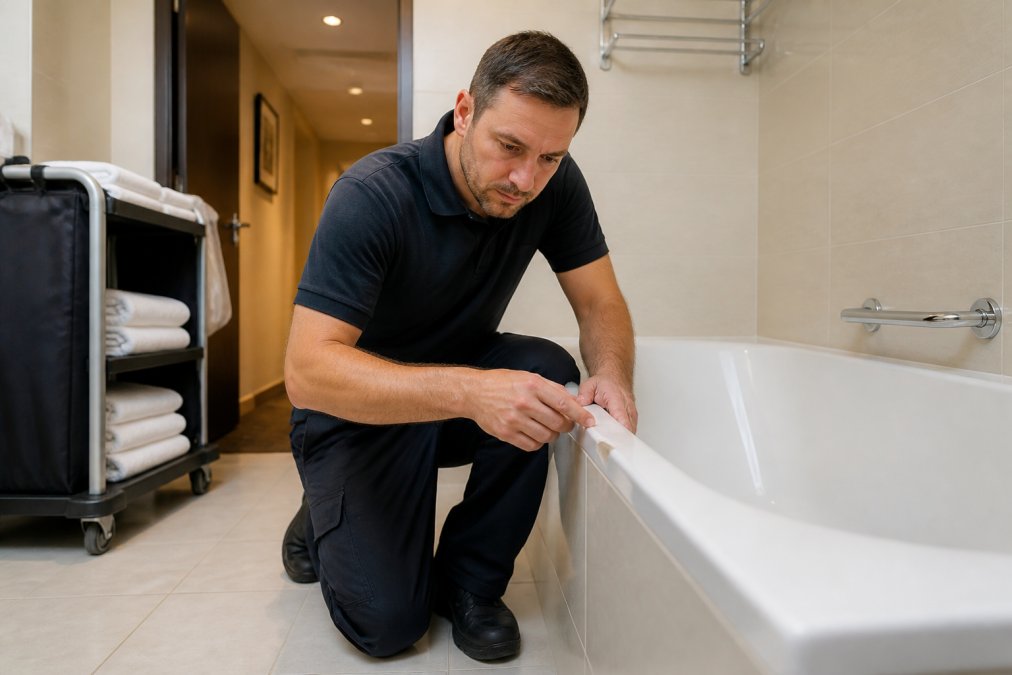
Picture a hotel maintenance technician inspecting a chipped bath edge between check-outs. The room is booked again tomorrow. A same-day repair keeps that booking; a replacement bath does not.
The same logic applies to:
- Letting agents turning a property around between tenants
- Housebuilders clearing a snagging list before legal completion
- Facilities teams keeping washrooms and kitchens in service
- Shopfitters hitting a handover deadline on a fit-out
In each case, the value of speed is measured in avoided loss, not in the repair invoice. A slightly higher repair cost that saves three days of downtime is usually the cheaper decision overall.
Where speed is the priority, be upfront about the deadline when you enquire. Surface Magic Repairs can advise whether the timescale is realistic before anything is booked.
When Lower Cost Than Replacement Should Drive the Decision
Lower cost should lead when the item is not blocking anyone. A homeowner with a scratched worktop, a landlord with a chipped sink in a void period or a property manager planning ahead can all prioritise the most economical route.
Here, the calculation is simpler. Repair keeps the existing surface, so there is no purchase price, no delivery lead time and no installation labour. It also avoids the decorating that often follows a strip-out.
The main caveat is suitability. Not every surface can be repaired. Suitability depends on:
- The material and how it responds to filling and refinishing
- The condition of the surrounding surface
- The location of the damage and how much it is used
- The extent of the damage, including whether it is structural
Where replacement would be more durable, a straight answer up front saves everyone time and money. Surface Magic Repairs will say so rather than book work that will not last.
Repairing Kitchen Worktop Chips and Scratches: A Practical Cost Case
Repairing kitchen worktop chips and scratches is one of the clearest cost cases, because worktops are expensive to replace and awkward to remove once fitted.
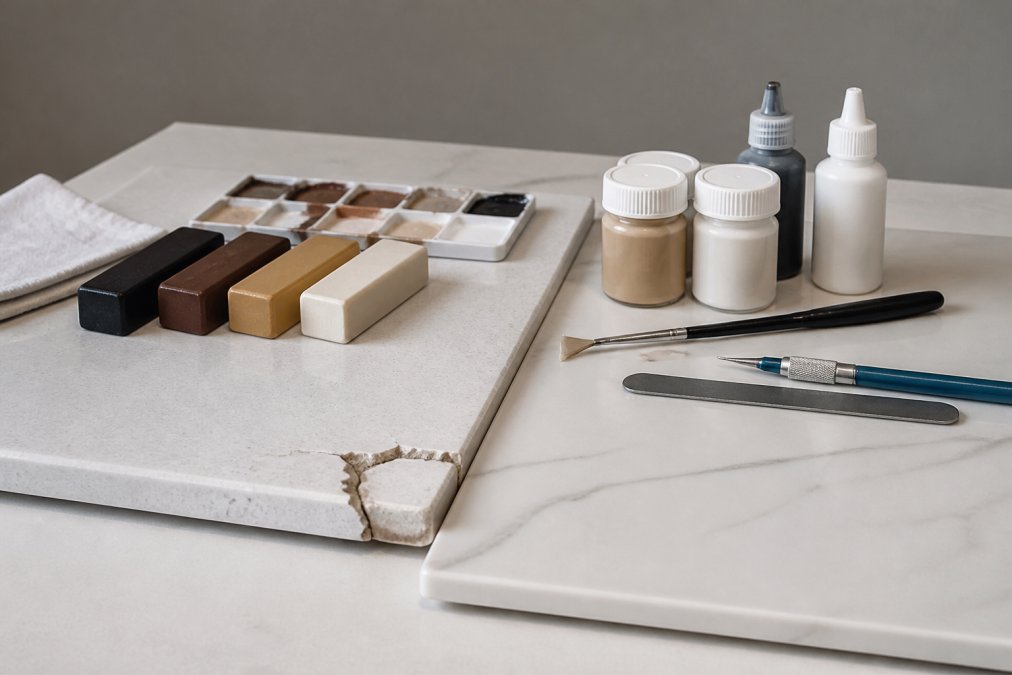
A laminate worktop with a burn mark or a solid-surface worktop with a scratch can often be filled, colour matched and refinished on site. The worktop stays in place. There is no cutting, no joinery and no disruption to the units below.
Compare the two routes:
- Repair: technician attends, prepares the area, rebuilds the damage, matches the colour and finish, and leaves the worktop usable.
- Replacement: measure, order, wait for delivery, disconnect services, remove the old top, fit the new one, seal it, and make good any damage to tiles or units.
The replacement route also risks a colour or pattern mismatch with the rest of the kitchen. A repair matched on site avoids that problem entirely.
For a quotation on worktop damage, send clear photographs of the damage, the full worktop and the surrounding area, plus your address and postcode.
What Affects the Turnaround Time for Surface Restoration
Turnaround time for surface restoration depends on the surface type, the extent of damage, access, drying or curing time, and how many repairs are booked in one visit.
A single chip on a bath is a short job. A burnt worktop with a deep gouge, or a batch of snagging repairs across several units, takes longer. Access matters too: a surface behind a fixed unit or in a tight corner adds time.
The main factors:
| Factor | Effect on Turnaround |
|---|---|
| Surface type | Stone and solid surface need more care |
| Damage extent | Deeper damage needs more rebuilding |
| Access | Poor access slows preparation |
| Number of repairs | Multiple items in one visit save travel time |
| Curing time | Some finishes need time before use |
For commercial clients with several repairs, grouping them into one planned visit is usually faster overall than booking separate appointments. Surface Magic Repairs works with site managers and maintenance teams to schedule visits around occupancy and handover dates.
The Hidden Costs of Replacement That Repair Avoids
Replacement rarely costs only the price of the new item. The hidden costs sit around it, and they are easy to miss when comparing quotes.
They include removal and disposal of the old fixture, sourcing a matching replacement, installation labour, sealing, and making good any tiling, flooring or decorating disturbed during the swap. In occupied buildings, add the cost of the room or unit being out of use.
Repair sidesteps most of this. Because the work happens in place, there is no strip-out, no skip, and no reinstatement. The existing surface stays intact, and less material goes to landfill.
This matters for property portfolios too. A planned programme of surface repairs across a set of properties avoids repeated replacement cycles and keeps serviceable materials in use for longer.
How to Decide: A Simple Framework for Property and Facilities Teams
Use this framework to decide between prioritising speed and prioritising cost. It works for a single repair or a full portfolio.
Step 1: Is the space in use or about to be? If yes, speed leads. If it is void or has slack in the schedule, cost leads.
Step 2: Is the damage cosmetic or structural? Cosmetic damage is usually repairable. Structural damage may need replacement, and a professional assessment should confirm which.
Step 3: What is the cost of downtime? If a room, unit or property is losing income while it sits idle, factor that into the comparison. It often outweighs the repair cost difference.
Step 4: What is the replacement chain? Add up removal, disposal, sourcing, installation and making good. That is the true replacement cost.
Step 5: Can the repairs be grouped? Multiple repairs in one visit usually beat separate bookings on both time and cost.
For domestic work further from Bolton, send the job details and postcode so availability can be checked. Nationwide work is available for suitable commercial and multi-site projects.
Damaged surfaces rarely improve on their own, and every day spent deciding is a day the damage is still visible to tenants, guests or buyers. Surface Magic Repairs repairs chips, scratches, cracks, burns and dents in place, with colour and finish matched to the surrounding surface, so you avoid the cost and disruption of replacement. With more than 46,000 surfaces repaired in the last year and a Bolton-based team covering Greater Manchester, the wider North West and nationwide commercial projects, the assessment starts with a photograph. Send clear images of the damage, the complete item and the surrounding area, along with your full address and postcode, to info@surfacemagicrepairs.com or call 0800 085 7773. Get a quotation from Surface Magic Repairs and find out whether repair is the right answer before you commit to replacement.
Frequently Asked Questions
Is it cheaper to repair a damaged worktop than replace it?
In most cases, yes. A cost-effective surface repair avoids the cost of a new worktop, the labour to remove the old one, and any knock-on tiling or decorating. Replacing also means disposal costs and days of disruption. Repairing the existing surface in place typically costs a fraction of replacement, though suitability depends on the material, the extent of the damage and its location. Surface Magic Repairs will advise honestly if replacement would be more durable.
How long does a professional surface repair take to complete?
The turnaround time for surface restoration varies by job. A single chip or scratch on a bath, sink or worktop is often finished within a couple of hours, and many repairs are completed in one site visit. Larger or multiple repairs, such as a snagging list across several units, may need a scheduled visit or a longer session. Drying and curing time also affects when the surface can be used again, so always confirm timings when booking.
Can you repair chips and scratches on laminate surfaces?
Yes, repairing kitchen worktop chips and scratches on laminate is a common job. A technician fills and rebuilds the damaged area, reproduces the colour and pattern, then applies a suitable finish to blend with the surrounding surface. Results depend on the depth of the damage and how closely the pattern can be matched. Deeper gouges or lifting edges may need assessment first, and Surface Magic Repairs will say if the repair is not the right option.
What information is needed to get a quote for surface repair?
Send clear photographs of the damage, the complete item and the surrounding area, plus your full address and postcode. This lets Surface Magic Repairs assess whether a repair is suitable and provide a quotation. For commercial or multi-site work, include the number of surfaces and the access arrangements. Photographs usually speed up the process, and pricing depends on the surface, damage, location, access, finish and number of repairs.
Is surface repair suitable for commercial properties and hotels?
Yes. Surface repair is well suited to commercial settings because work is done in place with minimal disruption. Hotels, holiday lets, offices and retail premises can keep rooms or areas in use far sooner than a strip-out would allow. Fast turnaround matters when a guest is checking in the next day. Surface Magic Repairs handles single repairs and planned programmes across multiple sites, and will confirm suitability after reviewing the damage.