Table of Contents
- What Causes Rust Stains in Hotel Bathtubs
- How to Remove Rust Stains from Hotel Bathtubs: Safe Cleaning Steps
- Which Chemicals Are Safe for Each Bathtub Material
- When Cleaning Stops Working and professional bath resurfacing services Are Needed
- hotel bathroom maintenance best practices to Prevent Rust Stains Returning
- How Professional Rust Stain Removal and Bath Repair Works
- Repair or Replace: Making the Right Call for Your Hotel
- Frequently Asked Questions
Last Updated: September 14, 2026
What Causes Rust Stains in Hotel Bathtubs
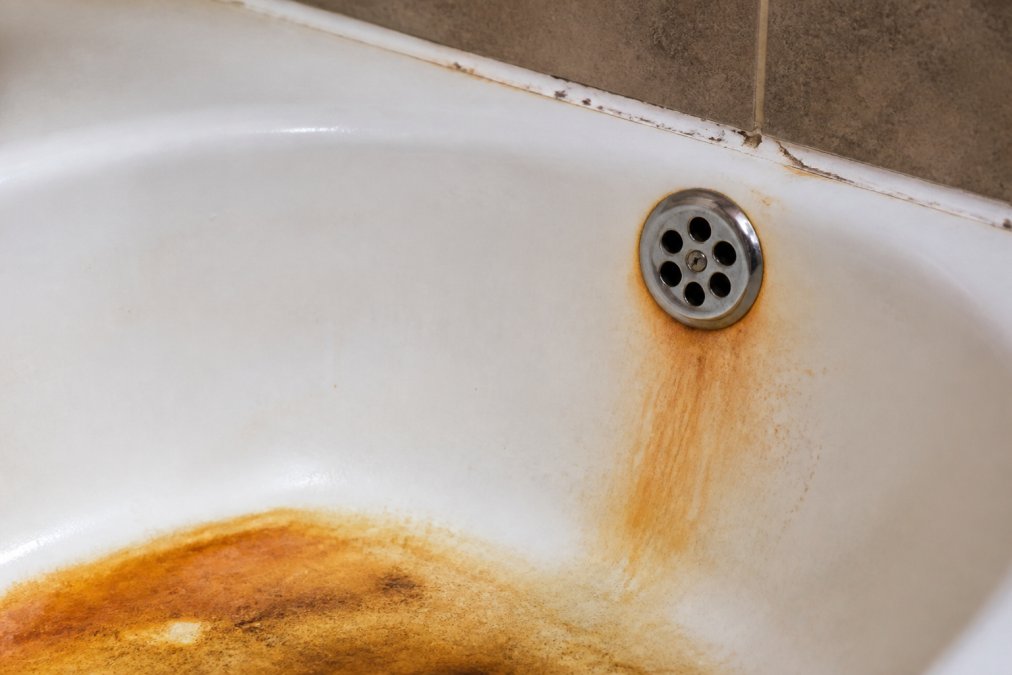
Rust stains in hotel bathtubs almost always trace back to water and metal meeting where they shouldn't. The orange-brown discolouration you see is iron oxide, and it forms when a metal component starts to corrode and the resulting particles settle on the enamel or acrylic surface below (rsc.org).
The frustrating part for housekeeping teams is that the stain often looks like it is part of the bath when it is actually sitting on top of it. That distinction matters, because it determines whether cleaning will work or whether you need a different approach entirely.
This guide from Surface Magic Repairs covers how to remove rust stains from hotel bathtubs safely, which chemicals suit which materials, and when cleaning stops being the answer. Below, we will show you exactly how to tackle the problem without damaging the surface, and when to call in professional bath resurfacing services instead.
Common Sources of Rust in Hotel Bathrooms
The source is rarely the bathtub itself. In most hotel bathrooms, the corrosion starts elsewhere and the stain simply ends up on the bath.
- Dripping taps and shower fittings. A slow drip keeps a small area permanently wet, and the metal in the tap body or spout begins to corrode.
- Chrome-plated waste fittings and overflow covers. Once the plating wears through, the steel underneath rusts and deposits colour around the drain.
- Shower curtain rails and towel rails. Condensation carries rust particles down onto the bath rim.
- Pipework and fixings behind the wall. Where a joint weeps, water carries dissolved iron onto the surface.
- Cleaning equipment left on the bath. A metal bucket handle or a steel scouring pad resting on enamel can leave a rust mark within hours.
Why Stains Return After Cleaning
A stain that comes back after cleaning usually means one of two things: the corrosion source is still active, or the bath surface has become porous.
Enamel and acrylic both develop a microscopic texture over years of use (pubmed.ncbi.nlm.nih.gov). Once that happens, rust particles lodge in the surface rather than sitting on it. Standard cleaning lifts what is loose but leaves what has settled into the grain. Within a week or two, the mark reappears in the same place.
The other common cause is a worn finish. Where the glaze has dulled or been scratched by abrasive cleaners, the surface holds onto staining far more readily than a smooth one. In that situation, no amount of scrubbing will give a lasting result, because the surface itself is the problem.
How to Remove Rust Stains from Hotel Bathtubs: Safe Cleaning Steps
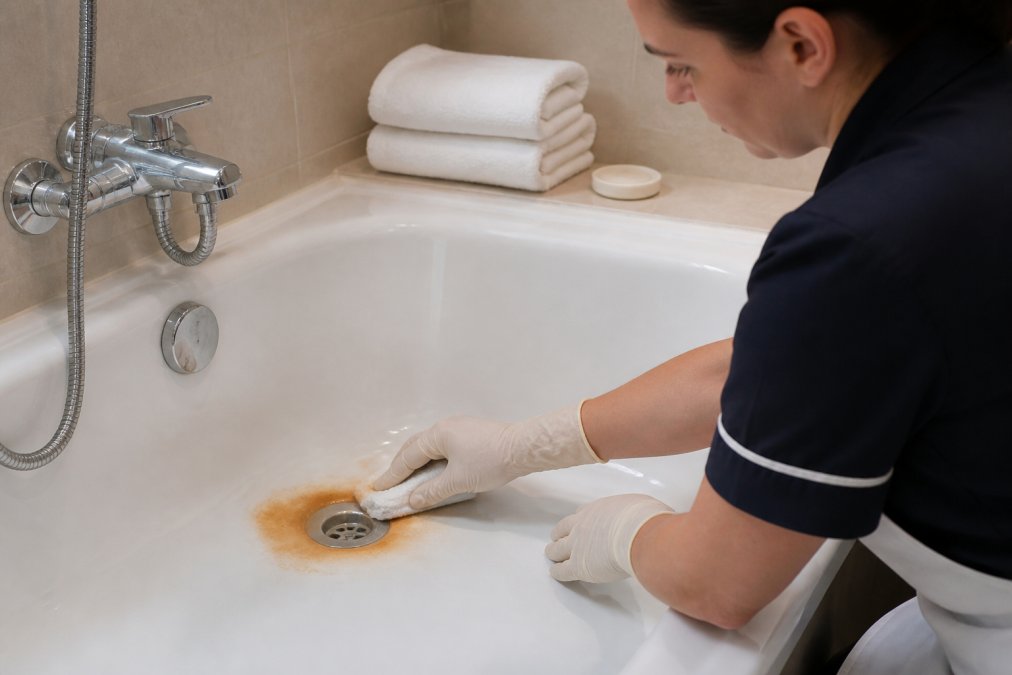
Removing rust stains from a hotel bathtub is a matter of matching the cleaning agent to the bath material and giving it time to work rather than scrubbing hard. Aggressive scrubbing is the single most common way housekeeping teams turn a cleanable stain into permanent surface damage.
Work through the steps below in order. If the stain has not lifted by the end, the surface likely needs professional attention rather than a stronger chemical.
What You Will Need
- A non-abrasive cloth or soft sponge
- Warm water and a mild detergent
- A proprietary rust stain remover suitable for the bath material
- White vinegar or a mild acidic cleaner for light staining
- Bicarbonate of soda for a gentle paste
- Rubber gloves and eye protection
- A plastic scraper, never a metal one
Check the bath manufacturer's guidance before applying any acidic product. Some acrylic and solid-surface baths are sensitive to acids, and a product that is fine on enamel can dull acrylic permanently.
Step-by-Step Cleaning Method
- Identify the bath material. Enamel, acrylic, and solid surface all behave differently. If you are unsure, treat it as the most delicate option.
- Remove the corrosion source. Clean or replace the corroding tap, waste, or fitting first. Otherwise the stain returns.
- Test on a hidden area. Apply your chosen cleaner to the underside of the bath rim or a corner out of sight, and wait ten minutes.
- Apply the cleaner and leave it. Give it five to ten minutes of contact time. Do not scrub immediately.
- Wipe with a soft cloth. Use light pressure and a circular motion. Rinse thoroughly with warm water.
- Repeat if needed. Two or three gentle passes beat one aggressive one.
- Dry the surface completely. Standing water encourages the next stain.
Which Chemicals Are Safe for Each Bathtub Material
The right cleaner depends entirely on what the bath is made of, and getting this wrong is how baths get ruined. There is no universal rust remover that is safe on every surface.
| Bath Material | Suitable Approach | Avoid | Why It Matters |
|---|---|---|---|
| Enamel | Mild acidic cleaner, bicarbonate paste | Metal scrapers, strong abrasives | Enamel is hard but chips; scratches hold staining |
| Acrylic | Non-abrasive cream cleaner, warm detergent | Strong acids, solvents, abrasives | Acrylic scratches and dulls easily |
| Solid surface | Manufacturer-approved cleaner | Abrasive pads, bleach-heavy products | Surface can be refinished, but dulls with harsh chemicals |
| Cast iron (enamelled) | Mild acidic cleaner, soft cloth | Impact tools, thermal shock | The enamel layer is what protects the iron beneath |
For light surface staining, white vinegar left for a few minutes often does the job on enamel. For anything that has settled into the surface, a proprietary rust remover formulated for bathroom use is the safer route than mixing your own stronger solution.
One point most guides miss: the age of the bath matters as much as the material. A twenty-year-old enamel bath with a worn glaze will stain faster and clean less completely than a newer one, regardless of which product you use.
When Cleaning Stops Working and professional bath resurfacing services Are Needed
Cleaning stops working when the rust has bonded with the surface rather than sitting on it, or when the bath finish has worn to the point where it holds staining permanently. At that stage, further cleaning risks damaging the surface without solving the problem.
Signs that it is time to stop cleaning and get an assessment:
- The stain returns within days of every clean
- The surface around the stain feels rough or looks dull compared with the rest of the bath
- Scrubbing has started to leave visible marks of its own
- The stain has spread beyond the original area
- The bath has been refinished before and the coating is failing
Professional bath resurfacing services address the surface itself rather than the stain on top of it. A technician prepares the damaged area, rebuilds or fills where needed, reproduces the colour and finish, and applies a suitable coating so the repaired area blends with the surrounding surface. Because the work happens in place, the bath stays fitted and the room stays usable, which matters when you have guests booked in.
Surface Magic Repairs handles this kind of work for hotels and hospitality businesses, with repairs completed on site and colour matched to the existing finish. Suitability always depends on the material, the condition of the bath, and how far the damage has gone, so an honest assessment comes before any booking.
hotel bathroom maintenance best practices to Prevent Rust Stains Returning
Preventing rust stains is cheaper than removing them, and it comes down to controlling moisture and catching corrosion early. Hotel bathroom maintenance best practices that actually work are unglamorous but effective.
- Fix drips immediately. A tap that drips for a month will leave a stain. Report it the day it starts.
- Inspect metal fittings quarterly. Check chrome plating on taps, wastes, and overflow covers for pitting or flaking.
- Dry surfaces after cleaning. A quick wipe-down stops standing water sitting against fittings.
- Use the right products. Abrasive cleaners wear the glaze, and a worn glaze stains faster.
- Ventilate properly. Extractor fans that work reduce the condensation that carries rust particles onto surfaces.
- Train housekeeping to report, not scrub. Staff who flag a stain early save the cost of a resurfacing job later.
How Professional Rust Stain Removal and Bath Repair Works
Professional rust stain removal and bath repair begins with an assessment, not a chemical. A technician looks at the material, the extent of the staining, whether the finish is intact, and whether the corrosion source has been dealt with. That assessment decides whether repair is viable or whether replacement is the more sensible option.
Where repair is suitable, the process typically involves preparing the damaged area, filling or rebuilding where the surface has broken down, reproducing the colour and texture to match the surrounding bath, and applying a suitable finish. The result is a bath that looks and functions as it should, without the strip-out, retiling, and downtime that replacement involves.
For hotels, the practical advantage is speed. A bath repaired in place does not require the room to be taken out of service for days, and it does not trigger the knock-on decorating and tiling work that a replacement does. Surface Magic Repairs has completed more than 46,000 surfaces in the last year across domestic and commercial properties, with the team bringing over 25 years of combined trade experience.
Health and Safety Executive guidance on hazardous substances in the workplace is worth reviewing before introducing any new cleaning chemical into a housekeeping programme, particularly where staff handle concentrated products daily.
Repair or Replace: Making the Right Call for Your Hotel
Repair is usually the better call when the bath is structurally sound and the damage is cosmetic. Replacement makes more sense when the bath has failed structurally, when the material cannot be refinished, or when the cost of repeated repairs would exceed the cost of a new unit.
| Situation | Recommended Approach | Reasoning |
|---|---|---|
| Surface rust staining, sound bath | Repair and refinish | Cosmetic issue, structure intact |
| Worn glaze causing repeat staining | Resurfacing | Restores a cleanable surface |
| Chips, cracks, or impact damage | Repair where suitable | Avoids strip-out and retiling |
| Structural cracking or flexing | Replacement | Repair will not hold safely |
| Bath at end of service life | Replacement | Repeated repairs stop being economical |
The honest answer is that suitability depends on the material, condition, location, and extent of the damage. A repair that is done well will hold up in a busy hotel environment, but it is not the right answer for every bath. Any reputable provider will tell you when replacement is the better route rather than taking on work that will not last.
Rust stains in hotel bathtubs are a maintenance problem with a maintenance answer: find the corrosion source, clean with the right product for the material, and repair the surface when cleaning no longer holds. If your baths have reached the point where stains return within days, Surface Magic Repairs can assess whether repair is the better option. The team offers colour-matched, in-place repairs to baths, shower trays, worktops, tiles, and sanitaryware, with honest assessments before any work is booked and quotations available from photographs. Send clear photographs of the damage, the complete bath, and the surrounding area, along with your full address and postcode, to info@surfacemagicrepairs.com or call 0800 085 7773. Get started with Surface Magic Repairs and keep serviceable baths in service rather than sending them to landfill.
Frequently Asked Questions
What causes rust stains to appear on hotel bathtubs?
Rust stains usually come from metal fittings rather than the bath itself. A dripping chrome tap, a corroded overflow plate, a steel plug chain or exposed pipework under the rim can leave iron deposits that run down the enamel. In hard-water areas, mineral build-up holds those deposits against the surface, so the stain darkens over time. Identifying the source matters, because cleaning the mark without fixing the cause means it will return within weeks.
Can professional surface repair fix permanent rust staining?
It depends on how deep the staining has gone. Light surface staining often lifts with the right cleaner. Once iron has etched into the glaze or the stain sits under a worn finish, cleaning will not remove it. In those cases, a specialist can prepare the area, remove the staining, rebuild the surface and refinish it to match the surrounding bath. Suitability depends on the material, condition and extent of the damage, so an honest assessment comes first.
Are harsh chemical cleaners safe for all bathtub materials?
No. Strong acidic descalers can strip the glaze from enamel and acrylic baths, and abrasive powders scratch the finish, which makes future staining worse. Acrylic and resin surfaces are especially vulnerable to solvent-based products. Always check the manufacturer's guidance for the bath material, test any product on a small hidden area first, and use the mildest option that works. If you are unsure, ask a specialist before applying anything aggressive.
When should a hotel bathtub be professionally resurfaced instead of cleaned?
If the stain keeps returning, the surface feels rough, or the glaze has worn thin, cleaning alone will not solve it. Repair is usually the better option when the bath is structurally sound but the finish is stained, dull or scratched. It restores the appearance in place, avoids stripping out a serviceable bath and keeps the room out of action for a much shorter period than a full replacement.