Last Updated: 25 October 2026
Quick Summary
The best kitchen worktop materials depend on your budget, cooking habits and maintenance tolerance. Quartz and sintered stone offer durability with minimal upkeep, whilst granite provides natural beauty but requires regular sealing. Laminate suits budget-conscious buyers, and wood brings warmth for low-traffic kitchens.
- Granite resists heat and scratches well but needs sealing every 1-3 years depending on use
- Quartz is non-porous and requires no sealing, making it genuinely low-maintenance compared to natural stone
- Marble stains easily from acids like lemon juice and vinegar, so suits light-use kitchens only
- Sintered stone and quartzite are the most durable options for long-term use and high-traffic homes
- Laminate scratches more easily than stone and cannot withstand direct heat from hot pans
Table of Contents
- Understanding Kitchen Worktop Materials Compared
- Natural Stone: Granite, Marble and Quartzite
- Quartz vs Granite Worktops: Engineered Stone Versus Natural
- Laminate and Solid-Surface Worktops
- Wood, Porcelain, Sintered Stone and Stainless Steel
- Most Durable Kitchen Worktop for Long-Term Use
- Repair or Replace Kitchen Worktop: When Each Makes Sense
- Choosing Your Worktop: Key Factors and Next Steps
- Frequently Asked Questions
Understanding Kitchen Worktop Materials Compared
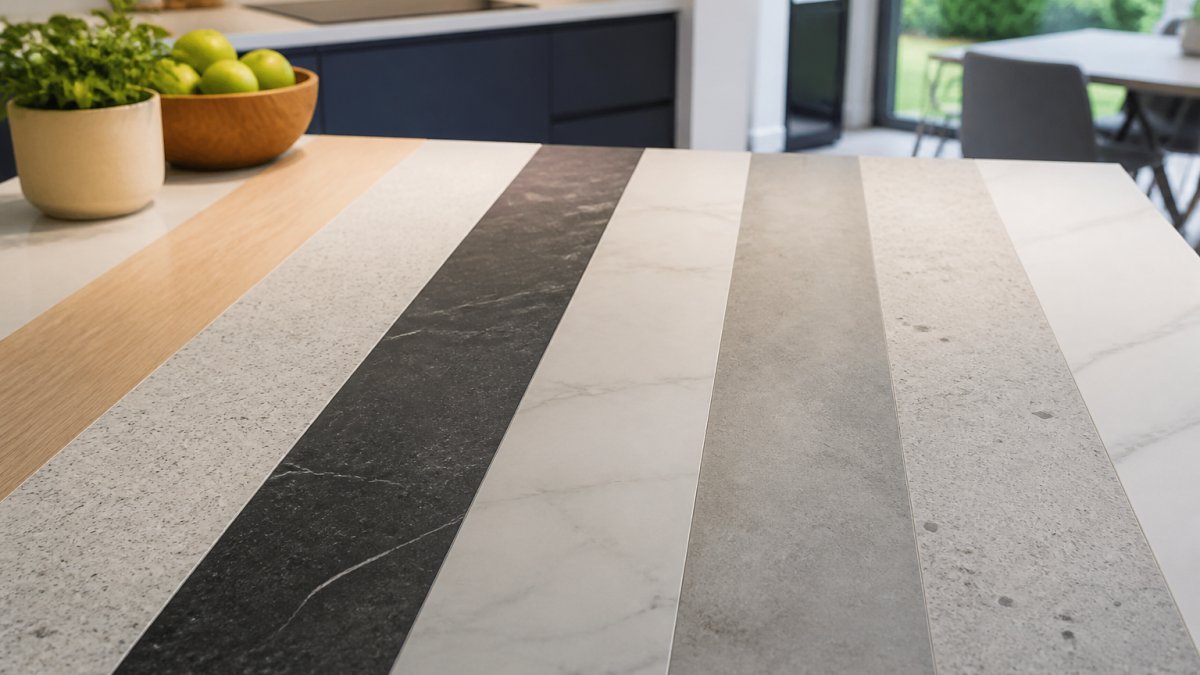
Choosing the right kitchen worktop material shapes how your kitchen looks and performs for years to come. Different materials offer distinct advantages. Some prioritise durability. Others focus on appearance or ease of care. Your choice depends on your budget, cooking habits, and design preferences.
The kitchen worktop materials available today range from natural stone to engineered surfaces and laminates. Each has trade-offs. Granite withstands heat well but needs sealing. Quartz requires minimal maintenance but costs more upfront. Laminate offers affordability but less durability.
This guide compares seven popular kitchen worktop materials. We'll explore what each offers, where each excels, and when repair might make sense instead of replacement. By the end, you'll have a clear picture of which material suits your home.
Natural Stone: Granite, Marble and Quartzite
Natural stone brings timeless beauty to any kitchen. These materials are quarried from the earth and finished to create striking worktops. Each type has unique characteristics that affect how it performs in daily use.
Granite: Heat and Scratch Resistance
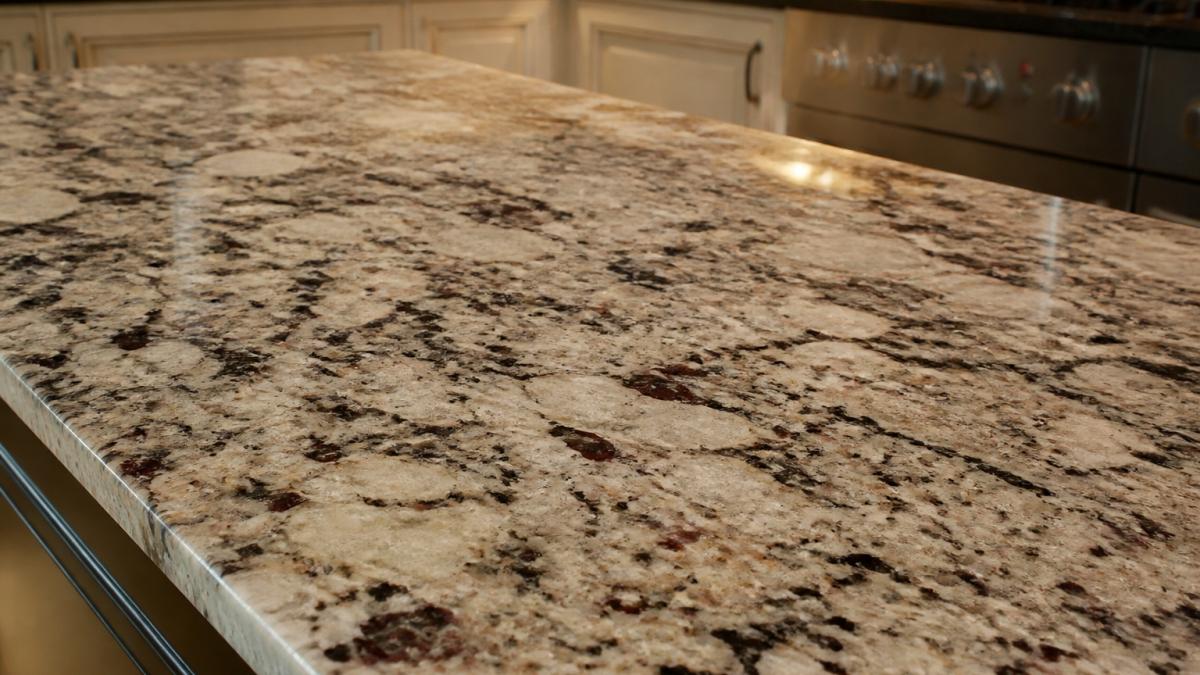
Granite is one of the most popular natural stone choices for kitchens. It's formed deep underground under intense heat and pressure, which makes it exceptionally hard and heat-resistant. You can place hot pans directly on granite without risk of damage.
Granite resists scratches well compared to softer stones. Its speckled appearance also hides minor marks and dust effectively. The stone comes in hundreds of colours and patterns, so finding a look you love is straightforward.
However, granite is porous. It absorbs liquids if left unsealed, which can lead to staining. You'll need to seal it regularly, typically every 1-3 years depending on use. Sealing adds to maintenance costs over time.
Granite also requires care with acidic substances. Lemon juice, vinegar, and wine can etch the surface if spilled and left standing. Prompt wiping prevents damage, but this demands attention during cooking.
Best for: Kitchens where heat resistance and durability matter most. Busy households that cook frequently.
Skip if: You want a low-maintenance surface that needs no sealing. Granite demands regular upkeep.
Marble: Elegance with Limitations
Marble is prized for its elegant appearance and soft, luxurious feel. It's a softer stone than granite, which gives it a refined, almost delicate quality. Designers love marble for its timeless aesthetic.
The downside is significant. Marble stains easily and etches readily when exposed to acids. A splash of lemon juice or tomato sauce can leave a permanent mark. Wine and vinegar cause visible damage within minutes if not wiped immediately.
Marble also scratches more easily than granite. Daily kitchen use, chopping, sliding pans, setting down utensils, leaves visible marks over time. These marks become part of the stone's character, which some homeowners embrace. Others find it frustrating.
Marble needs sealing like granite, and it requires more frequent resealing due to its porosity. It's genuinely high-maintenance in an active kitchen.
Best for: Light-use kitchens or homes where appearance takes priority over practicality. Kitchens that see occasional cooking rather than daily use.
Skip if: You cook regularly or have young children. Marble won't withstand the wear.
Quartzite: Premium Natural Stone
Quartzite is harder than both granite and marble. It's a metamorphic stone formed when sandstone is subjected to extreme heat and pressure deep underground. This process creates a denser, more durable material.
Quartzite resists scratches and heat like granite but with greater density. It's less porous than marble, so it stains less readily. Many homeowners see quartzite as the best of natural stone options.
The catch is availability. Quartzite is rarer than granite. Colour and pattern choices are more limited. Not every stone supplier stocks quartzite regularly.
Quartzite still needs sealing, though perhaps less frequently than marble. It's not maintenance-free, but it demands less attention than softer stones.
Best for: Homeowners who want natural stone durability without constant maintenance. Those willing to invest in a premium material.
Skip if: Budget is tight. Quartzite costs significantly more than granite.
Quartz vs Granite Worktops: Engineered Stone Versus Natural
Quartz and granite represent two different approaches to worktop materials. Understanding the distinction helps clarify which suits your needs.
Granite is a natural stone. It comes from the earth with its own unique patterns and colours. Each slab is one-of-a-kind. Quartz is engineered. Manufacturers combine crushed quartz stone with resins and pigments to create a uniform, consistent material.
Quartz doesn't require sealing. The resin binding means it's non-porous, so liquids can't penetrate. This makes quartz genuinely low-maintenance compared to granite. You can wipe spills without worry.
Quartz also offers more colour and pattern consistency. Every worktop looks the same, which appeals to those wanting predictable aesthetics. Granite's natural variation appeals to others who prefer uniqueness.
The trade-off is authenticity. Quartz is a manufactured product, not a natural stone. Some homeowners value the natural element of granite. Others prefer the practical benefits and uniform look of quartz.
Both resist scratches and heat reasonably well. Quartz is slightly more scratch-resistant due to its engineered composition. Granite requires more care with acidic foods, whilst quartz handles these without etching.
| Aspect | Granite | Quartz |
|---|---|---|
| Maintenance | Requires regular sealing | No sealing needed |
| Stain resistance | Moderate (porous) | Excellent (non-porous) |
| Heat resistance | Excellent | Good (can discolour with extreme heat) |
| Scratch resistance | Good | Excellent |
| Appearance | Unique natural patterns | Consistent engineered look |
| Cost | Moderate to high | Moderate to high |
Laminate and Solid-Surface Worktops
Laminate offers an affordable entry point into quality kitchen worktops. It's a manufactured material made from layers of kraft paper and plastic resin bonded under heat and pressure. The top layer features a printed design that mimics stone, wood, or solid colours.
Laminate is often an attractive option for budget-conscious homeowners or rental properties. Installation is straightforward.
Laminate resists stains well if sealed properly. It won't stain from wine, coffee, or acidic foods like natural stone might. Cleaning is simple, a damp cloth and mild soap suffice.
However, laminate has real limitations. It scratches more easily than stone. Sharp knives or rough utensils leave visible marks. Moisture can cause the material to swell or warp if water penetrates the seams. Heat can damage laminate, hot pans must go on trivets, not directly on the surface.
Laminate also has a visible lifespan. After a period of use, it often shows wear.
Solid-surface worktops are non-porous, durable, and come in many colours. They resist stains and scratches better than laminate but don't match stone's heat resistance.
Solid-surface worktops can be repaired if damaged. Minor scratches and burns can often be sanded out or filled. This repairability extends their lifespan compared to laminate, which typically can't be effectively repaired.
Laminate best for: Budget-conscious buyers. Rental properties. Kitchens where appearance matters more than longevity.
Solid-surface best for: Those wanting durability without natural stone prices. Homeowners who value repairability.
Kitchen & Bath Design News survey on countertop trends
Wood, Porcelain, Sintered Stone and Stainless Steel
Several less common worktop materials deserve consideration for specific situations.
Wooden worktops bring warmth and natural character to kitchens. They age beautifully, developing a patina over time. Wood feels pleasant to work on and is kind to dropped dishes.
Wood requires regular oiling to maintain water resistance. It's vulnerable to staining and water damage if not maintained. Chopping directly on wood can cause gouges, though many homeowners see this as part of the material's charm. Wood works best in kitchens where appearance takes priority over durability.
Porcelain worktops are gaining popularity. Porcelain is fired clay that's extremely hard and non-porous. It resists stains, scratches, and heat exceptionally well. Porcelain can mimic the look of natural stone or concrete.
The challenge with porcelain is brittleness. It can crack if subjected to impact. Installation requires specialist knowledge. Repairs are difficult because broken pieces can't easily be replaced.
Sintered stone is a newer material created by compressing mineral particles under extreme heat and pressure. It's harder than granite, non-porous, and highly scratch-resistant. Sintered stone handles heat excellently and resists stains completely.
Sintered stone offers superior durability. It's becoming more available as manufacturers expand production. Colour and pattern options continue to increase.
Stainless steel is primarily used in commercial kitchens but occasionally appears in domestic settings. It's hygienic, heat-resistant, and durable. Stainless steel shows fingerprints and scratches readily, which many homeowners find impractical for everyday use.
Most Durable Kitchen Worktop for Long-Term Use
If durability over decades is your priority, sintered stone and quartzite lead the field. Both resist scratching, staining, and heat damage exceptionally well. Both maintain their appearance with minimal maintenance.
Sintered stone edges ahead slightly because it's non-porous and requires no sealing. Quartzite needs occasional sealing, though far less frequently than granite or marble.
Quartz also ranks highly for durability. It's engineered to withstand daily kitchen use. Its non-porous surface resists staining and bacterial growth. Quartz typically lasts 25+ years with normal care.
Granite ranks next. Its natural hardness means it resists scratches well. Sealing requirements are the main maintenance burden, but this is manageable with a regular schedule.
Natural stone's advantage is that damage is often cosmetic rather than structural. A scratch on granite doesn't compromise the material. By contrast, laminate damage often requires replacement of the entire worktop section.
For commercial kitchens or high-traffic homes, sintered stone or quartz offer the best long-term value. You'll spend less time maintaining them and they'll look good for decades.
Repair or Replace Kitchen Worktop: When Each Makes Sense
This is where Surface Magic Repairs' expertise becomes valuable. Not every damaged worktop needs replacement.
Minor damage, small scratches, chips, or burns, often responds well to repair. Laminate and solid-surface worktops can be filled and refinished. Stone worktops can be polished or sealed to minimise visible damage. Repair keeps your existing worktop in place and avoids disruption.
Repair makes most sense when:
- The damage is cosmetic rather than structural
- The worktop is otherwise in good condition
- Replacement would require removal and reinstallation
- You want to avoid the disruption of a full replacement
- The damage is isolated to one area rather than widespread
Find out what professional kitchen worktop restoration typically involves.
Replacement becomes necessary when:
- Damage is extensive across multiple areas
- The material is warped or has structural failure
- The worktop is nearing the end of its natural lifespan
- Repair would be temporary rather than lasting
- You're planning a full kitchen redesign anyway
For laminate worktops with deep burns or extensive water damage, replacement may be more practical than repair. For stone worktops with isolated chips or scratches, repair typically extends the lifespan significantly.
guidance on assessing kitchen surface damage
Choosing Your Worktop: Key Factors and Next Steps
Your decision should weigh several practical factors. Budget matters, but so does how you actually use your kitchen.
Cooking frequency shapes your choice. Daily cooks benefit from heat-resistant, durable materials like granite, quartz, or sintered stone. Occasional cooks can prioritise appearance with marble or wood.
Maintenance tolerance differs by person. If regular sealing feels like a chore, quartz or sintered stone eliminate that task. If you enjoy caring for natural materials, granite or marble appeal more.
Longevity expectations influence the decision. If you plan to stay in your home for a long period, investing in durable stone may be a consideration. If you might move or renovate within a shorter timeframe, laminate or solid-surface worktops can offer good value.
Aesthetic preferences matter too. Natural stone brings organic beauty. Engineered materials offer consistency. Wood provides warmth. Choose what you'll enjoy looking at every day.
Budget constraints are real. Laminate and solid-surface worktops cost significantly less than stone. Quartz and sintered stone cost more but last longer.
Once you've chosen your material, protecting it from damage extends its life. Learn how to measure kitchen worktops for a perfect fit before installation begins. Use trivets under hot pans. Wipe spills promptly. Avoid chopping directly on stone. Use cutting boards instead.
If damage does occur, assess whether repair or replacement makes sense. Worktop & Countertop Repairs can restore chipped, cracked, or burnt worktops in place. For laminate worktops with deep damage, Laminate vs Solid Wood Worktops: Pros and Cons explains the trade-offs between materials.
For those deciding between repair and replacement, Is Repairing Kitchen Worktops Worth It? A 2026 Guide provides detailed guidance. Professional Kitchen Worktop Restoration explains what professional repair involves.
Send clear photographs of your worktop damage, the complete worktop surface, and the surrounding area. Include your full address and postcode. Surface Magic Repairs can assess suitability and provide a quotation. Ring 0800 085 7773 or email info@surfacemagicrepairs.com. Office hours are Monday to Friday, 9:00am-3:00pm.
Frequently Asked Questions
Which kitchen worktop material is the most durable?
Granite and quartzite lead for durability due to their hardness and heat resistance. Quartz engineered stone is also highly durable and requires no sealing. Laminate is budget-friendly and durable for normal domestic use, though it is more prone to damage from heat and sharp impacts than stone. The most durable choice depends on your kitchen's use: busy family kitchens benefit from quartz or granite; lighter-use kitchens can work well with laminate or wood.
What is the easiest kitchen worktop to maintain?
Quartz is the easiest to maintain because it does not require sealing and resists staining. Laminate worktops are also straightforward to clean and maintain. Natural stone like granite and marble require periodic sealing and more careful handling to avoid staining and etching. Wood needs regular oiling and is sensitive to moisture. If low maintenance is your priority, quartz or laminate are your best options.
Can a damaged kitchen worktop be repaired instead of replaced?
Many worktop damages can be repaired depending on the material, the extent of damage and the location. Laminate and solid-surface worktops respond well to cosmetic repair for burns, chips and scratches. Stone worktops can sometimes be repaired for minor cosmetic damage, though deep cracks or structural issues may need replacement. Surface Magic Repairs assesses worktop damage professionally and advises whether repair or replacement is the better choice. Send photographs of the damage, the complete worktop and your address to info@surfacemagicrepairs.com for an honest assessment.
Is quartz or granite better for a kitchen worktop?
Quartz requires no sealing and is easier to maintain, making it ideal for busy households. Granite offers natural beauty and excellent heat resistance but needs periodic sealing and more careful care. Quartz provides consistency in appearance across large surfaces, while granite's unique veining adds character. Budget and maintenance preference usually decide between them: choose quartz for convenience, granite for natural stone appeal.
Why replace when you can repair? Many worktop materials can be restored professionally in place. Surface Magic Repairs has repaired more than 46,000 surfaces in the last year, including laminate, solid-surface, and stone worktops across domestic and commercial properties. The team colour-matches and refinishes damage to blend seamlessly with the surrounding surface. Get an instant quotation by sending photographs to surfacemagicrepairs.co.uk or calling 0800 085 7773.