Last Updated: October 23, 2026
Quick Summary
Eco friendly home renovation planning tips start with keeping what you already have wherever it is safe to do so, as this saves more carbon, cash and skip space than most material upgrades. Set measurable energy, waste and materials goals before work begins, then repair rather than replace sound fixtures.
- Thoughtful sustainable renovations can cut a home's energy use by 25% to 40%, depending on scope and installation quality.
- Set three or four measurable goals covering energy, waste, materials and cost in use before any work starts.
- Judge materials on lifespan, embodied carbon, maintenance burden and end-of-life route rather than green marketing claims.
- Repair wins when an item is structurally sound, the finish can be matched and the repair will last.
- Budget energy upgrades fabric first, heating second and renewables last to get the most benefit per pound.
Table of Contents
- Eco Friendly Home Renovation Planning: Where to Start
- Set Your Sustainability Goals Before You Lift a Tool
- Your Sustainable Renovation Checklist, Room by Room
- Choosing Eco-Friendly Renovation Materials That Last
- Renovation Waste Reduction: Planning for Fewer Skips and Landfill
- Repair Versus Replace Home Renovation: Which Is Greener?
- Energy Efficiency Upgrades Worth Budgeting For
- How to Vet Contractors and Trades for a Greener Job
- Budgeting for an Eco Friendly Renovation Without Greenwash
- Common Eco Renovation Mistakes and Bad Advice to Ignore
- Reusing, Recycling and Giving Materials a Second Life
- Conclusion
- Frequently Asked Questions
Eco Friendly Home Renovation Planning: Where to Start
Eco friendly home renovation planning tips start with one decision: keep what you already have wherever it is safe to do so. That single choice saves more carbon, cash and skip space than most material upgrades put together. This guide sets out how to plan a greener renovation from first sketch to final snag list.
The scale of the opportunity is bigger than most homeowners expect. According to Crafthaus Remodeling's analysis of sustainable renovation scope, thoughtful sustainable renovations can cut a home's energy use by 25% to 40%. That is a range, not a promise, and it depends on what you change and how well it is installed.
Here is the part most guides get wrong. They treat sustainability as a shopping list of new products. In practice, the greenest renovation is usually the one that rips out least. A chipped bath, a scratched worktop or a cracked tile does not need to become landfill for a project to count as sustainable.
Below, we break down the full planning sequence: goals, checklists, materials, waste, repair-versus-replace decisions, energy upgrades, contractor vetting and budgeting. Get the order right and the rest follows.
Set Your Sustainability Goals Before You Lift a Tool
Most renovation projects fail on sustainability not because the materials were wrong but because nobody agreed what "green" meant before work started. Set three or four measurable goals first, write them down, and use them to judge every later decision.
A workable goal set looks like this:
- Energy: reduce heating demand, for example by upgrading loft insulation or draught-proofing before touching the boiler
- Waste: cap the number of skips and set a reuse target for existing fittings
- Materials: prioritise low-waste, long-life products over cheap short-life ones
- Cost in use: weigh running costs over the next decade, not just the purchase price
Research published by Springer's study on energy considerations in residential renovation found that early planning and involving everyone with a stake in the project are critical to aligning energy efficiency goals with the work itself. In plain terms: decide the goals before the trades arrive, not after the plasterboard is up.
A workable set of sustainability goals covers four areas, and each one should be written down before work starts.
| Goal area | What to aim for |
|---|---|
| Energy | Reduce heating demand, for example loft insulation or draught-proofing |
| Waste | Cap the number of skips and set a reuse target |
| Materials | Prioritise low-waste, long-life products over cheap short-life ones |
| Cost in use | Weigh running costs over the next decade, not just purchase price |
Your Sustainable Renovation Checklist, Room by Room
A sustainable renovation checklist works best in two passes: a whole-property pass before any room is touched, then a room-by-room pass that decides what stays, what gets repaired and what genuinely must go.
The Pre-Work Checklist
- Agree your energy, waste and materials goals in writing
- Survey existing fixtures for repairability before pricing replacements
- Identify which items can be reused elsewhere in the property
- Confirm how waste will be segregated on site
- Check whether original features can be retained and restored
- Get a measured baseline of energy performance before changes
The Room-by-Room Checklist
- Bathroom: assess bath, shower tray, tiles and sanitaryware for cosmetic repair before replacement
- Kitchen: check worktops, cabinet fronts and upstands for chips, burns and scratches
- Living areas: retain sound flooring and doors; repair dents and worn finishes
- Windows and doors: inspect frames for damage that can be restored rather than swapped
- Hallway and stairs: repair scuffed paintwork and damaged trim instead of renewing
The logic is simple. Every item you keep is an item you do not buy, deliver, install and dispose of. That cuts cost and carbon in the same move.
Choosing Eco-Friendly Renovation Materials That Last
Eco-friendly renovation materials are the ones that last longest with the least maintenance, not simply the ones marketed as natural. Durability is the greenest property a material can have, because a product that lasts thirty years avoids two or three replacement cycles.
When comparing options, judge them on four criteria: expected lifespan, embodied carbon, maintenance burden and end-of-life route. A material that needs refinishing every two years can lose its environmental advantage quickly.
Materials That Work Well in British Homes
- Timber from certified sustainable sources for floors, stairs and joinery, where it suits the building's damp profile
- Reclaimed brick and stone for matched repairs and extensions, keeping new extraction to a minimum
- Wool and wood-fibre insulation for breathable solid-wall properties
- Lime-based mortars and plasters where older walls need to manage moisture
- Repaired and refinished existing surfaces wherever condition allows
If you are weighing up material choices in more depth, our guide to the benefits of choosing sustainable building materials sets out the case before you commit.
Renovation Waste Reduction: Planning for Fewer Skips and Landfill
Renovation waste reduction starts before the first skip is ordered. Construction and demolition waste is one of the heaviest streams in any refurbishment, and most of it is avoidable through better sequencing and a repair-first mindset.
Three practical levers do most of the work:
- Repair before removal. Chips, cracks, burns and scratches on baths, worktops, tiles and frames are often cosmetic. Surface Magic Repairs assesses damage honestly and will say when replacement is the more durable answer, but plenty of fixtures that look finished are entirely restorable.
- Plan the sequence. Strip-out done in the wrong order breaks items that could have been salvaged. Protect retained fittings before heavy work begins.
- Segregate on site. Separate timber, metals, plastics and inert waste so each stream can be recycled rather than tipped.
For a deeper set of methods, our article on ways to reduce construction waste at home covers the practical detail beyond this overview.
Repair Versus Replace Home Renovation: Which Is Greener?
Repair versus replace home renovation decisions come down to three questions: is the item structurally sound, can the finish be matched, and will the repair last in its environment? If the answer to all three is yes, repair wins on carbon, cost and disruption.
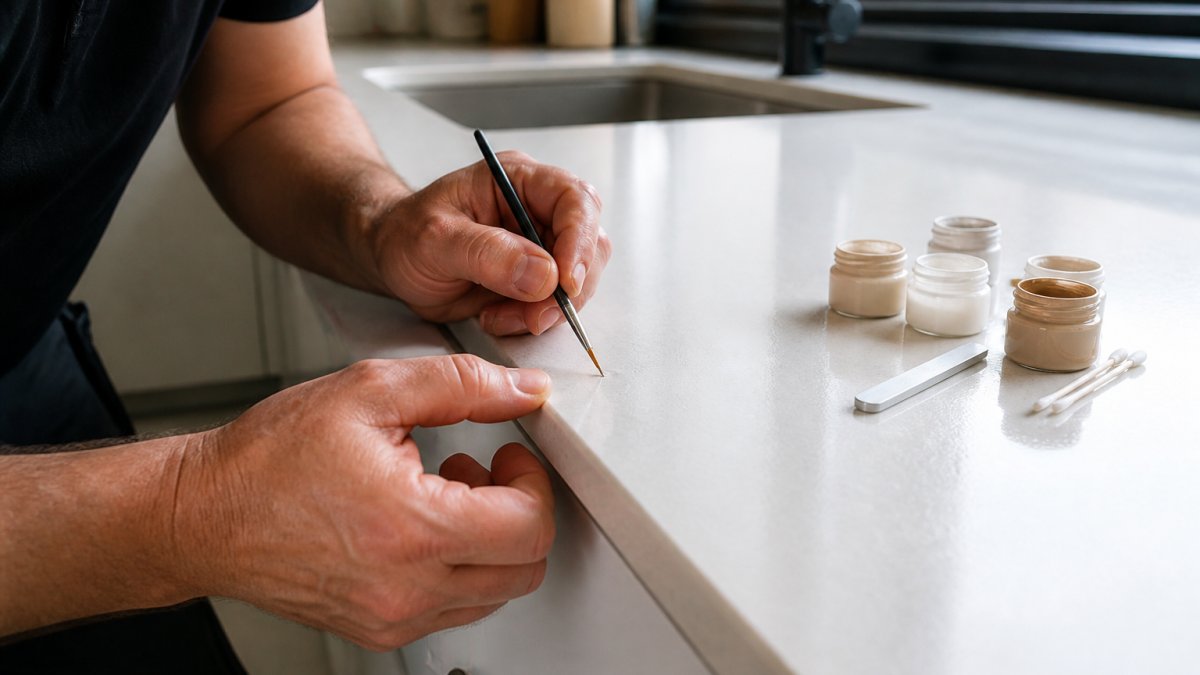
Replacement carries hidden costs that rarely appear on a quote: the removal labour, the skip, the matching of tiles or worktops that are no longer made, the decorating that follows a strip-out, and the downtime while a room is out of use. Repairing in place avoids all of it.
At Surface Magic Repairs, repairs are completed on site with the damaged area colour matched and refinished to blend with the surrounding surface. We have repaired more than 46,000 surfaces in the last year, across domestic and commercial properties. Suitability always depends on the material, condition, location and extent of the damage, and we will tell you plainly when replacement is the better route.
When Replacement Is the Greener Choice
Repair is not always right. Replacement is the more sensible option when:
- The item has failed structurally, not just cosmetically
- The damage will recur immediately because of the underlying cause, such as a persistent leak
- A modern replacement would deliver a large, verifiable energy saving that repair cannot
- The material cannot be matched or refinished to an acceptable standard
Our guide to the benefits of repairing versus replacing fixtures covers the environmental and practical case in more detail if you are still weighing it up.
Energy Efficiency Upgrades Worth Budgeting For
Energy efficiency upgrades pay back over years, so budget for them in the order that delivers the most benefit per pound. Fabric first, heating second, renewables last is the sequence that most often makes financial sense.
According to Sweeten's analysis of energy-efficient home improvements, a well-insulated home can reduce heating and cooling costs by up to 30%. VM Power Construction's 2026 renovation trends report puts the wider range for energy-efficient upgrades at 30% to 50% in utility savings, which shows how much the scope of the work matters.
A sensible priority order for most properties:
- Loft and wall insulation first, because it cuts demand at the source
- Draught-proofing and glazing improvements next, for comfort and heat retention
- Heating controls and a modern, well-sized boiler after the fabric is sorted
- Solar or heat pump technology last, once demand has already been reduced
Budgeting for these in the wrong order wastes money. A heat pump sized for a leaky house costs more to run than one fitted after insulation.
How to Vet Contractors and Trades for a Greener Job
Vetting contractors for a greener job means asking about waste handling, material sourcing and repair capability, not just price and availability. A good trade will answer these questions without hesitation.
Ask every contractor:
- How will you segregate and dispose of waste, and can you provide waste transfer documentation?
- Will you repair and retain sound existing fittings where possible?
- Can you source materials with certified sustainable origins?
- Do you hold current accreditation for the work you are quoting?
Surface Magic Repairs holds ISO 9001, CHAS Premier, SMAS Worksafe and SafeContractor Approved accreditation, and works with homeowners, landlords, facilities managers and housebuilders alike. If you are ready to move from planning to hiring, you can request a surface repair quotation by sending photographs of the damage, the complete item and the surrounding area, along with your full address and postcode.
Budgeting for an Eco Friendly Renovation Without Greenwash
Budgeting for an eco friendly renovation without greenwash means separating genuine environmental benefit from marketing language. Plenty of products carry green claims that do not survive a second look, and paying a premium for them helps nobody.
Greenwash warning signs to watch for:
- Vague claims such as "eco" or "natural" with no certification or evidence
- A single green attribute used to distract from a short lifespan
- Products described as recyclable with no route to actually recycle them locally
- Premium pricing justified only by the word "sustainable"
Build your budget around what you can verify: expected lifespan, running cost, repairability and end-of-life route. Those four factors are measurable. Marketing copy is not.
According to Kellow Construction's 2026 market projections, sustainable home renovation upgrades are expected to increase by around 2.5% year over year, which means more products will arrive with green claims attached. Scrutinise them.
Common Eco Renovation Mistakes and Bad Advice to Ignore
Common eco renovation mistakes share a pattern: they prioritise the visible, marketable change over the boring, effective one. Avoiding them is mostly a matter of sequencing and scepticism.
The mistakes we see most often:
- Replacing sound fixtures for the sake of a new look. A cosmetic chip is not a reason to send a bath to landfill.
- Buying eco-labelled products with short lifespans. A green label on something that fails in five years is not a win.
- Skipping the fabric upgrades. New windows on an uninsulated loft rarely deliver the savings promised.
- Ignoring embodied carbon. The carbon already locked into an existing fitting is lost the moment it is removed.
- Treating sustainability as a finish. It is a planning decision, made before any material is ordered.
Bad advice to ignore: that a green renovation must cost more. Repair-first planning can reduce the total spend, because retained fixtures mean fewer purchases, less labour and fewer skips.
Reusing, Recycling and Giving Materials a Second Life
Reusing and recycling materials gives a renovation a second environmental gain beyond the work itself. Items that genuinely cannot stay in place can often serve elsewhere rather than going to waste.
Practical routes for materials you cannot retain:
- Reuse within the property: sound doors, tiles and timber can move to another room
- Donate to reclaim schemes: architectural salvage yards and community projects take usable fittings
- Sell or exchange: matched tiles and surplus materials often find a buyer quickly
- Recycle by stream: metals, timber and inert waste all have established recycling routes
If you want to source second-hand stock for the project, our guide to finding reclaimed materials for home projects explains where to look and what to check before you buy.
Conclusion
The hardest part of a green renovation is not the materials. It is resisting the reflex to replace things that are only cosmetically damaged. Every bath, worktop, tile and frame you keep is carbon, cash and disruption saved.
If your renovation has turned up chipped sanitaryware, scorched worktops, cracked tiles or scuffed frames, Surface Magic Repairs can assess whether they can be restored in place. Our team colour matches and refinishes damaged surfaces on site, with no strip-out, no skip and no knock-on decorating. Send clear photographs of the damage, the complete item and the surrounding area, together with your full address and postcode, and we will confirm whether a repair is suitable and provide a quotation. Call 0800 085 7773 or visit surfacemagicrepairs.co.uk to get started.
Frequently Asked Questions
How do I plan an eco friendly home renovation?
Start with a survey of what already works before deciding what to change. Set clear goals for energy use, waste and materials, then build a sustainable renovation checklist covering each room. Get at least three quotes that itemise labour, materials and disposal, and ask contractors how they will reduce waste. Plan repairs to existing surfaces where they are sound, because keeping a serviceable bath, worktop or tiled floor avoids the carbon and cost of manufacturing and fitting a replacement.
Is repairing existing surfaces more sustainable than replacing them?
In most cases, yes. Repairing a chipped bath, scratched worktop or cracked shower tray keeps the original item in use and avoids the energy, raw materials and transport involved in making and fitting a new one. It also stops a serviceable item going to landfill. Suitability depends on the material, the extent of the damage and the location, so an honest assessment matters. Surface Magic Repairs will say if replacement would be more durable.
How can I reduce waste during a home renovation?
Order materials accurately after measuring twice, and keep offcuts for small repairs later. Ask your contractor to separate waste for recycling rather than putting everything in one skip. Donate or sell usable fittings such as doors, radiators and tiles. Choose repair over replacement where the item is structurally sound. Renovation waste reduction is largely a planning exercise, so agree the disposal approach before work starts rather than sorting it out at the end.
Which eco-friendly renovation materials are worth the money?
Look for materials that last, are repairable and suit British conditions. Timber from certified sustainable sources, wool or wood-fibre insulation, clay and lime plasters, and reclaimed bricks or tiles all perform well when specified correctly. Avoid choosing a material purely because it is labelled green; check how it will be maintained and whether it can be repaired later. A durable surface that can be refinished often beats a cheaper one that has to be replaced in a few years.
How much can energy efficiency upgrades cut my bills?
The savings depend on the property's starting point. Insulation and heating upgrades can meaningfully reduce running costs, with some sources reporting cuts of 25% to 40% for well-planned sustainable renovations and up to 30% on heating and cooling from good insulation. Treat these as indicative rather than guaranteed. A proper assessment of your home's construction, glazing and heating system will give a more realistic figure before you commit budget.
What should I ask a contractor before starting a sustainable renovation?
Ask how they will minimise waste, where materials will be sourced and whether they can repair rather than replace sound surfaces. Request a written scope that separates labour, materials and disposal. Confirm relevant certifications and insurance, and ask for references from similar projects. For surface repairs, send clear photographs of the damage, the whole item and the surrounding area with your address and postcode so suitability and a quotation can be assessed before booking.
Why replace when you can repair? Send your photographs to Surface Magic Repairs today and find out what can be saved.