Last Updated: 27 October 2026
Quick Summary
To learn how to donate leftover construction materials, sort and clean your usable stock, then contact local charities or reuse organisations to confirm what they accept before loading anything. Call ahead, as charities are selective and some materials are never accepted.
- Keep your donation pile separate from the waste pile from day one.
- Brush off dust, mortar and loose debris before contacting a charity.
- Confirm what a charity accepts right now, whether they collect, and any minimum rules.
- Never donate anything you suspect contains asbestos, as it cannot be resold.
- Check with your council whether it runs reuse points at household waste centres.
Table of Contents
- Why Donating Leftover Materials Beats Skipping Them
- What Building Materials Can Be Donated
- How to Prepare Building Materials for Donation
- Where to Donate Building Supplies
- Construction Waste Disposal for Items That Cannot Be Donated
- Repairing Damaged Surfaces to Avoid Waste
- Arranging a Surface Repair Before Your Next Donation
- Frequently Asked Questions
Why Donating Leftover Materials Beats Skipping Them
Learning how to donate leftover construction materials is one of the simplest ways to cut waste on a renovation. When you finish a job, the skip is the easy option. It is also the most wasteful one.
Usable timber, tiles, bricks and insulation often end up in landfill while someone else is buying the same materials new. Donating them keeps good stock in circulation and saves you the cost of a larger skip.
There is a practical catch. Charities are selective, and some materials are never accepted.
Below, we explain exactly what can be donated, how to prepare it, and where to send it.
The government guidance on dealing with construction waste is clear that reuse should come before disposal. Donation is the easiest form of reuse available to most homeowners and contractors.
What Building Materials Can Be Donated
Most clean, unused or gently used building materials can be donated, but acceptance depends on the charity and its current storage space. Call ahead before you load anything.
Charities that take building supplies usually want materials they can resell quickly. Condition matters more than quantity.
Materials Charities Commonly Accept
- Unopened boxes of tiles and flooring
- Clean timber and sheet offcuts
- Bricks and blocks with mortar removed
- Unused insulation in sealed packaging
- Doors, handles and ironmongery
- Sinks, taps and sanitaryware in good order
- Leftover paint in sealed tins
- Fixings, screws and sealed bags of cement
What Usually Cannot Be Donated
- Broken, crumbly or damp materials
- Materials with asbestos or unknown coatings
- Partly used chemicals and solvents
- Damaged or leaking paint tins
- Heavily soiled or contaminated stock
Watch out: never donate anything you suspect contains asbestos. It cannot be resold, and handling it is a serious health risk.
How to Prepare Building Materials for Donation
Preparation is where most donations succeed or fail. Sort, clean and label your materials before you contact a charity.
A tidy pallet may be more suitable for donation than a mixed pile of dusty offcuts.
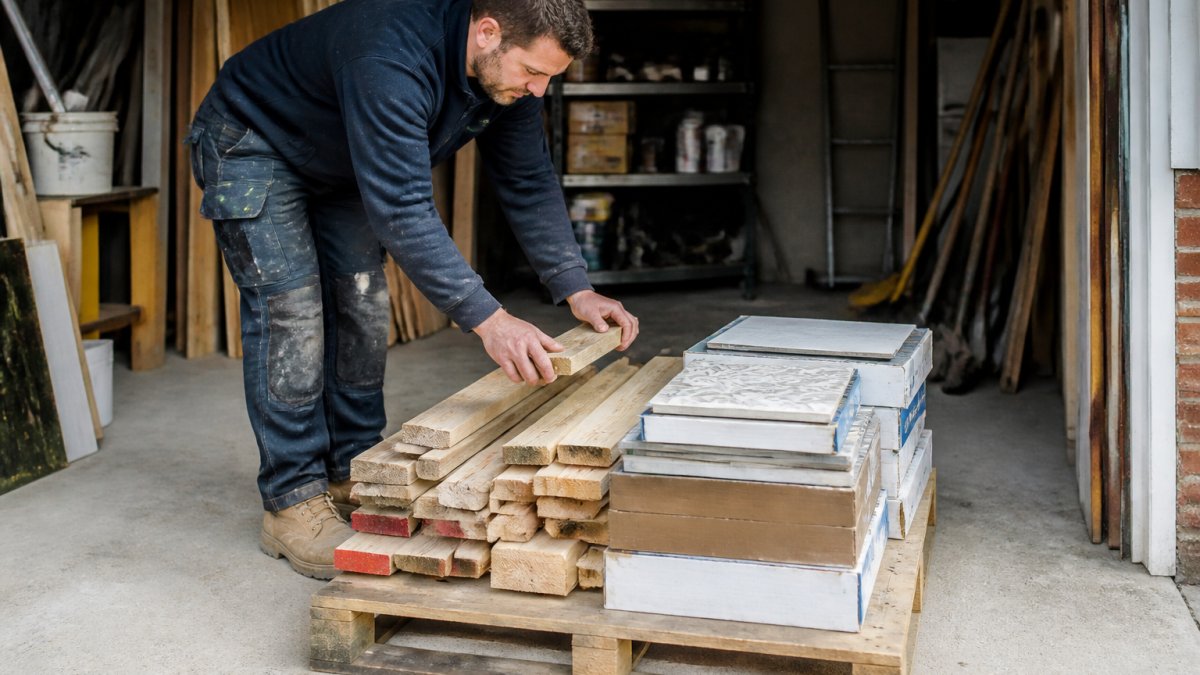
Follow this checklist:
- Separate materials by type: timber, tiles, bricks, metals, paint
- Brush off dust, mortar and loose debris
- Check tiles and flooring are in their original boxes
- Confirm paint tins are sealed and clearly labelled
- Bundle timber and sheet materials so they can be lifted safely
- Photograph each batch before collection
- Ask the charity how they want items packaged
A common mistake is mixing good stock with rubble. Keep the donation pile separate from the waste pile from day one.
Where to Donate Building Supplies
Knowing where to donate building supplies can start with local charities. Check whether there is a reuse organisation in your area that takes building materials.
In the UK, community reuse schemes, charity shops with a trade arm, and local scrap or salvage yards may be options to investigate. Check with your council whether it runs reuse points at household waste centres.
Search for "reuse" plus your town, or ask at a local builders' merchant.
If you want to source materials rather than give them away, our guide on how to find reclaimed materials for home projects covers the other side of the same market.
Always confirm three things before collection:
- What the charity accepts right now
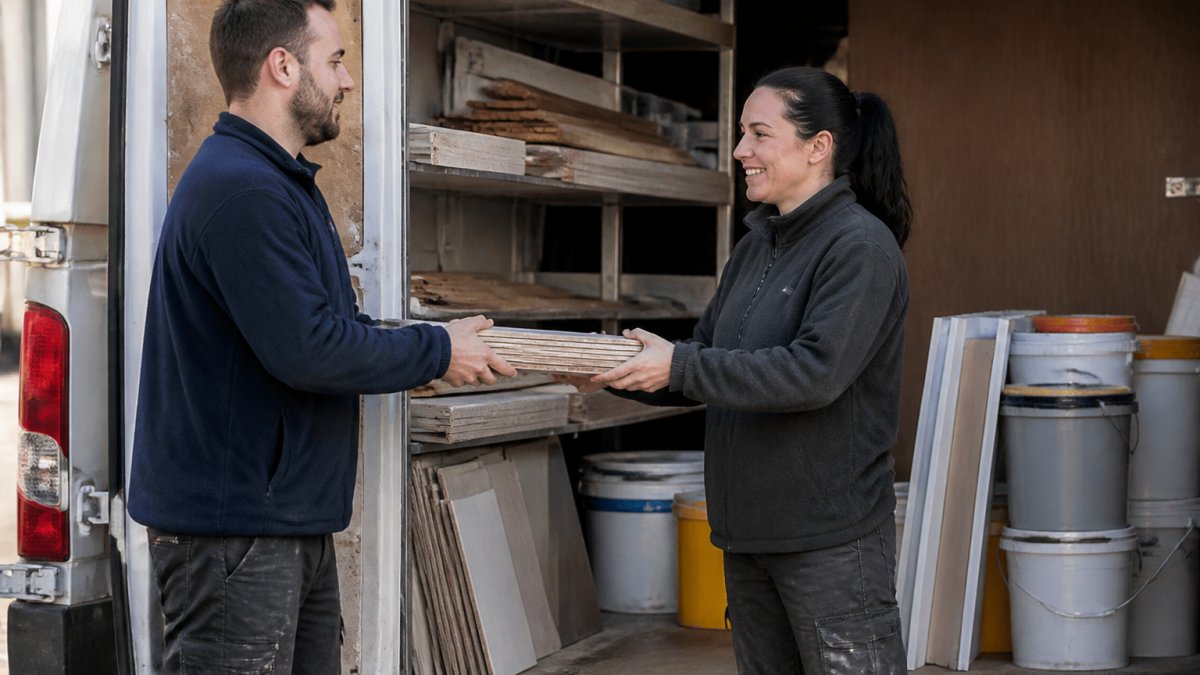
- Whether they collect or you deliver
- Any minimum quantity or condition rules
Construction Waste Disposal for Items That Cannot Be Donated
Not everything can be reused, and some waste needs proper disposal. Contaminated, broken or hazardous materials may need a suitable disposal route.
Sort your waste before you book anything. Clean rubble, timber and metals may be suitable for a waste facility. Hazardous items may need separate handling.
For a full breakdown of options, see our article on the best ways to dispose of renovation rubble.
Watch out: waste disposal requirements can depend on the material and circumstances. Check current official guidance before handing waste to a carrier.
Repairing Damaged Surfaces to Avoid Waste
Some materials cannot be donated because they are damaged, not because they are useless. A chipped bath or burnt worktop may be repairable rather than needing replacement.
Repairing rather than replacing can reduce waste by keeping a suitable existing item in place and avoiding some removal and replacement materials.
Our surface repair service for homes and properties covers baths, shower trays, worktops, tiles, doors and uPVC. Suitability depends on the material, the damage and its location, and we will say honestly if replacement is the better answer.
If you want to go further, our guide on ways to reduce construction waste at home sets out the wider strategy. The case for sustainable building materials also explains why reuse and repair sit at the top of the waste hierarchy.
Arranging a Surface Repair Before Your Next Donation
The best time to think about repair is before you plan a strip-out. A damaged surface that can be restored never enters the waste stream at all.
Surface Magic Repairs is a Bolton-based company that repairs surfaces in place, with colour and finish matched to the surrounding area. We have repaired more than 46,000 surfaces in the last year, for homeowners and commercial clients alike.
Our team holds ISO 9001, CHAS Premier, SMAS Worksafe and SafeContractor Approved accreditation. We work across Greater Manchester and the wider North West, with nationwide coverage for suitable commercial projects.
Send clear photographs of the damage, the complete item and the surrounding area, together with your full address and postcode. We can assess whether a repair is suitable and provide a quotation. Call 0800 085 7773 or visit surfacemagicrepairs.co.uk.
Frequently Asked Questions
Where can I donate leftover construction materials?
You can look for local reuse organisations that may accept construction materials. Search for 'building materials reuse' in your area and contact organisations directly to ask what they accept and whether they can collect.
What building materials can be donated?
Ask each organisation which materials it accepts and what condition they need to be in. Acceptance can vary, so check before arranging a donation.
Will charities accept opened or part-used building materials?
Acceptance depends on the organisation and the material. Ring ahead and describe what you have, including quantities and condition, before arranging a donation.
What should I do with construction materials that cannot be donated?
For items that cannot be donated, check current official guidance on suitable disposal options. Never fly-tip. If the item is a damaged surface such as a chipped bath or scratched worktop, consider whether a professional repair could restore it instead of replacing it.
Donating leftover materials is worth the small effort, but the biggest waste saving often comes earlier, when a damaged surface is repaired instead of replaced. Surface Magic Repairs restores chips, cracks, burns and scratches in place, with colour matching, minimal disruption and no unnecessary strip-out. Get started with Surface Magic Repairs and keep usable materials out of the skip.