Last Updated: 28 November 2026
Quick Summary
Reclaimed bricks can make excellent garden paving, but only when each brick is checked for frost damage, hardness and wear before it is laid. Reclaimed brick paving depends on the brick type, its condition and where it will sit, so sort every brick by eye and reject any that have spalled.
- Tap two bricks together: a clear ring means hard and dense, a dull thud means reject.
- Reject any brick showing spalling, flaking or crumbling on the face or corners.
- Lay bricks with consistent joints of 10-15mm and fill them with kiln-dried sand.
- A garden path typically needs a fall of about 1:60 to 1:80 away from the house.
- Use reclaimed bricks for paths and patios; most salvaged bricks are not up to driveways.
Table of Contents
- Are Reclaimed Bricks Suitable for Garden Paving?
- Clay Pavers vs Reclaimed Bricks: What Actually Differs
- Frost-Resistant Reclaimed Bricks and How to Spot Them
- Reclaimed Brick Paving Drainage, Falls and Ground Preparation
- Reclaimed Bricks for Driveways: Load, Traffic and Limits
- Surface Texture, Slip Resistance and the Weathered Finish
- A Nine-Point Inspection Checklist for Individual Bricks
- Repair or Replace: Assessing Damaged Paving Before You Rip It Up
- Send Photos of Your Damaged Paving for an Honest Assessment
- Frequently Asked Questions
Are Reclaimed Bricks Suitable for Garden Paving?
Yes, reclaimed bricks can make excellent garden paving, but only when each brick is checked for frost damage, hardness and wear before it is laid. Reclaimed brick paving is not a case of buying any old pallet and hoping for the best. Suitability depends on the brick type, its condition and where it will sit.
The environmental case is strong. A 2026 study in Buildings & Cities on reclaimed brick impacts found that reclaimed bricks carry just 20% of the total environmental impact of virgin bricks. That is a serious saving in embodied carbon.
Bricks that were written off often have years of life left. Bricks that look perfect sometimes fail within a winter.
So what decides it? Three things:
- The clay the brick was fired from
- How much weather it has already survived
- Where you plan to put it
Below, we break down exactly how to judge a reclaimed brick before it goes into a path, patio or drive.
Clay Pavers vs Reclaimed Bricks: What Actually Differs
New clay pavers are typically made to a consistent size and strength grade. Reclaimed clay bricks vary, sometimes wildly, and that variation is both the charm and the risk.
A new clay paver arrives with a known durability rating and a square edge. A reclaimed brick arrives with a history. It may have spent 80 years in a chimney stack, which usually means it was fired hard and will handle frost well. Or it may have come from an internal wall, which means it was never made for wet conditions.
The practical differences come down to four points:
| Feature | New Clay Pavers | Reclaimed Bricks |
|---|---|---|
| Consistency | Uniform size and colour | Variable, hand-sorted |
| Durability | Rated and stated | Must be tested by eye |
| Appearance | Clean, modern | Weathered, historic character |
| Cost and supply | Predictable | Depends on the salvage yard |
Reclaimed materials also fit a wider push toward sustainable building. If you want the broader argument, our guide on the benefits of choosing sustainable building materials sets out the case.
Frost-Resistant Reclaimed Bricks and How to Spot Them
Frost-resistant reclaimed bricks are dense, well-fired bricks with a low water absorption rate, and you can usually identify them by sound, weight and surface.
Frost is the number one killer of outdoor brick paving. Water soaks into a porous brick, freezes, expands and flakes the face off. Once the face goes, the brick crumbles.
Here is how to sort the good from the risky:
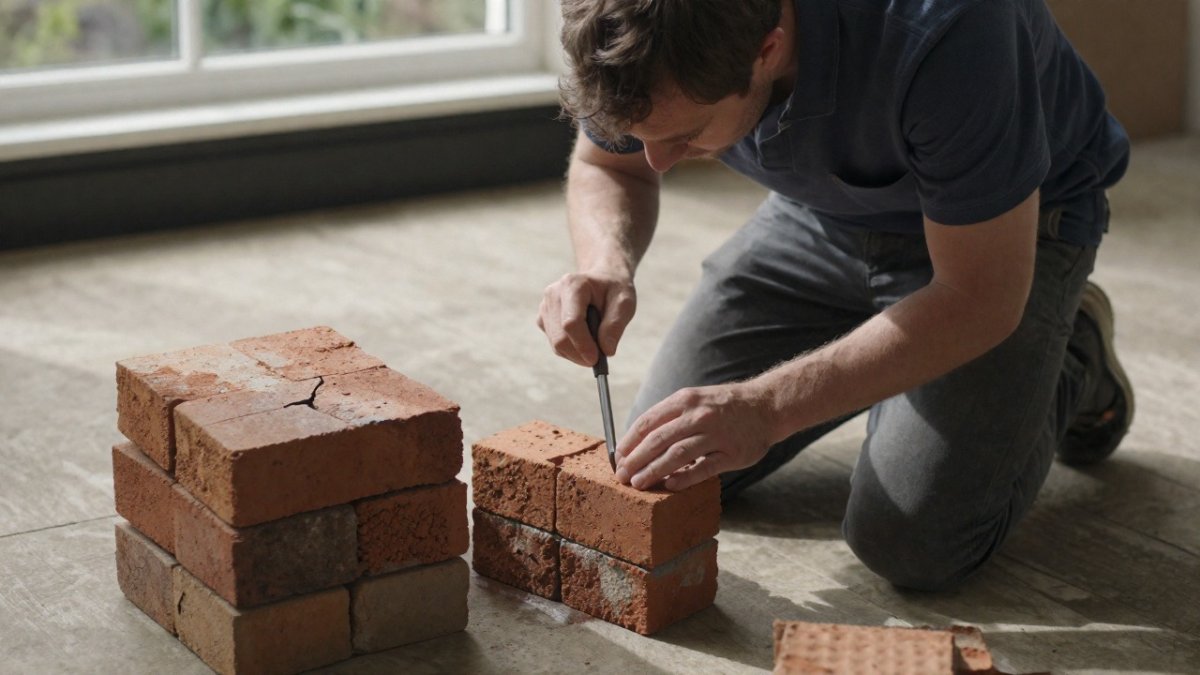
- Ring test: tap two bricks together. A clear ring means a hard, dense brick. A dull thud means it is soft or has internal cracks.
- Weight: a dense brick feels heavier than its size suggests.
- Surface: look for spalling, which is flaking or crumbling on the face or corners. Reject any brick with it.
- Colour: deep reds, blues and dark browns usually signal a harder fire than pale oranges.
- Water test: a drop of water that beads slightly is a better sign than one that soaks straight in.
Any brick that has already spalled outdoors should not go back outdoors. It has failed the frost test once.
Reclaimed Brick Paving Drainage, Falls and Ground Preparation
Reclaimed brick paving drainage depends on a proper sub-base, a correct fall away from buildings, and joints that let water through. Get this wrong and no brick, however good, will save the job. Water will pool, the bedding will soften and the paving will shift.
The build-up, from the bottom:
- Sub-base: compacted hardcore or Type 1 aggregate, laid in layers of around 75-100mm and whacked down. For a garden path, a 100mm sub-base is typical; for a patio, 100-150mm; for a driveway, 150-200mm or more depending on ground conditions. Each layer should be compacted before the next goes on.
- Bedding layer: sharp sand or a moist mortar mix, depending on the method. For flexible paving, a 30-40mm layer of sharp sand is common; for rigid paving, a 25-40mm mortar bed. The bedding should be screeded to a consistent depth and not over-compacted before laying.
- The bricks: laid tight with consistent joints of 10-15mm. Joint width affects both appearance and drainage; too tight and the bricks may spall against each other, too wide and the jointing sand may wash out.
- Jointing: kiln-dried sand brushed into the joints for a flexible finish. For paths and patios, a fine kiln-dried sand is usual; for driveways, a coarser sand or a proprietary jointing compound may be needed to resist washout. Joints should be filled flush and topped up after settling.
- Edge restraint: a solid border or kerb to stop the paving spreading. This can be a soldier course of bricks on a concrete haunch, timber edging, or proprietary plastic edging. Without it, the paving will creep outward over time, especially on curves or slopes.
Falls matter. A garden path should shed water to a drain, lawn or soakaway, never toward the house. A fall of about 1:60 to 1:80 (roughly 12-16mm per metre) is typical for a path; a patio may need a fall of 1:80 to 1:100 away from the building. On a driveway, a fall of 1:80 to 1:100 is common, but check local guidance for permeable paving if you want to avoid planning permission for surface water. A gentle fall across the surface keeps puddles from forming.
Watch out: if the ground is clay or poorly draining, a simple sub-base and sand bedding may not be enough. You may need a drainage layer or a soakaway, and the fall must be maintained throughout the build-up, not just on the surface.
If you are still sourcing your bricks, our guide on how to find reclaimed materials for home projects covers where to look.
Reclaimed Bricks for Driveways: Load, Traffic and Limits
Reclaimed bricks for driveways can work, but only with hard, well-fired bricks and a much heavier sub-base than a path needs. Most salvaged bricks are not up to it. A driveway takes car weight, turning forces and point loads. A soft brick laid on a light base will crack or sink within a season or two.
Use reclaimed bricks for a drive only when:
- The bricks are dense, hard-fired and free of cracks
- The sub-base is deep and properly compacted, typically 150-200mm of Type 1 aggregate, laid in layers and whacked down
- The bricks are laid on a rigid bed, not just sand, a mortar bed of 25-40mm or a proprietary bedding system
- The laying pattern spreads load, such as herringbone at 45 degrees, which interlocks and distributes weight better than stack bond or running bond
- Edge restraint is substantial, a concrete kerb or soldier course on a concrete haunch, not just timber edging
Skip reclaimed bricks for driveways if:
- The bricks are soft, flaky or from internal walls
- You cannot verify their condition
- Heavy vehicles will use the surface regularly
- The ground is clay or unstable without additional drainage or stabilisation
For most driveways, new clay pavers rated for vehicular traffic are the safer choice. They come with a known durability rating and consistent dimensions, which makes for tighter joints and more predictable performance. Reclaimed brick suits paths, patio edges and low-traffic areas best.
Watch out: even hard-fired reclaimed bricks can fail under repeated point loads if the bedding is uneven. A single rocking brick will work loose and damage its neighbours, so bedding must be flat and consistent.
If you are planning a driveway and want to know whether your bricks are up to it, send photographs of the bricks and the intended area to Surface Magic Repairs for an honest assessment.
Surface Texture, Slip Resistance and the Weathered Finish
Surface texture is where reclaimed bricks win on looks and need care on safety. A weathered face gives grip, but moss, algae and polished wear can undo that.
Slip resistance matters most on shaded paths, steps and anywhere water sits. A rough, sand-faced brick offers good grip when wet. A smooth, worn brick can become slick.
Watch out for green algae film on north-facing paving. It is the most common cause of slips on older brick paths, and it builds up quietly over winter.
The weathered finish is the whole point for many gardeners. That soft, varied colour and rounded edge is difficult to reproduce in new brick. It is also why reclaimed brick fits period properties and cottage gardens so well.
Where old and new bricks end up side by side, the mismatch can jar. Cosmetic brick tinting can blend mismatched replacement bricks and localised visual differences in suitable brickwork, assessed beforehand.
A Nine-Point Inspection Checklist for Individual Bricks
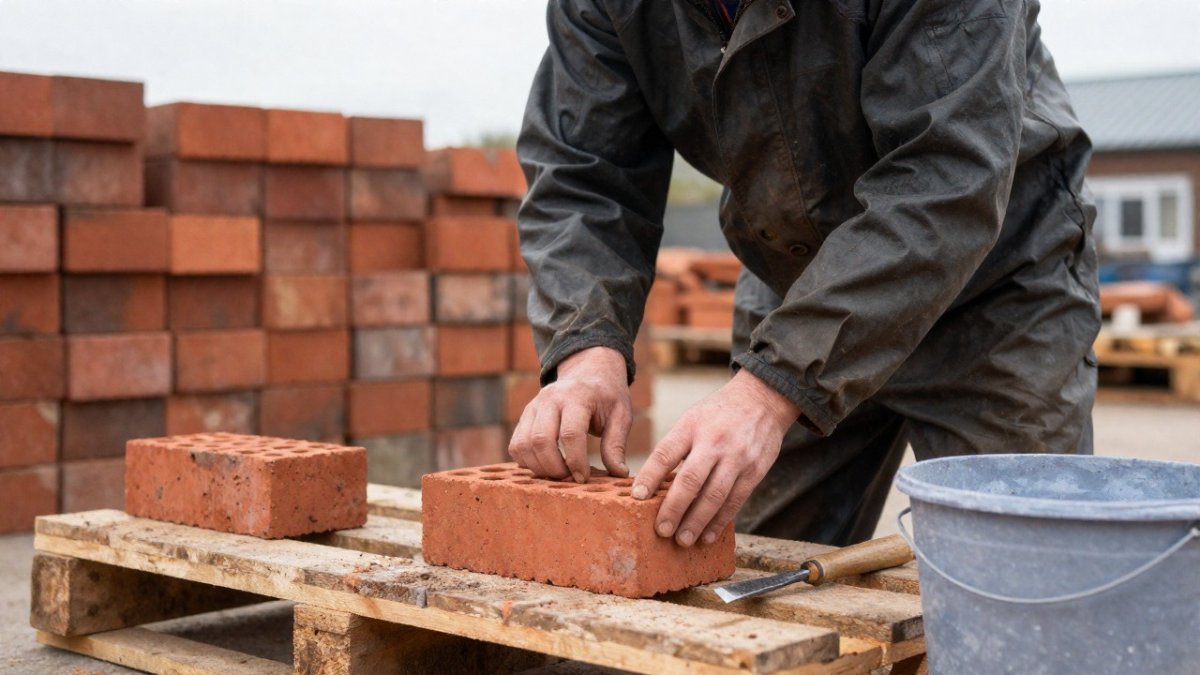
Run every brick through this checklist before it goes on the pallet for laying. One bad brick in a path is a weak spot that spreads.
- Ring test: tap two bricks together. Clear ring, keep it. Dull thud, reject it.
- Spalling check: any flaking, crumbling or lost face means reject.
- Hairline cracks: run a fingernail across the surface. Cracks that catch a nail are a reject.
- Corner condition: chipped corners are fine for a rustic look but weak under load.
- Water absorption: a drop that soaks in fast signals a porous, frost-prone brick.
- Hardness: scrape a corner with a nail. If it gouges easily, it is too soft.
- Salt damage: white powdery bloom or crumbling edges means it has been in a wet, salty spot.
- Dimensions: sort into piles by size so joints stay even.
- Colour and face: group by look so you can plan the pattern and blend.
Sort as you go. It saves hours on laying day.
Repair or Replace: Assessing Damaged Paving Before You Rip It Up
Damaged paving often needs repair, not replacement, and ripping up a sound path to fix a few bad bricks is usually the wrong call.
Before you reach for the breaker, ask three questions:
- Is the damage cosmetic or structural?
- Are the bad bricks loose, or is the base failing?
- Can the damaged area be lifted and re-laid?
Cosmetic damage, such as a chipped face, a stained patch or a scuffed edge, can often be improved without lifting anything. Structural movement, sinking or widespread cracking usually means the base needs attention.
If bricks are genuinely beyond saving, plan disposal properly. Our guide on how to dispose of renovation rubble covers the responsible options.
And remember the core question: why replace when you can repair? A lifted and re-laid section, or a tinted and refinished face, keeps good materials out of the skip.
Send Photos of Your Damaged Paving for an Honest Assessment
Send clear photographs of the damage, the complete item and the surrounding area, together with your full address and postcode, and Surface Magic Repairs can assess whether a repair is suitable and provide a quotation.
We are Bolton-based and travel across Greater Manchester and the wider North West for suitable work. For domestic jobs further afield, send the details and postcode so we can check availability.
Surface Magic Repairs carries out cosmetic repairs to brickwork, stone, sills and many other finished surfaces in place, with colour and finish matched where suitable. Not every surface can be repaired. Suitability depends on the material, condition, location and extent of the damage, and we will say honestly if replacement would be more durable.
Surface Magic Repairs has repaired more than 46,000 surfaces in the last year, backed by more than 25 years of combined trade experience within the team. The company holds ISO 9001, CHAS Premier, SMAS Worksafe and SafeContractor Approved accreditation.
Not sure how to take useful photos? Our guide on how to prepare photos for a repair quote shows you exactly what to capture.
Call 0800 085 7773 or email info@surfacemagicrepairs.com, Monday to Friday, 9:00am to 3:00pm.
Good reclaimed bricks, sorted and laid properly, can give many years of service. Bad ones will fail by the second winter. The difference is the inspection you do before laying, not the mortar you use. If you have damaged paving or brickwork already in place, get an honest assessment before you spend money on replacement. Surface Magic Repairs offers in-place cosmetic repairs and honest advice on when replacement is the better answer. Get started with Surface Magic Repairs and keep good materials where they belong.
Frequently Asked Questions
Are reclaimed bricks suitable for garden paving?
Often yes, but never automatically. Suitability depends on the brick itself and where it will sit. Well-fired clay bricks that have survived decades outdoors are usually dense and hard, which suits a garden path or patio. Bricks that spall, crumble or feel soft will not last underfoot. Check each brick for frost damage, cracks and delamination, and avoid any that were made for internal walls only. If you are unsure, ask a specialist to assess a sample before you buy a full pallet.
What is the difference between reclaimed bricks and clay pavers?
Clay pavers are manufactured to a consistent size, strength and frost rating for paving use. Reclaimed bricks come from demolished walls and buildings, so size, colour and durability vary from brick to brick. That variation gives reclaimed brick paving its character, but it also means you must hand-sort and reject weak units. Clay pavers are the safer choice for driveways and heavy traffic. Reclaimed bricks suit paths, patios and edging where their weathered finish is the point.
How can you tell whether reclaimed bricks are frost-resistant?
Look for a dense, ringing brick with sharp arrises and no flaking. Tap two together: a dull thud suggests a soft, porous brick that will struggle in frost. Reject any brick with face spalling, hairline cracks or white salt bloom. Reclaimed bricks can reduce environmental impact compared with new bricks, but that saving only holds if the bricks survive outdoors. If in doubt, test a few through a winter before committing.
Do reclaimed bricks need sealing outdoors?
Sealing is optional, not mandatory. A breathable sealer can slow water absorption and reduce moss, but a trapped damp brick is worse than an unsealed one, so never use a film-forming product on frost-damaged stock. Many gardeners leave reclaimed brick paving unsealed and accept the weathered look. If slip resistance matters, such as on a shaded patio, test a sample wet before deciding. Clean with a stiff brush rather than a pressure washer, which can erode soft faces.